
News
400 Students Get SPDC N60m Scholarship

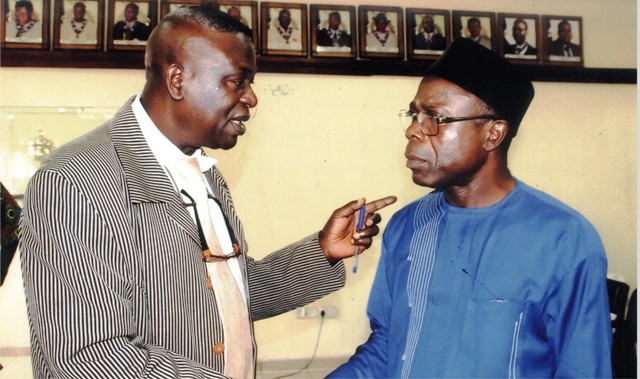
The Shell Petroleum Development Company of Nigeria Limited says it has awarded scholarships to the best and outstanding 400 university students, totalling N60million to enable them excel in their different fields of academic endeavours.
Speaking at the presentation of the awards for the 2015/2016 academic session at the Port Harcourt Literary Society Library, the SPDC General Manager, External Relations, Mr Igo Weli said: “SPDC does not segregate, the scholarship encompasses all fields of endeavours provided you are from the Niger Delta region and very brilliant.”
The Tide correspondent gathered that each student is given N150, 000 per annum, while the scholarship runs between four to six years depending on the course of study.
Weli stated that the SPDC JV university scholarship programme started since 1953 as one of its earliest Corporate Social Responsibility (CSO) initiatives, seven years before Nigeria gained her independence, adding that the initiative has continued to contribute to Nigeria’s human capital development.
The general manager said that SPDC was extremely proud of the success the initiative had recorded, having developed critical manpower for the development of modern Nigeria.
“From those early steps in 1953, what is now known as the NNPC/SPDC JV Scholarship programme has afforded many Nigerians the opportunity to acquire higher education, with many going on to become leaders in their chosen professions,” Weli said.
He stressed that this year’s award was very significant as it shows SPDC’s commitment to contribute to Nigeria’s human capital development despite the low oil price in the global market and the economic challenges in the country which have greatly impacted the funding of oil and gas operations.
Weli added that the company has launched the ‘Scholarship Meet Shell Programme,’ in which the beneficiaries meet and interact with Shell staff on their different chosen professions.
“Today, the SPDC JV runs four scholarship schemes as follows: The Secondary School, which supports over 1,000 students in SPDC’s operational areas in the Niger Delta annually, the Cradle-to-Career, which is an all-inclusive scholarship that provides opportunities and strong foundation for brilliant pupils in public primary schools to attend reputable secondary schools in Nigeria. The scholarship covers tuition and boarding awarded to 60 gifted young people from the Niger Delta annually,” he said.
He added that “the SPDC University Scholarship Scheme comprises two categories namely: the National Merit Award which is open to all Nigerians and the Operational Areas Award which is for undergraduates from our areas of operations in Abia, Bayelsa, Delta, Imo and Rivers States, and finally the Overseas Postgraduate scholarship programme which is awarded to 10 indigenes from Rivers, Bayelsa, Delta and Imo States annually for a Master’s programme in Oil and Gas-related disciplines at three top United Kingdom universities.”
Weli further stated that apart from helping to develop critical manpower, SPDC interventions in the educational sector over the years cover the building of science blocks, donation of science equipment, and establishment of the UNESCO ‘Education for All (EFA)’ goals, thereby ultimately contributing significantly to attaining the Millennium Development Goals on education in the Niger Delta and Nigeria.
Also speaking, Rivers State Commissioner for Education, Hon Tamunosisi Gogo-Jaja, represented by the Head Unit, Ministry of Education, Mrs Nwamaka Joseph, urged the students to take the opportunity given them by SPDC seriously, and expressed the Rivers State Government’s gratitude to the tremendous contribution SPDC has made in ensuring education for all in the state.
In her remarks, a motivational speaker, Mrs Osasere Esekhaigbe enjoined the beneficiaries to take their academic pursuit seriously, adding that there was need for them to distinguish themselves by having good defendable grades in their courses of study.
Esekhaigbe charged the students not to settle for the SPDC required 2.5 Cumulative Grade Point Average (CGPA), but thrive to score 4.5-5.0 CGPA as that was the only way they can compete favourably in the job markets.
Speaking on behalf of the beneficiaries, a student of the Niger Delta University, Wilberforce Island, Amassoma, from Agbere Agbama Community in Bayelsa State, Miss Tonaria Irene Ebilade said she believed the reason why she was given the scholarship was God’s divine favour, even as she said that her academic performance in the West African School Certificate (WAEC), Post UTME and her high CGPA of 3.9 played significant roles in her success story.
Ebilade urged other students and youth to take their academic pursuit seriously, adding that a time would come when they least expected and success would shine in their way.
Also speaking, another beneficiary, John Kingsley said God’s grace, favour and SPDC’s love for academic excellence propelled him to hedge on, and thanked God for the opportunity to carve a niche for himself.
On her part, a mother of one of the beneficiaries, Mrs Chioma Ndah said she would ever remain grateful to SPDC for taking the burden of paying university tuition and other fees off the family’s shoulders, as she and her husband were already finding it difficult to fend for their six children at the same time.
Susan Serekara-Nwikhana



The Nigerian Air Force has approved a major shake-up of its senior leadership, involving fresh appointments and postings across its operational commands, strategic institutions and Defence Headquarters.
The exercise, approved by the Chief of the Air Staff, Air Marshal Sunday Aneke, on November 7, 2026, is aimed at strengthening command effectiveness, enhancing institutional capacity and sustaining operational readiness.
In a statement yesterday, the Director of Public Relations and Information, NAF, Air Commodore Ehimen Ejodame, said the appointments covered Service Headquarters, operational commands, training institutions and other strategic establishments.
The statement partly read, “The NAF has approved a major strategic realignment of its senior leadership through a fresh round of postings and appointments designed to strengthen command effectiveness, enhance institutional capacity and sustain operational readiness in support of national security objectives.
“The exercise, approved by the Chief of the Air Staff, Air Marshal Sunday Kelvin Aneke, on 7 November 2026, takes effect from November 2026.
“The appointments span Service Headquarters, operational commands, Defence Headquarters, training institutions and other strategic establishments, reflecting a deliberate effort to align leadership competencies and professional experience with the Service’s evolving operational and institutional priorities.”
At the NAF Headquarters, Air Vice Marshal AK Ademuwagun was appointed Chief of Transformation and Innovation, while AVM IV Ajiboye became Superintendent of Standards and Evaluation.
Other appointments include AVM PN Amadi as Chief of Air Intelligence; AVM NN Ananaba as Chief of Operations; AVM AH Bakari as Air Provost Marshal; AVM EE Efiom as Chief of Training; and AVM AJ Laoye as Chief of Aircraft Engineering.
The Air Force also appointed AVM NI Ilo as Air Officer Commanding, Tactical Air Command; AVM BR Mamman as AOC, Mobility Command; AVM OS Ogunsina as AOC, Logistics Command; AVM MN Onyebashi as AOC, Special Operations Command; and AVM FCS Nwakara as AOC, Ground Training Command.
At the institutional level, AVM PB Philips was appointed Commandant of the Armed Forces Command and Staff College, while AVM MC Ekwueme became Commandant of the Armed Forces Resettlement Centre.
Similarly, AVM AO Akinbunwa was appointed Commandant of the Air Force War College, while AVM OC Ubadike became Commandant of the Air Force Institute of Technology.
Other appointments include AVM AI Sambo as Commandant of the Nigerian Air Force College of Logistics and Management, and AVM M Yusuf as Deputy Commandant of the Nigerian Defence Academy.
At the Defence Headquarters, AVM UK Abdullahi was appointed Director of Defence Operations, while AVM EOE Ebiowe was posted to the Office of the National Security Adviser as Deputy Coordinator, National Intelligence.
Also, AVM DDG Pwajok was appointed Director of Technical Services at the Defence Intelligence Agency, while AVM I Sani became Deputy Chief of Defence Intelligence.
Other senior officers were posted to various directorates at the Defence Headquarters, including operations, military strategy, cyber operations, civil-military relations, search and rescue, special duties and joint warfare doctrine.
The appointments also affected the Defence Space Administration, where AVM AA Suleh was named Deputy Chief, while AVM OA Oyename and AVM SS Lazarus were appointed Directors of Earth Observation and Launch Vehicles and Space Operations, respectively.
Furthermore, AVM GI Jibia was appointed Deputy Force Commander of Operation Hadin Kai, while AVM JI Ukeh became Commander of the Nigerian Air Defence Corps.
The statement said the exercise was part of efforts to strengthen leadership renewal, institutional accountability and operational effectiveness across the service.
According to the CAS, the professional competence and wealth of experience of the newly appointed officers would advance his command philosophy and strengthen the Air Force’s capacity to deliver decisive airpower effects in support of joint operations and national security objectives.
“All affected officers are expected to assume their new appointments and complete the necessary handover and takeover formalities on or before November 13, 2026,” the statement concluded.

The Socio-Economic Rights and Accountability Project (SERAP) has urged the Federal Government to disclose details of the funding, implementation and administration of its N50,000 National Emergency Relief and Stabilisation Intervention.
The organisation asked the Minister of Humanitarian Affairs and Poverty Reduction, Dr Bernard Doro, to provide information on beneficiary selection, payments, contracts with digital financial service providers and safeguards against political interference.
SERAP made the demand in a Freedom of Information request dated November 7, 2026, and signed by its Deputy Director, Kolawole Oluwadare.
The request followed the ministry’s October 30 announcement of the NERSI programme, which is intended to provide N50,000 in financial assistance to vulnerable Nigerians.
SERAP said important questions remained unanswered about the programme’s total funding, geographical coverage, duration and the methodology for selecting beneficiaries from the National Social Register and verified national identity records.
It urged the minister to disclose budgetary allocations, funds released and expended, eligibility criteria, beneficiary verification processes and the geographical distribution of recipients.
The organisation also asked the ministry to clarify whether the N50,000 assistance was a one-off payment or a monthly intervention, noting that the ministry’s public statement described it as a monthly payment, while a subsequent frequently asked questions document did not clearly specify the frequency or duration.
In the request, SERAP said, “Nigerians have a right to know how public funds allocated to NERSI are being spent, who is receiving the assistance, how beneficiaries are selected and whether the programme is reaching those most in need.”
The organisation raised concerns about possible political interference in the programme, particularly ahead of the 2027 general elections.
“Publicly funded social assistance must be allocated strictly on the basis of genuine need and objective eligibility criteria. It must not be used to reward political supporters, secure partisan loyalty, finance political mobilisation or influence the electoral choices of vulnerable Nigerians, particularly ahead of the 2027 general elections,” it said.
SERAP further insisted that beneficiaries should not be required to attend political rallies, support candidates or display political materials as a condition for receiving the assistance.
“Beneficiaries must not be required or encouraged to attend political rallies, support political parties or candidates, display political materials or demonstrate political loyalty as a condition for receiving assistance. NERSI is a government programme funded with public resources, not a personal gift or political benefit from any office-holder or political party,” the organisation stated.
It also urged the minister to publicly invite the Independent Corrupt Practices and Other Related Offences Commission and the Economic and Financial Crimes Commission to monitor the programme’s implementation and expenditure, investigate allegations of corruption and help ensure that funds reach intended beneficiaries.
SERAP expressed concern over reports that some Nigerians who received notifications of the N50,000 assistance had been unable to access or withdraw the funds, while others reportedly received messages indicating that they were ineligible.
“These reports raise questions about the accuracy of beneficiary verification, the reliability of payment arrangements and the effectiveness of mechanisms for resolving failed or disputed payments,” it said.
The organisation urged the ministry to investigate the complaints, publish its findings and ensure that all eligible beneficiaries received the assistance.
It also asked the government to disclose agreements with the digital financial service providers engaged to administer the payments, including ALAT, MoMo PSB, NairaGram, OPay and Moniepoint.
SERAP requested details of the providers’ roles, fees and performance, as well as information on how beneficiaries’ personal data would be protected.
“The use of the National Social Register and national identity records to identify beneficiaries must be governed by clear rules and appropriate data-protection safeguards. The Ministry should disclose how these records are being used and ensure that beneficiaries’ personal information is protected, while making anonymised and aggregated information available for public scrutiny,” it said.
The group further asked the ministry to publish anonymised information showing the number of beneficiaries and the amounts paid or scheduled for payment in each state and local government area.
It also sought records of any involvement of political actors in beneficiary selection, payments, access to beneficiary databases and the use of public resources to promote the programme.
To strengthen accountability, SERAP cited concerns raised by the Auditor-General of the Federation in the 2024 Annual Report regarding more than N78.8bn in public funds allegedly diverted or unaccounted for in the administration of social intervention and cash transfer programmes.
It also referred to concerns over N33.751bn in cash transfers made in 2023 for which relevant REMITA records and other supporting documents were reportedly not provided for audit.
“These findings underscore the importance of adequate financial controls, proper record-keeping, independent verification and effective oversight from the outset of the new intervention,” SERAP said.
The organisation said the information requested would enable Nigerians to assess whether the programme was reaching eligible beneficiaries and whether public funds were being properly accounted for.
It added, “Disclosure would also strengthen public confidence in social protection programmes and help ensure that resources intended for vulnerable Nigerians are used for their intended purposes.”
SERAP gave the minister seven days from receipt or publication of the letter to provide the requested information and take the proposed measures.
It warned that it would consider legal action to compel the ministry and other relevant authorities to fulfil their constitutional and statutory obligations if they failed to respond within the stipulated period.
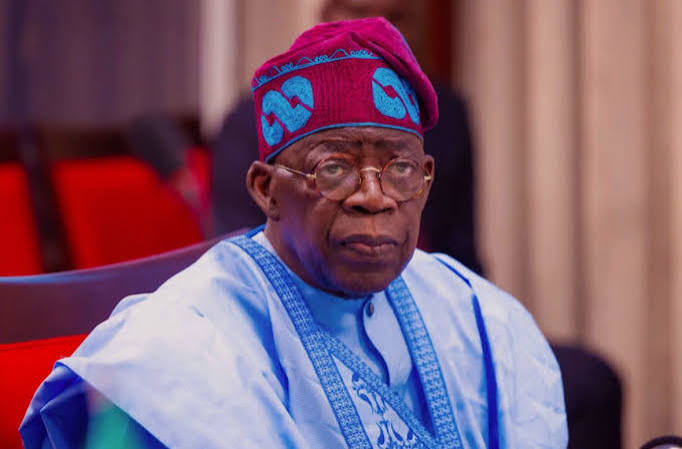
The Presidency has dismissed as misleading claims that President Bola Tinubu borrowed ?120 trillion in just three years while also removing the fuel subsidy.
In a statement posted on X yesterday, Special Assistant to the President on Social Media, Dada Olusegun, described the figures as the product of “Opposition’s propaganda machines.”
He said the claim that 16 past Nigerian leaders borrowed a combined ?46 trillion over 63 years, while Tinubu borrowed ?120 trillion in three years, does not reflect the full picture.
“Opposition’s propaganda machines claim that in 63 years, 16 past Nigerian leaders borrowed ?46 trillion combined, while President Tinubu borrowed ?120 trillion in just 3 years and still removed the fuel subsidy.
“But in reality, the ?46 trillion figure from late 2022 hid ?22.7 trillion in Central Bank ‘Ways and Means’ overdrafts that weren’t officially put on the books until May 2023,” Olusegun stated.
He added that earlier calculations converted foreign debt using an artificial exchange rate of ?448 to $1, when the street value was over ?700.
“When the exchange rate was unified in June 2023, the exact same dollar debt instantly looked ?13.4 trillion larger on paper overnight without a single new dollar being borrowed.”
In actual dollar terms, he said, Nigeria’s public debt rose from $113.4 billion in June 2023 to $120.9 billion by June 2026 — an increase of only $7.5 billion.
On the fuel subsidy, Olusegun noted that its removal had boosted monthly Federation Account Allocation Committee funds shared to states and local governments from ?656 billion in April 2023 to ?2.4 trillion by September 2026.
The claims being rebutted originated from a viral social media graphic that compared cumulative borrowing under previous administrations with the Tinubu government’s record and highlighted the subsidy removal.
Fact-checkers have described the graphic as misleading because the ?46 trillion figure represented outstanding debt at the end of 2022 rather than total borrowing by 16 leaders over 63 years, and because it did not adequately account for exchange-rate effects or the formal recognition of previously off-book obligations.
Nigeria’s total public debt stood at approximately ?87.38 trillion (about $113.4 billion) in June 2023, shortly after Tinubu took office.
By June 2026 it had risen to about ?166.79 trillion ($120.93 billion), according to Debt Management Office figures.
A large part of the naira increase stemmed from the 2023 naira float and the securitisation of Ways and Means advances inherited from the previous administration.
The latest rebuttal comes after Tinubu asked the Senate to approve the implementation of a $7.7bn external borrowing plan to part-finance the 2026 budget deficit.
The request, which translates to about N10.79tn at the budget exchange rate of N1,400 to the dollar, was conveyed in a letter read by the President of the Senate, Godswill Akpabio, during Wednesday’s plenary.
The request replaced an earlier approval for $20.52bn and €1.045bn borrowings that the President had asked the Senate and the House of Representatives for a week earlier.
However, opposition parties, including the Nigeria Democratic Congress, criticized the request, citing concerns about the country’s rising debt burden and its implications for future generations.
-
 Politics3 days ago
LG CITY BOY COORDINATOR HAILS WIKE’S SUPPORT FOR ONYESOH, TINUBU
-
Politics3 days ago
DIRI INAUGURATES APC CAMPAIGN COUNCIL, SETS MILLION VOTES TARGET FOR TINUBU
-
 Politics3 days ago
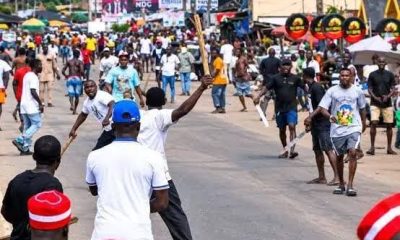
NDC Candidate Urges Oborevwori To Probe Asaba Political Violence
-
 News3 days ago
Army Recovers X Account After Hack Attempt
-
 Business3 days ago
Nigeria Loses N17tr Yearly To Abandoned Projects
-
Politics3 days ago
2027: Oborevwori Tasks Media On Fair, Accurate Reporting
-
Politics3 days ago
2027: AKPABIO ENVISAGES TINUBU’S VICTORY IN SOUTH SOUTH REGION
-
Politics3 days ago
Asaba Political Violence: Police Confirm One Dead, Delta Govt Urges Probe