
Editorial
Power Distribution Time To Break PHCN Monopoly

Disturbed by the apparent inability of the Power Holding Company of Nigeria (PHCN) to effectively evacuate power from its gas turbines and distribute same to end users, Rivers State Governor, Rt. Hon Chibuike Rotimi Amaechi recently threatened to shut such under-utilised plants to avoid further waste.
The governor’s frustration was borne out of the state’s desire to address the very epileptic electricity distribution needed to enhance industrial development in the state, but which is repeatedly hampered by existing enactments that allow the PHCN unfettered monopoly.
Under the arrangement, while states and other corporate citizens may generate electricity, through the many Independent Power Plant (IPP) projects, they are by law inhibited from distributing power to end users for whom such is meant.
For instance, the Rivers IPP projects, alone have the Trans-Amadi (1&2), and the Omoku Gas turbines, which together should generate 300 megawatts installed capacity, but are forced to generating about 250 megawatts due to evacuation hiccups on the part of PHCN. Like Rivers, Shell Petroleum Development Company (SPDC) also recently commissioned its 650 megawatts Afam VI, the third in the area, intended for improved power distribution in the state.
Intrinsically, should both Shell and the Rivers State Government enjoy the legal backing to both evacuate and distribute power to end users, the state would, without doubt, be the first to celebrate uninterrupted power supply for a considerably long period.
This is because, the state is estimated to need between 250 and 300 megawatts to achieve such uninterrupted supply which the volume generated by both the state and Shell can comfortably cover and even supply excess to the national grid.
In essence, every effort made by corporate citizens and state governments will be a huge waste unless the monopoly enjoyed by the obviously ill-equipped PHCN is broken to enshrine healthy competition in power generation and distribution.
This is why The Tide sympathises with the Rivers State Government over the frustration of watching its people suffer epileptic electricity supply in the midst of plenty.
Even so, the governor’s threat to shut under–utilised turbines, we think, is not the right option as it would further negatively affect the level of service.
Instead, the Rivers State government should join forces with other stakeholders and push for the breaking of the monopoly now being enjoyed by PHCN for the good of the citizenry.
We say so because, many industrial and manufacturing concerns are either relocating or folding up on account of the huge bills incurred on private plants and outrageous charges imposed by PHCN for services haphazardly rendered or never rendered at all.
Further shutting running turbines, we fear, will drastically reduce the present quota from the national grid and plunge parts of the state into even more debilitating power outage nightmare.
Even so, The Tide insists that the federal government should, without any further delay, break the satanic monopoly, if Nigeria is to be counted among the comity of nations keen on industrial and rapid infrastructural growth and development.
That electricity generation is one major pillar on which rests the transformation and growth of any economy is merely stating the obvious. This, perhaps, underscores President Goodluck Jonathan’s resolve to personally superintend the power sector.
It is on this count that The Tide is optimistic that the right things will be done, key among which is the empowerment of states and other willing stakeholder partners to generate, evacuate and distribute power rather than encumbering an inept PHCN with such vital national demand.
We are encouraged by the success achieved in the communication sector with the introduction of cell-phones and GSM service providers, and the benefits such healthy competition has provided the citizenry.
Unless those benefits are extended to the power generation and distribution sub-sectors, all the talk on improved electricity services would remain what they have always been – lip service, nothing more.



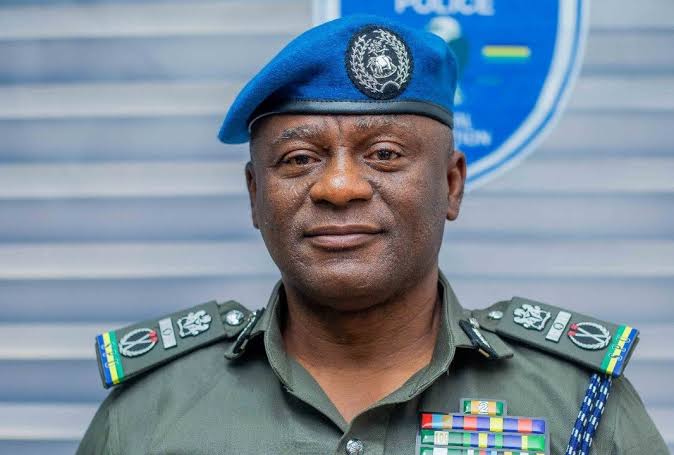
As Nigeria moves toward the 2027 general elections and campaign activities intensify, violence against opposition politicians has become an issue that can no longer be overlooked. What should be a season of competing ideas is increasingly turning into a test of intimidation, and early signs suggest that those challenging the ruling establishment are the primary targets.
It was, therefore, welcome news when the Inspector-General of Police, Olatunji Disu, warned politicians, political thugs and others against destroying, defacing or removing campaign posters, banners and billboards. In a statement issued in Abuja by the Force Public Relations Officer, CSP Ani Iniedu, the police condemned such acts as political intolerance, directed Commissioners of Police in all 36 States and the Federal Capital Territory to take preventive measures, and warned that sponsors would also face prosecution. The police rightly described such vandalism as a criminal act that undermines parties’ and candidates’ freedom to canvass for votes.
But billboards are replaceable; human lives are not. While applauding the IGP’s stance, we urge him to extend the same stern warning and enforcement zeal to thugs who assault opposition members during campaigns. A police force that punishes the tearing of a poster but ignores the breaking of a skull will have its priorities questioned. Allowing such attacks to continue could erode the foundations of our democracy.
Consider the African Democratic Congress (ADC) presidential campaign flag-off in Sokoto State on November 4, 2026. The party alleged that the State Government denied it access to public facilities, sealed its campaign venue and pressured hotels to reject its delegates, forcing it to hold the rally at its secretariat. The Sokoto authorities, however, denied instructing hotels to turn guests away. More seriously, two suspected ADC supporters were reportedly shot along the Sokoto–Wurno Road while travelling to the venue, allegedly by operatives of the Sokoto State Community Guards.
Whatever the truth of these competing accounts, a shooting demands more than press statements. It requires a transparent, independent investigation and prosecution where warranted. Sokoto was not an isolated incident. The following day in Birnin Kebbi, the ADC presidential campaign convoy was reportedly attacked by armed gangs. Amnesty International said vehicles were vandalised, people assaulted with cutlasses and roads blocked, while the party’s Kebbi governorship candidate, Abubakar Malami, alleged that media equipment was destroyed and tear gas deployed. His convoy had suffered a similar attack in the city in September 2025.
The Nigeria Democratic Congress (NDC) has suffered similar attacks. On November 4, hoodlums stoned the motorcade of its presidential candidate, Peter Obi, and running mate, Rabiu Musa Kwankwaso, at Watt Market roundabout in Calabar, Cross River State. Police reported arresting a 27-year-old suspect, Victor Edet, although it remains unclear whether he has been arraigned. The State Government has denied suggestions that ruling-party supporters were responsible. Worse, in Asaba, Delta State, one person was killed and five injured when suspected thugs attacked an NDC rally. A death at a political rally is no longer a warning; it is a damning indictment of the prevailing political climate.
Even critics of the establishment who are not frontrunners have not been spared. Omoyele Sowore, presidential candidate of the African Action Congress (AAC), was attacked by suspected thugs at a restaurant in Ado-Ekiti on October 30. He alleged that the assailants were linked to the Ekiti State Government House and that the Department of State Services leaked his location. Both the State Government and the security service denied involvement, while the police reported a minor injury and a discreet investigation. These conflicting accounts make an independent, publicly reported inquiry indispensable.
What deepens the concern is the Federal Government’s apparent silence. We are unaware of any specific, forceful condemnation of these assaults, even as All Progressives Congress (APC) rallies appear to proceed nationwide without incident. Such silence can easily be misconstrued as complicity, regardless of intent.
According to the Centre for Democracy and Development, 109 election-related deaths were recorded in the build-up to the 2023 polls. The Kimpact Development Initiative separately documented 238 incidents and 24 deaths during the general elections. Beyond Nigeria, Kenya’s 2007–08 post-election violence claimed more than 1,000 lives, according to the Waki Commission. Ghana, by contrast, enacted the Vigilantism and Related Offences Act in 2019 to curb party vigilante groups, a model worth studying.
The remedies are neither exotic nor expensive. The IGP should extend his directive to cover assaults on individuals and disruptions of rallies, while establishing a dedicated investigative unit to probe the Sokoto shooting and the attacks in Kebbi, Calabar, Asaba and Ado-Ekiti. It should publish the status of each case within a fixed period. Suspects must be prosecuted and their sponsors, regardless of party or position, brought to justice. State-backed security outfits, including the Community Guards, should be audited and barred from partisan duties.
The Federal Government must speak and act unequivocally. President Tinubu should specifically condemn attacks on opposition candidates and direct all security agencies to guarantee equal protection for every party. Governors must ensure equal access to public facilities for registered parties. The Independent National Electoral Commission (INEC), which has warned of fines and imprisonment under the Electoral Act 2026 for inflammatory campaign conduct, should enforce the Code of Conduct for Political Parties. Working with the Inter-Agency Consultative Committee on Election Security, it should publish a joint security plan covering campaigns, polling, and collation. Parties must discipline their supporters, courts expedite electoral-violence trials, and civil society and the media maintain a public record of incidents and their outcomes.
The credibility of the 2027 elections is at stake. An election is credible only when every contender can campaign, travel, assemble and speak freely, without fear. Without a free opposition, there can be no meaningful democracy. Nigeria is not a one-party State, and law enforcement agencies must demonstrate their neutrality through action, not communiqués. The campaign atmosphere is too tense to be left to chance. Billboards deserve protection, certainly, but citizens deserve it far more.

-

 Politics4 days ago
LG CITY BOY COORDINATOR HAILS WIKE’S SUPPORT FOR ONYESOH, TINUBU
-
Politics4 days ago
DIRI INAUGURATES APC CAMPAIGN COUNCIL, SETS MILLION VOTES TARGET FOR TINUBU
-

 Politics4 days ago
NDC Candidate Urges Oborevwori To Probe Asaba Political Violence
-

 News5 days ago
Army Recovers X Account After Hack Attempt
-
Business12 hours ago
‘NUJ, NPA’s Partnership Would Boost Port Producrivity, Economic Growth’
-
News9 hours ago
RSG Reaffirms Commitment To STEM Education, Technological Advancement
-

 News9 hours ago
IGP Warns Police Officers Against Partisanship …Directs Regular Engagement With Journalists
-
Politics4 days ago
2027: Oborevwori Tasks Media On Fair, Accurate Reporting