
Nation
THE STATES


Borno
The National Emergency Management Agency (NEMA) says the living conditions of Internally Displaced Persons (IDPs) in Borno State have significantly improved.
The North-East Coordinator of the agency, Malam Muhammad Kanar, stated this while speaking with newsmen in Maiduguri.
Kanar said this followed collaborative efforts by stakeholders.
He said unlike before, the IDPs were now living in a better environment due to such efforts.
“Actually, everything is going on well for the IDPs now, this is because of the collaboration between all stakeholders toward addressing their problems.
Ekiti
An Ado-Ekiti State Customary Court yesterday dissolved the 15-year-old marriage between Mercy Augustine and her husband, Linus Augustine on grounds of frequent beatings.
Other grounds for the dissolution were unruly behaviour, assault and adultery.
Mercy, 35, a public servant had filed a divorce petition, accusing her husband of maltreating, beating, and disgracing her in the presence of his relatives.
She also said that her husband was dating other women.
Mercy a mother of three children, explained that since she left the house of the respondent in August 31, 2013, he had refused to allow her visit the children in his custody.
FCT
The Attorney General and Minister of Justice, Alhaji Abubakar Malami, says President Muhammadu Buhari is worried over the delay in the passage of the Proceeds of Crime Act by the National Assembly (NASS).
Malami stated this when he briefed State House correspondents on the outcome of a closed door meeting with President Buhari in the Presidential Villa, Abuja last Tuesday.
According to him, the President noted that there has not been any expeditious determination on the passage of the anti-graft bill by the NASS.
“It’s a routine briefing of the president as it relates to general issues that have to do with anti-corruption.
“Mr. President is worried about the anti-corruption bills that are pending before the National Assembly overtime. There has not been any expeditious determination on the passage of the bills and indeed, the asset management agency was also part of the discussion.
Jigawa
Nigeria Security and Civil Defence Corps (NSCDC), Jigawa State Command, recovered over N3.93 million debts owed some residents of the state between January and March this year.
The spokesman of the command, Mr Adamu Abdullahi, made the disclosure yesterday in Dutse in an interview with newsmen.
He said that the amount was recovered following complaints the command received from aggrieved creditors.
He said that the command’s Disputes and Conflicts Resolution Unit (DCRU) amicably resolved disagreements between the debtors and their creditors.
Katsina
The Katsina State Emirate Council, last Tuesday suspended four village heads for alleged encroachment into Rugu Forest.
The suspension was announced in a statement signed by Alhaji Bello Ifo, the Council’s Secretary on Tuesday in Katsina.
Those suspended were the Village head of Illelah, Alhaji Adamu Aliyu, that of Muniya, Alhaji Hamisu Ahmad, and Alhaji Ibrahim Aliyu of Guzurawa, all in Safana Local Government Area.
Also suspended was Aihaji Isah Madogara and that of Madogara in Batsari Local Government Area.
Kogi
The Police last Saturday said they had arrested six suspects in connection with an assignation attempt on Senator Dino Melaye in his home in Kogi State on April 15.
The force Spokesman, CSP Jimoh Moshood, told newsmen in Abuja that the arrested suspects included a Kogi State local government sole administrator and his orderly.
Moshood said that items recovered included one Hyundai Ambulance bus allegedly used in conveying the attackers, five AK 47 rifles, One Beretta pistol and two locally made single barrel shot guns.
Others were 25 expended shells of 7.62 mm ammunition, 13 expended sheels of 9 mm ammunition and 12 expended shells of gauge cartridge.
Moshood said that the firearms had been sent for ballistic expert examination, test and analysis at the Force Criminal Intelligence and Investigation Department in Lagos.
Kwara
A philanthropist, Chief Jide Ajide, yesterday donated a Mathematics laboratory to a public secondary school in Isanlu-Isin, Kwara State.
Ajide said at the inauguration of the project that the laboratory equipped with modern instructural materials would encourage youths to study mathematics.
He urged well-meaning people to complement governments’ efforts in funding and developing education especially at the grassroots.
Ajide noted that many students had developed phobia for Mathematics, saying the attitude has continued to impede scientific and research breakthroughs.
“The laboratory is intended to complement government’s efforts toward enhancing learning, especially in Mathematics and Sciences.
Lagos
The United State last Monday began an anti-bomb training for 60 Nigerian Police officers to equip them to clear explosives from reclaimed communities in the North-East and ensure safe return of citizens.
The Inspector-general of Police (I-G), Mr. Idris Ibrahim, said at the commencement of the four-week training in Lagos State that the communities are in Borno, Yobe and Adamawa.
The I-G who was represented by the Deputy Inspector-General of Police (DIG), Operations, Mr. Joshak Habila, said that the training would also improve the capacity of personnel to be deployed to the Niger Delta.
According to the I-G, the officers are from the Explosives Ordinance Department (EOD). “These trained personnel are to ensure that the communities were cleared of all explosives for the safe return of displaced persons to their lands.
Niger
Commander, 31 Artillery Brigade, Minna, General Moshood Olanrewaju, has assured of the army’s readiness to tackle cattle rustling, kidnapping and armed banditry in Niger State.
Olanrewaju gave the assurance in an interview with newsmen in Minna on Thursday.
He said that the army, in collaboration with other security agencies, had mapped out strategies to flush out criminals in the state.
According to the brigade commander, adequate security personnel has been mobilised for the operation.
“We have put in place sensitive security methods that will enable us apprehend all those involved in illegal activities.
Ogun
The FRSC has confirmed that two persons died while eight others sustained injuries in an accident along the IIo-Awela Road Road at Sango Ota in Ogun State yesterday.
The Unit Commander of the FRSC in Ogun, Mr. Adekunle Oguntoyinbo, made the confirmation while speaking on the development in Sango-Ota.
He said the accident, which he blamed on break failure, occurred at about 8.20 am.
Oguntoyinbo said the incident involved two buses, one of which was a commercial bus.
He said that the brake of the commercial bus failed and ran into a bus at the tollgate, resulting in the death of two persons and injuring eight others.
The unit commander said that the bodies of the dead had been deposited at the morgue of the Ota General Hospital in Sango-Ota, while the injured persons were also receiving treatment at the same hospital.
Sokoto
The Sokoto State Government yesterday said it had distributed 172 transformers of various capacities to different communities across the 23 local government areas of the state.
The State Commissioner for Rural development, Alhaji Abdullahi Maigwandu, who stated this during a chat with journalists in Sokoto, added that the 172 transformers were procured by the state government at the cost of N623 million.
Maigwandu explained that N103 million was spent on the supply and installation of the electrical equipment in different parts of the state.
According to him, the categories of transformer distributed included 500 kva, 300 kva and 200 kva and that some local government areas got five while others got three depending on request.
He further said the state government had concluded plans to install additional 100 transformers in some selected communities in the state.



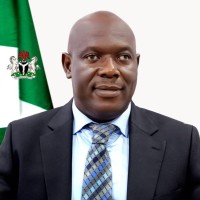
The Hydrocarbon Pollution Remediation Project (HYPREP) has commemorated the 15th anniversary of the release of the United Nations Environment Programme (UNEP) Environmental Assessment Report on Ogoniland, reaffirming its commitment to restoring the environment and improving the livelihoods of affected communities.
In a statement signed by the Project Coordinator, Prof Nenibarini Zabbey, to commemorate the anniversary, HYPREP described the anniversary as a significant milestone in Nigeria’s environmental restoration efforts, noting that the project has made remarkable progress in implementing the recommendations of the landmark UNEP report released on August 4, 2011.
The UNEP report had revealed extensive oil pollution across Ogoniland, severe environmental degradation, and serious public health risks resulting from decades of petroleum operations. It also recommended an initial $1 billion fund to commence the cleanup of the affected communities.
According to HYPREP, the Federal Government formally launched the Ogoni clean-up in 2016, while the Project Coordination Office was established in 2017 to drive the implementation of UNEP’s recommendations.
Zabbey said the current administration has continued to prioritise the project under the Renewed Hope Agenda.
Providing an update on the cleanup, the Project Coordinator disclosed that 30 of the 65 contaminated sites identified by UNEP have been fully remediated, while work is ongoing at several medium- and high-risk locations. It also stated that more than 1.5 million mangrove seedlings have been planted as part of what it described as the world’s largest restoration of oil-degraded mangroves, with over 1,000 hectares of shoreline already rehabilitated.
Zabbey further revealed that 49 Ogoni communities have been connected to potable water schemes through multiple water projects and booster stations aimed at providing safe drinking water across the region.
In the health sector, he said the 100-bed Ogoni Specialist Hospital in Kpite and the 43-bed Cottage Hospital in Buan are nearing completion, adding that several existing health facilities have been upgraded with modern medical equipment, while five ambulances have been donated to improve emergency healthcare services. The Project Coordinator also disclosed that a three-year human health biomonitoring study is being conducted in collaboration with the World Health Organization’s International Agency for Research on Cancer (IARC).
On economic empowerment, Zabbey stated that the Project has created more than 8,000 direct jobs and trained thousands of Ogoni youths and women in various vocational and technical skills, including software development, cybersecurity, aviation, commercial diving, seafaring, mechatronics, and creative arts. The project also reported awarding scholarships to more than 1,000 students, providing grants to small businesses, and supporting persons living with special needs through skills acquisition programmes.
The statement further highlighted ongoing legacy projects, including the Ogoni Power Project and the Centre of Excellence for Environmental Restoration, which it said is about 96 per cent complete. HYPREP also welcomed the recent designation of the Ogoni Wetland as a Ramsar Site of International Importance and pledged to continue promoting biodiversity conservation and sustainable management of the ecosystem.
Marking the anniversary, Zabbey said the progress achieved over the past 15 years demonstrates the collective commitment of government, development partners, stakeholders, and local communities to restoring Ogoniland. He called for renewed collaboration to sustain the cleanup effort, promote environmental sustainability, and support the long-term development of the region. 3
-

 News2 days ago
RSG Targets Nine Million Residents in Mosquito Net Distribution Campaign
-

 Oil & Energy1 day ago
Aiyedatiwa Signs New Electricity Bill
-

 Maritime1 day ago
Marine Minister Commends President Tinubu On NPERA Bill Assent
-

 Oil & Energy1 day ago
NLNG Commissions Research And Innovation Centre In RSU
-

 News2 days ago
KenPoly Holds Eight Convocations, August 29
-

 News2 days ago
RSG Begins Another Phase of Projects Commissioning Today
-

 News2 days ago
RMAFC Completes Revenue Sharing Review, Proposes New Pay
-

 Maritime1 day ago
NAGAFF Petitions IGP Over Alleged Maritime Police Harassment