
Nation
THE STATES

Adamawa
The Adamawa State Government, says it has begun payment of workers’ salary arrears, courtesy of the Paris Club refund as from last Wednesday.
The chairman of the committee set up by the State Government for payment of outstanding salaries and liabilities, Alhaji Abdulrahman Abba-Jimeta, made this disclosure in Yola while briefing newsmen.
Abba-Jimeta said that the state government had received N4.8 billion out of the expected N12.8 billion from the Federal Government.
He said that based on the available funds, the salary arrears of teachers, primary health care workers, local government staff and political office holders at the council areas would be paid.
He explained that the total bill stood at N4.7 billion, adding that pensioners would be considered when next the state received the expected balance of the Paris club refund.
Benue
Benue State Government says it has given out 10 hectares of land to the Federal Ministry of Power, Works and Housing for the construction of housing estate in Makurdi.
Special Adviser to Governor Samuel Ortom, Bureau for Lands and Survey, Prof. Jonathan Uever, made this known in Makurdi, the state capital.
Uever, while conducting a Federal Governmental team led by Malam Musa Mohammed round the proposed site, said that the project, when completed, would mitigate housing challenges in the state.
Speaking, the Federal Controller of Housing in Benue, Mr Patrick Nziwu, said that the project was in line with President Muhammadu Buhari’s agenda of meeting the housing needs of ordinary Nigerians.
Jigawa
Residents of Hadejia in Jigawa State have blamed petroleum products dealers for diversion of kerosene resulting to the current acute scarcity of the product in the town.
The situation has also resulted in price hike of the commodity in the market .
Investigations showed that most of the petroleum products service stations had run out of stock of the product in the past weeks.
It was discovered that kerosene was only obtainable at the black market outlets, where it sold for between N400 and N450 per litre, above the N83 approved pump price.
Black-market operators are making brisk businesses due to the high patronage of the trade occasioned by the scarcity.
Kaduna
A total of 110 prisoners were released from various prisons in Kaduna State in 2016, as part of efforts to decongest the prisons, officials have said.
Some 75 of the prisoners were released by State Committee on Prisons Decongestion while 35 were pardoned by the state Chief Judge, Justice Tanimu Zailani.
Chairperson of the Committee on Prisons Decongestion, Mrs Amina Sijuwade, said they had released 75 inmates, out of whom 71 were men and four were women.
Sijuwade, who is also the State Attorney-General and Commissioner for Justice, said that the gesture would continue throughout 2017 and beyond.
Meanwhile, the Prison Comptroller in the state, Mr Yazid Alhassan, confirmed that 35 other inmates were released by the Chief Judge during his routine visits to prisons in the state.
Kano
A Magistrates’ Court in Rijiyar Zaki, Kano State, has remanded a 28-year-old man, Oluwaseun Lasisi, in prison for allegedly forging a diploma certificate of Bayero University, Kano.
Lasisi of New Road, Sabo Gari, Kano, is facing a two-count charge of criminal conspiracy and forgery.
Senior Magistrate Aminu Fagge ordered the remand of the accused in prison till January 30 when the case would come up for mention.
The Prosecutor, Mr Yusuf Sale, had earlier told the court that a security officer attached to Bayero University, Tasiu Muhammad, reported the case to the Rijiyar Zaki Police Division in Kano on January 4.
Kebbi
No fewer than 1,447 cattle rustlers and other bandits have renounced criminality and surrendered to the authorities in Yauri Emirate of Kebbi State.
The Press Secretary to the Emir of Yauri, Dr Muhammad Zayyanu, Alhaji Ibrahim Yauri, made this known in a statement issued in Birnin Kebbi.
Yauri said the repentant rustlers agreed to swear by the Holy Quran and Bible not to indulge, assist or harbour any criminal henceforth in the area.
He appealed to local communities to embrace those who surrendered, stressing the need for forgiveness to allow peace in the area.
Kogi
Kogi State House of Assembly has threatened to sue Leadership Newspaper over what it termed “libelous editorial comments”, condemning its stand on the report of the State Staff Audit Committee.
The resolution followed the adoption of a motion on Matters of Urgent Public Importance raised by Mr Sunday Shigaba (PDP-Bassa), over the branding of its members as “PDP syndicates and renegades of the APC “ by the newspaper.
Shigaba said that the newspaper editorial of January 20, 2017 edition, titled; “Our Stand As Kogi Buries Ghost Workers”, had smeared the integrity of the House and should not be condoned.
Seconding the motion, Mr Oluwatoyin Lawal (PDP-Yagba West), commended the mover of the motion as he described the editorial as the position of the editorial board of the paper, adding that the publication was libelous and in bad taste.
The Deputy Speaker, Mr Aliyu Akuh (PDP-Omala) and John Abah (PDP-Ibaji) ,also condemned the publication while the Majority Leader, Matthew Kolawole (PDP-Kabba-Bunu), described the editorial as indicting, inciting and incriminating.
Kwara
The Kwara State House of Assembly in Ilorin said it would collaborate with the executive to ban construction of petrol stations in residential premises.
The Speaker of the House, Dr Ali Ahmad, made the disclosure at the first plenary of the assembly after the Christmas and New Year recess.
Ahmad said that the assembly would liaise with the executive and come out with laws that would discourage indiscriminate erection of petrol stations and shops in densely populated areas across the state.
He stressed the need to overhaul and review the state Town Planning Law with a view to curbing the menace as well as preventing any disaster associated with filling stations in the state.
Nasarawa
Governor Umaru Al-Makura of Nasarawa State has ordered Interim Management Committee chairmen in the 13 local government areas in the state to declare their Internally Generated Revenue (IGR) the face sanctions.
Al-Makura gave the order in Lafia while inaugurating the Interim Management Committee Chairman of Keana Local Government Area.
He said that given the current economic crunch, it behoved on the chairmen to come up with alternative sources of revenue rather than rely solely on allocation from the Federation Account.
According to him, henceforth, any chairman of a local government area or overseer of development area in the state who fails to declare his IGR does so at the peril of his job.
Niger
Niger State Government has distributed relief materials worth N28 million to victims of tanker fire in Tegina, Rafi Local Government Areas of the state.
Director-General, State Emergency Management Agency, Alhaji Ibrahim Inga, disclosed this in an interview with newsmen in Minna.
The tanker fire incident, which occurred on December 2, claimed 18 lives, injured five and destroyed property worth millions of naira.
Inga, who described the incident as unfortunate, noted that the relief materials was not a compensation but government intervention to cushion effect of the disaster.
Osun
The Standards Organisation of Nigeria (SON) in Osun State says it confiscated more than 1,000 underweighed bags of rice in Osogbo markets.
The SON State Coordinator, Mr Sunday Badewole, disclosed this in an interview with newsmen in Osogbo.
Badewole said the agency made the confiscation during the enforcement operation where more than 1,000 bags of 5kg, 10kg and 25kg of bags of rice were confiscated.
He said many of the rice sellers had reduced the quantity of rice from the kilogrammes that were indicated on the bags, to make more money.
Badewole said the observation carried out by the enforcement team of the agency in the markets during the raid revealed that rice sellers would remove some measures from the bags of rice and seal it back for sale.
Oyo
Some village heads in Oyo State have stopped the February 11 local government poll and the disbursement of the monthly federal allocation to the 33 local governments.
The state’s Attorney-General and Commissioner for Justice, Mr Seun Abimbola, said this at a news conference in Ibadan.
The 15 village heads had approached the Federal High Court in Abuja on issues bordering on the newly created Local Council Development Areas(LCDAs) in the state.
The village heads, he said, had obtained an injunction from the court last Friday and the state government was notified through its Abuja Liaison Office on Monday.
Those restrained, according to the injunction, were the Attorney General of the Federation, Accountant General of the Federation, Central Bank of Nigeria, Federal Ministry of Finance and Revenue Mobilisation and Fiscal Commission.
Plateau
A bill to establish the Plateau State Multi-Door Court House, has scaled through second reading at the state’s House of Assembly.
Presenting the bill for second reading, Majority Leader of the House, Mr Henry Yunkwap, said increasing social vices from increase in population necessitated the introduction of the bill.
According to him, the Multi-Door Court, if established, will serve as alternative way of resolving disputes in communities.
The Minority Leader of the House, Mr Daniel Dem, said that the bill, if passed into law, would promote peace and harmony among people and community disputes would be resolved amicably.
On his part, the Deputy Speaker of the House, Mr Yusuf Gagdi, said “the bill is apt because a lawless society is automatically a hopeless society.”
Sokoto
The Sokoto State Government has set up a taskforce that will monitor the distribution of petroleum products in the state.
A statement by Governor Aminu Tambuwal’s Spokesman, Malam Imam Imam in Sokoto noted that the task force was necessary, in the midst of fuel scarcity bedevilling the state.
Imam stated that the task force would monitor and ensure effective dispensing of petroleum products by selling outlets in all parts of Sokoto.
He added that the aim was to return to normal distribution since no part of the country was presently experiencing disruption in the supply chain of products.



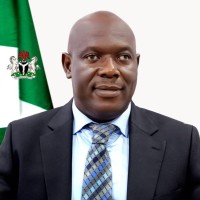
The Hydrocarbon Pollution Remediation Project (HYPREP) has commemorated the 15th anniversary of the release of the United Nations Environment Programme (UNEP) Environmental Assessment Report on Ogoniland, reaffirming its commitment to restoring the environment and improving the livelihoods of affected communities.
In a statement signed by the Project Coordinator, Prof Nenibarini Zabbey, to commemorate the anniversary, HYPREP described the anniversary as a significant milestone in Nigeria’s environmental restoration efforts, noting that the project has made remarkable progress in implementing the recommendations of the landmark UNEP report released on August 4, 2011.
The UNEP report had revealed extensive oil pollution across Ogoniland, severe environmental degradation, and serious public health risks resulting from decades of petroleum operations. It also recommended an initial $1 billion fund to commence the cleanup of the affected communities.
According to HYPREP, the Federal Government formally launched the Ogoni clean-up in 2016, while the Project Coordination Office was established in 2017 to drive the implementation of UNEP’s recommendations.
Zabbey said the current administration has continued to prioritise the project under the Renewed Hope Agenda.
Providing an update on the cleanup, the Project Coordinator disclosed that 30 of the 65 contaminated sites identified by UNEP have been fully remediated, while work is ongoing at several medium- and high-risk locations. It also stated that more than 1.5 million mangrove seedlings have been planted as part of what it described as the world’s largest restoration of oil-degraded mangroves, with over 1,000 hectares of shoreline already rehabilitated.
Zabbey further revealed that 49 Ogoni communities have been connected to potable water schemes through multiple water projects and booster stations aimed at providing safe drinking water across the region.
In the health sector, he said the 100-bed Ogoni Specialist Hospital in Kpite and the 43-bed Cottage Hospital in Buan are nearing completion, adding that several existing health facilities have been upgraded with modern medical equipment, while five ambulances have been donated to improve emergency healthcare services. The Project Coordinator also disclosed that a three-year human health biomonitoring study is being conducted in collaboration with the World Health Organization’s International Agency for Research on Cancer (IARC).
On economic empowerment, Zabbey stated that the Project has created more than 8,000 direct jobs and trained thousands of Ogoni youths and women in various vocational and technical skills, including software development, cybersecurity, aviation, commercial diving, seafaring, mechatronics, and creative arts. The project also reported awarding scholarships to more than 1,000 students, providing grants to small businesses, and supporting persons living with special needs through skills acquisition programmes.
The statement further highlighted ongoing legacy projects, including the Ogoni Power Project and the Centre of Excellence for Environmental Restoration, which it said is about 96 per cent complete. HYPREP also welcomed the recent designation of the Ogoni Wetland as a Ramsar Site of International Importance and pledged to continue promoting biodiversity conservation and sustainable management of the ecosystem.
Marking the anniversary, Zabbey said the progress achieved over the past 15 years demonstrates the collective commitment of government, development partners, stakeholders, and local communities to restoring Ogoniland. He called for renewed collaboration to sustain the cleanup effort, promote environmental sustainability, and support the long-term development of the region. 3
-

 News2 days ago
RSG Targets Nine Million Residents in Mosquito Net Distribution Campaign
-

 Oil & Energy2 days ago
Aiyedatiwa Signs New Electricity Bill
-

 Oil & Energy2 days ago
NLNG Commissions Research And Innovation Centre In RSU
-

 Maritime2 days ago
Marine Minister Commends President Tinubu On NPERA Bill Assent
-

 News2 days ago
KenPoly Holds Eight Convocations, August 29
-

 News2 days ago
RSG Begins Another Phase of Projects Commissioning Today
-

 News2 days ago
RMAFC Completes Revenue Sharing Review, Proposes New Pay
-

 Maritime2 days ago
NAGAFF Petitions IGP Over Alleged Maritime Police Harassment