
Business
Rivers 2017 Budget: Don Seeks Improved Tax System

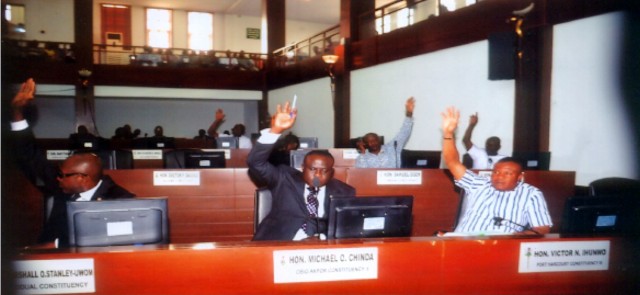
A Professor of Economics and Dean, Faculty of Social Sciences at the University of Port Harcourt, Prof Okechukwu Onachukwu has advocated improved tax earnings in Rivers State to raise revenue for effective implementation of the 2017 budget.
The Professor of Economics made the call during a chat with newsmen in Port Harcourt, shortly after the signing of the 2017 budget by Governor Nyesome Wike last Thursday.
He advised the State government to strengthen its taxes in the hospitality sector.
“Apart from the statutory allocation, there are other areas the government can raise money because you have several hotels.
“If you go back and categorise these hotels and tell them to pay for every room rented by a customer with an extra payment and gather such extra fund as for the state it will go along way in swelling the purse of the government, he said.
According to him, in Dubai, for every hotel room a customer stays , they pay extra money that goes to the government.
He explained that when such funds are paid to the government according to the category of the hotels, the charge though not too significant on the customer, but when gathered it can make something meaningful for the state government to ward driving its capital projects.
Onachukwu also called for periodic audit of companies operating in the state as a way of increasing the revenue base of the state.
“We need to also look at the current tax system and see how we can do periodic audit of companies in the state to ascertain the level of their tax compliance obligations” he said.
He decried a situation whereby companies pay the same amount of tax every year without a system put in place to know if they made profit to such tax payments.
“We need to know when they have hired more people, when their assets have increased in order to ensure that those who do not remit should do so as at when due,” he said.
The varsity don further said that the 2017 budget would boost the economy of the state if the government raises the revenue to finance the budget..
“There is a zeal by the state government to provide infrastructure particularly for roads, education and health and the idea is that when these infrastructure are provided, it will allow businesses to thrive in the state”, he said.



Business
Jonathan, Diri, Others Laud Firm’s Milestone in Bayelsa …Says Project Will Drive Industrialisation, Create Jobs



-

 News3 days ago
RSG Targets Nine Million Residents in Mosquito Net Distribution Campaign
-

 Oil & Energy2 days ago
Aiyedatiwa Signs New Electricity Bill
-

 Oil & Energy2 days ago
NLNG Commissions Research And Innovation Centre In RSU
-

 Maritime2 days ago
Marine Minister Commends President Tinubu On NPERA Bill Assent
-

 News3 days ago
KenPoly Holds Eight Convocations, August 29
-

 News3 days ago
RSG Begins Another Phase of Projects Commissioning Today
-

 News3 days ago
RMAFC Completes Revenue Sharing Review, Proposes New Pay
-

 Maritime2 days ago
NAGAFF Petitions IGP Over Alleged Maritime Police Harassment