
Oil & Energy
NNPC, IOCs And Nigeria’s Oil Revenue

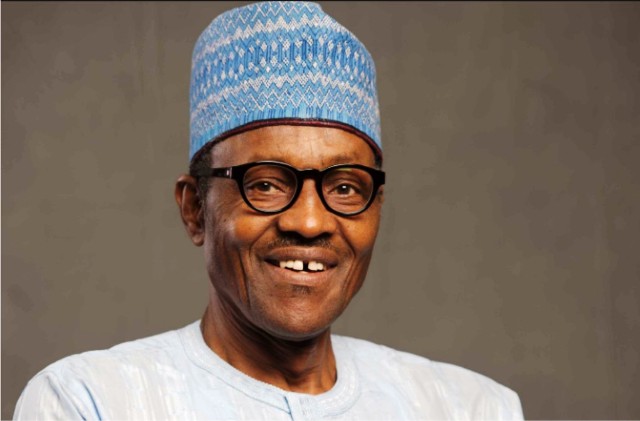
The activities of the Nigerian National Petroleum Corporation (NNPC and the International Oil Companies (IOCs) in the country’s oil and gas sector have now become a great concern that requires urgent attention.
In fact, the alleged level of corruption discovered recently in the NNPC clearly a revels that the present economic situation which the country is grappling with is the exquisite handiwork of a group of fraudulent and selfish people.
Despite the President Muhammadu Buhari’s reform initiatives to restructure the NNPC for greater efficiency , the inspired hope and confidence in the future of the nation’s oil and gas sector may spell doom if consistent measure are not put in place.
Recent findings reveal that the NNPC and the Nigerian Petroleum Development company (NPDC) unlawfully and willfully misappropriated public revenue to the tune of $3.487 billion. Against this backdrop, the senate while accusing the two agencies of perpetrating the act, mandated its committee on Petroleum Resources (Upstream) and that of Finance to urgently carry out a holistic investigation into the alleged level of corrupt in the Corporation, with a view to recovering every fund due to the Federation Account.
Apart from this recent discovery, the Federal Government said it had found uncredited debts of N2.2 trillion ($7.22 billion) left over from former president Goodluck Jonathan’s administration, following an audit aimed at improving transparency. In a statement, Finance Minister, Mrs Kemi Adeosun, stated that the debts were owed to contractors, oil marketers, exporters and electricity distribution companies and will be settled by issuing of 10-year promissory note. The NNPC is expected to tell the Senate where the monies are when the latter resumes sitting on January 9, 2017.
Furthermore, the Federal Government on December 13, 2016 accused International Oil Companies operating in Nigeria of falsifying gas flare data to cut down on payment of penalties, as a result of which the country is losing between $500 million and $1 billion in revenues that would have accrued from the penalties. The Minister of Power, Works and Housing, Mr Babatunde Fashola had disclosed that Nigeria’s perennial power problems were man-made and not as a result of technical challenges.
Meanwhile, the senate has commenced probing non-remittance of $3.48 billion by NNPC and NPDC from 2013 to date just as the House of Representatives is currently probing Oando, Mobil Oil, Total Oil and others over N500 billion debt to the Pipelines Products Marketing Company (PPMC).
Speaking at a Gas Competence Security in Abuja recently, Minister of State for Petroleum Resources, Dr Ibe Kachikwu, faulted reports that the country is currently recording only 10 percent non-compliance in terms of gas flaring. According to him, “These numbers are very mistaken. Beginning next year (2017) we will be putting up an independent tracking mechanism not relying on figures from the IOCs, to find out really what the actual flare volume is. My feeling is that there is a lot of management of these figures to suit the cap of penalties that are being charged.
“My take is that we lose over half a billion to a billion dollars of government revenue, looking at the basis of the present penalties position. Nobody is effectively monitoring the volume of gas flared. When you actually go for the real effect of what is flared in terms of statistics , it is much higher than that figure”, he lamented.
Kachikwu emphasized the need for the country to commercialize its gas resources, pointing out that gas commercialization, utilization and transportation would go a long way in bouying the nations’ economy.
Decrying the acts of sabotage and its attendant effects, Fashola stressed the need for all Nigerians to have a rethink and react, adding “the claim by oil companies in Nigeria tht flared gas is leaking fumes, brings us to ask if any of us would be able to drive our car if it is leaking fuel”.
Consequently, the senate has asked the NNPC and the NPDC to immediately remit funds obtained on behalf of the Federal Government to the Federation Account upon lifting and for the Group Managing Director (GMD) to ensure compliance to this directive with immediate effect.
The senate resolutions were sequel to a motion by Senator Dino Malalye (APC, Kogi West), titled: “The unlawful and willful misappropriation and criminal withholding of public revenue by the NNPC and NDPC from 2013 to date.
Senate President, Bukola Saraki, wondered how the Minister of State for Petroleum, the GMD, NNPC the Auditor-General, the Minister of Finance, the Governor of Central Bank and the Anti-corruption Agencies would allow the trend to continue just as Senator Melaye decried the way the NNPC and NPDC which are government agencies have been carrying out crude oil lifting, saying it has not been transparent.
They have been lifting crude oil from diverted oil wells OML 61, 62 and 63 worth over $3.487 billion since 2013 without remittance of any nature to the Federation account; the same NPDC has been lifting from diverted oil wells OML 65,111 and 119 to the tune of $100 million only”.
Expressing worry that the practice may have started before the present administration, Malalye said “it has continued under the watch of the new administration without abating so much so that in (2016) alone between January and August, a total of $344.442 million worth of oil has been lifted by NPDC without remittance to the Federation Account and also not paying royalties and others taxes on these lifting”.
In their contributions, senator Mao Ohuabunwa (PDP,Abia North) and Senator Adeola Olamilekan (APC, Lagos West), said the issue must be taken seriously, stressing that depriving the nation of the whopping sum of almost $4 billion by the two agencies at the time the government was seeking to borrow $30 billion must not go unpunished.
In like manner, Speaker of the House of Representativives, Yakubu Dogara, inaugurated an ad-hoc committee to investigate huge debts of over N500 billion and alleged criminal acts of sabotage by oil companies.
The inauguration was sequel to a motion sponsored by Rep. Jarigbe Agom Jerigbe representing Ogojayala Federal Constituency of Cross Rives State on the urgent need to investigate the huge debts owed to the PPMC by some major and independent oil marketers.
As he puts it, “there may be connivance and compromise by functionaries of PPMC to leave government funds in the hands of marketers, thereby putting the country in dire financial straits”.
While inaugurating the ad-hoc committee headed by Abdullahi Gaya in Abuja recently, Dogara said that “the committee is basically a fact-finding one expected to make findings that will lead to plugging the loopholes in existing laws and proactive in the downstream sector of the Nigerian economy.
In actual fact, the committee should not be seen as a mere fact-finding one whose findings will be swept under the carpes without actions to receiver of all the monies involved and remitted into the Federation Account for use. By so doing, there will be hope of reviving the nation’s crushed economy.
Indeed, the corrupt practices of the NNPC, NPDC and the IOCs did not start today. Nigerians will not easily forget the pronouncement of the NNPC GMD in 2015 on the remittances of all Nigerian Liquefied Natural Gas (NLNG) dividends to the Federation Account, which “by implementation, a total of 11.6 billion dollars was paid by NLNG to NNPC but was not remitted by the NNPC to the Federation Account”. Has that been recovered into government coffers?
The Nigerian Extractive Industries Transparency Initiative (NEITI) in its recommendation for the repositioning of the NNPC sometime ago, stressed the need to address inadequate metering infrattrasture for accurate measurement of crude, the onerous each call regime, inefficient cost determination, pricing issues related to expire MOUs, legal agreements with oil companies, huge costs of fuel subsidy, crude oil swap and products exchange agreement and repair of the refineries and oil theft, among others.
The NEITI also called on the Adhoc Committee of the National Economic Council to investigate the inflows and outflows of funds from the Federation Account by revenue generating government agencies to ensure efficient fiscal allocation, disbursement and value for money through prudent utilization of resources.
In 2014, former Chief of Naval Staff, Vice Admiral Useman Jibrin, accused International Oil Companies (IOCs) of complicity in the theft of the country’s crude oil. He made the accusation while speaking at a meeting of the top leadership of the Navy and the Managing Directors/Chief Executive Officers of the IOCs in Abuja, where he said the Navy would not pretend about the involvement of the oil firms in crude oil theft.
According to Jibrin, some of the oil firms had delibrately lelft the manifolds of their oil wells open for years without conscious efforts to close them in spite of the fact that only experts had the capacity to reopen close manifolds.
In the same vain, some host communities accused employees of oil giants, of being actively involved in vandalisation of pipelines, saying that workers of the firms were involved in vandalizing pipelines to create jobs for their friends and cronies. A group of civil society organizations in 2012 called for the inclusion of provision for yearly full disclosure of NNPC’s revenue profile, pointing out that such step would be key towards commercialization.
In 2015, the Nigerian National Petroleum Corporation said it had finalized arrangements to get $500 million external fund to fix the nation’s oil refineries, according to its then GMD, Dr Ibe Kachikwu now Minister of Petroleum Resources. Disclosing this at a luncheon organized in Lagos by the Petroleum Club, Lagos on Saturday, November 7,2015, Kachikwu said the decision to seek repayable fund is in line with the transformation of NNPC towards making it an autonomous business organization, explaining that the step would bring the nation’s refineries back on course by giving it the needed capacity output. The fund, he said would be repaid over seven to nine years.
The issue of non-remittance of funds by NNPC into the Federation Account or consolidated revenue fund has been a long problem even as the Chairman, House of Representatives Committee on Finance, Rep Abdulamuin Jibriin in 2013 accused the corporation of doing so. At an investigative hearing with some revenue generating agencies of government over non-remittance of revenue into the consolidated revenue fund, it was said that “the case of NNPC is unique because the corporation has never paid any dine into the Federation Account.
Shedie Okpara



-
 Sports5 days ago
Arsenal Fans Converge, Interact In PH
-

 Sports5 days ago
SEVEN Countries Qualify for 2027 WOMEN’S W/CUP Play-Off
-

 Sports5 days ago
Arokodare Tipped To Shine At Ajax
-

 Sports5 days ago
Fans, ex-internationals demand NFF board overhaul
-

 Sports5 days ago
SWIMMING: Liebmann, Douglass Dismantle World Records
-
 Sports5 days ago
Falcons Coach Not Afraid Of Sack
-

 Sports5 days ago
No excuses for Man Utd’s performance against Milan – Carrick