
Business
Recession:Don Wants FG To Privatise Refineries, NNPC …Says Assets Sale, A Misnomer

Even as the debate on the
proposed sale of national assets rages on in the country as a way of coming out of the current economic recession, a university teacher, Dr Samuel Chisa Dike, says the Federal Government should rather embark on the privatisation of ailing national companies like the Nigerian National Petroleum Company (NNPC) and the four refineries.
Dike, a senior lecturer in the Faculty of Law of the Rivers State University of Science and Technology, who bared his mind in an interview with The Tide in Port Harcourt said privatisation of the companies instead of sale of national assets which he described as a misnomer remains the surest option of assisting the country to come out of the current economic recession.
He posited that for the privatisation option to, however, yield positive fruits, the necessary legal machineries and regulatory processes must be put in place to achieve transparency and make it work, insisting that without transparency, it might not achieve much for the country.
The university teacher, who specialises in Energy Law said there was also the need for the Federal Government to privatise its ailing companies because, according to him, governments have never been good managers of public institutions and corporations.
He noted that if the necessary legal framework is put in place to drive the privatisation process, economic theorists and practitioners would be in a better position to articulate a robust way of ensuring transparency of the process, stressing that the absence of transparency may not be able to promote the effectiveness and efficiency of the privatisation process.
To this end, Dike called on the Federal Government to borrow a cue from the United Kingdom, under the administration of its former Prime Minister, Margaret Thatcher, which he said embarked on the privatisation of some ailing British companies to get them out of doldrums.
The university teacher further posited that he was opposed to a situation where the Federal Government would privatise and sell the assets to a few Nigerians, saying, doing so would not augur well for the country, and hinted that instead of bandwagon privatisation of government assets, selective privatisation should be the best option.
Dike also urged the government to tell Nigerians what it wants to do, particularly when it mooted the idea of sale of assets and clearly defines its intention.
“What is selling of assets? Government can only privatise or commercialise. Selling of assets is a misnomer,” he intoned, stressing that only ailing companies ought to be privatised and not viable ones like the Nigeria Liquefied Natural Gas (NLNG), which he said recently remitted a large chunk of money into government coffers.
He also picked holes in the Federal Government’s Treasury Single Account (TSA), saying if under the TSA policy, the country has found itself in deep economic recession, there was the need to revisit and review it.
The university teacher said there was hope for the country if Nigerians keep faith and remain united, having passed through thick and thin in the past 56 years, and particularly commended Governor Nyesom Wike of Rivers State for using the 56th Independence celebration to commission several road projects across the state.
Describing Wike as a pragmatic leader, he advised the governor to give other sectors attention apart from roads and veer into the sea ports in the state and also Risonpalm, to boost the revenue profile of the State.
He suggested that the franchising of ports should be revisited to enable the State government to buy into the ports and make them a source of revenue for the State and equally buy into the contractual relationship of Risompalm and re-work it to make the company more efficient.
Donatus Ebi



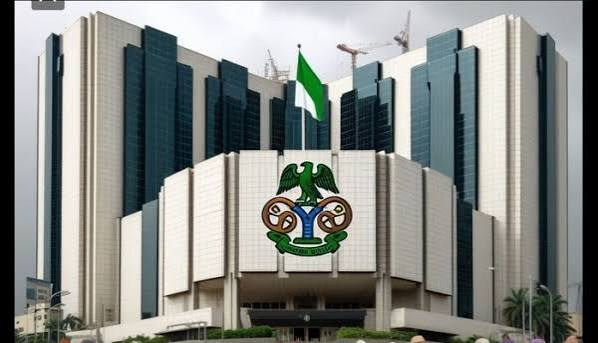
Credit to Nigeria’s private sector rose to N83.26 trillion in June 2026 from N81.04 trillion in May, signifying a positive balance of N2.22 trillion month-on-month.
Year-on-year, the figure represents a nine per cent increase compared with the N76.13 trillion recorded in June 2025. The latest figures come as the CBN continues to balance efforts to control inflation with the need to support economic growth and expand credit to businesses.
The CBN data shows that credit to Nigeria’s private sector increased by approximately 2.74 per cent month-on-month between May and June 2026. Also, the CBN data noted that credit to the government fell slightly to N40.03 trillion from N40.38 trillion. Other assets, net, dropped to N10.76 trillion from N12.63 trillion.
The credit surge signifies sustained growth in lending to businesses and other private-sector borrowers during the month. The rise in private sector credit was recorded alongside an increase in net domestic credit, despite declines in credit to government and other assets.
Further analysis of the report says that compared with June 2025, private sector credit rose by about N7.13 trillion yea-on-year but net domestic credit increased by approximately N1.87 trillion during the month.
The CBN’s relatively tight monetary policy stance notwithstanding, more banks still loaded funds to the private sector within the period. The Monetary Policy Committee (MPC) of the Central Bank of Nigeria (CBN) held its 306th meeting on July 20 and 21.
The Committee reviewed recent developments in the global and domestic economies, assessed emerging risks to the outlook and considered their implications for monetary policy and retained all rates.
The Committee decided to retain the Monetary Policy Rate at 26.5 per cent; the Standing Facilities Corridor around the MPR at +50/-450 basis points and retain the Cash Reserve Requirement (CRR) for Deposit Money Banks at 45.00 per cent, Merchant Banks at 16.00 per cent, and non-TSA public sector deposits at 75.00 per cent.
The MPC decision means that credit extension in the private sector will likely continue to rise because of rising confidence in the sector and calls by stakeholders for banks to invest in the private scetor instead of government securities.


-

 Niger Delta2 hours ago
Community Elects Monarch After 55yrs Interregnum … As King-elect Preaches Unity
-
 Business3 hours ago
$50m Steel Pipe Facility: NCDMB Lauds Brentex, Assures Industry Patronage
-
 Business2 hours ago
Vet Doctors Vow Support To Check Rabies Spread In Rivers
-
 Politics46 minutes ago
Buhari Administration Originated Fake PFIPC, Budget Office Tells Reps
-
 Business3 hours ago
FG Plans Rival Power Firms To Compete With Discos
-
 Politics46 minutes ago
Votes Will Count In 2027, INEC Assures Nigerians
-
 News4 hours ago
SERAP Sues NNPCL Over Failure To Account For N211trn Oil Money
-

 Sports39 minutes ago
Klopp Threatens To Quit Germany If