
Nation
THE STATES

Borno
The Nigerian Army has inaugurated environmental sani
tation in Maiduguri as part of the 2016 Army Day celebration.
The General Officer Commanding (GOC) 7 Division of the Nigerian Army, Brig.- Gen. Victor Ezugwu, started the exercise at the Monday Market, Maiduguri.
Ezugwu said the objective of the exercise was to mobilise residents of the state towards cleaning their environment.
He said that the programme was launched in partnership with the State Government to ensure that all parts of the state were kept clean.
“We are here today to flag off environmental sanitation at the Maiduguri Monday Market as part of this years’ Army Day celebration.
Ekiti
Spokesman of Farmers‘ Congress in Ikole Local Govern
ment Area, Ekiti, Mr Olaolu Adeniji, has advised farmers to cultivate cocoyam in large quantities as another means of boosting their income.
Adeniji gave the advice in Odo-Oro – Ekiti during the monthly meeting of the farmers‘ congress.
While noting that demand for cocoyam had increased in recent times, Adeniji said, “there is need for our farmers to expand their cocoyam farms while others should embrace its cultivation.
“Farmlands in the state are conducive for the production of quality cocoyam, especially the red one, which nutritionists confirmed as good and beneficial for a healthy living.
“Large scale cultivation of cocoyam will no doubt increase the income of farmers at the end of the farming season and consequently change their living standard for better, “ he said.
FCT
The Minister of Agriculture and Rural Development,
Chief Audu Ogbeh, has advised online media operators to endeavour to confirm their reports and ensure professionalism.
Ogbeh made the statement in Abuja while reacting to an online publication which accused him and staff of the ministry of sharing N2 billion from N20 billion meant to pay agro dealers.
The minister noted that criminality in the name of social media was unacceptable and a source of concern to the government.
The minister said the online report claimed that in paying the agro dealers, the leadership of the ministry paid N13 billion and shared N2 billion.
Gombe
Gombe State said that it would resuscitate the dormant
Manto Tomatoes Processing Company in Akko Local Government Area of the state.
Commissioner of Commerce and Industries in the state, Alhaji Bakura Mohammed, gave this indication in an interview with newsmen in Gombe.
He said that apart from boosting commercial activities and generating revenue for the state, the company would also create employment opportunities for the people.
The Commissioner stated that Gombe government was committed to improving its Internally-Generated Revenue (IGR) base and reducing its dependence on Federal Allocation.
According to him, tomato farmers in the state will have a ready market whenever the company resumes production.
Kaduna
The United States Chapter of Southern Kaduna in the
Diaspora (SOKAD) on Saturday donated books and instructional materials worth N330,000 to Local Government Education Authority (LGEA) Primary School, Tunga Nok.
Tunga Nok is in Jaba Local Government Area of Kaduna State.
Presenting the items to the beneficiary in Kaduna, the President of SOKAD, Dr Likita Aminu, said the gesture was part of the organisation’s contribution to the state’s educational development.
Aminu said: “On May 6, 2013 our organisation, SOKAD, donated school supplies worth N158, 000 to Zack-Zawan Primary School, Sanga Local Government Area.
“On that day, SOKAD said the gesture was the beginning of series of such donations to come.
Kogi
The National Association of Nigeria Students (NANS)
has given seven days ultimatum to Governor Mr Yahaya Bello of Kogi State to unconditionally reopen the state university in Anyigba.
A statement signed by the National President of NANS, Mr Tijani Shehu, and made available to the newsmen in Abuja, stated that the ultimatum would take effect from July 4.
It said that the association called on the governor to immediately address their requests bothering on the state’s economy, welfare of Nigerian students of Kogi State origin and state workers.
It said that failure of the government to do so; the students would stage a protest on the streets of the state capital, Lokoja.
It said that the position of the association was based on the preliminary report from its Joint Campus Committee, Kogi State chapter.
An environmentalist, Mr Samuel Buoye, has identified
indiscriminate felling of trees as one of the major impediments in the fight against environmental degradation and deforestation.
Buoye, who is attached to Irepodun Local Government Area of Kwara, said removing trees deprived the forest of portions of its canopy that was a major component of environmental protection.
“This canopy is meant to block the sun’s ray during the day and hold in heat at night.
“This disruption leads to more extreme temperature swings that can be harmful to plants and animals,” he said.
According to him, fewer forests mean larger amounts of greenhouse gases entering the atmosphere.
A Federal High Court in Lagos has remanded Janilu
Bashiru, a 24-year-old businessman, in prison custody after he pleaded guilty to allegation of drug trafficking.
The National Drug Law Enforcement Agency (NDLEA) had arraigned the accused on the charge.
In a short ruling, the trial judge, Justice Chuka Obiozor, ordered the accused to be remanded in prison custody.
Obiozor then adjourned the case till Sept.15 for a review of facts and sentence.
The prosecutor, Mr Jeremiah Aernan, following the plea of the accused, had earlier urged the court to remand him in prison custody.
In the charge, the prosecution alleged that the accused committed the offence on May 2 at the Iyana Iba area of Lagos.
Aernan said that following a tip-off, about 350g of Cannabis Sativa was recovered from the accused.
Nasarawa
The Nasarawa State Government said that it would as
sist rice millers and farmers in the state to access loan from the Central Bank of Nigeria (CBN) to boost rice production.
The Commissioner for Agriculture and Water Resources, Mr Yusuf Lawee, stated this in an an interview with newsmen in Lafia.
He said that the measure was designed to boost rice production for local consumption and export in line with the Federal Government’s drive to diversify the economy.
Lawee said that as soon as the paper works were completed, the rice millers and growers would be able to access the loan and increase their production capacity.
He said the state government was also working towards expanding the scope of the pilot rice incubation plant project in the state.
Osun
The Superintendent in-charge, Christ Apostolic Church
(CAC), Modakeke District Coordinating Council (DCC), Pastor Samuel Esho, has enjoined Christians to desist from every form of immorality.
Esho gave the charge during 11th Osun State Sunday School Rally, entitled: “Going into Perfection”, held at CAC Oke-Anu, Modakeke DCC Headquarters, Ife North-East LG Area of Osun State recently.
He lamented the level of atrocities being committed among Christians today, saying that many had turned away from God.
“This was not the experience among Christians in the olden days; we all have turned away from God.”
Sokoto
The Sokoto State Government says it has concluded ar
rangement to train youth in the state on all-year-round farming.
The state’s Commissioner for Local Government Affairs, Alhaji Mohammed Mannir, made this known on Saturday in Sokoto.
Mannir told newsmen that the training was aimed at creating job opportunities for unemployed youths as well as enhance food production for internal consumption and export.
He explained that the state would exploit available fertile land to produce assorted foods crops.
He said that the state government would encourage local government councils to actively participate in farming activities and food production.
The Commissioner said the ministry was partnering with the State College of Agriculture, Wurno, to train the youths on poultry, fish farming and livestock rearing.
He said that the training in farming for economic benefit would also prevent youths’ migration from rural areas to urban areas in search of white collar jobs.
He called on the people of the state, especially youths, to embrace farming for a living.
The commissioner said that government would make available modern farming inputs at subsidised rates to encourage massive participation in the agriculture sector.



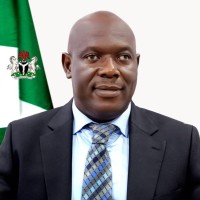
The Hydrocarbon Pollution Remediation Project (HYPREP) has commemorated the 15th anniversary of the release of the United Nations Environment Programme (UNEP) Environmental Assessment Report on Ogoniland, reaffirming its commitment to restoring the environment and improving the livelihoods of affected communities.
In a statement signed by the Project Coordinator, Prof Nenibarini Zabbey, to commemorate the anniversary, HYPREP described the anniversary as a significant milestone in Nigeria’s environmental restoration efforts, noting that the project has made remarkable progress in implementing the recommendations of the landmark UNEP report released on August 4, 2011.
The UNEP report had revealed extensive oil pollution across Ogoniland, severe environmental degradation, and serious public health risks resulting from decades of petroleum operations. It also recommended an initial $1 billion fund to commence the cleanup of the affected communities.
According to HYPREP, the Federal Government formally launched the Ogoni clean-up in 2016, while the Project Coordination Office was established in 2017 to drive the implementation of UNEP’s recommendations.
Zabbey said the current administration has continued to prioritise the project under the Renewed Hope Agenda.
Providing an update on the cleanup, the Project Coordinator disclosed that 30 of the 65 contaminated sites identified by UNEP have been fully remediated, while work is ongoing at several medium- and high-risk locations. It also stated that more than 1.5 million mangrove seedlings have been planted as part of what it described as the world’s largest restoration of oil-degraded mangroves, with over 1,000 hectares of shoreline already rehabilitated.
Zabbey further revealed that 49 Ogoni communities have been connected to potable water schemes through multiple water projects and booster stations aimed at providing safe drinking water across the region.
In the health sector, he said the 100-bed Ogoni Specialist Hospital in Kpite and the 43-bed Cottage Hospital in Buan are nearing completion, adding that several existing health facilities have been upgraded with modern medical equipment, while five ambulances have been donated to improve emergency healthcare services. The Project Coordinator also disclosed that a three-year human health biomonitoring study is being conducted in collaboration with the World Health Organization’s International Agency for Research on Cancer (IARC).
On economic empowerment, Zabbey stated that the Project has created more than 8,000 direct jobs and trained thousands of Ogoni youths and women in various vocational and technical skills, including software development, cybersecurity, aviation, commercial diving, seafaring, mechatronics, and creative arts. The project also reported awarding scholarships to more than 1,000 students, providing grants to small businesses, and supporting persons living with special needs through skills acquisition programmes.
The statement further highlighted ongoing legacy projects, including the Ogoni Power Project and the Centre of Excellence for Environmental Restoration, which it said is about 96 per cent complete. HYPREP also welcomed the recent designation of the Ogoni Wetland as a Ramsar Site of International Importance and pledged to continue promoting biodiversity conservation and sustainable management of the ecosystem.
Marking the anniversary, Zabbey said the progress achieved over the past 15 years demonstrates the collective commitment of government, development partners, stakeholders, and local communities to restoring Ogoniland. He called for renewed collaboration to sustain the cleanup effort, promote environmental sustainability, and support the long-term development of the region. 3
-

 News2 days ago
RSG Targets Nine Million Residents in Mosquito Net Distribution Campaign
-

 Oil & Energy2 days ago
Aiyedatiwa Signs New Electricity Bill
-

 Maritime2 days ago
Marine Minister Commends President Tinubu On NPERA Bill Assent
-

 Oil & Energy2 days ago
NLNG Commissions Research And Innovation Centre In RSU
-

 News2 days ago
KenPoly Holds Eight Convocations, August 29
-

 News2 days ago
RSG Begins Another Phase of Projects Commissioning Today
-

 News2 days ago
RMAFC Completes Revenue Sharing Review, Proposes New Pay
-

 Maritime2 days ago
NAGAFF Petitions IGP Over Alleged Maritime Police Harassment