Connect with us

Education

‘No Framework To Tackle Corruption In Nigeria’

Published

on

In the face of the on-going
fight against corruption, a legal luminary, George Etomi, has stated that Nigeria does not have proper regulatory framework to tackle corruption, bribery and money laundering.
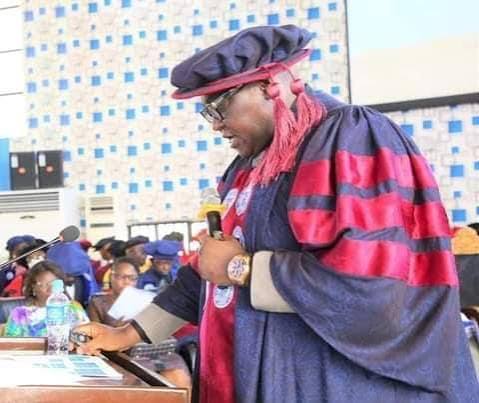
Etomi, who stated this recently at a public lecture organised by the “advancement and Linkages Centre” in the Faculty of Law, Rivers State University of Science and Technology (RSUST), also gave reasons for the state of affairs in the country.
In his lecture titled “Emerging Trends in Globalised Legal Practice,” Etomi gave the reasons to include ineffective law enforcement and the incidence of corruption among law enforcement officials, and lack of protection for whistleblowers.
Others are excessive bureaucratic and administrative red tape which makes bribery and corruption an inevitability, as well as multiplicity of regulatory bodies and legislation.
It also includes bribery and facilitation being seen as the “Culture” or a widespread necessity in doing business and conducting transactions.
For the fight against corruption to yield the required result, therefore, he recommended reduction in bureaucratic and administrative red tape to reduce the need for facilitation and payment to expedite processes.
According to Etomi, there is also the need for ethical trainings for law enforcement officials, and increased protection for whistle-blowers to encourage legal practioners to flag transactions that are suspicious.
These, he continued, will be enhanced by an increased awareness of know your customer requirements, and possible unification or  collaboration of different anti-corruption agencies  into one department to tackle corruption.
At the international level, Etomi recommended that countries should monitor physical cross-border transportation of cash and bearer instruments without impeding the freedom of capital movement.
Finally, he urged for less corrupt countries to boost their efforts in assisting more corrupt countries in streamlining their anti-corruption legislation and enforcement.
In his welcome address, Dean of the Faculty of Law, Professor Nlerum S Okogbule, had harped on the need to maximize on the benefits of globalization as regards opportunities provided in relation to legal practice.
“The crucial question is how best can we maximize the opportunities provided by globalization in relation to legal practice? That is the challenge facing us today, especially those of us from the developing countries of the world”, he said.


Continue Reading

Education

Rivers NYSC Cordinator task corps members on peace building 

Published

on

Corps Members have been urged to use the rich cultural heritage of Nigerians to promote peace in the state and country at large.
The Rivers State Coordinator  of NYSC Mr. Moses Oleghe gave the charge  during the inter-platoon cultural carnival competition for 2025 Batch C Corps Members deployed to the State orientation camp, Nonwa-Gbam Tai held over the weekend.
Oleghe while addressing the Corps Members, further charged them to be a “source of light in their host communities,” noting that the “symbolic lighting of the cultural carnival torch means that every Corps Member must be the light that dispels darkness.”
He urged them to integrate and internalize the culture of the people of their area where they serve, strengthen cultural practices that promote human dignity, rights, and respect.”
The radiant and colorful event witnessed the regeneration and rebirth of various ethnic cultures by the Corps Members.
At the end of the competition, 4 platoon was adjudged the overall best, 9 platoon 2nd and 6 platoon 3rd.
Continue Reading

Education

RSU Best Graduating Student Makes Case for Absorption of Graduates

Published

on

Miss Chukwuka Christabel Chidnma, one of the best overall graduating students of Rivers State University (RSU), Nkpolu/Oroworukwu, Port Harcourt, has advocated for the retention of the best graduating students of the institution to fill the gap in teaching staff in the institution.
Chidnma, who was adjudged the overall best graduating student of the class of 2023/2024 academic session in the just-concluded 37th and 38th combined convocation ceremony of the university, had a CGPA of 4.88 from the Department of Theatre and Film Studies in the Faculty of Humanities.
She made the call while delivering her valedictory speech at the awards of the first degree on Saturday, saying the call becomes imperative to ensure that the department and the university at large continue to thrive and maintain academic standards.
She opined that she and her colleagues would be eager to contribute to the workforce of the development and the school in general, in whatever capacity the institution may deem appropriate, to bring their skills, training, and passion to support its continued growth and excellence.
The overall best graduating student decried the enormous challenges lecturers of the department and the university as a whole are facing due to limited manpower and appealed to the university management to also employ professional producers and technical personnel.
She recounted the experiences and challenges she faced during her years of academic studies, noting that resilience, hard work, determination, and being focused were the bedrock of her success.
She dedicated the award to her parents for their untiring efforts in ensuring that her academic fortunes were not cut short.
By: Akujobi Amadi
Continue Reading

Education

Students Free to Choose Any WAEC Subjects  of Their Choices – FG

Published

on

The Federal Government has reaffirmed that senior secondary school students whether in arts, commercial or science classes are free to register any approved subject of their choice for the West African Senior School Certificate Examination (WASSCE), as confusion over the revised curriculum continues to generate debate across the country.
The clarification came in a press statement issued on Saturday and signed by Boriowo Folashade, Director of Press and Public Relations at the Federal Ministry of Education, following widespread misinformation circulating on social media and within some schools.
According to the ministry, contrary to claims that students must strictly remain within their designated subject tracks, “there is no restriction or exclusion attached to the selection of any approved subject under the Senior Secondary School Curriculum.”
Officials said the curriculum was intentionally designed to be flexible, student-centred and supportive of diverse academic and career interests.
Under the guidance, science students may select subjects traditionally grouped under the arts or social sciences, just as arts and commercial students may choose science-designated subjects provided such choices are supervised by school authorities, parents or certified counsellors.
The ministry also clarified public concerns surrounding the subject formerly known as Information and Communication Technology (ICT), confirming it has been renamed Digital Technology.
The statement emphasised that the change is purely in nomenclature and does not alter the curriculum content or disadvantage students who previously took ICT in school.
Regarding Trade Subjects, the ministry noted that six trades have been approved under the curriculum.
Students may register any of these trades only if the subjects are offered by their schools and they have been taught them. However, the government stressed that students who have never been exposed to any of the six trade subjects are under no obligation to register one as a third subject.
This clarification comes as WAEC registration for the 2026 examination cycle continues nationwide. WAEC recently urged schools to ensure accurate subject entries before the January deadline, warning that mistakes in registration especially in subject combinations have increasingly led to withheld or invalid results in previous years.
The announcement also aligns with ongoing reforms in Nigeria’s education sector. Earlier this year, the ministry began rolling out teacher retraining and digital learning initiatives aimed at boosting performance in core WAEC subjects, following several exam cycles that showed inconsistent pass rates in mathematics and English.
Nigerian universities often require specific subject combinations for competitive courses such as medicine, engineering, law, accounting and mass communication.
The ministry urged the public to rely solely on verified information, noting that misinformation remains a major challenge during examination cycles. It said further updates will be issued as reforms continue across the senior secondary school system
Continue Reading

Trending