
Politics
Gender Equality In Nigerian Politics

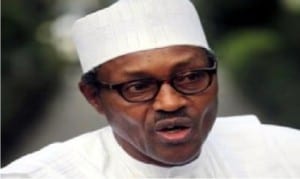
President Muhammadu Buhari
Nigeria is a patriarchal
society, a feature mirrored in many aspects of its national life.
In politics, the issue of gender imbalance has continued to draw the attention of many, especially with today’s changing world favouring greater women representation.
As a continent, Africa is striving to give women a better deal than ever before with their number in parliaments of some countries appreciable.
Some activists say Nigeria, being the “Giant of Africa’’, needs to move in that direction.
Statistical evidence by the Department For International Development (DFID) of in 2011, gave a picture of women’s presence in the legislature of some countries.
The statistics indicate that South Africa has 33.2 and 42 per cent respectively in the upper and lower legislative chambers, while Kenya has 27 and 20 per cent respectively in the two chambers.
In Rwanda, women make up 61 out of 106 parliamentarians (58 per cent) and in Senegal, women occupy 65 of the 150 parliamentary seats (43 per cent).
On the Nigerian scene, only one female was among the14 candidates that tried to get the nation’s number one seat in the 2015 presidential election.
After the National Assembly elections, eight women made it to the Senate, which has 109 senators (7.3 per cent), while 14 won seats in the 360-member House of Representatives (the lower house), accounting for four per cent.
The governorship elections also produced four women deputy governors in the nation’s 36 states.
President Muhammadu Buhari swore-in 36 ministers as members of his cabinet on November 11 and only five are women.
All these realities exist in spite of the National Gender Policy which seeks to support women to occupy 35 per cent of elective positions in the country.
To some people, women, for a long time in the nation’s history, have been kept behind the scene and prevented from taking centre stage. Such people believe that women are still treated as second class citizens in the country.
Some believe that women are relegated in the area of political appointments due to cultural stereotypes, traditional practices and the patriarchal structure of the society. Others attribute this to lack of funds, violent nature of politics in Nigeria, absence of agreed quotas for women, failure of political parties to nominate women for elective offices and lack of support from other women.
Sen. Oluremi Tinubu believes that the challenge in ensuring women’s participation goes beyond electing a larger number of women in the parliament or executive. According to her, it is about changing the endemic perception that the public domain is an exclusive preserve of men. Tinubu says there is the need for attitudinal change and increased awareness of the role that women can play in nation building and development.
“Women constitute about half of Nigeria’s population; they constitute a great majority in voting population, yet, they are the minority when you look at the number of candidates running for elective positions or the few who actually get elected.
“Nigerian women must rise up to enlighten and re-orientate themselves on the positive role they can play in governance by coming on board to contest for elective positions.
“They must believe that if they want to make the 21st century the woman‘s century, they should not wait to be called leaders, but embrace the role naturally.
“We need increased women participation in politics to enable us feel more relevant as productive members of the society,’’ Tinubu said.
She believes that the empowerment of women and equality between men and women are prerequisites for achieving political, social, economic, cultural and environmental security among all peoples.
On her part, Prof. Remi Sonaiya, Presidential Candidate of KOWA Party in the 2015 election, believes women need to redefine their role in the polity.
According to her, there is the need for women to redefine their cultural role in the polity, away from the “Aso Ebi’’ syndrome, singing and dancing during electioneering.
Sonaiya believes that women are being used for electoral campaigns; they sing praises of the men and when the men get elected, they forget that these women have a role to play in policy formation.
She says women should begin to realise that their participation in government decision-making is fundamental to inclusive governance, without which good governance is not possible.
“Women need to redefine their role in the polity because our democracy cannot thrive without their full participation.
“No country can progress or prosper if half of its citizens are left behind or treated as mere subjects.
“Progress for women and progress for democracy go hand in hand toward sustainable development if government is to meet the needs of both men and women through a balanced representation at all levels and in all fields of decision making,’’ Sonaiya said.
The Lagos State Deputy Governor, Dr Idiat Adebule, thinks that the lack of synergy among women in the public and private sectors is a contributory factor to the poor representation of women.
Adebule says women need to support one another and work together to achieve collective empowerment in the face of a male-dominated society.
“In spite of decades of struggle for gender equality and women empowerment, women’s political involvement has always been low.
“It appears that women in the private sector have been excluded in the struggle for women representation in government, thereby missing out in the opportunity to build a better synergy between women across the board. For instance, between women in public governance and women in business/private sector.
“Women have consistently demonstrated that they are great leaders with skills and approaches to leadership and management that are both innovative and outstanding and we can harness these potential with strong collaboration and support for one another to increase female representation in politics,’’ she said.
Adebule believes that partnerships for development between civil society, public and private sectors will have to be re-enforced among women to build a very strong team that can penetrate in a supposedly man’s game and be recognised for it.
On finance, Mrs Oluwatoyin Sanni, Chief Executive Officer, United Capital Plc, an African Investment Bank, says that women often do not have access to the same corporate and business networks that their male counterparts use to raise money for their political ambition.
Sanni says that money is a prerequisite for competing in most political systems today, but patterns of gender discrimination force women candidates to make do with more limited resources than men. According to her, financial resources often determine whose voice is loudest and most heard.
“One of the greatest hurdles women face is financing the process of getting a nomination. “Women tend to have less financial freedom, they earn disproportionately less and they tend to be kept outside of existing part establishments, resulting in limited access to their professional fundraisers and political networks.
“ Nomination costs require women to come up with funds to build name recognition, travel, attend party meetings, organise campaign teams and cultivate a constituency.
“With all these financial limitations, we will continue to have poor representation of women except women development groups that can assist to set up Political Action Committees to assist and support female candidates get sponsorships and build their own financial partnership networks,’’ she said.
Mr Bisi Adeleye-Fayemi, wife of the former governor of Ekiti State, believes there is the need for a constitutional amendment that would have affirmative action and quotas for women in the polity.
“We must work toward having a legislative framework that will accommodate and stipulate the position of women in the polity, the needs and concerns of women, as well as reserve a certain number of leadership positions for women,’’ she said.
Adeleye-Fayemi also says that the few women who hold key positions by the virtue of their trail blazing appointments, selection or election, have not been able to develop agenda for change for the majority of Nigerian women.
“If you occupy a leadership position as a woman and you are unable to serve and support other women, or even leave an identifiable legacy behind when your time is done, I’m afraid you have wasted that space; be you a member of the legislature, first lady or local government chairman.
“Worse still, you have made it more difficult for another woman to be considered. With your position, you should be passionate about the issues affecting the majority of Nigerian women,’’ Adeleye-Fayemi said.
On the role of political parties, Mrs Sarah Sosan, a former Deputy Governor of Lagos State, says that party leaders should be held responsible for the poor number of women in government.
“I do not believe that the problem of poor representation is about finance, constitutional stipulation or support from other women.
“Our women need to hold our party leaders accountable to ensure that they support and give higher tickets or quotas to women as they do to men,’’ she said.
But Mr Abiodun Salami, Assistant Publicity Secretary of the All Progressives Congress (APC), Lagos State chapter, said that his party at its level gives 100 per cent concession to women who indicate interest to contest for any elective position.
“The women do not pay for nomination form; the forms are given out free to the women, while men pay through their nose to get their forms.
“That is APC way of encouraging more women to come out. It now depends on the women to take advantage of such concession,’’ he said.
Retired Capt. Tunji Shelle, Chairman, Lagos State chapter of the Peoples Democratic Party (PDP), also said his party recognises the important place of women and has accordingly granted them suffrage like their male counterparts.
He said that many of the women are as intelligent, vibrant and bright as the men and have proved so in various endeavours without any hindrance.
“As far as the party is concerned, everybody is a potential candidate for nomination and when the party decides who gets the ticket, we give every support and deploy every resource to ensure that the candidate, man or woman, wins the election,’’ he said.
Shelle believes that in politics, power is grabbed, not given like some who get it due to their family background and influence; and women politicians, like their male counterparts, should brace up for the challenges.
Osuizigbo is of the News Agency of Nigeria (NAN)
Lucy Osuizigbo



The Independent National Electoral Commission (INEC) has extended the deadline for political parties to submit the list of candidates for the 2027 governorship and state Houses of Assembly elections from Saturday, August 8, to Tuesday, August 11, 2026.
The commission announced the extension in a statement issued on Saturday and signed by the National Commissioner and Chairman of its Information and Voter Education Committee, Mohammed Haruna.
According to INEC, the decision followed appeals by political parties for additional time to complete the submission process through the dedicated online portal.
“The submission window, which according to the revised Timetable and Schedule of Activities for the General Election was originally scheduled to close on Saturday, 8th August, 2026, has been extended to Tuesday, 11th August, 2026,” the commission said.
In a a related development, INEC announced the suspension of PVC collection in Osun State ahead of the August 15 governorship election.
The commission said voters who applied for replacement of lost, damaged or defaced Permanent Voter Cards would have until midnight on Sunday, August 9, to print downloadable copies of their cards.
The electoral body explained that the deadline was necessary to enable it compile data on downloaded PVCs and produce final statistics on the total number of cards collected ahead of the election.
INEC said PVC collection in Osun commenced at the Registration Area level from July 22 to 28, 2026, but was extended to July 31 following complaints about large crowds and difficulties experienced by voters at collection centres.
The exercise subsequently moved to the local government level and ran from August 1 to 7.
The commission also disclosed that replacement downloadable PVCs had been made available to voters in Odo-Otin and Ife Central Local Government Areas following the theft of cards during attacks on the two collection centres.
It stressed that the stolen cards could not be used to vote.
INEC reassured Osun residents of its preparedness for the August 15 governorship election.
“The commission reiterates that the stolen cards cannot be used to vote.
“INEC reassures the people of Osun State of its readiness to conduct a free, fair, credible and inclusive governorship election on 15th August, 2026,” the statement said.
The commission said the deadline, initially set for Saturday, 8 August, has been extended to Tuesday, 11 August 2026, following appeals from political parties for more time.
INEC also announced that the window for voters who applied to replace lost, damaged or defaced PVCs to download their replacement cards will close at midnight on Sunday, 9 August.
The move is to enable the commission compile final PVC collection figures ahead of the 15 August Osun governorship election.
INEC said replacement downloadable PVCs have also been provided to affected voters in Odo-Otin and Ife Central Local Government Areas after hoodlums carted away cards from two collection centres, stressing that the stolen cards cannot be used to vote.
The commission reaffirmed its readiness to conduct a free, fair, credible and inclusive election in Osun State.
Gov. Kefas made the remarks over the weekend at the Federal Medical Centre (FMC), Jalingo, during the flag-off of the second phase of the Renewed Hope Medical Outreach in Taraba State, organised as part of activities marking Prof. Yilwatda’s 58th birthday.
The governor commended Prof. Yilwatda for choosing to mark his birthday by providing medical care to people in need.
“What Professor Nentawe did is a powerful demonstration of what leadership should be,” Gov. Kefas said.
He assured that his administration would continue to support initiatives that complement government efforts to improve healthcare delivery and the wellbeing of residents.
Speaking at the event, Prof. Yilwatda called on Nigerian leaders to embrace the culture of giving and use their positions to touch the lives of the less privileged.
He said his decision to celebrate his 58th birthday in Taraba State was deliberate and informed by the needs of underserved communities, particularly people who face difficulties accessing healthcare because of distance and financial constraints.
According to him, the intervention followed a needs assessment and was extended across the three senatorial districts of the state.
He said the exercise commenced on August 3 at Takum General Hospital and covered the Federal University Teaching Hospital, Wukari; First Referral Hospital, Sunkani, Ardo-Kola Local Government Area; General Hospital, Bali; General Hospital, Gembu; and FMC Jalingo.
Prof. Yilwatda said the intervention provided medical services to thousands of beneficiaries, including people who required surgical procedures.
He said sustainable national development could only be achieved when strong institutions placed Nigerians at the centre of development.
“Leadership is about service,” he said, urging political and public leaders to make giving back to society an important part of their responsibilities.
He reaffirmed his commitment to serving Nigeria and its people, saying his personal vision was to make every day of his life useful to humanity.
“Every day that I live, the vision is: let it be useful to humanity,” he said.
The Taraba State Commissioner for Health, Dr. Bordiya Buma, commended the initiative, saying it was consistent with the Renewed Hope agenda and efforts to strengthen healthcare delivery in the state.
Dr Buma said the second phase followed the successful completion of the first phase, which was conducted simultaneously in six local government areas, with two LGAs selected from each of the three senatorial districts.
According to him, more than 10,000 patients were attended to during the first phase, including people with medical and surgical conditions.
He disclosed that 327 general surgeries, 71 eye surgeries and 575 dental procedures were carried out during the exercise.
The commissioner expressed appreciation to President Bola Tinubu for the Renewed Hope Medical Outreach and thanked Prof. Yilwatda for supporting the initiative and choosing Taraba State as a beneficiary.
The Minister of Health and Social Welfare, Prof. Muhammad Ali Pate, also commended Prof. Yilwatda for choosing Taraba State to mark his 58th birthday through a medical outreach.
Prof. Pate said making healthcare the centrepiece of the birthday celebration was significant because health affects everyone.
-

 News3 days ago
RSG Targets Nine Million Residents in Mosquito Net Distribution Campaign
-

 Oil & Energy3 days ago
Aiyedatiwa Signs New Electricity Bill
-

 Oil & Energy3 days ago
NLNG Commissions Research And Innovation Centre In RSU
-

 Maritime3 days ago
Marine Minister Commends President Tinubu On NPERA Bill Assent
-

 News3 days ago
KenPoly Holds Eight Convocations, August 29
-

 News3 days ago
RMAFC Completes Revenue Sharing Review, Proposes New Pay
-

 News3 days ago
RSG Begins Another Phase of Projects Commissioning Today
-

 Maritime3 days ago
NAGAFF Petitions IGP Over Alleged Maritime Police Harassment