Connect with us

Environment

Rivers Guber Tussle: ‘Supreme Court ’ll Come To The Rescue’

Published

on

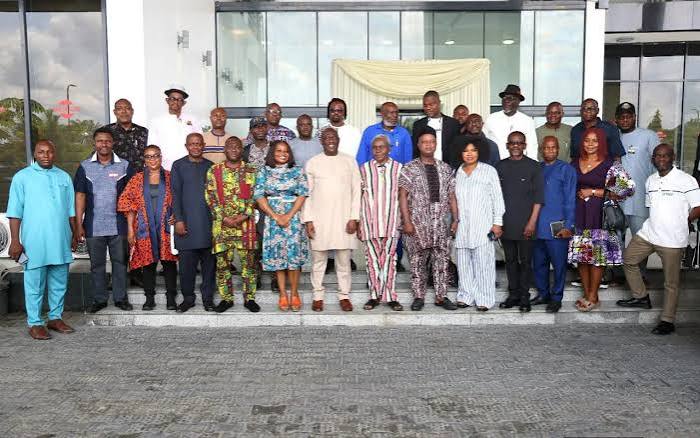
Governor Nyesom Wike

Governor Nyesom Wike

We now have a ba
bel of voices concerning judgments  on electoral  matters before the courts. The Tribunals and Court of Appeal  are singing  discordant tunes, allowing  political  considerations to be the  centrepiece  of  their decisions.
The situation  has so degenerated that a relationship  with  the  centre gives one a clear advantage in any electoral matter before  the  lower courts. Without  doubt, the oil-rich States of the Niger Delta  are worse hit by this sad development  in the nation’s  judiciary.
Rivers State has suffered the most in the current  wave of judicial  indiscretion  at the lower bench. Once the matters involve Rivers State,  the Electoral Act and the Constitution  are thrown out of the windows. Cases decided elsewhere  based on the law are disregarded  when it comes  to  Rivers State.
The Court of Appeal has decided on all the National Assembly elections in Rivers State and judgements  have been  entered  for the Governorship  and State Assembly Elections.
In its  judgment  on the governorship  election,  the Court of  Appeal claimed that there was no election anywhere  in  Rivers State.  The court claimed that it arrived at its decision  on  the  strength  of  the  use of the card readers and the testimonies of just 56 witnesses.
The judgments  of  the Court of  Appeal on all the elections  in Rivers  State  are flawed in all respects. However,  nothing  can be  done for the victims  of  the  judicial  error as regards the  National Assembly and State Assembly elections.  They will have  to make the sacrifice of approaching their constituents  again  for  the  revalidation of their earlier mandate.
However,  with the unfolding  scenario,  it is necessary  to  use the the disposition of the  Court of  Appeal  to actually analyse  the situation  in the state.
First, the judgments churned out by the Court of  Appeal have proved for the very first time, that the elections in Rivers State  were held in compliance  with  the  Electoral  Act and the Constitution.  The fact that the Court of  Appeal  has upheld State Assembly elections  from constituencies in all the three senatorial  districts of the state show that the APC  lost fairly and Governor  Wike  was duly elected by lawful votes cast. Out of the 32 State Constituencies , the Appeal Court  upheld  elections  in  11 State Constituencies.  That represents  roughly 35 percent of the State. Yet, the same Court said that the  governorship  election  did not hold. This error is regrettable.
In one of the state Constituencies upheld  by the Appeal Court, that is the Port Harcourt Constituency 1, the Court held that Victoria  Nyeche of the  APC  defeated  Jones Ogbonda of the PDP  in a legally  conducted election.  Recall  that both the Governorship  and State Assembly elections held on same day.
The same Appeal Court  held that elections  held successfully in Okrika State Constituency,  Etche 1 State  Constituency,  Ahoada West State Constituency, Ogu/Bolo State Constituency , ONELGA 2 State Constituency,  Oyigbo, Khana,Phalga  1 ,Abua/Odual   and Okrika Constituencies.
These were Constituencies  where the  APC  claimed violence  caused elections  not to the hold. Two of these Constituencies, ONELGA and Ahoada West were celebrated by the APC as hotbeds of electoral  violence and irregularities.
If the  Appeal Court has finally  admitted that  elections  held in these constituencies,  it goes to prove that no diligent judicial  review was done before the decision  to  annul the  Rivers State Governorship Election was taken.
The controversial  decisions  of the Appeal Court panel  on Rivers election have been premised on faulty lines already disregarded  by other panels of the Appeal  Court  and the Supreme Court. First, the Court of Appeal  panel for Rivers elections shifted the burden from the petitioners (APC ) to the respondents (PDP ).
An Appeal Court Panel  sitting  in  Makurdi  on the appeal filed by Prince Terhemen Tarzoor against  the decision upholding the election of Benue State Governor, Samuel Ortom held thus:
“The complaint of the Appellant under this issue is that the Tribunal had misplaced the burden of proof on him when it said that he must win his case on the strength of his own case and not on the weakness of the Respondents’ cases or defence, was on the assertion made that the 2nd Respondent did not conduct a primary election at all for the nomination of the 1st Respondent as a candidate to contest the election in question. The Appellant calls and labels the said assertion or allegation, as a negative assertion which he has no duty to prove under the law. However, as demonstrated earlier, an assertion or allegation, can be either negative or positive, but once made by a party in a case, he owes and bears the legal burden of proof, which is fixed and static, to prove same if he expects a court or tribunal to, on its basis, make a declaration of right he claims in the case in his favour. It is a clear misconception, with due respect to counsel, to argue that the Respondents who had denied the assertion made by the petitioner as the vital and crucial point and fulcrum of his case, had the legal burden of proof of such an allegation against them merely on the basis of their denial of the assertion or allegation”.
But in the  state of all Rivers State  elections decided so far, the Appeal Court panel moved the burden from the APC  to  the  PDP.
In the case of the governorship  election,  the Rivers State APC only called only 56 witnesses. Majority  of  these witnesses had nothing to do with  the  governorship election at the polling  unit. They were soldiers, mobile policemen  and DSS  operatives  detailed by the Security  High  Command to lie in court. Even where the exact officers  who personally  provided security for the elections  testified,  they were ignored.
Even at that, these few 56 witnesses’  testimonies in line with  the  Supreme  Court  position  on the required proofs to void an election represent just 56 polling units out of the 4442 polling  units  for the entire state. It is unheard of that courts would rely on gossips or hearsay to decide electoral  matters.
According  to  the  Supreme Court,  a petitioner  can only prove that elections  did not hold by calling a voter per polling  unit to prove his case. Therefore,  a petitioner  cannot rely on blanket frivolous  allegations  like APC  have done to get judgment  in an electoral dispute.
Deciding  the election  petition  filed by Senator  Ucha against the election of  former Governor Elechi of Ebonyi State in 2012, the Supreme Court declared:
“The results declared by INEC are prima facie correct and the onus is on the petitioner to prove the contrary. Where a petitioner complains of non-compliance with provisions of the Electoral Act, 2010 (as amended), he has a duty to prove it polling unit by polling unit, ward by ward and the standard of proof is on the balance of probabilities and not on minimal proof. He must show figures that the adverse party was credited with as a result of the non-compliance, Forms EC8A, election materials not stamped/signed by Presiding Officers. He must establish that non-compliance was substantial, that it affected the election result. “.
Now, there is the issue of the  qualification  to contest the  Rivers State elections  in the state first place. Section 85 (1) spells out clearly  that a political  party  must give INEC 21 days notice before holding  a  valid primary.  Failure  to  do this implies that no primary  was held. It was on the premise of the APC’S failure  to  observe  Section 85 (1) that the Appeal Court panel upheld the  election  of  Prince Nnam Obi, representing ONELGA /Ahoada West at the House of  Representatives.  It was also on the  basis  of  Section 85 (1) that the same  Appeal Court dismissed  the  appeal  of  Labour Party  against  the  election  of  Governor Wike.
Only this week, the Court of  Appeal  nullified  the  election  of  Senator Uche Ekwunife of the PDP on the strength  that she was not validly nominated.
According  to  the  Appeal Court panel that sat in Enugu :
“Nomination is part and parcel of qualification to stand for an election and since an election can be challenged on the grounds of lack of qualification, it follows that the appropriate forum to challenge it after the election is held is the Election Tribunal”.
However,  the  Appeal  Court  panel  that considered  all the  appeals on the Rivers State  elections  deviated  from this norm. Instead, they chose to support the illegality wherein the APC  conducted no valid primary  in the  state.  Based on the Electoral Act,  APC  had no governorship candidate,  no National Assembly candidates  or State Assembly candidates.
Finally,  there is  the issue of card reader accreditation.  The Appeal  Court  panel for Rivers elections  elevated  the  card reader  accreditation  above the Electoral Act and the Constitution. The Electoral Act spells out the process of accreditation  during  an election.
The electoral dispute  between  Jimi Agbaje  (PDP ) and the  Lagos State Governor,  Akinwunmi Ambode  (APC ) is the most prominent  case to cite on the issue  of card reader accreditation. The Appeal Court threw  out Agbaje’s appeal in a considered opinion.
Justice Ogbuinya, the presiding judge of the Appeal Court panel held that: “The paragraph (13b) displays a vitriolic attack on the irregularities germinating from the improper or non-use of the smart card readers in the polling units.
“As it is, it has no life of its own as a ground. It endeavours to introduce the defects in the use of smart card readers. The evolution of the concept of smart card reader is a familiar one. It came to being during the last general election. On this score, it is a nascent procedure injected into our infant and fledgling electoral system to ensure credible and transparent election.
“The extant Electoral Act (2010) which predates the concept (of card reader) is not its parent or progenitor. Since it is not the progeny of the Electoral Act, fronting it as a ground to challenge any election does not have its (the Electoral Act’s) blessing, nay Section 138 (1) of it.
“Put simply, a petitioner cannot project the non-presence or improper use of smart card reader as a ground for questioning an election. It does not qualify as one.”
The preceding  paragraphs  on the Lagos State Governorship Dispute between  the  PDP and the APC  rests the issue on card reader accreditation. It brings  to the fore the errors  that invalidate  the Appeal Court judgments on Rivers elections.
In Delta State,  the Appeal Court similarly  dismissed  the card reader as the basis for the nullification  of  an election  in the appeal filed by Great Ogboru  of  Labour Party who challenged the  election  of  Governor Ifeanyi Okowa.
Justice Abba-Aji in the lead judgment of the Court of Appeal held that Ogboru merely relied on records of the card reader accreditation without demonstrating the documents by credible evidence.
She held that Ogboru never challenged the evidence of the respondents and even his own witnesses that the card readers had challenges in many part of the states and that apart from the use of card reader, there was also manual accreditation.
While the  National and State Assembly elections  have come and gone, the judiciary  still has the opportunity  to remedy  its  dwindling  image  in relation  to  the  Rivers State Governorship Election.
The onus to address the errors  of the Appeal Court panel that sat on Rivers State elections  rests squarely with the Supreme Court.  These erroneous  judgments  of the Appeal Court panel should be  confined to  the  dustbin  of history.  They have  damaged  the electoral jurisprudence,  but the Supreme Court must come to the rescue. Irrespective  of  whose  political  ox is gored, the Supreme Court  must rise to the  occasion.
From all indications, immediate past Rivers State    Governor,  Rotimi Amaechi has concluded  plans  to  use Rivers State as a collateral  to remain  relevant  in Abuja after squandering  over N3trillion in the worst governance tragedy  of  our time. Amaechi  and his political  crooks who have  been  fingered in the worst judicial  misrepresentation of all time. The National  Judicial Council should act on the petition filed against  the  Appeal Court panel  that failed the Justice  system.  This is the only way the reforms the Chief Justice of Nigeria promised dissatisfied  Nigerians will be  effected. Indicted Amaechi  is using these illegally  acquired  funds to compromise  the  judiciary. The facts are with the EFCC and Nigerians  are waiting  for the commission  to act.
SimeonNwakaudu is Special Assistant to the Rivers State Governor on Electronic Media.

Continue Reading

Environment

NICOLD Urges Private Investment, Innovation To Strengthen Dam Safety

Published

on

The Nigerian Committee on Large Dams (NICOLD) has called for increased private-sector  investment and sustained training of young engineers to strengthen dam safety and  management in Nigeria.
The committee’s President, Dr Johnson Adewumi, made the call at its 2026 National Conference and Annual General Meeting (AGM) in Abuja recently.
The conference was themed “Sustainable Dams for Water, Energy and Climate Resilience”.
Adewumi said the conference provided a platform for engineers, policymakers, researchers and other stakeholders to exchange knowledge and develop solutions to challenges in dam engineering.
He said while the public sector was responsible for policy development, private organisations had a critical role in translating policies into practical programmes and projects.
He urged more companies to partner with NICOLD, noting that the committee brought together professionals involved in dam engineering and technology.
Adewumi said NICOLD had organised seven training sessions on dam operations and maintenance with sponsorship from partners, including Mainstream Energy Solutions and DeCrown West Africa Company, whose contributions he acknowledged.
The president stressed the need to equip younger engineers with skills in dam design, construction, operation and management to sustain professional expertise and prevent infrastructure failures.
He said NICOLD was promoting knowledge transfer from experienced professionals to younger engineers, adding that continuous training was necessary to prepare them for future responsibilities.
Adewumi, who said he was 75, noted that experienced professionals had a duty to mentor younger engineers and ensure the transfer of technical knowledge.
He said dams remained vital to water security, food production, hydropower generation and flood control, adding that reservoirs also supported irrigation, livestock production, industrial activities and public water supply.
He called for the adoption of modern technologies, research and innovation to improve dam monitoring, structural assessments and maintenance.
Earlier, the Minister of Water Resources and Sanitation, Prof. Joseph Utsev, called for stronger collaboration and investment to improve dam safety, hydropower generation and water resources management.
Utsev, represented by the Acting Permanent Secretary of the ministry, Ali Dallah, said sustainable dam development was essential to water security, agricultural production, energy generation and flood management.
He identified the Sustainable Power and Irrigation for Nigeria (SPIN) Project, implemented with Federal Ministry of Power and World Bank support, as a key initiative to strengthen dam safety, modernise irrigation and promote hydropower.
The minister said effective dam management required regular inspections, structural assessments, preventive maintenance and timely rehabilitation to identify risks and protect infrastructure.
He also warned that changing hydrological conditions and extreme weather events posed challenges to dam design and operations, making climate resilience necessary throughout the development and management of dams.
Utsev said the ministry, through the Nigeria Hydrological Services Agency, was strengthening hydrological data collection, flood forecasting and early warning systems.
He said the Annual Flood Outlook provided information to support flood preparedness, reservoir management and decisions by relevant stakeholders.
Also speaking, Irrigation and Drainage expert, Mr Matthew Offie, called for the reassessment of existing dams using current climate data to ensure their safety and functionality.
Offie said many dams were designed using historical hydrological data that might no longer reflect prevailing climate conditions.
He cited changing rainfall patterns, erratic flooding and prolonged droughts in parts of the country as reasons for updating hydrological assessments.
He recommended retaining the original engineering principles of existing dams while incorporating current climate data into their operation and management.
Offie said satellite information and emerging technologies could make such assessments more affordable and accessible.
He said his conference paper examined cost-effective approaches to hydrological assessment, drawing on lessons from more than 40 years of professional experience to recommend solutions and avoid repeating past project failures.
The National Emergency Management Agency reported that floods affected 315,762 people, displaced 113,367 and killed 231 across 25 states and 86 local government areas as of September 2025.
The floods also damaged 46,304 farmlands.
The Nigerian Electricity Regulatory Commission reported that hydropower plants generated 3,081.88 gigawatt-hours of electricity in the first quarter of 2025, compared with 3,029.07 gigawatt-hours in the preceding quarter.
Changing rainfall patterns and extreme weather events also highlight the need to incorporate current climate data into dam planning, operation and maintenance to reduce risks and sustain water and energy supplies.
Continue Reading

Environment

HYPREP Seeks CSOs’ Support To Prevent Repollution In Ogoniland

Published

on

The Hydrocarbon Pollution Remediation Project (HYPREP) has urged Civil Society Organisations (CSOs) to intensify community campaigns against illegal artisanal refining, unsustainable fishing and activities threatening environmental restoration in Ogoniland.
Prof. Nenibarini Zabbey, Project Coordinator of HYPREP, made the call in an interview with the  News men made available to Tide on Wednesday after receiving a coalition of CSOs in Port Harcourt.
The coalition visited Rivers to assess cleanup project sites and evaluate progress made in the implementation of the Ogoni environmental restoration programme.
Zabbey said sustaining the achievements of the cleanup required more than remediation, emphasising that communities must collectively protect restored ecosystems against renewed pollution and environmentally harmful activities.
He identified sensitisation on sustainable fishing, responsible mangrove harvesting and campaigns against illegal artisanal refining as critical areas where CSOs could support environmental protection efforts.
According to him, the return of aquatic organisms, including different crab species, to restored water bodies indicates ecological recovery, but their survival depends on responsible environmental practices.
He urged stronger collaboration in promoting ecotourism, carbon stock assessment, climate finance and alternative livelihoods, particularly following the designation of Ogoni mangrove wetlands as an internationally important Ramsar Site.
The coordinator said the designation placed a collective responsibility on stakeholders to preserve the wetlands’ ecological character while exploring sustainable  economic opportunities to reduce pressure on natural resources.
He expressed optimism that collaboration with CSOs would strengthen community engagement, expand environmental advocacy and prevent activities capable of reversing the gains recorded through restoration efforts.
Zabbey subsequently presented a project status briefing, highlighting achievements and ongoing interventions across HYPREP’s thematic areas and outlining progress recorded in the cleanup programme.
The CORDAID Strategic Partnership comprises CSOs advocating environmental protection, good governance and institutional development, with a longstanding commitment to the full implementation of the Ogoni cleanup programme.
Speaking on behalf of the coalition, Tolese Olatinwo, Consultant to CORDAID, described the visit as encouraging, recalling the partnership’s five-year advocacy for environmental restoration and alternative livelihoods.
He said the partnership had consistently advocated community participation in the cleanup programme and the release of funds for HYPREP, expressing satisfaction with visible project interventions.
Olatinwo said the delegation was pleased with the progress observed at project sites, adding that the coalition would review its previous advocacy scorecard and establish fresh objectives.
Similarly, Dr Emem Okon, Executive Director of Kabetkache Centre for Women Development and member of the Strategic Partnership, commended women’s inclusion and livelihood interventions under the project.
Okon recalled that her organisation had conducted a livelihood needs assessment for women and advocated greater female participation in the Ogoni cleanup process and related interventions.
She said the coalition would develop a new pathway of change, focusing on community sensitisation, environmental advocacy and campaigns against illegal artisanal refining across affected communities.
The coalition, comprising CSOs from different parts of Nigeria, also commended HYPREP for progress in mangrove restoration, shoreline cleanup, potable water provision and public  health interventions.
The groups applauded increased women’s participation in project activities, describing the interventions as important steps towards improving environmental conditions and supporting affected communities across Ogoniland.
The delegation assessed the K-Dere Water Facility, Ogoni Specialist Hospital and mangrove restoration site in Bomu, where members also participated in symbolic mangrove planting activities.
Continue Reading

Environment

DBN Inaugurates $275m Climate Finance To Boost Nigerian MSMEs

Published

on

The Development Bank of Nigeria (DBN) has inaugurated a 275-million-dollar  climate finance programme to support Micro, Small and Medium Enterprises (MSMEs).
The aim according to the bank is to adopt clean energy solutions, strengthen climate resilience and expand sustainable business operations.
The programme, known as the DBN Enterprise Lending for Transition and Adaptation (DELTA), is also designed to bridge the  financing gap facing Nigerian businesses seeking to  invest in renewable energy-efficient technologies and climate-resilient agriculture.
DBN Managing Director and Chief Executive Officer (CEO), Dr Tony Okpanachi said this on the sidelines of the 31st United Nations Climate Change Conference (COP31) in
Antalya, Türkiye on Friday.
Okpanachi said climate change was already affecting Nigerian businesses through unpredictable weather patterns, disruptions to production and supply chains, and rising energy costs.
He said the initiative represented an expansion of DBN’s mandate of addressing financing challenges facing productive and underserved enterprises, with a renewed focus on climate-related investments.
He explained that the programme would combine lending, risk-sharing mechanisms and technical assistance to address barriers such as high upfront investment costs, collateral constraints, inadequate credit facilities and limited project preparation capacity.
According to him, the facility will support businesses to replace expensive diesel-powered generators with solar energy, invest in efficient irrigation systems and strengthen agricultural production against increasingly unpredictable rainfall.
He said DBN would commit its own resources to the programme and collaborate with the Green Climate Fund (GCF) and other development partners to mobilise additional capital, technical expertise and risk-sharing instruments.
Okpanachi added that the success of DELTA would be measured not merely by the size of its financing facility but by its impact on businesses through lower energy costs, increased productivity, stronger resilience and sustainable economic growth.
In his welcome address, the Minister of Finance and Coordinating Minister of the Economy, Mr Taiwo Oyedele,
described the initiative as an important step towards translating Nigeria’s climate commitments into practical financial solutions.
Oyedele was represented by the Deputy Director, IERD, in the ministry, Mr Abubakar Matazu.
Oyedele said climate change was an economic, fiscal and development challenge for Nigeria, with growing implications for agricultural productivity, food security, energy access, infrastructure and livelihoods.
He said the 275-million-dollar programme, including a 100-million-dollar contribution from GCF, is expected to expand access to affordable, and long-term financing for MSMEs.
According to him, it is also to benefit approximately 1.3 million people and reduce greenhouse gas emissions by an estimated 4.5 million tonnes of carbon dioxide equivalent.
The minister said the Federal Government remained committed to creating an enabling fiscal, policy and institutional environment to mobilise climate finance and attract private-sector investment.
He said that development finance institutions such as DBN had a critical role in connecting international climate funding with local businesses through accessible financing opportunities.
Dr Omotenioye Majekodunmi, the Director-General,  National Council on Climate Change (NCCC), said MSMEs were also emerging as key drivers of climate solutions through the adoption of renewable, energy-efficient technologies and climate-resilient business practices.
Majekodunmi who was represented by
the Head of Climate Finance at the National Council on Climate Change (NCCC), Mrs Benny Ejiofor, described MSMEs as both highly vulnerable to climate change and important drivers of climate solutions.
Majekodunmi said the facility would make climate finance accessible beyond large corporations, extending opportunities to small businesses, farmers and young entrepreneurs.
She cited examples of market women acquiring solar-powered freezers, entrepreneurs developing electric vehicle businesses and farmers adopting climate-smart agricultural practices.
She urged financial institutions to increase green lending, while encouraging MSMEs to embrace sustainable business practices and climate-resilient operations.
“In spite of being among the most vulnerable to climate change impacts, including floods, droughts, and rising energy costs, they are key drivers to achieving Nigeria’s climate solutions.
“It is a great honour to welcome you all to this landmark event on behalf of the D-G NCCC, the inauguration of the  Climate Finance Facility for Small and Medium Enterprises by the Development Bank of Nigeria.
“Today is not just another inauguration, today, we are opening a new door of opportunity for the thousands of small businesses that power our economy.
“We all know that MSMEs are the backbone of Nigeria,they create jobs, they feed families, and they drive innovation.
“But we also know that they are the most vulnerable to climate change, to floods, to drought, to rising energy costs, yet, they are also the solution.”
Similarly, the Director of Climate Change, Rural Development and Infrastructure Division ,GIZ, Mr Alexander Haack, said the organisation would provide technical assistance to complement the  financial support under the programme.
Haack said GIZ’s experience in facilitating access to  finance and strengthening the capacity of small businesses and financial institutions would help improve the bankability of climate-related projects.
He noted that GIZ’s interventions would include training businesses in bookkeeping and financial management, as well as supporting financial institutions to develop targeted financial products for sectors often considered risky.
During a panel discussion on the programme, the Executive Director and Chief Financial Officer, Finance and Corporate Services, DBN, Mrs Ijeoma Ozulumba, expressed optimism that the facility would attract additional partners and generate a strong pipeline of climate-focused projects.
Ozulumba said DBN was working towards ensuring that the programme’s implementation gathered momentum ahead of COP32, scheduled to hold in Ethiopia in 2027.
Also contributing, the Founder and Chief Empathy Officer of Glean Sustainable Renewable Solutions Ltd., Mr Dele Awosika, emphasised the need to identify viable businesses and develop pilot projects that would demonstrate the programme’s potential to attract further investments.
Awosika identified opportunities in climate-resilient crop production and low-carbon agricultural practices, including rice and cassava production, as areas requiring technical expertise and targeted financing.
The DELTA programme is expected to strengthen Nigeria’s climate finance ecosystem by connecting international funding, development finance institutions and private-sector investments with businesses working towards a low-carbon and climate-resilient economy, Awosika said.
Continue Reading

Trending