
Business
NNPC Decries Spending N152bn On TAM

The Nigerian National Petroleum Corporation (NNPC) said yesterday that there was deliberate distortion of facts and figures about its operations by some politicians.
In a statement issued in Abuja by its Group General Manager, Group Public Affairs Department, Mr Ohi Alegbe, the corporation was a public entity responsible to the government and people of Nigeria.
He said NNPC was focused on its mandate and would not be distracted by the spate of politically inspired polemics against its operations and refuted a report credited to some civil society organisations, alleging that the NNPC had committed N152billion to execute the Turn Around Maintenance (TAM) of four refineries between 2011 to 2013.
Alegbe said that a decision was taken in 2011 to rehabilitate all refineries, using the Original Refinery Builder (ORB) of each of the refineries.
He said the NNPC, however, made recourse to a new strategy after the ORBs declined participation and nominated some partners in their stead who came up with outrageously unfavourable terms.
“The nominated partners, as sole bidders, came up with humongous price offers after two years of thorough and exhaustive scope of work definition and price negotiations. “The proxies were also unwilling to provide post rehabilitation performance guarantees,’’ he said.
He said the new arrangement, which kicked off in October 2014, entailed phased and simultaneous rehabilitation of all refineries, using in-house and locally available resources.
Alegbe said that the strategy also embraced the direct use of Original Equipment Manufacturer representatives to effect major equipment overhaul and rehabilitation.
He said it was projected that the new strategy would reduce the cost of the operation by 70 per cent.
This money, he said, would help in mitigating the financing challenges of NNPC visa-a-vis refinery rehabilitation.
“The phased rehabilitation programme started in October 2014 after the required funding stream was established and will last for 18 months,’’ he said.
He said that over 60 per cent of materials needed for the TAM at Port Harcourt refinery had been delivered, adding that their installation was in progress.
Alegbe said that material orders and deliveries to Kaduna and Warri refineries remained substantial and called on the public to discountenance sensational comments about NNPC.
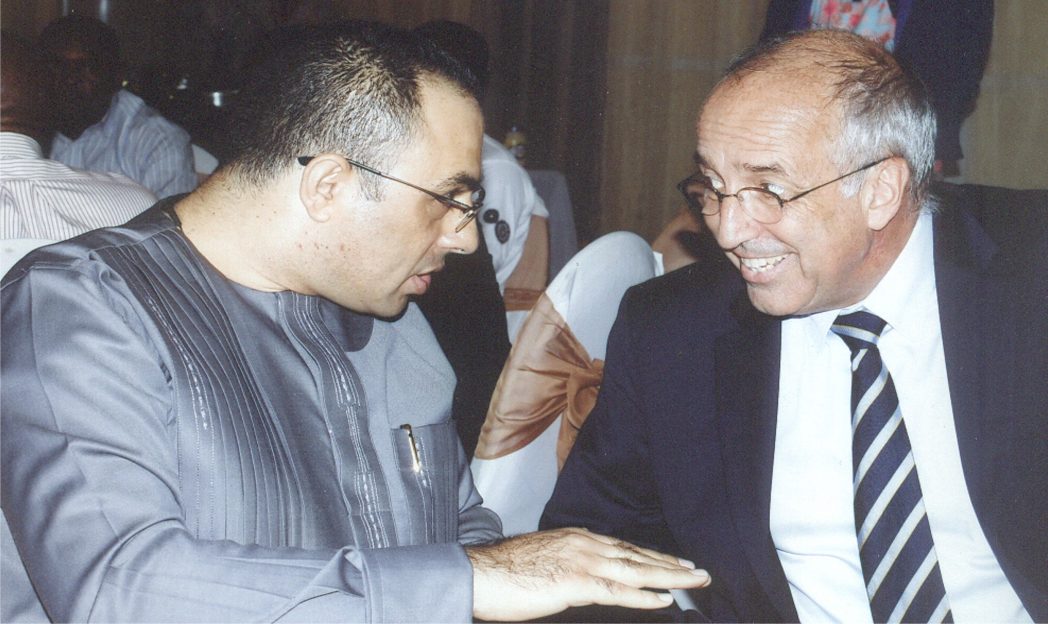
Total Manager, Enterprise Development, Philippe Desriac (right) having a chat with a member of Manufacturers Association of Nigeria, Rivers/Bayelsa States, Chief Nabil Saleh (left) during 30th Annual General Meeting of MAN, Rivers State in Port Harcourt recently. Photo: Egberi A. Sampson



Business
Jonathan, Diri, Others Laud Firm’s Milestone in Bayelsa …Says Project Will Drive Industrialisation, Create Jobs



-

 News3 days ago
RSG Targets Nine Million Residents in Mosquito Net Distribution Campaign
-

 Oil & Energy3 days ago
Aiyedatiwa Signs New Electricity Bill
-

 Maritime3 days ago
Marine Minister Commends President Tinubu On NPERA Bill Assent
-

 Oil & Energy3 days ago
NLNG Commissions Research And Innovation Centre In RSU
-

 News3 days ago
KenPoly Holds Eight Convocations, August 29
-

 News3 days ago
RSG Begins Another Phase of Projects Commissioning Today
-

 News3 days ago
RMAFC Completes Revenue Sharing Review, Proposes New Pay
-

 Maritime3 days ago
NAGAFF Petitions IGP Over Alleged Maritime Police Harassment