
Environment
Stakeholders Call For Establishment Of Ministry Of Waste Resources

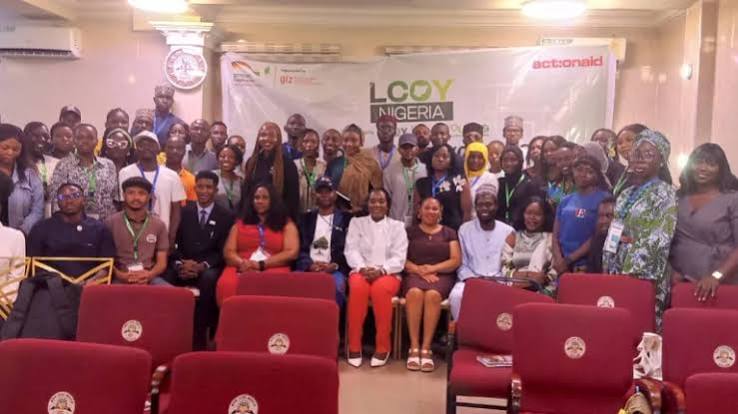
Stakeholders in Lagos’ waste management sector have called for the establishment of a standalone Ministry of Waste Resources to drive reforms, attract investment and strengthen environmental governance.
A summary of the meeting’s proceedings and recommendations was made available to the Tide source on Friday by Mr Philips Obuesi, President and Chief Executive Officer of SWEEP Foundation NG and convener of the Lagos Waste Forum.
According to the summary, the stakeholders made the call at a Lagos Waste Governance Reform meeting on Thursday, proposing the ministry as part of policy recommendations for the incoming state administration in 2027.
The recommendations also covered professional leadership, household waste separation, integration of informal waste workers and improved accountability across Lagos’ waste management system.
The summary indicated that the Lagos Waste Forum was tasked with consolidating citizens’ and industry stakeholders’ recommendations into a policy brief for presentation to the incoming governor.
The proposed document is expected to reflect the concerns of residents, waste generators, recycling businesses, waste pickers and other operators across the waste value chain.
On institutional reform, the stakeholders proposed a dedicated ministry headed by a cabinet level commissioner to coordinate policies that would transform discarded materials into economic resources.
They also advocated appointing experienced waste management professionals to lead the Lagos State Waste Management Authority (LAWMA), with technical competence guiding appointments.
The recommendations further called for separating LAWMA’s regulatory responsibilities from waste collection operations to strengthen oversight and improve service delivery.
The stakeholders also identified the prevailing collection-and-dumping approach as inadequate, advocating a shift towards source separation, recycling, processing and local resource recovery.
They proposed household incentives for waste separation and modular processing plants across local governments to encourage local value addition.
On stakeholder inclusion, the recommendations called for integrating informal waste pickers into formal waste management arrangements, recognising their contributions to recycling and livelihoods.
They also advocated stronger partnerships between private sector participation (PSP) operators and informal collectors, alongside improved occupational protection and community-based waste education.
The summary identified outdated waste collection data as a major obstacle to effective planning, monitoring and enforcement.
To address this, stakeholders recommended street-level data collection, local government performance comparisons and stronger accountability in public spending across the waste value chain.
They also identified registration and evacuation-access challenges as infrastructure gaps requiring attention to improve compliance and enforcement.
The Lagos Waste Forum was further tasked with ensuring women’s perspectives were adequately represented in the proposed policy brief.
Other recommendations included financial incentives for household waste separation, stronger PSP monitoring and community education in local languages.
The proposals build on discussions at the sixth Lagos Waste Forum in 2025, which advocated establishing a standalone Ministry of Waste Resources.
The forum promotes policies that position waste as an economic resource through collaboration among government, industry operators and environmental stakeholders.
The proposed reforms seek to reposition Lagos’ waste sector from conventional refuse collection and disposal towards an inclusive circular economy driven by investment, innovation and resource recovery.


Continue Reading
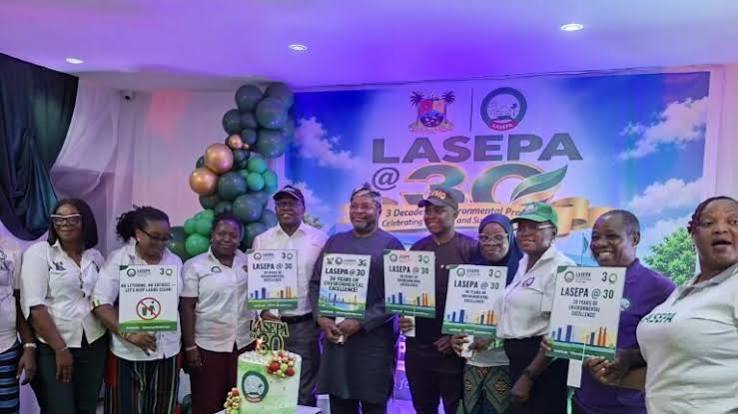
ActionAid Nigeria has urged young people to take leading roles in driving climate action, strengthening accountability and ensuring the implementation of Nigeria’s climate commitments.Support Charities
Blessing Ifemenam, Programme Adviser, Strategic Partnership Agreement (SPA II) Project, ActionAid Nigeria, made the call at the National Conference of Youth on Climate Change (LCOY-Youth COP 2026) on Thursday in Abuja.
The conference, organised by ActionAid Nigeria (AAN) was themed: “Advancing Nationally Determined Contributions (NDC 3.0) Implementation: Youth-Led AI and Climate Finance Capacity Building for a Resilient Nigeria”.
TheTide source reports that the conference is being organised as a key initiative under the SPA II project and the Food and Agriculture unit.
It was to engage a wider cross-section of young people across Nigeria through capacity building, youth engagement among others to identify and address the barriers to youth participation in climate change initiatives
The conference is aimed at empowering young people to showcase ideas, insights and innovations while engaging with policymakers and stakeholders to drive meaningful climate action.
Ifemenam said the conference came at a critical time as Nigeria worked towards implementing its third Nationally Determined Contributions (NDC 3.0).
She said young people should be recognised as leaders, advocates, innovators and decision-makers rather than mere participants in climate discussions.
According to her, climate action must be anchored on justice, human rights, equality and accountability, given the disproportionate effects of climate change on vulnerable communities.
“The climate crisis disproportionately affects communities that have contributed least to global emissions, particularly young people, women, girls and other marginalised populations.Track Weather
“Government, civil society organisations, development partners and the private sector must ensure that young people have access to the information, resources and platforms required to influence climate policies,” she said.
Ifemenam said ActionAid was committed to strengthening youth movements, promoting climate-accountable governance and supporting community-led resilience.
She added that the organisation would continue to advocate a just transition that protects livelihoods while creating inclusive opportunities.
On the use of Artificial Intelligence (AI) in climate action, she said technology could support innovation, evidence generation and advocacy.
She, however, stressed that its application must be inclusive, accessible and responsive to community needs.
“Innovation should not deepen existing inequalities; it should help us address them,” she said.
Ifemenam expressed concern that climate finance and public investments were not adequately reaching communities and young people who needed them most.
She also called for stronger collaboration among government, civil society, development partners and the private sector to ensure accountability for climate commitments.
The programme adviser urged stakeholders to strengthen links between youth-led solutions and policy processes to ensure that young people’s contributions translated into tangible policy influence.
“This conference should go beyond statements of commitment to identify practical actions young people can lead, influence and monitor.
“Let us move from consultation to influence, from commitments to accountability, and from youth participation to youth-led transformation,” she said.
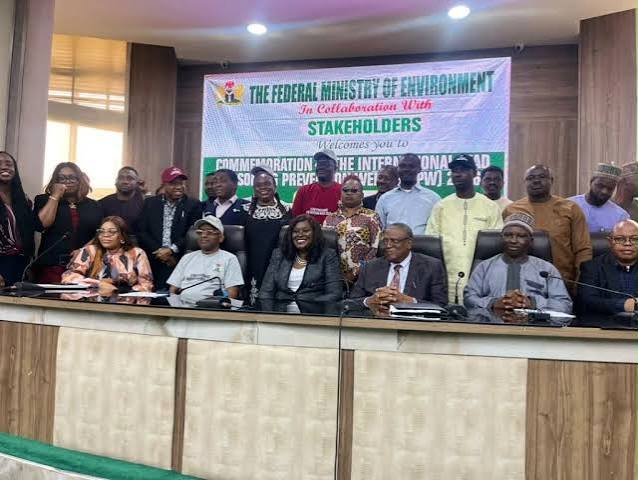
The Federal Government says it is intensifying efforts to eliminate lead exposure and phase out lead-based paints in Nigeria by 2030.
The Permanent Secretary in the Federal Ministry of Environment, Dr Salihu Usman said this at the 2026 International Lead Poisoning Prevention Week in Abuja .
Usman who was represented by the Director, Department of Pollution Control and Environmental Health in the ministry Mrs Omotunde Adeola said lead poisoning was a preventable environmental and public-health problem, with no known safe exposure.
Usman warned that children, pregnant women and occupationally exposed workers faced significant risks.
He emphasised the need for coordinated action among government agencies, industries, health professionals and civil society organisations to strengthen environmental monitoring, enforce product standards, promote safer alternatives and improve public awareness.
He also highlighted the National Inter-Agency Working Group on Lead Poisoning Elimination and the proposed five-year strategic plan.
Usman urged stakeholders to measure progress through reduced exposure, removal of unsafe products and responsible management of contaminated sites, rather than meetings and policies alone.
He reaffirmed the ministry’s commitment to stronger environmental regulation and called for sustained collaboration to protect Nigerians from preventable lead poisoning.
Dr Leslie Adogame, Executive Director, Sustainable Research and Action for Environment Development (SRADeV) cited studies on lead paint and used lead-acid battery recycling, and urged the need for stronger laboratory testing, environmental monitoring, enforcement of standards and safer alternatives.
The director commended stakeholders for supporting efforts to eliminate lead exposure and said that they commemorated the event annually since 2013, collaborating with government institutions, industry players and schools.
He further urged stakeholders to prioritise prevention, environmental remediation and community protection, particularly for children and workers vulnerable to lead poisoning.
Mrs Omotunde Adeola, the Director of Pollution Control and Environmental Health, in the ministry called for measures to prevent lead poisoning, stating that there was need to translate detection into effective action.
Adeola, who was represented by Mr Idris Abdullahi, Director, National Ozone Office, in the ministry, reaffirmed the ministry’s commitment to supporting Nigeria’s target of phasing out lead-based paints by 2030, stressing that success must be measured by reduced exposure and lives protected.
She highlighted key developments, including a November 2025 capacity-building workshop on portable X-ray fluorescence analysers, which equipped 35 participants with skills for screening lead in paints and consumer products.
She said that the ministry, with support from Resolve to Save Lives and other stakeholders, had validated a training toolkit for Environmental Health Officers to improve lead-poisoning prevention, detection and response.
Adeola urged manufacturers, importers, retailers, regulators and communities to comply with product standards, improve surveillance and promote safer waste-management practices.
She also cited the ministry’s April 2026 pilot programme for environmentally sound management of small-sized waste batteries in the Federal Capital Territory.
The Tide source reports that awards were presented to institutions, associations, paint manufacturers and raw material suppliers, acknowledging their contributions to Nigeria’s transition towards the production and use of lead-free paints.
The awardees are Balarabe Lawal, the Minister of Environment, Mrs Omotunde Adeola
Director of Pollution Control and Environmental Development and the Standards Organisation of Nigeria.
Others are the Paint Manufacturers Association; Paints and Coating Manufacturing Nigeria, Chemicals and Allied Products (CAP) Plc; Prestige Paint Nigeria Ltd.; and Parco Enterprise Nigeria Ltd.
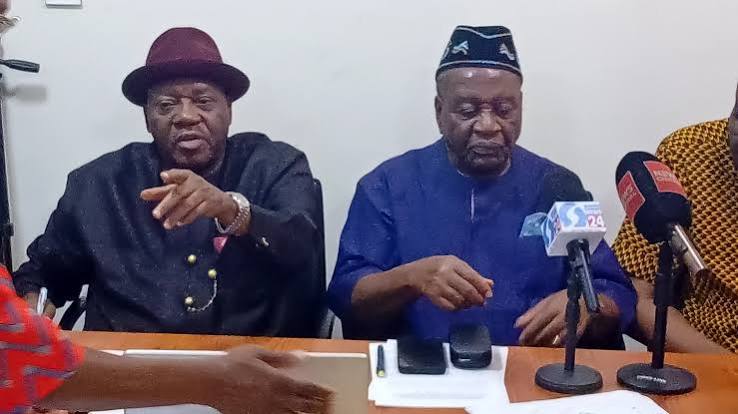
The Pan Niger Delta Forum (PANDEF) has challenged presidential candidates of political parties to demonstrate a clear commitment to environmental justice in the Niger Delta, demanding practical and measurable plans to address decades of pollution, ecological damage and underdevelopment in the oil-producing region.
The organisation made the demand on Tuesday in a communiqué issued after a virtual meeting of its Board of Trustees (BoT) and National Executive Committee (NEC), held in Abuja.
The meeting urged presidential candidates to present practical, measurable and time-bound programmes for the cleanup, restoration and sustainable development of communities affected by oil and gas exploration and production.
Those at the meeting included PANDEF BoT Chairman, Obong Victor Attah; National Chairman of the NEC, Ambassador Godknows Igali; former governors and ministers; first-class traditional rulers; political leaders; opinion leaders and other stakeholders from the region.
PANDEF observed that more than six decades of oil and gas exploration had left communities across the Niger Delta grappling with environmental degradation, pollution and the destruction of ecosystems and livelihoods.
It specifically called for urgent attention to the environmental challenges in Nembe Creek, Bayelsa State; Odidi, Delta State; and Kula, Rivers State.
The forum reaffirmed its commitment to sustained advocacy and engagement with the Federal Government on environmental protection, remediation and the restoration of affected communities.
It also called for adequate, sustained and transparent funding of the Ogoni cleanup programme, urging the Federal Government to develop a comprehensive framework for extending similar remediation efforts to other parts of the Niger Delta.
On infrastructure, PANDEF commended President Bola Tinubu’s decision to modernise and upgrade the ports in Warri, Port Harcourt and Calabar. It also welcomed approvals for proposed deep seaport projects in Akwa Ibom, Rivers and Bayelsa states.
The projects include the Ibom Deep Sea Port in Akwa Ibom, Bonny Deep Sea Port in Rivers and Agge Deep Sea Port in Bayelsa.
According to the communiqué, the strategic location of the proposed ports could strengthen trade links with East, Central and Southern Africa and improve access to the Indian Ocean.
PANDEF, however, urged the Federal Government to establish a sustainable financing framework for the South South port projects, comparable to arrangements adopted for major port infrastructure development around the Lagos corridor.
The organisation also welcomed the Federal Government’s decision to retain the original broad alignment of the 750-kilometre Lagos-Calabar Coastal Highway as a distinct strategic infrastructure project, following reported reconsideration of an earlier proposal to integrate the route into the East-West Road.
Describing the coastal highway as a long-standing project that predates Nigeria’s independence, PANDEF said it had constituted a high-level technical committee to assist the Federal Ministry of Works on the project.
It declared the accelerated and successful completion of the highway non-negotiable, arguing that the road would improve connectivity among coastal states, stimulate trade and investment, strengthen national integration and unlock economic opportunities.
The forum also appealed to the Federal Government to take steps towards establishing an appropriate north-south rail connection that would link the Niger Delta with other parts of the country.
On revenue allocation, PANDEF called for an increase in the derivation fund from the current 13 per cent to a minimum of 50 per cent, citing the environmental and developmental burdens borne by oil-producing communities.
The forum noted that Section 162(2) of the 1999 Constitution, as amended, provides for the allocation of not less than 13 per cent of revenue accruing directly from natural resources to the states from which the resources are derived.
It argued that the provision had remained unchanged for more than two decades, despite the scale of environmental degradation, ecological challenges and developmental deficits in oil-producing communities.
PANDEF said increasing the derivation allocation would give the affected states greater resources to address environmental damage, health hazards, infrastructure gaps and the wider social and economic consequences of oil and gas operations.
The organisation further called on the Federal Government, the Revenue Mobilisation, Allocation and Fiscal Commission (RMAFC) and the National Assembly to urgently resolve the longstanding controversy surrounding the onshore/offshore dichotomy in revenue allocation.
The forum’s demands place environmental remediation, resource revenue allocation and major infrastructure development at the centre of its expectations from political parties and the next administration as the country approaches another election cycle.
-
Rivers3 days ago
NUJ Set To Attend UNIPORT’s 217th Inaugural Lecture
-
 News3 days ago
NJC Suspends Three Judges, Sanctions Eight Others
-
Politics3 days ago
Atiku Kicks-Off 2027 Campaign, Promises To Tackle Nigeria’s Challenges
-

 News4 hours ago
Army Recovers X Account After Hack Attempt
-
 Featured3 days ago
APC Presidential Campaign Storms PH, ‘Morrow
-
News3 days ago
FG Explains Supply Disruption As Power Generation Drops To 3,659MW
-
Metro3 days ago
Port Harcourt Prepares For 10,000 Runners As International Marathon Returns
-
 News3 days ago
Bille Gas Leak: Coalition Tasks FG On Proactive Measures