
Rivers
IAUE Inaugurates Centre For AI, Launches Book On Digitisation Milestone

Ignatius Ajuru University of Education (IAUE), Rivers State, Nigeria last Tuesday, inaugurated IAUE Centre for Artificial intelligence and officially launched the book, “Ignatius Ajuru University of Education Legacy Information Technology Automation and Digitisation Milestone 2015-2025 (10 years): A Model for the Nigerian University System “, at the University auditorium.
Speaking at the event, the Rivers State Commissioner for Education, Dr. Peters Nwagor, who was represented by the Permanent Secretary, Ministry of Education, Dr. Mina Tele Ikuru, congratulated the Vice Chancellor of IAUE, Professor Okechuku Onuchuku, the Governing Council, Senate, Management, Staff and Students of IAUE for the achievements, which celebrates not merely a new Centre and a new book, but vision, innovation and the courage to prepare for the future.
He stated that the IAUE Centre for Artificial intelligence could not have come at a more fitting time , because Artificial Intelligence is reshaping every sector of society with education not an exception.
IAUE, he stated, stands at a strategic point in the transformation as an institution devoted to teacher education.
Dr. Nwagor charged the Centre to equip Lecturers and students with genuine Artificial intelligence competencies to drive interdisciplinary research and to forge partnership with government, industry and technology organizations.
Artificial intelligence, he continued, “must never diminish the human purpose of education. It must assist the teacher not replace the teacher and must expand access and improve outcomes. It must also safeguard critical thinking, creativity, academic integrity and Human values.”
The Commissioner described the story captured in the book as remarkable, noting that IAUE has moved from manual systems to automated digitized processes in admissions and clearance, biometric verification, computer based testing, a centralized e-campus cloud, digitized webometrics ranking and secure digital certification production since NUC digitalization policy of 2015.
He explained that the University students’ population has grown from 4,500 in 2015 to more than 34,000 today, more than sevenfold as the National Information Technology Development Agency (NITDA), CISCO, MICROSOFT, Huawei and GLOBACOM.
Increase, sustained by a resilient digital infrastructure and partnership with organizations such as the National Information Technology Development Agency (NITDA), CISCO, MICROSOFT, Huawei and GLOBACOM.
According to the Commissioner for Education, institutions must not only make history, but document it. By preserving the ten years journey, IAUE, he added, has produced a reference point from which other universities can genuinely learn from.
Nwagor stressed the need for universities to be digitally driven, research oriented, innovation focused and globally competitive, producing graduates who do not merely seek jobs, but create them.
Rivers State Government, he reiterated, will continue to place great emphasis on quality education, technology, research and human capital development while the Ministry of Education will keep supporting every initiative that positions Rivers State as a leading destination for innovative education.
He urged the Centre to build and promote strong ethical framework for the responsible use of Artificial intelligence, teaching students not and how to ensure that digital transformation widens opportunity rather than create new forms of exclusion, so that staff and students from every background can enjoy meaningful access.
merely how to use these tools, but how to think critically about what those tools produce and how to ensure that digital transformation widens opportunity rather than create new forms of exclusion, so that staff and students from every background can enjoy meaningful access .
While inaugurating the Centre, Dr. Nwagor commended the Vice Chancellor of IAUE Professor Onuchuku; the ICT Director, Professor Nathaniel Ojekudo; the Book Reviewer, Professor Nduka Wonu; Deputy Director, ICT, Dr. Emma Aburuotu; Coordinator of the Centre, Dr. Kingsley Theophilus Igulu; and all who contributed to the milestone.
He congratulated the University for the landmark achievements and prayed that IAUE continues to grow in knowledge, innovation and excellence .
The 13th Pro-Chancellor and Governing Council Chairman of IAUE, Chief Chinyere Emmanuel Igwe, in his address, described the event as “a product of vision, collaboration and unwaivering belief that a University must not only teach the future, but build it.”
He expressed gratitude to TETFUND, National Universities Commission (NUC), Ministry of Education, and other partners, and also appreciated the Vice Chancellor of IAUE, and the Planning Committee for their dedication, which, he said, which has brought the University this far.
“Artificial intelligence is reshaping Agriculture in Kebbi State, diagnostics in Port-Harcourt, Fintech in Lagos, and governance across Nigeria.
“AUE will continue to lead and the Centre will personalize learning for 200 million Nigerians, equip graduates with Artificial intelligence literacy so that they become employers of choice rather than job seekers, solve local problems with global tools, and ensure that it is ethically inclusive and proudly African”, Igwe stated.
He expressed optimism that the Artificial intelligence Centre will be run differently following the best of traditions, and urged IAUE students to grow up with ChatGPT, question, build and govern Artificial intelligence as the world needs Nigerian Artificial intelligence talent.
The Pro-Chancellor charged staff to reskill, saying that the Centre will fund Faculty, Fellowship and Sabbaticals in Artificial intelligence.
He encouraged them to embrace the discomfort of learning something new, and also encouraged Alumni and Industry partners to support the Centre by sponsoring a laboratory, offering internships, adopting a research project, noting that Universities of the world are not remembered for their buildings, but for the problems that they solve.
He expressed hope that IAUE Centre for Artificial intelligence would be remembered as a place of innovation where Nigerians began to build Artificial intelligence for Africans and by Africans.
On his oart, the Vice Chancellor of IAUE, Professor Onuchuku, stated that Artificial intelligence is used in many areas to help people solve problems, automate tasks and make better decisions in healthcare, education, business, transportation, Finance, Agriculture, Communications, Entertainment, Manufacturing and at daily life
He listed the benefits as saving time by automating tasks, improving accuracy and efficiency, helping to analyze large amounts of data, supporting better decision-making, and provides personalized experiences.
Professor Onuchuku explained that IAUE has over the past ten years enabled various automations and digitization to drive research learning development and administration.
This solution, he stated, complies with both local and international standards in computing.
Also speaking, the ICT Director, Professor Nathaniel Ojekudo, in his presentation, noted that the University has embraced transformation with courage and vision, aligned with NUC directives, as well as set the pace for innovation within the Nigerian University System.
According to him, the ICT centre has been at the heart of transformation, ensuring that every innovation is not just a technological upgrade, but a stronger investment in the future of education, building systems that foster inclusivity, enhance research and, strengthen teaching and streamline administration
While appreciating the Vice Chancellor of the university for driving the huge innovations and craving for excellence, and speedy implementations of all Information Technology related programmes, he noted the fact that without his support, IAUE will not be where it is today.
He called on industries and corporate partners to join hands in expanding the digital infrastructure by establishing centres of excellence and supporting innovative programmes that will empower the next generation of leaders.
Also speaking, the Acting Director of the Centre for Artificial intelligence, Dr. Kingsley Theophilus Igulu, said, “the Centre is the inauguration of an idea, vision, commitment to the future and timely institutional response to the emerging national regulatory and policy direction of the National Universities Commission (NUC) on the integration of Artificial intelligence into Nigerian higher education”
He emphasized that the centre is a declaration that IAUE will not merely observe the Artificial intelligence revolution from the sidelines, but will participate in it and ensure that it serves humanity with fairness.
Reviewing the book, “IAUE Legacy Information Technology Automation and Digitalization Milestone 2015-2015 (10years): A Model for the Nigerian University System “, Professor Nduka Wonu explained that the ten years period marks a decade of transformation during which IAUE systematically integrated digital solutions across all facets of its operations, including admissions, teaching, learning, research, staff development, administration and national policy implementation and it’s still advancing.
Prof. Wonu, who is the Director of Research and Development in the University, further said, “it is a monumental Chronicles of how technology reshaped the University’s ecosystem over a decade, and stands as both a historical record and a blueprint for the future of higher education in Nigeria.
“The overall impact is that together these innovations transformed IAUE into a digitally-oriented institution, setting a benchmark for Nigerian Universities.”
The event featured presentation of awards to all those whose contributions laid the foundation for the digital ecosystem.


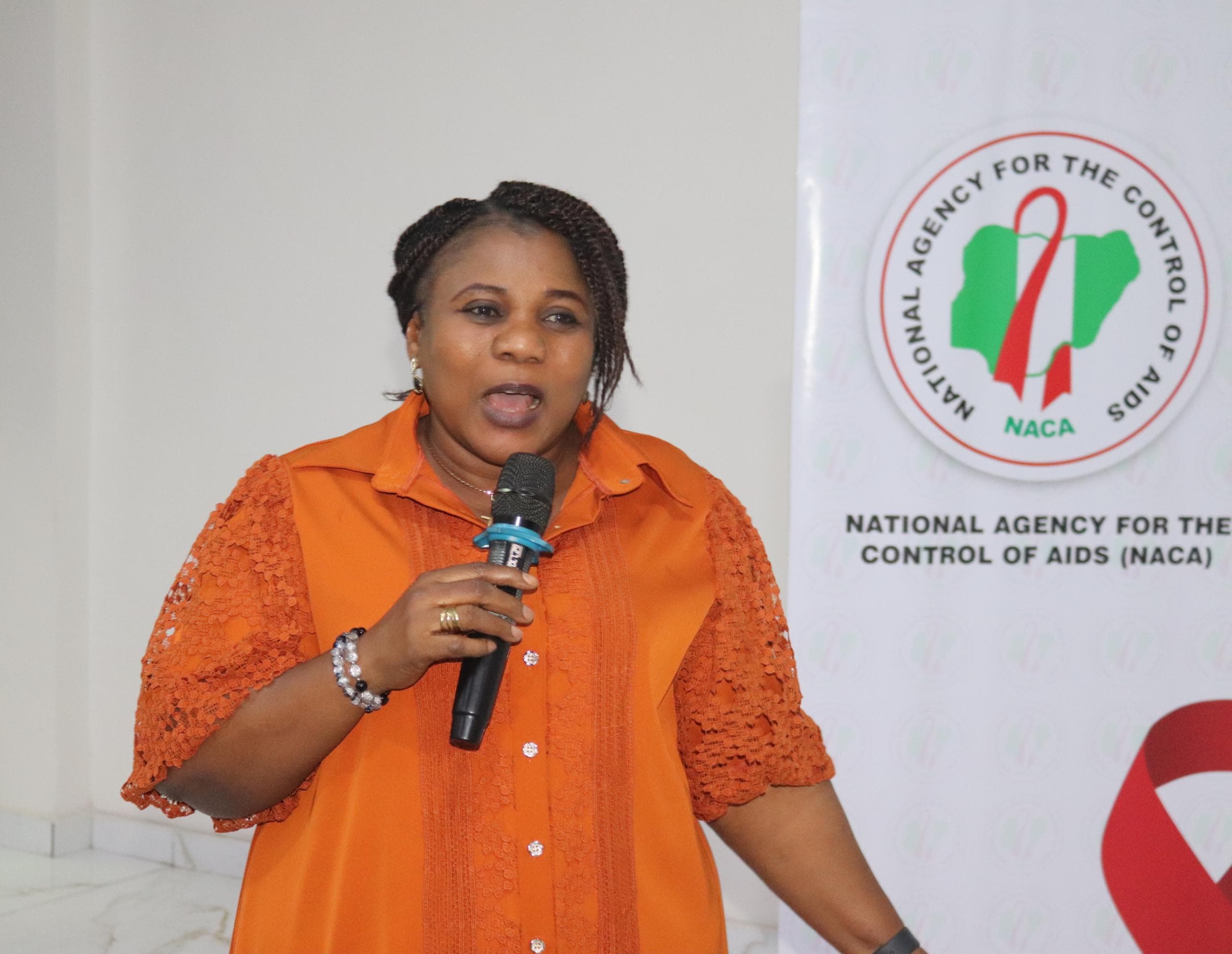
Prevention for HIV has taken yet another more advanced dimension with the introduction of the Lenacapavir (LEN) Pre-Exposure Prophylaxis (PrEP) into the stable of HIV prevention.
This was disclosed to Journalists assembled from across Nigeria in a two-day training programme on Lenacapavir in Lagos State.
In his presentation, the Lead Facilitator, and Principal Partner, Kent Consult Limited, Abuja, Dr. Segun Oyedeji, said unlike the earlier Post-Exposure Prophylaxis (PEP), which is taken to prevent HIV infection after exposure, the Lenacapavir PrEP is taken by non-infected persons.

Such targeted persons are usually those exposed to vulnerable behaviours capable of exposing them to HIV infection.
“PrEP is taken before you are exposed to HIV, and comes in three forms: the daily oral PrEP, Truvada pill; the two-months interval injectible, Cabotegravir; and the long-acting bi-annually (six months interval) injectible, Lenacapavir. There’s also the Dapivrine Vaginal Ring, which women wear for one month”, he said.
Dr. Oyedeji explained that PrEP is meant for people who are exposed by their risk profile to HIV infection.
Risk profile, he explained, “is the kind of risk behaviours they exhibit in their lifestyle.”
Such people include people with a partner who has HIV, people who don’t always use condoms, sex workers, etc.
PrEP, according to Dr. Oyedeji, “builds up protection in your body so that if HIV enters your body, the medicine stops it from multiplying.”
Also, within the period the person is taking it, the person must get tested for HIV every three months interval.
So far, among the four options of PrEP, Adedeji, continued, “the Lenacapavir is the game-changer everyone is talking about.”
The reason is that it is a Capsid inhibitor, first of its class, that attacks the protein shell that HIV uses to copy itself, which is different from old drugs, and is just two injections per year, plus small starter tablets at the beginning. Not daily pills.
He, however, noted that before any of the PrEP options can be used, the person has to go through an eligibility test to ascertain which of the options would be suitable for the person, based on the person’s risky behaviour, and that all the person needs to do is to go to any health facility close to them to seek for the service, or the State Agency for the Control of AIDS (SACA) to get the right direction.
On his part, the Senior Prevention Manager, AIDS Healthcare Foundation (AHF), Mr. Adeleye Taofeek, who spoke on condom use as part of preventive measures for both HIV and Sexually Transmitted Infections (STIs), encouraged the use of condoms, especially where abstinence from sex is inevitable.
He said, “We are canvassing that as much as you use PrEP, you can also use condoms to prevent other STIs, beside HIV.
“We want the media to engage in demand creation for use of the various HIV prevention options: whether it is condom, PrEP, or change of behaviour, staying with an uninfected partner, we want the media to support the national response by creating demand for HIV prevention options.”
Earlier in her welcome address to participating Journalists at the two-day training, organised by the NACA and the Institute of Human Virology, Nigeria (IHVN), the Director-General, National Agency for the Control of AIDS (NACA), Dr. Temitope Ilori, emphsised the importance of the media in awareness creation.

She said: “PrEP is an effective HIV prevention for people who are HIV-negative and may be at risk of acquiring HIV. However, the availability of a prevention intervention is only one part of the equation. People must also have access to the right information, understand their prevention options, know where services are available, and feel confident seeking those services. This is where you, our media professionals, become indispensable partners.
“The media has the power to shape public understanding. A well researched story can dispel a misconception, encourage someone to seek a prevention service and potentially change a life. On the contrary, inaccurate or sensational reporting can create fear, reinforce stigma and discourage people from accessing HIV services.
“We, therefore, count on you to report PrEP and HIV prevention accurately, responsibly, and without stigma.”
The NACA D-G, who was represented by the Head, Public Relations and Protocol, NACA, Toyin Aderibigbe, charged the participants at the training, saying, “your reporting should make these issues understandable to ordinary Nigerians.”

Research shows that so far there have been no infections among all the people who have received the LEN PrEP, showing almost 100% protection.
The World Health Organisation (WHO) adopted it in July 2025 as an additional PrEP option.
In Nigeria, NAFDAC approved it in the late 2025 and received regulatory clearance, with the country receiving its first batch of doses in March 2026, and subsequently distributed it to 8 pilot states.
The states are: Akwa Ibom, Anambra, Benue, Cross River, Ebonyi, FCT, Gombe, and Kwara.
Investigation revealed that since May 2026, all the pilot states are accessing the LEN, and the demand is very high, especially among sex workers who want privacy and no daily pills.
In Rivers State, although the Lenacapavir is expected to arrive soon, the daily oral PrEP (Truvada pill), and the two-months interval injectible (Cabotegravir) are available, and the relevant authorities are encouraging people to access the drug.
Sogbeba Dokubo
-
News3 days ago
Bayelsa Boat Mishap: Tinubu Donates N250m As Death Toll Hits 29
-
News3 days ago
Odu Pays Tribute To Late Chinwah, Describes Him As Courageous, Selfless Academic
-

 Maritime3 days ago
Nigeria, Russia Customs Sign MOU To Trade Facilitations
-

 Sports3 days ago
World marathon champion gets three-year doping ban
-

 Maritime3 days ago
South-South Governors Urges To Shake Off Collective Lethargic To Embrace Blue Economy
-

 Maritime3 days ago
Oyetola Woos Investors With Nigeria’s Seabed Resources, Marine Biotechnology
-

 Business3 days ago
Moniepoint MfB transaction volume hits 1trn daily — CEO
-

 Oil & Energy3 days ago
Global Oil Market May Witness Supply Surplus Before The End Of 2026 …… Report