
Rivers
Train 7: NLNG Unveils Plan To Deepen Skills Development


The Nigeria Liquefied Natural Gas Limited (NLNG) has said it is aiming to increase youth participation in its recently expanded specialised skills-based programme under the Train 7 Project.
Manager of Nigerian Content Development at NLNG, Mr. Dagogo Buowari, made the remark in a statement issued by NLNG’s Manager, Corporate Communications and Public Affairs, Mrs. Anne-Marie Palmer-Ikuku in Port Harcourt.
The Manager, according to the statement, spoke at the launching of the Train 7 Project Human Capital Development (HCD) Basic Training Supplementary Programme.
Addressing the latest beneficiaries of the programme, Buowari described the scheme as a significant step in the company’s broader efforts to achieve Nigerian Content targets and to empower the nation’s youths with practical skills.
“This initiative further strengthens NLNG’s role in supporting Nigeran Content development, particularly within the ongoing Train 7 Project.
“We are proud to sustain this momentum in collaboration with the Nigerian Content Development and Monitoring Board (NCDMB), which continues to drive human capital development across Nigeria.
‘’The supplementary training marks an expansion of the Train 7 HCD Basic Training Programme and offers two distinct learning pathways designed to accommodate the varied needs of participants”, he said.
Buowari noted that the training was divided into two components, which were structured theoretical modules delivered through classroom instruction and practical, field-based hands-on experience.
According to him, both components are delivered through a carefully developed curriculum with clearly defined milestones to ensure that trainees graduate with both industry-relevant knowledge and applied technical expertise.
“Beyond technical training, the programme is structured to comprehensively support the personal and professional growth of each participant.
“Trainees will have access to healthcare services through Reliance Health Maintenance Organisation (HMO), thereby ensure their wellbeing throughout the duration of the programme.
“They will also be enrolled in mentorship schemes offering guidance from experienced professionals within the oil and gas industry”, he added.
Buowari further stated that the company would offer additional support services, such as, counselling and emotional wellness resources, performance assessments, and career guidance sessions.
He affirmed that the support mechanisms underscore NLNG’s commitment to both skill acquisition and the development of well-rounded professionals who can excel in dynamic and challenging work environments.
He urged the beneficiaries to take full advantage of the opportunities offered to enhance their skills for the benefit of themselves and their families.
The Tide’s source recalls that Nigeria, through the LNG Train 7 Project, aims to increase its gas production output to 30 million tonnes per annum.
By: Wokoma Emmanuel & Theresa Frederick



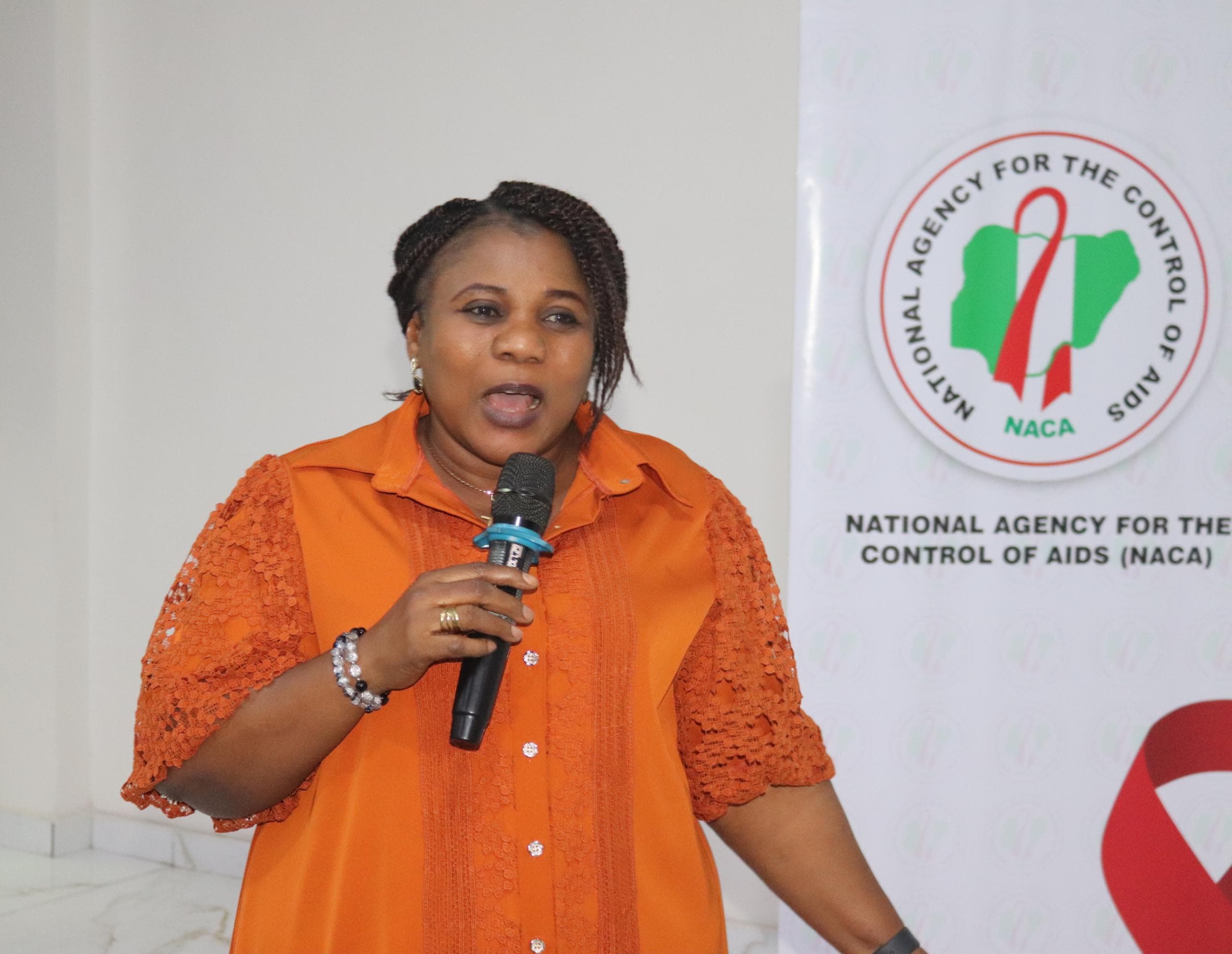
Prevention for HIV has taken yet another more advanced dimension with the introduction of the Lenacapavir (LEN) Pre-Exposure Prophylaxis (PrEP) into the stable of HIV prevention.
This was disclosed to Journalists assembled from across Nigeria in a two-day training programme on Lenacapavir in Lagos State.
In his presentation, the Lead Facilitator, and Principal Partner, Kent Consult Limited, Abuja, Dr. Segun Oyedeji, said unlike the earlier Post-Exposure Prophylaxis (PEP), which is taken to prevent HIV infection after exposure, the Lenacapavir PrEP is taken by non-infected persons.
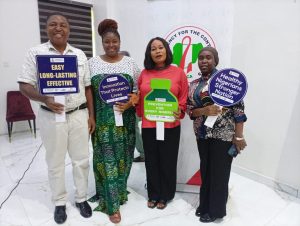
Such targeted persons are usually those exposed to vulnerable behaviours capable of exposing them to HIV infection.
“PrEP is taken before you are exposed to HIV, and comes in three forms: the daily oral PrEP, Truvada pill; the two-months interval injectible, Cabotegravir; and the long-acting bi-annually (six months interval) injectible, Lenacapavir. There’s also the Dapivrine Vaginal Ring, which women wear for one month”, he said.
Dr. Oyedeji explained that PrEP is meant for people who are exposed by their risk profile to HIV infection.
Risk profile, he explained, “is the kind of risk behaviours they exhibit in their lifestyle.”
Such people include people with a partner who has HIV, people who don’t always use condoms, sex workers, etc.
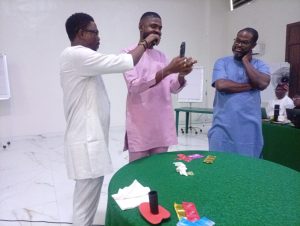
PrEP, according to Dr. Oyedeji, “builds up protection in your body so that if HIV enters your body, the medicine stops it from multiplying.”
Also, within the period the person is taking it, the person must get tested for HIV every three months interval.
So far, among the four options of PrEP, Adedeji, continued, “the Lenacapavir is the game-changer everyone is talking about.”
The reason is that it is a Capsid inhibitor, first of its class, that attacks the protein shell that HIV uses to copy itself, which is different from old drugs, and is just two injections per year, plus small starter tablets at the beginning. Not daily pills.
He, however, noted that before any of the PrEP options can be used, the person has to go through an eligibility test to ascertain which of the options would be suitable for the person, based on the person’s risky behaviour, and that all the person needs to do is to go to any health facility close to them to seek for the service, or the State Agency for the Control of AIDS (SACA) to get the right direction.

On his part, the Senior Prevention Manager, AIDS Healthcare Foundation (AHF), Mr. Adeleye Taofeek, who spoke on condom use as part of preventive measures for both HIV and Sexually Transmitted Infections (STIs), encouraged the use of condoms, especially where abstinence from sex is inevitable.
He said, “We are canvassing that as much as you use PrEP, you can also use condoms to prevent other STIs, beside HIV.
“We want the media to engage in demand creation for use of the various HIV prevention options: whether it is condom, PrEP, or change of behaviour, staying with an uninfected partner, we want the media to support the national response by creating demand for HIV prevention options.”
Earlier in her welcome address to participating Journalists at the two-day training, organised by the NACA and the Institute of Human Virology, Nigeria (IHVN), the Director-General, National Agency for the Control of AIDS (NACA), Dr. Temitope Ilori, emphsised the importance of the media in awareness creation.

She said: “PrEP is an effective HIV prevention for people who are HIV-negative and may be at risk of acquiring HIV. However, the availability of a prevention intervention is only one part of the equation. People must also have access to the right information, understand their prevention options, know where services are available, and feel confident seeking those services. This is where you, our media professionals, become indispensable partners.
“The media has the power to shape public understanding. A well researched story can dispel a misconception, encourage someone to seek a prevention service and potentially change a life. On the contrary, inaccurate or sensational reporting can create fear, reinforce stigma and discourage people from accessing HIV services.
“We, therefore, count on you to report PrEP and HIV prevention accurately, responsibly, and without stigma.”
The NACA D-G, who was represented by the Head, Public Relations and Protocol, NACA, Toyin Aderibigbe, charged the participants at the training, saying, “your reporting should make these issues understandable to ordinary Nigerians.”
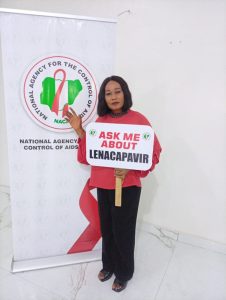
Research shows that so far there have been no infections among all the people who have received the LEN PrEP, showing almost 100% protection.
The World Health Organisation (WHO) adopted it in July 2025 as an additional PrEP option.
In Nigeria, NAFDAC approved it in the late 2025 and received regulatory clearance, with the country receiving its first batch of doses in March 2026, and subsequently distributed it to 8 pilot states.
The states are: Akwa Ibom, Anambra, Benue, Cross River, Ebonyi, FCT, Gombe, and Kwara.
Investigation revealed that since May 2026, all the pilot states are accessing the LEN, and the demand is very high, especially among sex workers who want privacy and no daily pills.
In Rivers State, although the Lenacapavir is expected to arrive soon, the daily oral PrEP (Truvada pill), and the two-months interval injectible (Cabotegravir) are available, and the relevant authorities are encouraging people to access the drug.
Sogbeba Dokubo
-
News3 days ago
Bayelsa Boat Mishap: Tinubu Donates N250m As Death Toll Hits 29
-
News3 days ago
Odu Pays Tribute To Late Chinwah, Describes Him As Courageous, Selfless Academic
-

 Maritime3 days ago
Nigeria, Russia Customs Sign MOU To Trade Facilitations
-

 Sports3 days ago
World marathon champion gets three-year doping ban
-

 Maritime3 days ago
South-South Governors Urges To Shake Off Collective Lethargic To Embrace Blue Economy
-

 Maritime3 days ago
Oyetola Woos Investors With Nigeria’s Seabed Resources, Marine Biotechnology
-

 Business3 days ago
Moniepoint MfB transaction volume hits 1trn daily — CEO
-

 Oil & Energy3 days ago
Global Oil Market May Witness Supply Surplus Before The End Of 2026 …… Report