
Rivers
PH High Court Fixes July 16, To Rule On N5.74bn Suit Claim By Indigenous Contractor, Macobarb Against NLNG

A Port Harcourt High Court Rivers State headed by Justice Chinwendu Nwogu is going to decide and rule on July 16, 2025, in suit number PHC/2013/CS/2022.
The fixing of date of judgment came on June 24, 2025, after counsels for both parties adopted and adumbrated their final written addresses, each seeking to convince the judge to rule in his client’s favour.
The trial judge will unravel wether or not did the NLNG breach a contract it awarded to an indigenous contractor, Macobarb International Limited, years ago and wether the breach lead to costs as high as N5.74Bn ?
Macobarb had sued NLNG claiming that it breached the terms of contract and that this breach led to various costs amounting to N5.74bn, saying the contract was deemed to still be running and that cost is rising.
Adopting their address, the lead counsel to Macobarb, Benefit Vilokpo, said “Claimants have shown by their pleadings and documentary evidence that NLNG breached its terms of contract, and that Macobarb has demonstrated that the purported letter of termination dated 27th November, 2015, is unlawful, null, and void.”
Counsel also said contract agreement made several provisions for ‘Standby Payments’ and that Claimants have also shown that they are entitled to Standby Payments.
The claimants lead counsel submitted in his adopted final address what he considered issues for determination, thus: “Whether the Claimants have proved their case as required by law to be entitled to the reliefs sought in this case (a. Whether the purported termination letter dated 27th November 2015 was valid in view of the provisions of the contract Agreement).”
The Claimants built their claim on the ground that the person that terminated the contract (Emeka Ohiri) was not known to the contract. Rather, it is the Contract Holder, Dweller Francis, that was known to the contract and that the said Francis never served Macobarb any termination letter.
The claimant counsel also said and pointed to the sections in their final address that the contract provided for standdown time.
Another prong on which the claimant wanted the judge to consider an opinion is whether the Defendant (NLNG) fulfilled the terms and conditions of the Close-out Meeting.
The Claimants final address noted that to demonstrate that the Contract is still in existence, the Defendant, NLNG, called for a meeting on the February 19, 2016 termed “Project close-out meeting”. The contract close-out meeting with signatures of all the attendees (Exhibit YJ 5) showed where it was stated that to close out the contract, NLNG will have to establish what the costs for the materials delivered to NLNG were, as well as the cost for demobilising and to prepare the payment Certificates for all items of the contract executed by the contractor”.
Macobarb asked the court to view it that the Contract is yet to be closed out; to also note that the Defendant (NLNG) admitted receipt of materials including 20ft container from the Claimants.
NLNG key positions:
The NLNG lead counsel, Prof Bayo Aderelegbe, on the other hand, wants the Court to determine whether the second claimant was a party to the contract and can sue in respect of the contract. Macobarb countered this in their address that this contention by the NLNF had earlier been dismissed by the same court and judge when it was raised during preliminary objection and that in fact, the judge had awarded a fine of N200,000 against the NLNG.
The NLNG counsel also wants the Court to determine whether the Defendant (NLNG) breached the contract as alleged by the Claimants; whether the Defendant wrongfully terminated the Contract; and whether the Claimants were entitled to the N5.74Bn.
During adoption and adumbration of the final addresses on June 24, 2025, the defence lead counsel asked the court to dismiss the claim by Macobarb on the ground that the termination of contract was legitimate and was done by the rightful party. Adarelegbe said the contract provided lumpsum amount and that the claim by Macobarb was outside the amount so provided and that it did not have any basis.
The Claimant’s counsel however countered in his address to the court saying that the Defendant did not challenge the amount submitted by the Claimants’ principal witness, the forensic accountant, and quoted Supreme Court’s position on such matter.
The Claimants’ counsel also said the Defendant did not plead any alternative figure in their statement of defence as being a more realistic or reasonable figure.
Another crucial matter both parties addressed is the issue of ‘Performance Bond’ mentioned in the contract. The NLNG submitted that the Claimant (contractor) failed to submit it within 14 days and that this was the basis for termination of the contract.
The Claimants (Macobarb) counsel countered that the contract did not state who was to submit the Performance Bond between the contractor and the contract owner. Macobarb thus asked the court to note that both parties failed on that and thus ‘deviated’, and that by law, deviation would be regarded as mutual and thus not punishable.
Macobarb further asked the court to note that it was 16 months after commencement of contract that the NLNG wrote to demand for it as well as submitted the sample of the performance bond. The Claimant therefore argued that the Performance Bond did not stop the contract from performing for up to 18 months.
The Claimant’s counsel particularly drew the attention of the court to a section of the defendant’s address and said by NLNG’s admission that by November 27, 2025, that the contract was ‘coming to an end’ meant that they admitted that the contract was yet to come to an end by that time. She said this amounted to inconsistency which she said is not admissible in law. She attempted to quote authorities on that.
The judge is thus to determine if the Performance Bond was so crucial in the contract to warrant termination of the job, and if the right person known to the contract carried out the termination.
Macobarb particularly drew the attention of the court to the many steps they took up to the Nigerian Senate seeking peaceful resolution, but to no avail, probably to show that the company (Macobarb) was not just being a troublesome contractor.
It seems to be these decisions that would lead to whether NLNG owed Macobarb any amount at all and if such debt is up to N5.74bn.
A highpoint in the addresses by both counsels was when the judge, Chinwendu Nwogu, reminded Macobarb’s counsel (Vilokpo) that any new authorities quoted during adumbration that were not contained in their original address were not going to be recorded or regarded.
The outcome of the controversial case seems very sensitive because of its criticality in how multinational companies and their indigenous contractors handled disputes, now and in the future.




Prevention for HIV has taken yet another more advanced dimension with the introduction of the Lenacapavir (LEN) Pre-Exposure Prophylaxis (PrEP) into the stable of HIV prevention.
This was disclosed to Journalists assembled from across Nigeria in a two-day training programme on Lenacapavir in Lagos State.
In his presentation, the Lead Facilitator, and Principal Partner, Kent Consult Limited, Abuja, Dr. Segun Oyedeji, said unlike the earlier Post-Exposure Prophylaxis (PEP), which is taken to prevent HIV infection after exposure, the Lenacapavir PrEP is taken by non-infected persons.

Such targeted persons are usually those exposed to vulnerable behaviours capable of exposing them to HIV infection.
“PrEP is taken before you are exposed to HIV, and comes in three forms: the daily oral PrEP, Truvada pill; the two-months interval injectible, Cabotegravir; and the long-acting bi-annually (six months interval) injectible, Lenacapavir. There’s also the Dapivrine Vaginal Ring, which women wear for one month”, he said.
Dr. Oyedeji explained that PrEP is meant for people who are exposed by their risk profile to HIV infection.
Risk profile, he explained, “is the kind of risk behaviours they exhibit in their lifestyle.”
Such people include people with a partner who has HIV, people who don’t always use condoms, sex workers, etc.

PrEP, according to Dr. Oyedeji, “builds up protection in your body so that if HIV enters your body, the medicine stops it from multiplying.”
Also, within the period the person is taking it, the person must get tested for HIV every three months interval.
So far, among the four options of PrEP, Adedeji, continued, “the Lenacapavir is the game-changer everyone is talking about.”
The reason is that it is a Capsid inhibitor, first of its class, that attacks the protein shell that HIV uses to copy itself, which is different from old drugs, and is just two injections per year, plus small starter tablets at the beginning. Not daily pills.
He, however, noted that before any of the PrEP options can be used, the person has to go through an eligibility test to ascertain which of the options would be suitable for the person, based on the person’s risky behaviour, and that all the person needs to do is to go to any health facility close to them to seek for the service, or the State Agency for the Control of AIDS (SACA) to get the right direction.

On his part, the Senior Prevention Manager, AIDS Healthcare Foundation (AHF), Mr. Adeleye Taofeek, who spoke on condom use as part of preventive measures for both HIV and Sexually Transmitted Infections (STIs), encouraged the use of condoms, especially where abstinence from sex is inevitable.
He said, “We are canvassing that as much as you use PrEP, you can also use condoms to prevent other STIs, beside HIV.
“We want the media to engage in demand creation for use of the various HIV prevention options: whether it is condom, PrEP, or change of behaviour, staying with an uninfected partner, we want the media to support the national response by creating demand for HIV prevention options.”
Earlier in her welcome address to participating Journalists at the two-day training, organised by the NACA and the Institute of Human Virology, Nigeria (IHVN), the Director-General, National Agency for the Control of AIDS (NACA), Dr. Temitope Ilori, emphsised the importance of the media in awareness creation.

She said: “PrEP is an effective HIV prevention for people who are HIV-negative and may be at risk of acquiring HIV. However, the availability of a prevention intervention is only one part of the equation. People must also have access to the right information, understand their prevention options, know where services are available, and feel confident seeking those services. This is where you, our media professionals, become indispensable partners.
“The media has the power to shape public understanding. A well researched story can dispel a misconception, encourage someone to seek a prevention service and potentially change a life. On the contrary, inaccurate or sensational reporting can create fear, reinforce stigma and discourage people from accessing HIV services.
“We, therefore, count on you to report PrEP and HIV prevention accurately, responsibly, and without stigma.”
The NACA D-G, who was represented by the Head, Public Relations and Protocol, NACA, Toyin Aderibigbe, charged the participants at the training, saying, “your reporting should make these issues understandable to ordinary Nigerians.”
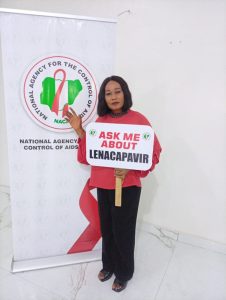
Research shows that so far there have been no infections among all the people who have received the LEN PrEP, showing almost 100% protection.
The World Health Organisation (WHO) adopted it in July 2025 as an additional PrEP option.
In Nigeria, NAFDAC approved it in the late 2025 and received regulatory clearance, with the country receiving its first batch of doses in March 2026, and subsequently distributed it to 8 pilot states.
The states are: Akwa Ibom, Anambra, Benue, Cross River, Ebonyi, FCT, Gombe, and Kwara.
Investigation revealed that since May 2026, all the pilot states are accessing the LEN, and the demand is very high, especially among sex workers who want privacy and no daily pills.
In Rivers State, although the Lenacapavir is expected to arrive soon, the daily oral PrEP (Truvada pill), and the two-months interval injectible (Cabotegravir) are available, and the relevant authorities are encouraging people to access the drug.
Sogbeba Dokubo
-
News3 days ago
Bayelsa Boat Mishap: Tinubu Donates N250m As Death Toll Hits 29
-
News3 days ago
Odu Pays Tribute To Late Chinwah, Describes Him As Courageous, Selfless Academic
-

 Maritime3 days ago
Nigeria, Russia Customs Sign MOU To Trade Facilitations
-

 Sports3 days ago
World marathon champion gets three-year doping ban
-

 Maritime3 days ago
South-South Governors Urges To Shake Off Collective Lethargic To Embrace Blue Economy
-

 Maritime3 days ago
Oyetola Woos Investors With Nigeria’s Seabed Resources, Marine Biotechnology
-

 Business3 days ago
Moniepoint MfB transaction volume hits 1trn daily — CEO
-

 Oil & Energy3 days ago
Global Oil Market May Witness Supply Surplus Before The End Of 2026 …… Report