
Business
Nigeria’s Power Generation Stagnates At 4,500MW



Business
Bayelsa To Spend N1.24trn As Diri Presents 2027 Appropriation Bill …Works, Education, Sports, Others Gulp Lion’s Share

Bayelsa State Governor, Senator Douye Diri has presented the 2027 Appropriation Bill of the State to State House of Assembly.
Christened the ‘’Budget of Assured Prosperity for Sustainable Growth and Development”, the appropriation bill was based on a projected revenue of N1,242, 688,970,520,22.
The Governor said the 2027 proposals were derived from broad stakeholder engagements involving traditional rulers, technical experts, the organised private sector and citizens across the state, noting that it was a historic budget being the first as the state was beginning its fourth decade and presented at a time sustained investments were visible in all the local government areas.
“Our fiscal priorities remain clear: roads and bridges that connect communities, better health and education services, reliable power and an environment in which businesses and families can thrive”, he said.
Presenting the estimates, governor Diri said N840.791 billion representing approximately 68 per cent was proposed for capital expenditure while recurrent expenditure was put at N401.897 billion representing approximately 32 per cent.
He observed that the proposed budget was approximately 22 per cent larger than that of the 2026 fiscal year, which was N1.016 trillion, just as he listed some strategic projects that would continue to receive priority attention in 2027, saying they were all at advanced stages of completion.
The projects according to the governor, include the Ekeremor–Agge Road Phase I, Nembe–Brass Road Phase I, Akaba–Ayakoro Road with spur to Otuegwe 1, Glory Drive Phase 3, Agbere-Elemebiri Road, the 30,000-seater stadium at Igbogene, and the nine-storey state secretariat complex.
The governor expressed the conviction that with work progressing on the three senatorial roads, all local government headquarters would be connected to the state capital and boost socio-economic activities across the state.
“With work progressing on all senatorial causeways, we are moving closer to an ambition our people have held since the creation of the state: to connect the capital to every local government headquarters and open up access to our coastal communities. This will boost fisheries, marine and blue economy enterprises, and tourism.
“These projects demonstrate that our beautiful terrain should not limit our ambition. With resolve, sound planning and prudent management, Bayelsa is building what many once thought were impossible”, he added.
Giving a breakdown of the sectoral allocations, Works and Infrastructure got the lion’s share of N422.84 billion followed by Education ¦ 126.97 billion and Sports ¦ 68.50 billion.
Also, Health was allotted ¦ 53.32 billion, Security N24 billion, Public Utilities N22.94 billion and Agriculture got N17.74 billion.
Diri charged the Ministry of Budget and Economic Planning to enforce coordination, transparency and accountability and ensure effective implementation of the budget.
According to him, government would continue to improve its model schools, support accreditation of programmes in tertiary institutions, strengthen science and technical education and introduce digital learning tools in schools.
He added that the administration would pursue the upscaling of its 60 megawatts independent power plant to 100 megawatts and prioritise water provision in 2027.
He also remarked that the allocation to the sports sector would enable government accelerate work on the stadium project as the state prepares to host the National Sports Festival.
In his remarks, Deputy Speaker of the House of Assembly, Rt. Hon. Michael Ogbere, commended Governor Diri for the successful implementation of the 2026 budget, and appreciated him for his visionary leadership.
Hon. Ogbere described Diri as a peace maker, bridge builder and a leader who has constructed roads and bridges across 80% of all communities in the state, expressing confidence that the projects outlined were achievable.
The Deputy Speaker assured the governor of the 7th Assembly’s support and speedy passage of the budget while the Majority Leader, Rt. Hon. Monday Bubou, moved a motion for the members to pass a vote of confidence on Governor Diri and the administration, which was unanimously endorsed by the lawmakers.
Ariwera Ibibo-Howells, Yenagoa
The Nigerian National Petroleum Company Limited (NNPC) has said that ongoing reforms in Nigeria’s oil and gas sector have lifted national crude oil production by 600,000 barrels per day, from about 1.2 million barrels per day to 1.8 million barrels per day.
According to the company, the improvement has strengthened Nigeria’s position as a destination for international energy investment.
Group Chief Executive Officer ( GCEO) of NNPC Limited, Engr. Bashir Bayo Ojulari, made the remarks last week at an Energy Talk titled “Nigeria’s Reform Agenda: Competing for Energy Capital”, moderated by John Defterios, Chairman, MENA, APCO, at the 2026 Abu Dhabi International Petroleum Exhibition and Conference (ADIPEC) in Abu Dhabi, United Arab Emirates.
Ojulari linked the production growth to the implementation of the Petroleum Industry Act (PIA) 2021, an improved investment climate, better investment decisions, and stronger collaboration between NNPC Limited and its partners.
He said the current output level is a milestone in NNPC Limited’s journey towards its 2 million barrels per day target by 2027.
The Company, he explained, is focused on maintaining infrastructure, protecting base production, increasing output from existing assets, and advancing new projects designed to lift production further.
“The figure of 1.8 million barrels per day is a stage in a journey towards our objective.
We are concentrating on the basics, which are maintaining our infrastructure, protecting base operations and executing the projects that will take production higher,” Ojulari stated.
On the domestic market, the GCEO said the removal of petrol subsidy has been accompanied by an expanded Compressed Natural Gas (CNG) programme.
He noted that over 400 CNG conversion centres have been established, while more than 1,000 trucks are transporting petroleum products
Nkpemenyie Mcdominic, Lagos
The Sea Empowerment and Research Centre (SEREC) has call for an independent forensic audit of the Nigerian Maritime Administration and Safety Agency (NIMASA), following conflicting claims over the management and currency status of the Cabotage Vessel Financing Fund (CVFF).
The centre said the controversy surrounding the fund had reinforced its earlier concerns about transparency, accountability and the possible erosion of contributions through currency conversion and administrative decisions.
In a reaction titled, “Cocks Crow at Dawn — On the CVFF Audit Crisis,” forwarded by SEREC’s representative, Eugene Nweke, the organisation said the latest revelations had vindicated its earlier calls for a comprehensive examination of NIMASA’s accounts from 2004 to date.
SEREC said former NIMASA Director-General, Temisan Omatseye, had disclosed that dollar-denominated contributions were converted into naira and invested in fixed deposits during his tenure, while the incumbent Director-General, Dr Dayo Mobereola, maintained that the fund remained in dollars with the Central Bank of Nigeria.
The organisation said the conflicting accounts raised questions about the actual value, location and management of the fund, which was to provide financing support established for indigenous shipowners under the Coastal and Inland Shipping (Cabotage) Act.
It argued that shipowners, as contributors to the fund, deserved documentary evidence showing how much had accrued, where the money was domiciled, the interest generated and the amount currently available for disbursement.
SEREC also warned that converting dollar contributions into naira exposed the fund to significant foreign exchange losses, given the depreciation of the local currency over the years.
According to the organisation, if the contributions were converted into naira and retained in that currency, the fund could have suffered a substantial erosion in its real value, undermining its original objective of strengthening indigenous shipping capacity.
It maintained that the CVFF was contributors’ money and should not be treated as government largesse, stressing that shipowners had a legitimate right to demand accountability.
The centre further criticised maritime industry stakeholders, particularly shipowners’ associations, for allegedly prioritising access to the fund over sustained demands for transparency in its management.
SEREC insisted that no disbursement should take place without a comprehensive forensic audit to establish the fund’s financial history and current position.
It said the audit should cover all contributions, currency conversions, investments, accrued interest and administrative transactions relating to the fund from 2004 to date.
The organisation said the findings would provide the necessary clarity on the financial position of the CVFF and help restore confidence among indigenous shipowners seeking access to the facility.
Nkpemenyie Mcdominic, Lagos
-
Rivers2 days ago
NUJ Set To Attend UNIPORT’s 217th Inaugural Lecture
-
 News2 days ago
NJC Suspends Three Judges, Sanctions Eight Others
-
Politics2 days ago
Atiku Kicks-Off 2027 Campaign, Promises To Tackle Nigeria’s Challenges
-
 Featured2 days ago
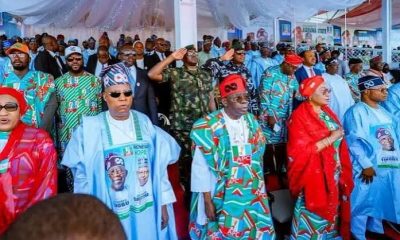
APC Presidential Campaign Storms PH, ‘Morrow
-
News2 days ago
FG Explains Supply Disruption As Power Generation Drops To 3,659MW
-
Metro2 days ago
Port Harcourt Prepares For 10,000 Runners As International Marathon Returns
-
 News2 days ago
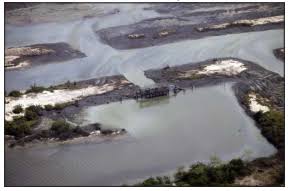
Bille Gas Leak: Coalition Tasks FG On Proactive Measures
-

 News2 days ago
IGP Orders Arrest, Prosecution Of Campaign Billboard Vandals