
Nation
N4bn Seized Assets, Arrest Of Kano Anti-Corruption Chair, Magaji, Raise Fresh Dust

Two weeks after relocating seized properties linked to a high-profile corruption case, Muhuyi Magaji Rimingado, Chairman of the Kano State Public Complaints and Anti-Corruption Commission (PCACC), has found himself on the other side of the law, facing alleged arrest by the Nigeria police.
His arrest and subsequent release have generated significant debates and controversies.
Magaji was arrested on Friday on the order of the Inspector General of Police (IGP). The team was led by ASP Ahmed Bello. The arrest is reportedly linked to the ongoing trial of Bala Muhammad Inuwa, the former Managing Director of the Kano Agricultural Supply Company (KASCO).
Inuwa’s trial which began in November 2023 at the Kano High Court under the presiding judge, Justice Hafsat Yahaya, is centered around the seizure of properties, including bank accounts, allegedly linked to the embezzlement of over ¦ 4 billion in public funds.
Inuwa was arrested in August 2023 by the Kano State Public Complaints and Anti-Corruption Commission (PCACC) for allegedly diverting government funds through the Association of Compassionate Friends, an NGO he founded.
Along with his son, Bala Inuwa Muhammad Jr., and other associates, Inuwa faces multiple charges, including criminal breach of trust, criminal misappropriation, and making false statements. The charges claim that, between August 2022 and April 2023, they transferred funds meant for KASCO into personal accounts.
Following their arrests, a Kano State High Court granted administrative bail to Inuwa on self-recognizance, while his son was granted bail under strict conditions, including a ¦ 10 million bond.
Legal proceedings continued, with Inuwa’s legal team challenging the PCACC’s jurisdiction, seeking the withdrawal of certain judges, and requesting the removal of police officers stationed at Limestone Processing Links Ltd.
It took another turn when Inuwa accused PCACC in January 2025 of violating court orders by seizing his property, which led to a public outcry.
He urged law enforcement agencies to respect judicial decisions and not undermine the court’s authority in the ongoing legal matters.
Speaking to journalists on January 8, Inuwa claimed the agency had taken over properties stocked with trailers, fertilizer grinding machines, and other agricultural implements in contravention of a High Court order.
In response, the PCACC chair vehemently dismissed these allegations, arguing that the restraining orders obtained by Inuwa were interim orders that had expired since 2024.
He also noted that the PCACC was not made a party to the proceedings, despite being the primary agency in charge of the confiscated properties.
Magaji emphasized that Section 40 of the Kano Anti-Corruption Law empowers the commission to secure such properties while the case is ongoing.
Two weeks ago, Magaji disclosed during a press briefing that his commission had thwarted an attempt to relocate seized properties worth over ¦ 2 billion, including trailers, trucks, and minivans. The items were moved to a state government warehouse in Nasarawa GRA from their previous location in Kumbotso Local Government Area.
However on Friday, Magaji was arrested by the IGP monitoring team and released the same day at around 10:45 p.m.
According to his lawyer, Usman Umar Fari, the arrest was based on allegations of misappropriating ¦ 4 billion and confiscating properties worth ¦ 2 billion.
Fari criticized the police’s actions as a breach of legal process, noting that the complaints against Magaji involve cases already before the courts.
However, the Nigeria Police on Monday responded by issuing a statement to clarify the situation.
According to the police, Magaji was not arrested but was instead invited for questioning in relation to a petition filed against him.
The Force Public Relations Officer, ACP Olumuyiwa Adejobi, stated, “We wish to clarify that Mr. Magaji was not arrested; instead, he was invited by the Force pertaining to a petition received against him. Any assertions indicating that Mr. Magaji was arrested are unfounded and misleading.”
Speaking on Channels Television on Monday, Magaji alleged that his arrest was orchestrated by a suspect being prosecuted by his agency.
He described it as retaliation from individuals within the corruption world.
“Anti-corruption fights are fair, but corruption fights are dirty. There are lots of activities being orchestrated against my person,” he said.
Magaji accused the accused persons of attempting to tamper with evidence, prompting his decision to relocate the seized properties to a more secure location.
He added, “When they couldn’t succeed in court, they activated the police to arrest me.”
Also, at a One-Day Dissemination Event for Kano Open Government Partnership (OGP) Second State Action Plan (SAP II 2024-2025) and the Kano State Anti-Corruption Strategy (2024-2028) held on Tuesday in Kano, Magaji, lamented the challenges faced in combating corruption, emphasizing how corrupt individuals exploit the system to fight back.
He detailed the ongoing case and how it unfolded.
“That money we are talking about was put in KASCO’s account between May 2022 and May 2023. The then head of the agency siphoned it. We traced about ¦ 700 million cash that was not spent, blocked it, and identified over ¦ 43 billion that had been spent. We tracked the assets they purchased, seized them in accordance with the law, and charged the matter to court.”
Magaji explained that while the Commission made progress in the case, efforts were obstructed by what he termed “judicial interference.”
He recounted how ¦ 200 million of the blocked funds were allegedly removed through questionable judicial maneuvers.
“Somebody, through the backdoor, used our judicial system to help these people remove ¦ 200 million out of the ¦ 700 million we blocked. They are using this money to fight back. Beyond that, they attempted to seize the property we pledged as evidence before the court. That’s when I said, ‘No.’”
Magaji criticized the alleged complicity of law enforcement officers and judicial representatives in enabling corruption.
He cited an instance where a senior police official dismissed the Commission’s actions, stating, “The property belongs to Ganduje, and you’re too small to seize it.”
“This is not about personalities. This is about anti-corruption. Regardless of your status, as far as you break the law, the law will go after you. In an egalitarian society, we are all supposed to be equal in the eyes of the law,” Magaji said.
He further disclosed how the police guarding the seized property were removed under dubious circumstances, leading to the deployment of civil defense officers.
“Three hours after we stationed civil defense personnel, I received a call that they had been ordered from Abuja to withdraw. I had no choice but to call on KAROTA to secure the property.”
Magaji shared how he faced threats, including an attempt to detain him on charges of abuse of power, mischief, and trespass. He questioned the motives behind such accusations:
“Can I even abuse power as the head of an agency empowered by law to act? If i do is it the appropriate way to go about it?.
“Someone asked me, ‘What do you stand to lose if you allow them to take the property?’ This fight is not about me; it’s about upholding the law,” he added.



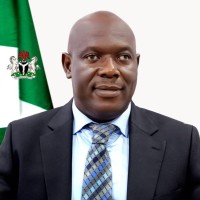
The Hydrocarbon Pollution Remediation Project (HYPREP) has commemorated the 15th anniversary of the release of the United Nations Environment Programme (UNEP) Environmental Assessment Report on Ogoniland, reaffirming its commitment to restoring the environment and improving the livelihoods of affected communities.
In a statement signed by the Project Coordinator, Prof Nenibarini Zabbey, to commemorate the anniversary, HYPREP described the anniversary as a significant milestone in Nigeria’s environmental restoration efforts, noting that the project has made remarkable progress in implementing the recommendations of the landmark UNEP report released on August 4, 2011.
The UNEP report had revealed extensive oil pollution across Ogoniland, severe environmental degradation, and serious public health risks resulting from decades of petroleum operations. It also recommended an initial $1 billion fund to commence the cleanup of the affected communities.
According to HYPREP, the Federal Government formally launched the Ogoni clean-up in 2016, while the Project Coordination Office was established in 2017 to drive the implementation of UNEP’s recommendations.
Zabbey said the current administration has continued to prioritise the project under the Renewed Hope Agenda.
Providing an update on the cleanup, the Project Coordinator disclosed that 30 of the 65 contaminated sites identified by UNEP have been fully remediated, while work is ongoing at several medium- and high-risk locations. It also stated that more than 1.5 million mangrove seedlings have been planted as part of what it described as the world’s largest restoration of oil-degraded mangroves, with over 1,000 hectares of shoreline already rehabilitated.
Zabbey further revealed that 49 Ogoni communities have been connected to potable water schemes through multiple water projects and booster stations aimed at providing safe drinking water across the region.
In the health sector, he said the 100-bed Ogoni Specialist Hospital in Kpite and the 43-bed Cottage Hospital in Buan are nearing completion, adding that several existing health facilities have been upgraded with modern medical equipment, while five ambulances have been donated to improve emergency healthcare services. The Project Coordinator also disclosed that a three-year human health biomonitoring study is being conducted in collaboration with the World Health Organization’s International Agency for Research on Cancer (IARC).
On economic empowerment, Zabbey stated that the Project has created more than 8,000 direct jobs and trained thousands of Ogoni youths and women in various vocational and technical skills, including software development, cybersecurity, aviation, commercial diving, seafaring, mechatronics, and creative arts. The project also reported awarding scholarships to more than 1,000 students, providing grants to small businesses, and supporting persons living with special needs through skills acquisition programmes.
The statement further highlighted ongoing legacy projects, including the Ogoni Power Project and the Centre of Excellence for Environmental Restoration, which it said is about 96 per cent complete. HYPREP also welcomed the recent designation of the Ogoni Wetland as a Ramsar Site of International Importance and pledged to continue promoting biodiversity conservation and sustainable management of the ecosystem.
Marking the anniversary, Zabbey said the progress achieved over the past 15 years demonstrates the collective commitment of government, development partners, stakeholders, and local communities to restoring Ogoniland. He called for renewed collaboration to sustain the cleanup effort, promote environmental sustainability, and support the long-term development of the region. 3
-

 News2 days ago
RSG Targets Nine Million Residents in Mosquito Net Distribution Campaign
-

 Oil & Energy2 days ago
Aiyedatiwa Signs New Electricity Bill
-

 Oil & Energy2 days ago
NLNG Commissions Research And Innovation Centre In RSU
-

 Maritime2 days ago
Marine Minister Commends President Tinubu On NPERA Bill Assent
-

 News2 days ago
KenPoly Holds Eight Convocations, August 29
-

 News2 days ago
RSG Begins Another Phase of Projects Commissioning Today
-

 News2 days ago
RMAFC Completes Revenue Sharing Review, Proposes New Pay
-

 Maritime2 days ago
NAGAFF Petitions IGP Over Alleged Maritime Police Harassment