
Rivers
Rivers Seals Firms Over Non-Compliance With Physical Planning Law


The Rivers State Ministry of Physical Planning and Urban Development has sealed some oil and gas service Companies and training firms at the Trans-Amadi Industrial Layout of Port Harcourt over non-compliance with the Physical Planning Law and Regulations of the State.
The Commissioner, Rt. Hon. Evans Bipi, who led the enforcement team on the action, accused the companies of flagrant violation of standards and procedures of the Nigerian building codes and regulations of the Ministry while carrying out development projects in their premises.
He said the companies failed to comply with the requirements on the monitoring, verification and compliance exercise carried out by officials of the Ministry.
The Commissioner also frowned at the companies for also failing to honour invitations extended to them by the Ministry over the issues.
Hon Bipi said the sealing of premises of the defaulting companies was done with human face and within the ambit of the law.
He clarified that it was not meant to disrupt the operations of the companies but a necessary action to compel them to comply with safety, quality and other regulatory standards of the building industry.
The Commissioner assured that the affected companies will be unsealed as soon as they send their representatives to the Ministry to resolve the outstanding issues.
On his part, the Chairman of the Special Committee on Development Control of the Ministry, David Ogbanga, explained that the companies failed to provide relevant documents required of them, which include previous and current plans with elevations and setbacks, previous and current development permits and approval on fencing and renovation as well as Urban Infrastructure Support Plans.
He said others include Demand Notices and evidence of original receipts of payment, Reports of relevant professionals on subject plan, as well as Location Map and Survey Plan.
Ogbanga said the companies were duly served with notices of enforcement, which include that of contravention, stop work and seal-up, in accordance with relevant sections of the Physical Planning and Development Law of the State before the execution of the action.
He said the affected companies will remain sealed until their Managements demonstrate seriousness and willingness to resolve the outstanding issues.
The Chairman of the Special Committee on Development Control further stated that this will serve as a deterrent to non-compliant companies and corporate organisations in the State.
By: Theresa Frederick & Charity Amiso



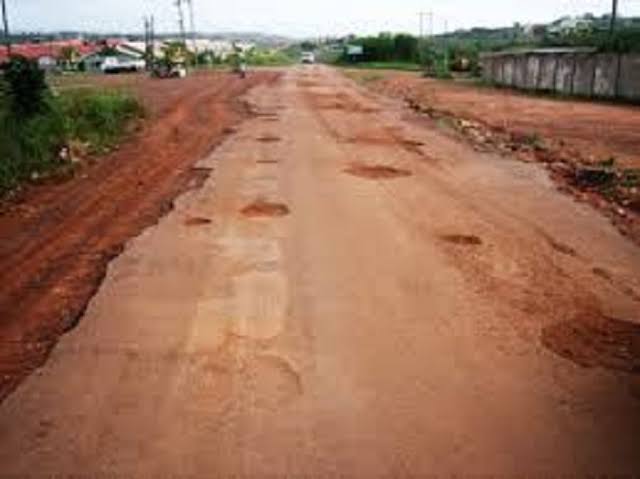
The Head of Chiefs in Nkpolu, Rumuigbo, in Obio/Akpor Local Government Area, Eze Ogwutum Ezekiel, has decried the deplorable condition of schools in the community, disclosing that pupils have stopped attending the secondary school due to the challenges facing the facility.
Eze Ezekiel, who made this known recently in an exclusive interview with Tide, in Rumuigbo, also lamented the poor state of the community’s primary school and roads, calling on the government to urgently intervene to address the situation.
He expressed concern over the state of educational infrastructure in Nkpolu, stressing the need for the relevant authorities to restore conducive learning conditions for children in the community.
The traditional leader said the situation required urgent attention, noting that access to functional schools was essential to the educational development and future of children in the area.
He also called on youths and other residents of Nkpolu to maintain peace during elections, and urged eligible voters to cast their votes peacefully and return to their homes afterwards.
He warned against violence and the disruption of electoral activities at polling units, stressing that “youths and other members of the community must conduct themselves responsibly before, during and after elections.”
On the relationship between Nkpolu and neighbouring communities, he explained that Nkpolu falls under Apara, which is also under Egbema, adding that the paramount ruler of Apara hails from Nkpolu.
He stated that there was no dispute between Nkpolu and the neighbouring communities, and that their traditional and communal relationships remained peaceful.
Speaking on land grabbing, Eze Ezekiel said he had not experienced any case of forceful land acquisition in the community, saying that the land in question had been sold and was almost fully developed.
On development projects, the community leader identified the ongoing installation of solar streetlights as one of the developments in Nkpolu.
He also mentioned a hall constructed by the Niger Delta Development Commission (NDDC), existing streetlights and road repairs among projects associated with the commission, while reiterating the need for further infrastructural development.
The paramount ruler further disclosed that his traditional stool had yet to receive official government recognition, but expressed optimism that it would eventually be recognised.
He appealed to the government to address the challenges confronting Nkpolu, particularly the poor condition of schools and roads, while urging residents to sustain the peace and unity necessary for the community’s development.
By: Goodness Emelue & Fruitful Wodi
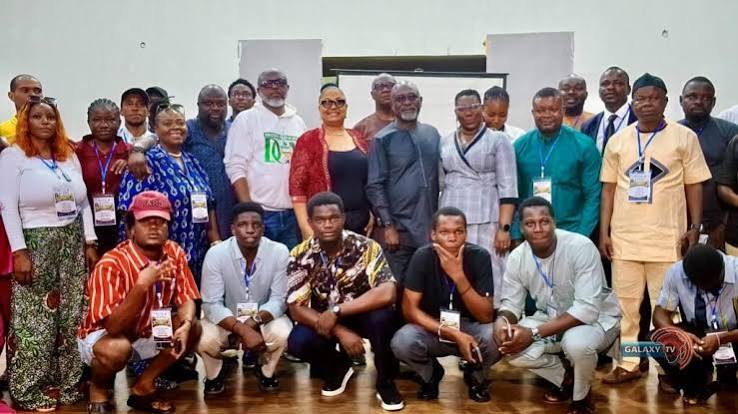
The Niger Delta Development Commission (NDDC), in collaboration with the University of Port Harcourt, has intensified efforts to strengthen the region’s creative economy through a four-day technical training programme in film production.
The initiative is aimed at equipping film makers with practical skills to improve their professional capacity, expand employment opportunities and promote authentic storytelling about the Niger Delta.
Speaking during the training at the auditorium of the university’s Department of Theatre Arts and Film Studies, the NDDC Head of New Media in the Corporate Affairs Department, Dr. Selina Dan-Albert, said the commission was exploring opportunities to empower young people with relevant skills to thrive in the creative industry.
In a statement signed by the NDDC Director of Corporate Affairs, Seledi Thompson-Wakama, Dan-Albert described the programme as an investment in the future of the region’s creative sector, noting that it would encourage greater interest in film making as a viable career and source of livelihood.
She urged participants to maximise the opportunity to develop their technical expertise and establish themselves professionally, while using their creative abilities to tell authentic stories about the Niger Delta.
She assured them that the commission would sustain its support for initiatives aimed at improving the skills and professional competence of young people in the region.
The Head of the Department of Theatre Arts and Film Studies, Prof. Edward Imo, said the programme was designed to equip participants from the Niger Delta and other parts of Nigeria with the technical expertise required for film production and the use of cinema to communicate the region’s experiences and stories.
He described the partnership with the NDDC as an indication of growing opportunities for the department and commended the commission for recognising its contributions to practical film production.
Imo said the department had a pool of skilled personnel and industry professionals, including individuals with experience in Nigeria’s film industry, adding that the training would further strengthen the creative sector.
On the growing influence of artificial intelligence and digital technologies, Imo said filmmakers should embrace emerging tools without losing the human experiences, emotions, aspirations and social realities that give stories their meaning.
He urged participants to deploy technology responsibly in addressing societal concerns and promoting development, while calling on other government agencies to emulate the NDDC’s investment in human capital development.
According to him, sustained investment in skills acquisition and professional training would strengthen the Nigerian film industry and expand opportunities for young people.
The Consultant and Managing Director of GreenHedge Resource Consults Limited, Mr. Francis Abayomi, said the Niger Delta had considerable potential for growth in the creative industries.
He explained that the training was designed to provide young people with practical filmmaking skills, noting that the University of Port Harcourt was selected because of its pool of talent and contribution to producing professionals for the creative sector.
The National President of the Directors Guild of Nigeria, Mr. Uche Agbo, described filmmaking as an important driver of employment and economic growth, with the potential to help young people develop sustainable livelihoods and reduce poverty and crime.
Agbo said the film industry offered accessible entry points for aspiring professionals, making it a viable avenue for youth empowerment and economic inclusion.
He urged participants to develop distinctive storytelling styles and remain committed to integrity and authenticity, stressing that filmmakers must remain faithful to their stories and avoid distorting facts in their creative work.
Also speaking, veteran Nigerian actor, Mr. Bimbo Manuel, described the programme as timely, given the growing contribution of the Nigerian film industry to the creative economy and national development.

The Rivers State Ministry of Education has condemned reports of alleged forced virginity testing involving female students of Government Comprehensive High School (Senior Secondary), Taabaa, in Khana Local Government Area, describing the incident as disturbing and calling for a thorough investigation.
The Ministry’s position was contained in a press statement issued by the Permanent Secretary, Dr. Mina Tele Ikuru, on behalf of the Commissioner for Education, Dr. Peters Wagor.
According to the statement, the Ministry received reports that individuals allegedly acting on behalf of a traditional institution in the community visited the school and sought to select female students for virginity testing under the guise of providing scholarships and exercise books.
The statement further disclosed that on September 17, 2026, 16 female students were reportedly selected for the exercise, prompting objections and a peaceful protest by students.
Describing the allegations as deeply troubling, the Ministry said the incident raises serious concerns about the dignity, privacy, safety and fundamental rights of school children.
It stressed that no individual, traditional institution, community, body, or private organisation has the authority to subject students to virginity testing or any other degrading, coercive or invasive practice.
The Ministry also emphasised that educational support, including scholarships, exercise books and other learning materials, must be provided transparently and unconditionally, without exposing beneficiaries to practices that undermine their safety, dignity or fundamental rights.
According to the statement, the Ministry has commenced an investigation to establish the facts and determine the circumstances surrounding the alleged incident. It assured the public that appropriate action would be taken, including referring the matter to relevant authorities, against any individual or organisation found culpable.
Pending the conclusion of the investigation, the Ministry warned individuals, traditional institutions and community bodies against engaging in any activity involving the selection, examination or testing of female students for virginity, whether directly or indirectly.
It also directed schools across Rivers State to uphold the highest standards of child protection and ensure that students are safeguarded against practices that could expose them to humiliation, coercion, abuse or violations of their fundamental rights.
The Ministry stated that no cultural tradition, scholarship programme, disciplinary measure or community development initiative should be used as a pretext for subjecting students to such practices.
Reassuring the students of Government Comprehensive High School, Taabaa, their parents and guardians, and the wider school community, the Ministry said their concerns were being taken seriously.
It reiterated its commitment to ensuring that all schools in Rivers State remain safe and supportive environments where every child can pursue an education without fear of intimidation, abuse or discrimination.
The statement further stated that “the safety, dignity, privacy and fundamental rights of every student remain paramount and must be protected at all times.”
By: Tochi Abinye Pepple
-

 Education22 hours ago
FCE Yola Graduates 3,555 Teachers , Seeks Upgrade to University
-

 Niger Delta1 day ago
Diri Restates Stance On Lagos-Calabar Coastal Highway
-

 Sports21 hours ago
Nigerian Trio Target Titles At PFL Africa Finals
-

 Niger Delta1 day ago
C’River, NUJ Pay Tribute To Late Guardian Editor
-

 News1 day ago
NDLEA Recovers Tons Of Illicit Drug Consignments In Nine States
-

 Opinion1 day ago
Checking Voter Apathy In Nigeria’s Electoral Process
-

 Politics22 hours ago
2027: DICKSON’S EX-ALLY VOWS TO WORK AGAINST NDC INTEREST IN BAYELSA
-

 Politics22 hours ago
2027: GROUP PLEDGES 40,000 SUPPORTERS FOR COALITION CANDIDATES IN RIVERS