
Business
‘Nigerians Imported N903bn Worth Food In Three Months’

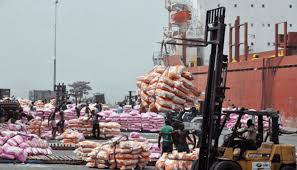
The Central Bank of Nigeria released $689.88million (N903.95billion) at the official exchange rate of N1,309/$ as of March 31, 2024 to Nigerians for importing food items in the first quarter of 2024.
The amount of food imported into Nigeria increased by 16.37 per cent within the first six months of 2024, The Tide’s source gathered.
According to the monthly Consumer Price Index data released by the National Bureau of Statistics (NBS), the average price index for imported food rose to 806.0 points in June 2024, up from 692.6 recorded in January 2024.
On a month-on-month basis, imported food inflation jumped to 36.38 per cent in June 2024, from 34.83 per cent recorded in the previous month, which represents a 1.55 per cent increase as the naira weakened following the unification of all segments of the forex exchange market by the CBN.
The unification process in June 2023, aimed at creating a more transparent and efficient foreign exchange market, resulted in a steep naira depreciation.
Further analysis by the source showed that imported inflation has increased consecutively for over four years, largely driven by both internal and external factors.
Data from the NBS on imported food inflation from January to June 2024 reveals a troubling and steady increase in costs. In January, Nigeria recorded an imported inflation rate of 26.29 per cent. This increased to 29.81 per cent in February, marking a notable jump of 3.52 per cent in the inflation rate from January.
The trend continued in March, with the imported food inflation rate climbing to 32.89 per cent, an increase of 3.08 per cent from February.
In April, the inflation rate further increased to 34.01 per cent, growing by 1.12 per cent from March, showing a slight deceleration in the rate of increase.
May recorded an imported food inflation rate of 34.83 per cent, indicating a continued upward trend. The increase in the inflation rate is 0.82 per cent from April.
By June, the imported food inflation rate had hit 36.38 per cent, marking an increase of 1.55 per cent from May.
While the overall trend is upward, the rate of increase in inflation shows signs of gradual deceleration from March to May before picking up again in June.
Recently, the Federal Government approved a 150-day duty-free window to allow the importation of maize, husked brown rice and wheat as part of efforts to tackle rising inflation which had impoverished many Nigerians.
Consequently, the government suspended duties, tariffs and taxes for the importation of certain food commodities through land and sea borders.
However, the President of the African Development Bank, Dr Akinwunmi Adesina, raised concerns over the federal government’s plan to import food, stating that the policy is depressing. According to him, Nigeria cannot rely on food imports to stabilize prices, and resorting to it could destroy the country’s agricultural policy.
Also, the National President of the All Farmers Association of Nigeria, Kabir Ibrahim, said the duty-free importation of food items would lead to the erosion of gains made in local maize, rice and wheat production.
He called on governments to invest through the provision of subsidies on inputs such as machines, fertilizers and chemicals to have a sustainable food system in the country.
Nigeria’s inflation rate in June 2024 surged from 33.95 per cent in May 2024 to 34.19 per cent in June. The headline inflation rate in June 2024 was 11.40 percentage points higher compared to June 2023, rising from 22.79 per cent.
On a month-on-month basis, the headline inflation rate in June 2024 was 2.31 per cent, an increase of 0.17 per cent from May 2024’s rate of 2.14 per cent.
Similarly, the quarterly statistics of CBN have shown that the country exported large amounts of food from foreign countries despite being touted as the food basket of Africa.
An analysis showed that its citizens spent $689.88m on import bills between January and March 2024. This was an increase of $12m or 1.77 per cent from $677.61m recorded in the same period of the previous year.
The high food import bill is a concern for the government. The country has a large agricultural sector, and there have been efforts to boost local production to reduce the dependence on food imports. However, factors such as inadequate infrastructure, insecurity, and climate change have hindered progress in the sector.
###
Bayelsa Urges Cooperatives To Apply Global Best Practices
… Make Investment in Social Capital
Ariwera Ibibo-Howells, Yenagoa
Bayelsa State Deputy Governor, Senator Lawrence Ewhrudjakpo, has restated the need for cooperative societies in the country to follow global trends in their operations to contribute meaningfully to the growth and development of the national economy.
Senator Ewhrudjakpo, who spoke recently during a courtesy visit by the Former Legislators’ Wives Association (FLEWA) to his office in Government House, Yenagoa, described cooperative societies as strategic engines of growth and stabilization of any economy.
The Deputy Governor opined that, apart from pooling resources together and sharing same among their members, cooperatives could do a lot more to impact society by investing in both profitable and non-profit making ventures.
He encouraged cooperatives in Bayelsa to imbibe global best practices by partnering government and other well-meaning organizations to invest in education and other areas of social capital.
While expressing appreciation to the women for supporting the re-election of the Governor and himself, Senator Ewhrudjakpo urged the Association to key into the policies and programmes of the Governor Diri-administration, especially those on women and youth empowerment.
He also called on FLEWA to take their public enlightenment programmes against drug addiction, cultism and other antisocial vices to the primary schools, which according to him, have become breeding grounds for such societal ills.
”Cooperatives, as far as I am concerned, are the engines of growth and stability of the economy. Most of the big economies and companies you see started off as cooperatives.
“The biggest football clubs in Europe were cooperatives that have become very mega investments.
“So, while I will really want to encourage you with your cooperative, I want you to have more than one area of focus. Our cooperatives should do more than contributing money for members in turns.
“We will match forward with our agenda, and expect you to match behind the state. I encourage you to come up with programmes that will help fight against cultism and other vices in our primary schools.
“Don’t always focus your enlightenment programmes on the secondary and tertiary learning institutions alone because our primary schools have become the breeding ground for all the vices we have mentioned here”, he said.
Speaking earlier, the President of FLEWA, Mrs. Margaret Boye Debekeme, said the goal of the association was to foster unity and collective development, through the pooling of resources for financial self-reliance.
Mrs Debekeme, who lauded the development strides of the present administration in the state, solicited the support of government for their programmes lined up for the year, including enlightenment campaign against cultism in schools.



Business
Jonathan, Diri, Others Laud Firm’s Milestone in Bayelsa …Says Project Will Drive Industrialisation, Create Jobs



-

 News2 days ago
RSG Targets Nine Million Residents in Mosquito Net Distribution Campaign
-

 Oil & Energy2 days ago
Aiyedatiwa Signs New Electricity Bill
-

 Maritime2 days ago
Marine Minister Commends President Tinubu On NPERA Bill Assent
-

 Oil & Energy2 days ago
NLNG Commissions Research And Innovation Centre In RSU
-

 News2 days ago
KenPoly Holds Eight Convocations, August 29
-

 News2 days ago
RSG Begins Another Phase of Projects Commissioning Today
-

 News2 days ago
RMAFC Completes Revenue Sharing Review, Proposes New Pay
-

 Maritime2 days ago
NAGAFF Petitions IGP Over Alleged Maritime Police Harassment