Connect with us

Business

Fuel Scarcity’ll Last For Two More Weeks -IPMAN

Published

on

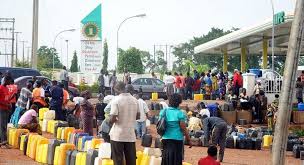
The Independent Petroleum Marketers Association of Nigeria, IPMAN, said yesterday that the petrol scarcity currently spreading to more states across the country will take at least two weeks to normalise.
This is even as the Nigerian National Petroleum Company Limited, NPCL insisted yesterday that it has adequate stock of the product.
However, the Public Relations Officer of IPMAN, Chinedu Ukadike, said the product is not available in the country.
He said it has become a bit of a challenge to source the product because most refineries in Europe are undergoing turnaround maintenance.
Ukadike also blamed the acute shortage in supply on importation bottlenecks and the slow pace of marketers’ licence renewal by the Nigerian Midstream and Downstream Petroleum Regulatory Authority, NMDPRA.
He disclosed that only 1,050 marketers out of 15,000 have had their licences renewed by NMDPRA.
He said: “The situation is that there is no product. Once there is a lack of supply or inadequate supply, what you will see is scarcity and queues will emerge at filling stations.
“On the part of NNPCL, which is the sole supplier of petroleum products in Nigeria, they have attributed the challenge to logistics and vessel problems.
“Once there is a breach in the international supply chain, it will have an impact on domestic supply because we depend on imports. I also have it on good authority that most of the refineries in Europe are undergoing turnaround maintenance, so sourcing petroleum products has become a bit difficult.
“NNPC Group CEO has assured us that there will be improvement in the supply chain because their vessels are arriving. Once that is done, normalcy will return. This is because once the 30-day supply sufficiency is disrupted, it takes two to three months to restore it.
“We expect that by next week or so, NNPC should be able to restore supply and with another week, normalcy should return”.
On challenges faced by marketers in renewing their licences, he said: “NNPC has said the marketers who have not been able to renew their licences will not be allowed to remain on their portal which has been shut for some time now. Because of this, we have not been able to request new products.
“At this nascent period of deregulation, you will discover that this leads to scarcity, even when the product arrives. As it is now, even by their data, out of 15,000 marketers that are on the portal with licences, only 1,050 renewed their licences.
“The requirement for renewal by NMDPRA is so much. Marketers are facing a hostile environment. NNPC placed a deadline of April 15, 2024, for marketers to renew their licences.
“We are, therefore, appealing to NNPC to extend this deadline and also to NMDPRA to hasten the release of licences of marketers who have completed their processes, and also reduce bottlenecks around licence renewals”.
However, reacting to the crisis yesterday, Chief Corporate Communications Officer, NNPC Ltd, Olufemi Soneye, expressed optimism that the long queues will clear in the coming days, adding that NNPC Ltd has adequate stock.
He stated: “The Nigerian National Petroleum Company Limited, NNPCL, wishes to clarify that the tightness in the supply of Premium Motor Spirit currently being experienced in some areas across the country is a result of logistics issues and they have been resolved.
“It also wishes to reiterate that prices of petroleum products are not changing. It urges Nigerians to avoid panic buying as there are sufficient products in the country.”
Similarly, the Chief Executive Officer/Executive Secretary, Major Energy Marketers Association of Nigeria, Mr. Clement Isong, said: “As the NNPC Ltd said, there were logistics issues and they have been resolved. The marketers who have fuel, are working round the clock and the queues will be cleared in the coming days.”
However, the shortage of petrol witnessed in Nasarawa, Niger, Abuja, the Federal Capital Territory, FCT, last week, spread to Lagos, Oyo, Osun and other states, weekend, thus affecting the movement of goods and persons and by extension, the nation’s economy.
In Lagos, motorists and other users woke up yesterday to witness long queues at the few filling stations which had the product to sell, while many outlets belonging mostly to independent marketers, without the product, were closed.
However, some major marketers, including 11 Plc and NNPC Ltd, with stocks sold the product at over N600 per litre, while the few independent marketers with the product sold it at between N650 and N700 per litre, depending on location.
Checks by The Tide’s source indicated that many motorists and other users were compelled by circumstances to patronise black market operators who openly sold the product along Ikorodu Road, Isolo and other locations in jerry cans at between N900 and N1,000 per litre.
Further checks indicated that transporters increased fares by 100 per cent to cover the high cost of petrol.
For instance, commuters paid N2,000 from Mile 12 to Mile 2, a distance that used to cost them N1,000, while others paid N1,000 from CMS to Mile 2, which previously cost about N500.
The fuel situation in the ancient city of Kano worsened yesterday as most of the petroleum stations were shut.
Vanguard checks observed long queues in the few filling stations still dispensing the product in the state capital.
It was observed that independent marketers and some major marketers who were seen selling fuel sold it as high as between N850 and N900 per litre.


Continue Reading

Business

RIVERS NUJ BACKS BONNY TOURISM, TASKS MEDIA ON DEVELOPMENT REPORTING

Published

on

The Nigeria Union of Journalists (NUJ), Rivers State Council, has thrown its weight behind efforts to reposition Bonny Island as a major tourism destination, urging journalists to move beyond crisis reporting and deliberately promote the state’s investment, tourism and development potentials.
The Chairman of the NUJ Rivers State Council, Comrade Paul Bazia, said this at a press briefing held at the Ernest Ikoli Press Centre in Port Harcourt, recently.
Bazia said Rivers State was endowed with enormous natural and economic resources, stressing  the media must gradually shift its attention from conflict-oriented reporting to development communication capable of attracting investors, tourists and other economic opportunities to the state.
He said the tourism potential of Bonny Local Government Area was enormous and could compete favourably with attractions found in Caribbean countries, urging journalists to tell the story of Bonny in a way that would attract global attention.
“If we don’t blow our own trumpet, people won’t know that we have our trumpets. Most of the people that travel to the Caribbean, Bonny is more than that. Bonny is more than just the hydrocarbon headquarters. Bonny is beautiful. Bonny environment is therapeutic,” he stated.
The NUJ chairman stressed that tourism could provide a sustainable source of income without the environmental consequences associated with some extractive economic activities, adding that the media must help to market the tourism products available in Rivers State.
“Our role is to ensure that our stories market the product that we have,” Bazia said, urging journalists across the state to consciously promote its tourism and investment opportunities.
He warned that failure to develop and promote tourism destinations such as Bonny could contribute to economic stagnation and insecurity, stressing that businesses and communities would ultimately suffer where legitimate economic opportunities were neglected.
“It is better for us now to get into it and sell the product that we have so that it will be a win-win for everybody,” he added.
Also speaking, the President of the Bonny Chamber of Commerce and Executive Director of the Discover Bonny Initiative, Mrs. Constance Nwokejiobi, Ph.D., said the initiative was a three-year strategic programme designed to transform Bonny Island into a premier tourism destination.
Nwokejiobi disclosed that Bonny Island Tourism & Investment Summit 2026, scheduled for August 18 to 20, would feature a Tourism Concierge Platform, multi-tier partnership arrangements ranging from Platinum to Community Tourism levels, as well as a privately driven Tour
She stressed that sustainable tourism could not depend solely on government, but required entrepreneurship, private investment and strategic partnerships, noting that Bonny already contributes an estimated four per cent of Nigeria’s national GDP, largely through oil and gas, while efforts were underway to develop a second and more sustainable economy based on tourism, heritage and hospitality.
Nwokejiobi said the initiative enjoyed strong support from His Majesty King Edward Asimini William Dappa Pepple III, Perekule XI, Amanyanabo of Grand Bonny Kingdom, who, she noted, had consistently promoted the island’s rich heritage and hospitality potential alongside its energy and industrial strengths.
She called on Nigerians to embrace domestic tourism by visiting Bonny and also invited international visitors and investors to discover the island as an authentic West African destination.
By: King Onunwor
Continue Reading

Business

Jonathan, Diri, Others Laud Firm’s Milestone in Bayelsa     …Says Project Will Drive Industrialisation, Create Jobs

Published

on

Nigeria’s ex-First lady, Dame Patience Jonathan, Governor of Bayelsa State, Senator Douye Diri, and the Managing Director of the Niger Delta Development Commission(NDDC), Chief Samuel Ogbuku, have commended a Bayelsa-based firm, Azikel Group for its commitment towards industrialising the state and the Niger Delta region.
They spoke while inspecting the Crude Distillation Unit (CDU) and other facilities recently at the Azikel Refinery in Obunagha Community of Yenagoa Local Government Area of the state.
They pledged continued support for the successful completion of the multi-billion naira refinery project.
In his remarks, Governor Diri represented by his deputy, Dr Peter Akpe, expressed satisfaction with the progress made so far by the company, describing the refinery project as a major step towards industrialising the state, creating employment and opening new economic opportunities for the people.
He congratulated the President of the Azikel Group, Dr Azibapu Eruani and his team on the successful procurement of the CDU, which is the most critical component of a refinery, describing the feat as a significant milestone towards completing the project.
He said industrialisation remains an integral part of his Prosperity Administration’s agenda, noting that government’s responsibility was to create an enabling environment for businesses and investments to thrive.
According to him, the state government’s ongoing road projects were designed to improve connectivity and provide easier access to industrial investments, including the refinery.
The governor urged Bayelsans to take advantage of the opportunities that would emerge from the project, particularly employment and skills development, and warned the people against commercialising  opportunities meant for them.
“The Prosperity Government, which is the agenda that we propagate, has industry and industrialisation as one of the major things. As a government, our business is to provide or enhance ease of doing business.
“Our universities have got graduates that can fit into most of the levels that will be available”, he said.
The State Chief Executive urged the people of the local communities to develop the capacity to participate meaningfully in the investment.
Also speaking, former First Lady, Dame Patience Jonathan, applauded the Bayelsa State Government for supporting the project, particularly through infrastructure development and improved road access to the refinery.
She said the investment was significant because Bayelsa had traditionally depended heavily on government, stressing that sustainable development depended more on investments that create wealth than totally relying on monthly salaries and allocations.
Dame Jonathan described the refinery as an investment that should receive the collective support of government, communities and other stakeholders, saying its benefits would extend beyond the company to the wider economy.
According to her, “It is not the amount of money you get at the moment, but the investment you put on ground that matters.
What we are doing is not for you alone; it is for all of us.”
In his remarks, the Managing Director of the Niger Delta Development Commission, Dr. Samuel Ogbuku, stressed that the refinery would have a multiplier effect on Bayelsa’s economy, particularly through job creation and increased business activities.
Dr. Ogbuku maintained  the project could also  boost traffic at the Bayelsa International Airport by attracting investors, contractors and other business interests into the state.
The NDDC helmsman stressed  the need for Bayelsans, particularly young people not to be spectators to the investment but rather prepare and position themselves to benefit from the opportunities it would create.
He also lauded the state government for improving road access to the refinery, saying the infrastructure had helped to make the investment more accessible and demonstrated that the state was preparing for the economic opportunities associated with the project.
On his part, the President of Azikel Group, Dr. Azibapu Eruani, described the project as a major industrial milestone for Bayelsa and Nigeria, saying the refinery had reached a critical stage with the arrival of the CDU.
He disclosed that the refinery, with a capacity of 25,000 barrels per day and an investment value of about one billion dollars, would produce petrol, diesel, aviation fuel, kerosene, LPG, naphtha and heavy fuel oil.
Dr. Eruani said the arrival of the CDU represented the culmination of eight years of work and marked a significant step towards actualising the refinery project.
He explained that the CDU took more than three years to build in South Korea before being transported to Nigeria on a specially chartered vessel.
Chairman of the Bayelsa State Traditional Rulers Council, King Bubaraye Dakolo, former Chief Operating Officer, Refinery and Petrochemical of the NNPC, Mr. Mustapha Yakubu, among other dignitaries also delivered goodwill messages at the event.
By: Ariwera Ibibo-Howells, Yenagoa
Continue Reading

Business

AKG To Purchase More Aircraft —-Targets 10 Fleets this Year

Published

on

The Akwa Ibom State Government has announced plans to expand the fleet of its state-owned airline, Ibom Air, with the acquisition of an Airbus A220-300 aircraft.
The Commissioner for Information, Dr Aniekan Umanah, disclosed this to newsmen recently in Uyo, saying the state government would travel to Montreal, Canada, to finalise documentation for the purchase.
Umanah said the aircraft is expected to arrive at the Victor Attah International Airport on August 30, 2026, bringing Ibom Air’s fleet to 10 aircraft.
He described the planned acquisition as a milestone for the state’s aviation sector, adding that it supports the government’s ambition of positioning Akwa Ibom as a major aviation hub for business, tourism and investment under its ARISE Agenda.
The commissioner also identified tourism as a major driver of the state’s economy outside crude oil revenues, saying the government remained committed to developing the sector.
He said the expansion of Ibom Air would improve connectivity and create opportunities for young people seeking careers in aviation, while strengthening links for businesses and families.
According to him, the arrival of the Airbus A220-300 would further demonstrate the state government’s commitment to improving connectivity and supporting economic growth.
Apapa Customs Command Regs N323 Bn Revenue In July
(1)
Nkpemenyie Mcdominic, Lagos
The Nigeria Customs Service (NCS), Apapa Area Command, has posted an unprecedented revenue collection of ?323 billion in July 2026, the highest monthly figure ever recorded by the Command.
The landmark performance further underscores the strong results achieved under the leadership of Comptroller Emmanuel Oshoba, who earlier guided the Command to another record haul of ?304 billion in October 2025.
Comptroller Oshoba  disclosed this  during the monthly meeting with Deputy Comptrollers of Terminals and Unit Heads held on Tuesday, 11 August 2026.
He attributed the record collection to the combined impact of policy support, operational reforms and improved compliance across the Command.
In a press statement issued by the Public Relations Officer of the Command, Chief Superintendent of Customs (CSC) Isah Sulaiman, the Customs Area Controller specially commended the Comptroller-General of Customs, Bashir Adewale Adeniyi, MFR PhD and the Service management team for their commitment to the ongoing modernisation of the Nigeria Customs Service.
“We recognise and acknowledge the CGC’s devotion and dedication to the modernisation project of the Nigerian Customs Service.
“The management team has introduced several innovations that have streamlined our activities and given us clear direction,” he said.
Comptroller Oshoba noted that the reforms are already delivering measurable results. He highlighted the improved performance of the B’Odogwu system, which had earlier faced challenges but has since been enhanced and is now producing strong outcomes.
He also commended the One-Stop Shop (OSS) initiative for accelerating cargo delivery time and creating a more predictable business environment that encourages legitimate importation.
“Another important development is the Authorised Economic Operator (AEO) framework, which currently has more than 200 beneficiaries. This has positively impacted the revenue profile of the Command,” he added.
Intelligence-driven enforcement operations, he said, have further strengthened compliance where officers and men of the Command have intensified interventions that detect false declarations and ensuring compliance with the Service valuation principles to protect national revenue.
The CAC also specifically credited the enabling business environment created by President Bola Ahmed Tinubu, GCFR, particularly the relative stability in the foreign exchange mmarket.
He explained that a more predictable forex regime has allowed business operators to plan better, make informed decisions and conduct trade with greater confidence while challenging officers to examine their individual contributions beyond routine revenue generation.
“In your Area of Responsibility, you must ask yourself, apart from the normal revenue generated by your Unit, what is your own contribution in terms of intervention? What have I added?” he asked.
The CAC stressed the continued importance of trade facilitation and ease of doing business describing the current operating environment as more predictable and conducive to growth.
He directed that disputes should be resolved promptly where consignments require further scrutiny, officers must follow proper documentation and the Post Clearance Audit (PCA) process.
On stakeholder relations, Oshoba issued a clear directive, “When you interact with stakeholders, let them leave your office with hope rather than despair. As a leader, do not allow anyone who comes to you to depart feeling hopeless or depressed. Give people hope.”
He acknowledged the valuable cooperation of stakeholders and sister agencies, noting that their support has improved compliance and restored greater sanity to the business environment. Officers, he said, must continue to build trust through professionalism, respect and collaboration.
Comptroller Oshoba further urged personnel to uphold transparency and discipline, work smart, remain up to date with evolving digital processes and consult more experienced colleagues when necessary.
He described effective leadership as a collective responsibility, calling on Staff Officers to support Deputy Controllers in reinforcing discipline and fostering a healthy work environment rooted in compassion, empathy, teamwork and genuine concern for the welfare of subordinates.
The CAC called for heightened security consciousness, proper supervision, continuous in-house training and full compliance with approved procedures.
He charged all Units to sustain the current momentum, deepen professional development and remain focused on productivity and service delivery.
By: Enoch Epelle
Continue Reading

Trending