
Rivers
PANDEF, LEADERS OF ETHNIC NATIONALITIES HAILS TINUBU FOR REAPPOINTING SAM OGBUKU AS MD, NDDC,OTHERS


The Niger Delta Ethnic Nationalities comprising of Pan-Niger Delta Forum PANDEF and Leaders of Ethnic Nationalities has hail President Bola Ahmed Tinubu Dr. Sam Ogbuku as Managing Director, Niger Delta Development Commission NDDC and others from the extraction
The Ethic Nationalities also applauded Mr President for repositioning the Board of Commission
The Ethnic Nationalities thanked Mr President for retaining the Management Team of the Commission led by Samuel Ogbuku which had exhibited notable competency within the short period; prior to its dissolution.
The Regional Ethnic Nationalities stated this in an open letter to President Bola Ahmed Tinubu, thanking him for key appointments of their sons and daughters
They commended the President mostly for reappointing the Managing Director, NDDC, Dr Sam Ogbuku and Chairman, NDDC Barr. Chiedu Ebie
The Open letter was signed by the National Chairman, PANDEF, Senator Emmanuel Bok Essien, President Ijaw National Congress INC, Prof Benjamin Okaba and Leader, Coalition of Niger Delta Women, Lady Annkio Briggs and made available to Newsmen in Port Harcourt
The critical stakeholders applauded the President for appointing men of proven records and caliber’s of persons into the board
“It behooves on us, as appreciative Niger Delta people, to express our profound gratitude by publicly thanking you Mr. President, for your kind gestures”.
“It is also worthy of mention how elated we are for the caliber of individuals you assembled for the new board. This has given us high hopes in the future of the Niger Delta”
The Open letter described the Chairman, NDDC Board, Barrister Chiedu Ebie as a man with enormous wealth of experience, key player in the oil and gas sector with credible antecedents, one who cares about the development of the region.
It’s further noted that the reappointment of Sam Ogbuku as Managing Director, NDDC had changed the narratives in the commission and the region at large
The letter noted that Dr Samuel Ogbuku reappointment would bring sustainable partnership, engender global best practices and corporate governance in a bid to reposition the Commission for global business acceptability, robust public-private partnership, such as partnership with Chevron and other multinationals towards citing tangible projects in the Niger Delta, partnership with KPMG for global best practices, corporate governance, signing of a pact with NLNG to maximize impact of development in Niger Delta
The Niger Delta Ethnic Nationalities said Dr Samuel Ogbuku’s reappointment has demonstrated that he is a round peg in a round hole and has been deepening stakeholders’ engagement in line with his commitment to the President and the people of the region, promoting federal government’s developmental agenda on one hand, rekindling the hope and confidence of the people, as well as uniting ethnic nationalities towards regional cohesion.
“On the personalities on the new Board, we can categorically say, we have a good team in the saddle as they look flawless to us and we pray they don’t yield to the trappings, niceties and the appurtenances of the office and other negative corrupt influences in the future.
“We therefore, thanked you, Mr. President, for giving the Niger Delta people, and indeed the Niger Delta region, a purposeful Board and Management team.
“We recognize the support and cooperation of the Senate President, our own Distinguished Senator Godswill Akpabio, who with an uncommon precision made the screening process seamless but with dexterity”
“Your Excellency, posterity will not pardon us, if we fail to draw your attention to the unremitted funds due the Commission over the years from both the public and private sector, as this has greatly hindered the Commission from achieving its set objectives hence, we solicit your kind intervention in this regard”.
The regional leaders thanked Tinubu for appointing credible personalities from the region as Ministers and others into positions.
The stakeholders solicited for more appointments for other qualified and dedicated sons and daughters from the region to positions of trust in his cabinets
By: CHINEDU WOSU



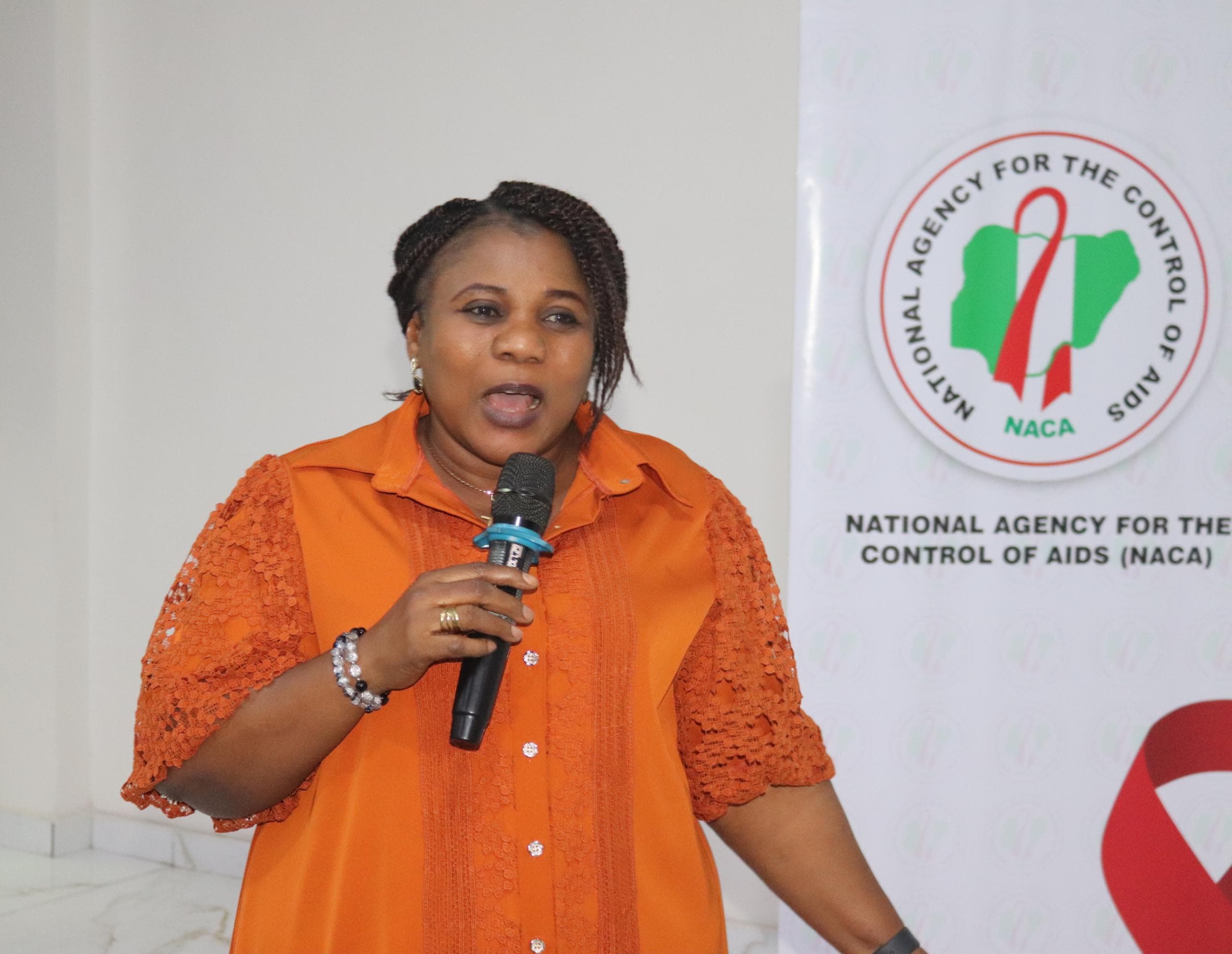
Prevention for HIV has taken yet another more advanced dimension with the introduction of the Lenacapavir (LEN) Pre-Exposure Prophylaxis (PrEP) into the stable of HIV prevention.
This was disclosed to Journalists assembled from across Nigeria in a two-day training programme on Lenacapavir in Lagos State.
In his presentation, the Lead Facilitator, and Principal Partner, Kent Consult Limited, Abuja, Dr. Segun Oyedeji, said unlike the earlier Post-Exposure Prophylaxis (PEP), which is taken to prevent HIV infection after exposure, the Lenacapavir PrEP is taken by non-infected persons.

Such targeted persons are usually those exposed to vulnerable behaviours capable of exposing them to HIV infection.
“PrEP is taken before you are exposed to HIV, and comes in three forms: the daily oral PrEP, Truvada pill; the two-months interval injectible, Cabotegravir; and the long-acting bi-annually (six months interval) injectible, Lenacapavir. There’s also the Dapivrine Vaginal Ring, which women wear for one month”, he said.
Dr. Oyedeji explained that PrEP is meant for people who are exposed by their risk profile to HIV infection.
Risk profile, he explained, “is the kind of risk behaviours they exhibit in their lifestyle.”
Such people include people with a partner who has HIV, people who don’t always use condoms, sex workers, etc.

PrEP, according to Dr. Oyedeji, “builds up protection in your body so that if HIV enters your body, the medicine stops it from multiplying.”
Also, within the period the person is taking it, the person must get tested for HIV every three months interval.
So far, among the four options of PrEP, Adedeji, continued, “the Lenacapavir is the game-changer everyone is talking about.”
The reason is that it is a Capsid inhibitor, first of its class, that attacks the protein shell that HIV uses to copy itself, which is different from old drugs, and is just two injections per year, plus small starter tablets at the beginning. Not daily pills.
He, however, noted that before any of the PrEP options can be used, the person has to go through an eligibility test to ascertain which of the options would be suitable for the person, based on the person’s risky behaviour, and that all the person needs to do is to go to any health facility close to them to seek for the service, or the State Agency for the Control of AIDS (SACA) to get the right direction.

On his part, the Senior Prevention Manager, AIDS Healthcare Foundation (AHF), Mr. Adeleye Taofeek, who spoke on condom use as part of preventive measures for both HIV and Sexually Transmitted Infections (STIs), encouraged the use of condoms, especially where abstinence from sex is inevitable.
He said, “We are canvassing that as much as you use PrEP, you can also use condoms to prevent other STIs, beside HIV.
“We want the media to engage in demand creation for use of the various HIV prevention options: whether it is condom, PrEP, or change of behaviour, staying with an uninfected partner, we want the media to support the national response by creating demand for HIV prevention options.”
Earlier in her welcome address to participating Journalists at the two-day training, organised by the NACA and the Institute of Human Virology, Nigeria (IHVN), the Director-General, National Agency for the Control of AIDS (NACA), Dr. Temitope Ilori, emphsised the importance of the media in awareness creation.

She said: “PrEP is an effective HIV prevention for people who are HIV-negative and may be at risk of acquiring HIV. However, the availability of a prevention intervention is only one part of the equation. People must also have access to the right information, understand their prevention options, know where services are available, and feel confident seeking those services. This is where you, our media professionals, become indispensable partners.
“The media has the power to shape public understanding. A well researched story can dispel a misconception, encourage someone to seek a prevention service and potentially change a life. On the contrary, inaccurate or sensational reporting can create fear, reinforce stigma and discourage people from accessing HIV services.
“We, therefore, count on you to report PrEP and HIV prevention accurately, responsibly, and without stigma.”
The NACA D-G, who was represented by the Head, Public Relations and Protocol, NACA, Toyin Aderibigbe, charged the participants at the training, saying, “your reporting should make these issues understandable to ordinary Nigerians.”
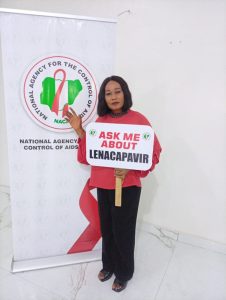
Research shows that so far there have been no infections among all the people who have received the LEN PrEP, showing almost 100% protection.
The World Health Organisation (WHO) adopted it in July 2025 as an additional PrEP option.
In Nigeria, NAFDAC approved it in the late 2025 and received regulatory clearance, with the country receiving its first batch of doses in March 2026, and subsequently distributed it to 8 pilot states.
The states are: Akwa Ibom, Anambra, Benue, Cross River, Ebonyi, FCT, Gombe, and Kwara.
Investigation revealed that since May 2026, all the pilot states are accessing the LEN, and the demand is very high, especially among sex workers who want privacy and no daily pills.
In Rivers State, although the Lenacapavir is expected to arrive soon, the daily oral PrEP (Truvada pill), and the two-months interval injectible (Cabotegravir) are available, and the relevant authorities are encouraging people to access the drug.
Sogbeba Dokubo
-
News4 days ago
Bayelsa Boat Mishap: Tinubu Donates N250m As Death Toll Hits 29
-
News4 days ago
Odu Pays Tribute To Late Chinwah, Describes Him As Courageous, Selfless Academic
-

 Maritime3 days ago
Nigeria, Russia Customs Sign MOU To Trade Facilitations
-

 Sports4 days ago
World marathon champion gets three-year doping ban
-

 Maritime3 days ago
South-South Governors Urges To Shake Off Collective Lethargic To Embrace Blue Economy
-
 Maritime3 days ago
Oyetola Woos Investors With Nigeria’s Seabed Resources, Marine Biotechnology
-

 Business4 days ago
Moniepoint MfB transaction volume hits 1trn daily — CEO
-

 Oil & Energy3 days ago
Global Oil Market May Witness Supply Surplus Before The End Of 2026 …… Report