
Editorial
Israel, Hamas War: Call For Truce

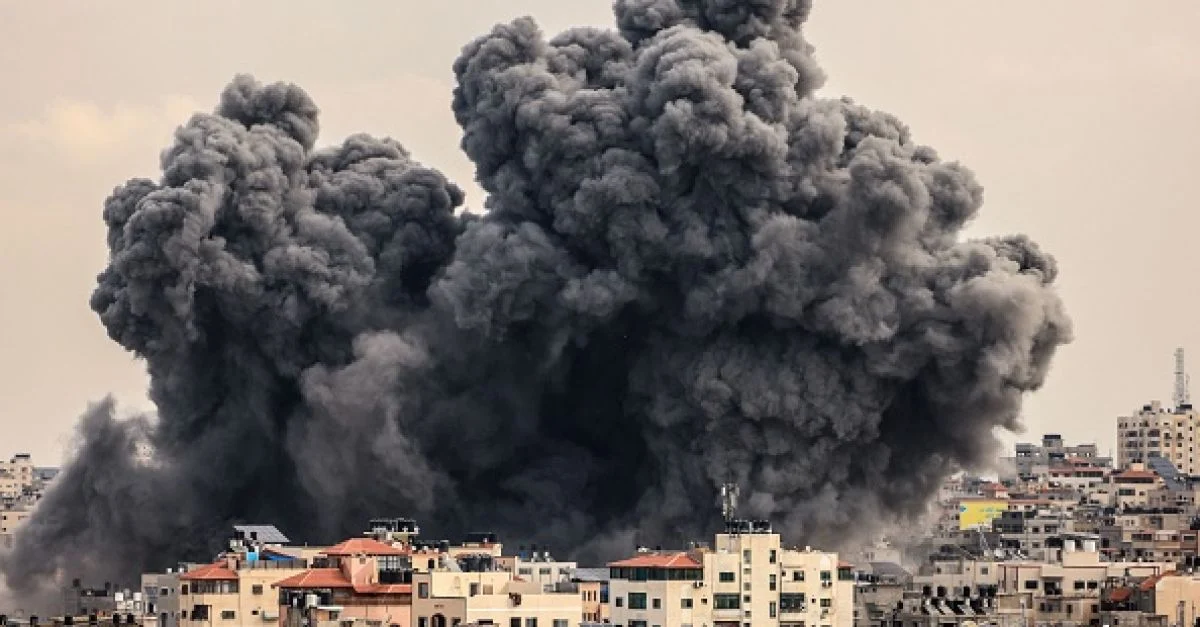
On October 7, there were surprise attacks by Palestinian Hamas terrorists in southern Israel. The attacks,
originating from the Gaza Strip, involved land, sea, and air incursions as well as missile launches, claiming over 1,400 Israeli lives and the capture of more than 203 hostages. These coordinated assaults resulted in retaliatory airstrikes by Israel on Gaza, causing further casualties. The sequence of events has raised concerns about a possible escalation, potentially involving more parties engaged in hostilities.
This onslaught represents the largest number of Jews killed in a single day since the Holocaust, and currently ranks as the third-deadliest terrorist attack of all time, exceeded only by Islamic State massacres in Iraq and Syria, and the 9/11 attacks in the United States. On October 8, Israel declared a state of war for the first time since 1973 and has engaged in a bombing campaign targeting the Gaza Strip, with a ground invasion soon to follow.
Israeli airstrikes have led to the deaths of more than 2,800, with over 3,000 injured, and 650,000 displaced. Unfortunately, the casualty numbers are expected to rise as Israel has begun to deploy additional troops to the Gaza border, signalling the start of what could be a prolonged conflict. At the northern flank of Israel, Hezbollah and Islamic Jihad fighters have begun launching rocket strikes from Southern Lebanon and Syria, with retaliatory strikes from Israeli Defence Forces (IDF). The situation is deeply concerning, and efforts must be made to find a peaceful resolution to prevent further loss of lives and suffering.
The ongoing war in the Middle-East serves as a stark reminder that global peace remains elusive, despite the apparent calm in many regions. The Israel-Hamas confrontation is merely the latest chapter in a complex and longstanding conflict that defies easy resolution. Historical, political, religious, and territorial factors intertwine, resulting in decades of tension, violence, and immense suffering.
Endorsed by the United Nations, the United States and its allies, and backed by pragmatic Arab nations like Egypt, Saudi Arabia, the United Arab Emirates, Qatar, and Kuwait, the creation of autonomous Palestinian two-state entities is seen as a durable, consensus-driven peace solution. This strategy also entails acknowledging Israel’s right to exist within its pre-1967 boundaries and promoting a harmonious cohabitation between the Israel and the Arab nations.
About 21 years ago, Saudi Arabia embarked on a diplomatic endeavour by introducing the Arab Peace Initiative. This proposal successfully brought together Arab states, offering Israel recognition, regional legitimacy, and security in exchange for certain concessions. The blueprint has garnered support from the current US President Joe Biden administration, and most western leaders. The friendly tone of this initiative aims to foster peaceful relations and promote stability in the region. Already, some Arab nations have normalised relations with Israel, with Saudi Arabia at the verge of signing a diplomatic pact with the Jewish state before this bizarre incident.
We unequivocally condemn the unprovoked attacks by Hamas terrorists against Israeli civilians. There is never any justification for terrorism. We extend our condolences for the Israeli lives lost in these attacks, and call for the exercise of utmost restraint while avoiding exposing civilians to further risks. Although it is the right of Israel to defend itself, we warn of serious repercussions as a result of the escalation of violence, which would negatively affect the future of truce efforts.
The world is unfortunately at the beginning of an inevitably protracted war that has already claimed the lives of countless innocent Israelis and Palestinians, with more heavy losses to come. Just on the eve of last Wednesday’s Biden visit to Israel and Jordan, where issues around how to manage the humanitarian crisis were to be ironed out, a hospital holding thousands of displaced and injured Gazans was bombed, killing hundreds, according to Hamas-controlled Ministry of Health. This incident put a wedge on the Jordan leg of the visit, thereby making any interface with Egyptian President, Mohammed Al-Sisi; Palestinian President, Mahmood Abass; and Jordanian King impossible.
Indeed, we cannot overemphasise the fact that there is an urgent need for peace. To achieve lasting peace, it is important to address the root causes of the conflict and ensure the rights and safety of all parties involved. This requires genuine efforts and a comprehensive strategy to end the recurring violence and establish a peaceful future.
Prime Minister Benjamin Netanyahu should be held culpable for the ongoing attacks that Israel is experiencing. Rather than prioritising the vital task of protecting his nation, Netanyahu was engrossed in irrelevant judicial reforms. This preoccupation has resulted in a diversion of his attention from fulfilling his constitutional obligation to safeguard Israel and its people. The prolonged emphasis on these reforms has created a division within the country, as evidenced by the large-scale protests witnessed in recent months.
The two-state solution is the most viable path to lasting peace between Israelis and Palestinians. However, the political and on-the-ground changes in Israel and the Palestinian Territories over the past three decades have made it increasingly difficult to achieve this goal. Israeli and Palestinian leaders lack the necessary resources to engage in productive negotiations and reach a bilateral agreement, making it difficult to achieve a mutually satisfactory resolution.
Thousands of Palestinians are fleeing to already overwhelmed areas in the south of Gaza through unsafe conditions that could especially pose a risk to children, at least, 447 of whom have already been killed in Israeli air strikes since past 13 days. As some families in the northern part of Gaza Strip make their way south with hope of finding a safer place and basic necessities, Israel should observe international laws that are meant to protect children and vulnerable people. The main pillars of protection for children during armed conflict of this nature are the Geneva Conventions.
Allies of Israel and the Palestinians have a critical role to play in de-escalating the conflict, and should take the lead in mobilising the warring parties to the negotiation table. We commend Lebanon for its seeming neutral stance on the conflict, as it consistently expresses its unwillingness to be drawn into the war. The Lebanese government prioritises maintaining security and stability within the country, and it has warned its citizens against making provocative statements.
Egypt, Saudi Arabia, the UAE, Qatar, and other fellow Arab nations should take the initiative to garner international support to facilitate a ceasefire and the resumption of peace negotiations. We warn Iran and its proxies to turn a new leaf, and avoid unprecedented catastrophe that full-scale regional war may unleash. We acknowledge that a large majority of individuals on both sides yearn for peace, therefore, concerted efforts should be made to overcome those who endorse violence. Immediate action should be taken to enforce a ceasefire and ensure the provision of humanitarian assistance.
Those responsible for war crimes should face justice. This includes taking necessary measures to compel Hamas and Islamic Jihad elements in Gaza to release the hostages they currently hold. Israel should distance itself from the hardliners and religious fanatics within their midst who have been violating existing treaties, UN resolutions, and occupying Arab land. These conflicts must be addressed as the world is currently grappling with several such conflagrations, such as the Russian aggression against Ukraine. The war must not escalate any further. The human toll is already enough!




The Independent National Electoral Commission’s (INEC) disclosure of an alleged plot to target its ad hoc personnel ahead of the 2027 general elections demand urgent national attention. The reported arrest of suspects, with intelligence support from the Department of State Services (DSS), is encouraging, but must not breed complacency. Any attack on electoral workers threatens not only human lives but also Nigerians’ constitutional right to choose their leaders through credible elections. The alleged conspiracy must be thoroughly investigated, its sponsors identified and all those found culpable prosecuted.
Particularly troubling is the reported targeting of National Youth Service Corps (NYSC) members, who play a vital role in Nigeria’s electoral process. Many serve far from home and undertake sensitive assignments at polling units and other electoral locations. As civilians, they should not be exposed to intimidation, abduction or violence without adequate protection. If election workers are vulnerable, the safety of other officials, observers and voters cannot be guaranteed.
Nigeria’s electoral history offers painful lessons. Human Rights Watch reported in Nigeria’s Post-Election Violence, published in May 2011, that more than 800 people died in the violence following the 2011 general elections. NYSC members serving as electoral officials were among the victims. This tragedy underscores the deadly consequences of political tension, incitement and disputed outcomes. Nigeria must act on the latest warning before another preventable disaster occurs.
INEC deserves recognition for uncovering the alleged plot, while the DSS and other security agencies merit commendation for their reported assistance. However, arrests are only the beginning. Investigators must establish the suspects’ identities, motives, networks and intended targets, ensuring that evidence is admissible in court. The process must remain impartial and free from political interference. Credible public updates are also necessary, provided they do not compromise investigations or operational security.
The authorities must adopt a comprehensive, intelligence-led security strategy for 2027. INEC’s proposed security conference should produce practical measures developed in collaboration with the Inter-Agency Consultative Committee on Election Security (ICCES), the police, the DSS and other relevant agencies. Threat assessments should guide personnel deployment, secure transportation, emergency communications, evacuation procedures and rapid response. Protection must extend beyond polling day to the distribution of sensitive materials, collation centres and the safe return of ad hoc personnel.
Those who provide intelligence must also be protected from retaliation. Confidential reporting channels and appropriate safeguards should be established for informants and others assisting investigations. Equally, security deployments must not intimidate voters or facilitate political repression. Personnel should act professionally, impartially and proportionately, within the law. Clear mechanisms for reporting misconduct and investigating abuses are essential to maintaining public confidence.
The threat also highlights broader concerns about trust in the electoral system. The European Union Election Observation Mission’s June 2023 final report identified shortcomings in transparency and operational implementation during Nigeria’s 2023 general elections, alongside concerns about the legal framework and electoral dispute resolution. Credible elections require more than security; they depend on transparent procedures, accountable officials and consistent enforcement of electoral laws. INEC must demonstrate measurable progress in addressing previously identified weaknesses.
Voter apathy presents another challenge. INEC’s published figures indicate that approximately 25 million people voted in the 2023 presidential election, out of about 93.5 million registered voters, a turnout of roughly 26.7 per cent. Although insecurity is not the sole cause of low participation, threats against electoral personnel can heighten public anxiety and discourage voters from exercising their franchise. INEC should strengthen civic education, improve polling accessibility and communicate procedures clearly. Political parties, civil society and the media must promote peaceful participation and reject electoral intimidation.
Misinformation and manipulated digital content pose additional risks. False reports, fabricated announcements and deepfake videos can inflame tensions, impersonate officials and mislead voters. INEC should establish a well-resourced, rapid-response communication system supported by verified digital channels and timely public statements. Collaboration with credible media organisations and fact-checkers would help counter falsehoods without suppressing legitimate criticism. Clear, consistent communication is indispensable, as administrative confusion and delayed explanations often allow rumours to spread.
Electoral integrity must also begin within INEC itself. The chairman’s warning against partisanship, negligence, extortion and ethical misconduct deserves serious attention. Security measures cannot compensate for officials who abuse their positions or disregard established procedures. INEC should strengthen staff training, ensure transparent recruitment and deployment, provide secure channels for reporting misconduct and enforce disciplinary rules consistently. Allegations of bribery and political interference must be investigated regardless of rank, while ad hoc personnel should receive adequate briefing, support and prompt payment.
The legal framework also requires clarity and consistent enforcement. INEC should explain the precise provisions and applicability of Section 26 of the Electoral Act 2026, including the obligations of electoral officials and security personnel, and publish authoritative guidance on neutrality and professional conduct. Complaints by opposition parties that they have been prevented from campaigning in certain states must likewise be investigated impartially. Any established violations should attract appropriate corrective action. Electoral fairness requires not only impartial polling officials but also lawful campaigning, access to competing viewpoints and freedom from intimidation.
The alleged plot against INEC’s ad hoc personnel is a warning against complacency ahead of the 2027 general election. Governments, security agencies, INEC, political parties and civil society must work together to prevent violence, punish misconduct and protect citizens’ participation. The commission should communicate its security priorities, maintain accessible threat-reporting channels and provide periodic updates on preparedness. Nigeria’s democracy cannot be safeguarded by assurances alone; it requires demonstrable preparation, impartial law enforcement and an unwavering commitment to free, fair and credible elections.
-

 Politics3 days ago
LG CITY BOY COORDINATOR HAILS WIKE’S SUPPORT FOR ONYESOH, TINUBU
-
Politics3 days ago
DIRI INAUGURATES APC CAMPAIGN COUNCIL, SETS MILLION VOTES TARGET FOR TINUBU
-

 Politics3 days ago
NDC Candidate Urges Oborevwori To Probe Asaba Political Violence
-

 News3 days ago
Army Recovers X Account After Hack Attempt
-
 Business3 days ago
Nigeria Loses N17tr Yearly To Abandoned Projects
-
Politics3 days ago
2027: Oborevwori Tasks Media On Fair, Accurate Reporting
-
Politics3 days ago
2027: AKPABIO ENVISAGES TINUBU’S VICTORY IN SOUTH SOUTH REGION
-
Politics3 days ago
Asaba Political Violence: Police Confirm One Dead, Delta Govt Urges Probe