Editorial
Kudos S’Falcons, D’Tigress
Sports in Nigeria, particularly in the women category has been in the news within and outside
the country following the recent exploits of the country’s women football team, the Super Falcons and the basketball team, D’Tigress. The Super Falcons were one of the five flag bearers for Africa at the ongoing ninth FIFA Women’s World Cup in Australia and New Zealand. Though they went to the women’s mundial, saw, impressed but failed to ultimately conquer, they exited after proving to be the best continental representatives and paradoxically, managed to win the hearts of Africa and world football fans.
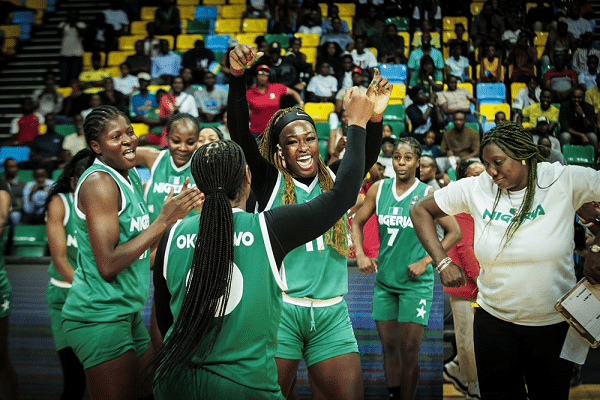
Coming on the heels of Super Falcons’ impressive showings at the World Cup was the exhilarating triumph of D’Tigress in the 2023 FIBA Women’s Afrobasket tournament in Rwanda. The women basketballers mastered all opponents at the tournament including hosts Rwanda, culminating in the exciting 84 points to 74 victory over a strong Senegalese team in the final match. The victory by D’Tigress is historic as the Nigerian Ladies have become only the second team ever after Senegal to win four consecutive titles.
The victory followed earlier ones in 2017, 2019 and 2021 after waiting for solid 12 years to rule Africa. Interestingly, the Coach of D’Tigress, Rena Wakama is the first female coach to win the Afrobasket title and with her in charge, we think that there is room to dream of bigger things in the days ahead; especially with the Olympic qualifiers around the corner.
Indeed, not many Nigerians and keen observers gave the Super Falcons and this current set of D’Tigress, largely made up of rookies and a couple of experienced players a chance to make impact at their respective tournaments. But they rose above their critics, handicaps and adversities to not only put smiles on the faces of Nigerians with their performances, they showed that they have what it takes to mix it with the world’s best at the highest level.
That is why we believe that it is pertinent to commend the teams and encourage them palpably. Their performances have demonstrated that women and girls can thrive in every area of human endeavour.
For the Super Falcons, the turmoil preceding the finals was embarrassing, and a group-stage exit was anticipated. Three games later, the Super Falcons had reason to smile. They did not only navigate a presumed group of death, consisting top 10 side, Australia, Olympic Champions, Canada and a rugged debutants, Republic of Ireland without losing a match, they showed the true African determination and resilience that belied their FIFA world ranking.
After reaching the knock out stage in back-to-back championships after their 2019 showing in France and going toe-to-toe with and holding European champions, England to a barren score within regulation and extra time, the gallant Falcons bowed out to the lottery of penalty shoot- out.
Indeed, the energy and intensity demonstrated by the team throughout their time at the World Cup had not been on show at any tournament in recent times. Though they bowed out and failed to reach the ultimate prize, they were not losers at all.
Already, many Nigerians are celebrating the performance and achievement of the women. From the National Assembly to sports fans on the street, it has been encomiums for the teams. Only on Monday, the First Lady, Mrs Oluremi Tinubu hosted the Super Falcons in Abuja and praised them for their outing. We join the teeming Nigerians in congratulating and commending the Super Falcons and D’Tigress.
However, we think that they deserve some measure of reward and awards. This, we believe, would go a long way to sustain their patriotic appetite, thirst for hard work and sacrifice for national causes. It also behoves the Nigeria Football Federation, NFF and their Basketball counterparts, NBBF to learn from the experience, try to effect the best practices at all times and give the teams the needed preparation and support to excel.
The Super Falcons and D’Tigress have shown that with the requisite environment and motivation, the country has the manpower and talent to rule the world in sports.

Editorial
Enough Of Xenophobic Attacks On Nigerians
Editorial
NCC, Save Nigerians From Exploitation
Editorial
WPFD: Nigeria’s Defining Test
Nigeria stands at a critical juncture as the world marked World Press Freedom Day (WPFD) on May 3. This annual observance is a reminder that a free press is central to democratic life, good governance, and public accountability. For Nigeria, it is also a moment for sober reflection on how far the country has come and how far it still has to go in safeguarding the independence of its media.
World Press Freedom Day exists to highlight the fundamental importance of freedom of expression and to honour journalists who risk their lives in pursuit of truth. It underscores the idea that without a free press, societies cannot function transparently, nor can citizens make informed decisions. In countries like Nigeria, where democracy continues to evolve, the observance carries particular urgency.
This year’s theme, “Shaping a Future at Peace: Promoting Press Freedom for Human Rights, Development and Security”, places journalism at the heart of global stability. It emphasises that a peaceful society cannot be built on silence, fear, or manipulated information. Rather, it depends on the free flow of accurate, timely, and independent reporting.
At its core, the theme highlights the role of journalism in fostering accountability, dialogue, and trust. These are not abstract ideals. In Nigeria, where public confidence in institutions is often fragile, the media remains one of the few platforms through which citizens can question authority and demand transparency. When press freedom declines, so too does public trust.
Journalism serves as a foundation for peace, security, and economic recovery. Countries with robust media systems tend to attract greater investment, maintain stronger institutions, and resolve conflicts more effectively. Nigeria’s economic challenges, ranging from inflation to unemployment, require open scrutiny and informed debate, both of which depend on a free press.
However, the issue of information integrity has become increasingly complex in the digital age. Artificial Intelligence (AI) and online platforms have amplified the spread of misinformation and disinformation. In Nigeria, where internet penetration has grown rapidly, false narratives can travel faster than verified facts. This makes the role of credible journalism more vital than ever.
The challenge is not only technological but also ethical. AI-driven manipulation of information threatens to distort public discourse, influence elections, and deepen social divisions. In such an environment, professional journalism must act as a stabilising force, ensuring that truth prevails over sensationalism and propaganda.
Equally troubling is the safety of journalists. Across Nigeria, reporters face growing levels of online harassment, judicial intimidation, and physical threats. Self-censorship is becoming more common, as media practitioners weigh the risks of reporting sensitive issues. This trend undermines the very essence of journalism.
A particularly alarming incident involved a serving minister in the present administration, who openly threatened to shoot a journalist during a televised exchange. Such conduct, broadcast to the public, sends a dangerous signal that hostility towards the press is acceptable. It erodes the norms of democratic engagement and places journalists in harm’s way.
This year’s theme aligns closely with the United Nations Sustainable Development Goal (SDG)16, which promotes peace, justice, and strong institutions. Freedom of expression is a cornerstone of this goal. Without it, institutions weaken, corruption thrives, and justice becomes elusive. Nigeria’s commitment to SDG 16 must therefore include genuine protection for the media.
Historically, the Nigerian press has been a formidable force. From resisting colonial rule to challenging military dictatorships, our journalists have played a central role in shaping the nation’s political landscape. Today, however, that legacy appears to be under strain, as the media operates under what can best be described as a veneer of freedom.
Beneath this facade lies a troubling reality. Journalists are routinely harassed, detained, and prosecuted for performing their constitutional duties. Reports from media watchdogs indicate that dozens of Nigerian journalists face legal threats or arrest each year, often for exposing corruption or criticising those in power.
The Cybercrimes (Prohibition, Prevention, etc.) Act of 2015 has become a focal point of concern. Originally intended to combat cyber threats, it has increasingly been used to silence dissent. Sections 24 and 27(1)(b), in particular, have been invoked to target journalists, bloggers, and social commentators.
Although amendments introduced in February 2024 were meant to safeguard journalists, concerns persist. The law continues to be wielded in ways that stifle investigative reporting and restrict freedom of expression. Legal reforms must go beyond cosmetic changes to address the root causes of misuse.
To safeguard the future of journalism in Nigeria, decisive action is required. The Cybercrimes Act must be revisited to ensure it cannot be weaponised against the press. Law enforcement agencies must operate free from political influence, upholding the rule of law and protecting journalists’ rights. Civil society and international partners must also strengthen independent media through funding, training, and platforms for wider reach.
In this rapidly evolving world shaped by artificial intelligence and digital innovation, Nigeria faces a clear choice. It can either allow press freedom to erode under pressure, or it can champion a truly independent media landscape. The path it chooses will determine not only the future of journalism, but also the strength of its democracy and the peace it seeks to build.
-
Editorial11 hours agoEnough Of Xenophobic Attacks On Nigerians
-
Environment12 hours agoMOSOP – Tinubu Not Sincere With Ogoni People For Oil Resumption
-
Nation9 hours agoRSU, Otonti Nduka Foundation Hold Centenary Conference, Unveil Book on Values in Nigeria
-
News15 hours agoFubara, Wife Hail Tinubu’s Renewed Hope Initiative …As Over 6,800 Families Benefit From Largesse In Rivers
-
Oil & Energy10 hours agoRivers PETROAN Elects 12-Member Executive
-
Maritime13 hours agoProducts, Others, To Arrive Lagos Ports Today — MPA
-
Environment12 hours agoNGOs Task Media On Investing In Climate Literacy
-
Oil & Energy12 hours agoSEED: FG To Train 6,000 Energy Professionals