Connect with us

Education

Weeds Have Lots Of Medicinal, Health Benefits-Don

Published

on

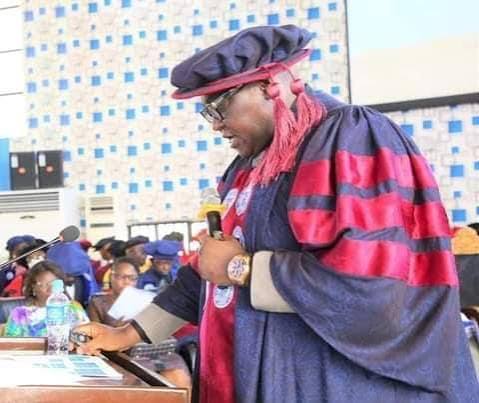
A Professor of Crop Production, Ignatius Ajuru University of Education (IAUE), Prof. Apele Graham Iyagba has stated that weeds have lots of nutritional and health benefits.
Iyagba stated this recently, while delivering the Ignatius Ajuru University of Education (IAUE) 46th Inaugural Lecture, titled: ‘Waste But Not A Waste And Its Impact On National Food Security’, at the University Auditorium Complex, Port Harcourt.
Iyagba stated that weeds have lots of biological, nutritional and health benefits that help mankind, stressing that there were lots of accusations made against weeds as causing damage to the land, environment and health of the people.
The professor argued that weeds also have their positive side that should be considered, while advising that people should practice organic agriculture when planting their crops, as well discouraging the use of synthetic chemicals that are dangerous to human health.
Iyagba regretted that there was lower awareness on organic agriculture as well as food security, noting that everyone has a role to play by starting first, to create needed awareness at home and among students that study agriculture on the need for all to use organic materials when planting crops instead of synthetic chemicals.
He added that although sometimes,  weeds interfere with human activities, there is also the positive impact of weeds, hence the need to concentrate more on the positive than their negative impacts.
He explained that there is a relationship between waste, weed and food security, saying: “If you have eaten Achara Soup, Waterleaf soup, then Mr Weed is asking ‘ Where Are My Accusers?”
Weeds are useful in biological and medicinal functions; and have food values. Water leaf as a case study, helps in mulching, which increases crop yields, organic matter of the soil, potentially minimising water runoff, improving infiltration capacity of the soil, among others”, the Prof said.
Prof Iyagba recommended that state and federal governments depolitise agriculture by continuing the agrarian policies established, irrespective of the party in power, adding that this follows the United Nations Global hunger predictions that hunger will be more eminent in the next few years and Nigeria will be a casualty.
He further recommended that the state and federal governments should as a matter of urgency declare a state of emergency on agriculture, so that all could embrace it the more, especially students that study Agriculture from the various tertiary institutions.
On his part, the Vice Chancellor, IAUE, Prof Okechuku Onuchuku, stated that looking at the topic, shows that waste can also be converted to something useful, saying: “One way to go is to ensure that some of these things we call waste , should not just be thrown away like that, because they are very useful.
“Organic farming is very good to health. I would want farmers to do more of organic farming instead of going into subsistent farming, it should be mechanised farming, that boosts the country’s economy,” he said.

By: Susan Serekara-Nwikhana

Continue Reading

Education

Uniport Appoints Prof. Princewill R. Chike as 10th Vice-Chancellor

Published

on

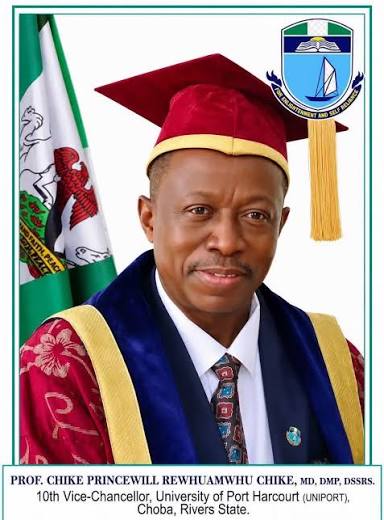
The Governing Council of the University of Port Harcourt has approved the appointment of Professor Princewill R. Chike as the 10th Vice-Chancellor of the University.
Prof. Chike, a former Commissioner for Health in Rivers State, will succeed Prof. Georgewill Owunari whose tenure ends on July 13, 2026.
A statement signed by the University’s Public Relations Officer, Dr. Sam Kpenu and made available to _The Tide_, said the appointment was made by the 17th Governing Council following the successful conclusion of the selection process.
“The process was conducted in strict compliance with the provisions of the Universities (Miscellaneous Provisions) Act and the University of Port Harcourt Act,” the statement read.
It added that the process involved the constitution of a Search Team and a Joint Council-Senate Selection Board. Both bodies carried out their responsibilities in accordance with extant laws and regulations governing the appointment of Vice-Chancellors in Nigerian universities.
According to the statement, the Pro-Chancellor and Chairman of the Governing Council, Senator Mao Ohuabunwa, congratulated Professor Chike on his appointment.
Senator Ohuabunwa expressed confidence in Prof. Chike’s ability to provide visionary leadership for the continued growth and development of the University.
Professor Princewill R. Chike is expected to formally assume office as the 10th Vice-Chancellor of the University of Port Harcourt on July 13, 2026.
By: Akujobi Amadi
Continue Reading

Education

Education commissioner Commends WAEC Conduct in Rivers ,, Vows Sanctions for Malpractice

Published

on

The Rivers State Commissioner for Education, Dr. Peters Nwagor, has commended the orderly conduct of the ongoing 2026 West African Senior School Certificate Examination in the state and urged schools to sustain the standard.
 Dr. Nwagor gave the commendation recently during a monitoring tour of selected secondary schools in Port Harcourt and environs where the WAEC exam is ongoing.
The commissioner, who was accompanied by directors and monitors from the Ministry of Education, said he was impressed with the peaceful atmosphere at the centres visited.
“The students conducted themselves properly and wrote their papers under conducive conditions. Invigilators and supervisors also performed their duties professionally,” he stated.
Nwagor noted that the Rivers State Government had invested heavily to ensure the smooth and credible conduct of the examination across the state
 He urged candidates to reciprocate government’s effort by shunning all forms of examination malpractice and focusing on their studies.
 “Government has done so much to ensure successful examinations in our schools. Students should take advantage of it by remaining focused,” the commissioner said.
While no case of malpractice was recorded in the centres inspected, Dr. Nwagor warned that any principal, teacher, invigilator, or official caught aiding malpractice would face strict sanctions in line with regulations.
 He also commended school administrators, teachers, WAEC officials, and security personnel for upholding the integrity of the process. Centres visited included County Grammar School, Ikwerre/Etche; Government Comprehensive Secondary School, Borokiri; Government Secondary School, Borokiri; and Pabod Model Secondary School.
By: Akujobi Amadi
Continue Reading

Education

RSU Law Professor Calls for Periodic Review of Nigeria’s Criminal Laws

Published

on

A Professor of Criminal Justice and Law at the Faculty of Law, Rivers State University, Nkpolu-Oroworukwu, Port Harcourt, Prof. Clifford Anaele Nwanyanwu, has advocated for periodic review of the nation’s criminal justice administration laws to reflect current societal needs and challenges.
Prof. Nwanyanwu noted that many of the criminal justice laws in use today date back to the pre-colonial era. He questioned their efficiency in addressing modern criminal justice administration, adding that the complex nature of adjudication often allows crime to thrive.
He made the call while delivering the university’s 132nd Inaugural Lecture on Wednesday at the Senate Conference Auditorium titled: “Society as Criminal Enterprise: Unravelling a Complex Justice System.”
The erudite legal scholar clarified that the lecture was not meant to condemn the country’s justice system. Instead, he said it was intended to highlight areas that require urgent attention.
He expressed concern that criminal justice practice in Nigeria is more dysfunctional than functional, and stressed that he wants to see a system that works effectively for all citizens.
“The essence of criminal justice administration is due process, and anything contrary is not it. Plea bargains help to fast-track trial processes and reduce delays,” he stated.
However, Prof. Nwanyanwu expressed worry that the sums recovered through plea bargain arrangements are often meagre compared to the wealth looted, noting that this contradicts the purpose of the arrangement.
To strengthen the system, he recommended merit-based recruitment of judicial officers with proven character and integrity. He also called for adequate funding, infrastructure development, removal of political interference, and ethical reorientation within the judiciary.
The law professor further recommended that the state should pay compensation to citizens when security officers are found culpable for arbitrary killings, in line with the principle of vicarious liability.
In his remarks, Vice-Chancellor of the university, Prof. Isaac Zeb-Obipi, commended the lecturer. He described the lecture as timely and relevant to addressing the nagging challenges of crime in society.
Prof. Zeb-Obipi expressed concern over the justice system’s inability to curb the rising rate of criminal activities in the state. He added that through inaugural lectures, the university continues to provide solution-based approaches to societal challenges.
Our correspondent reports that the thought-provoking lecture was attended by stakeholders in the judicial system, judges, magistrates, scholars, and members of the university community.
By: Akujobi Amadi
Continue Reading

Trending