
Featured
Buhari Grants 65 Ex-Corps Members Automatic Employments

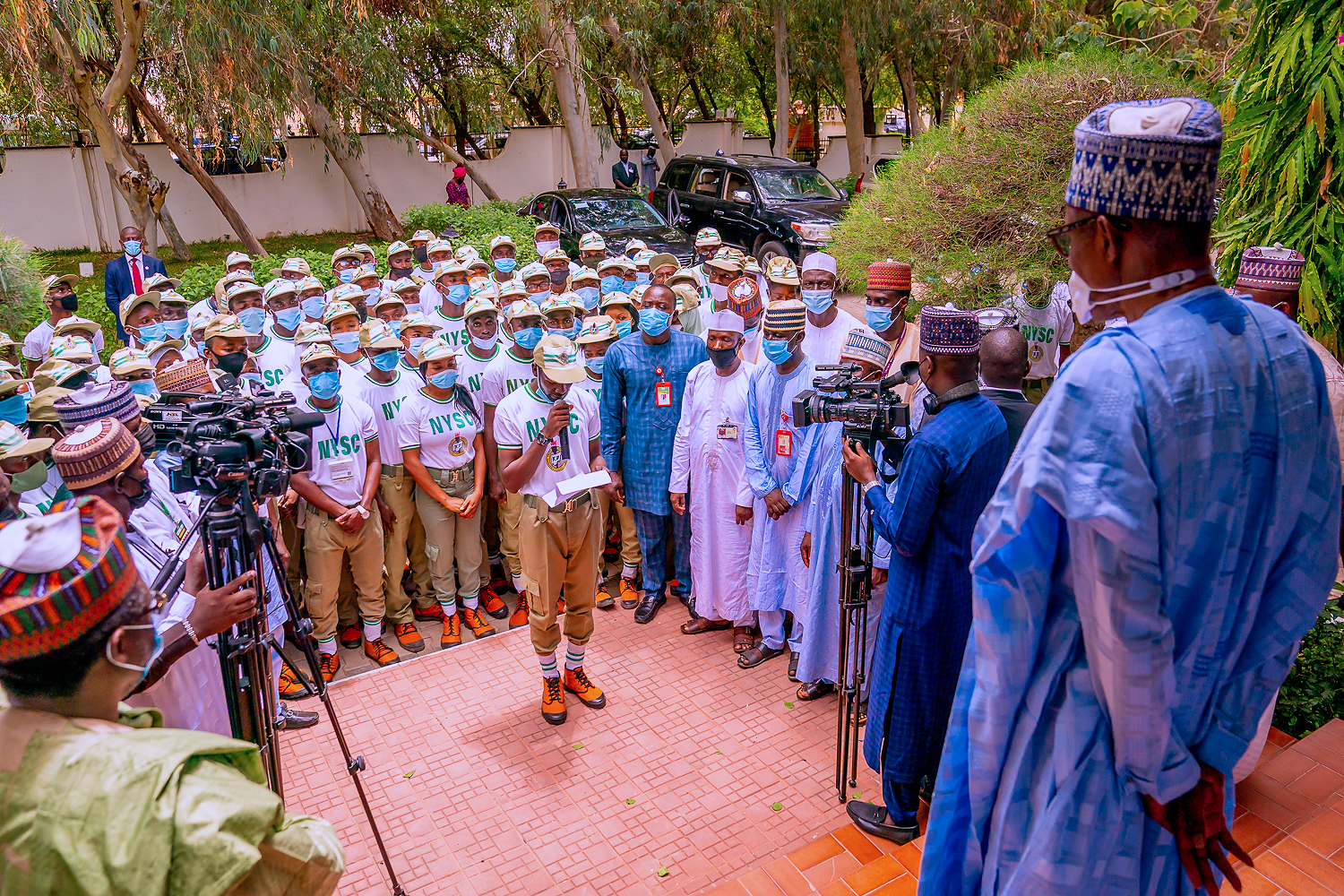
President Muhammadu Buhari has granted automatic employments in the Federal Civil Service to 65 former members of the National Youth Service Corps (NYSC).
Speaking at the NYSC 50th Anniversary Honours Award held at the State House Conference Centre, Abuja, yesterday, the Nigerian leader also highlighted numerous achievements of the scheme since its establishment 50 years ago.
The president said out of the 65 recipients, 52 individuals received the Presidential Honours Awards while the remaining 13 were physically challenged ex-Corps members recognised under the NYSC Hope Alive programme.
In addition to the employment, Buhari also disclosed that both groups would be awarded scholarships to pursue their education up to the doctorate degree level at any university of their choice within the country.
He also announced a cash prize of N250,000.00 for each of the top award winners, N200,000.00 for other award recipients, including the physically challenged ex-Corps members under the NYSC Hope Alive Programme.
Consequently, the president issued a directive to the Head of the Civil Service of the Federation, the Federal Civil Service Commission, and the Minister of Education to ensure adherence to the employment offers and the granting of scholarships.
Buhari also used the occasion to pay tribute to corps members from the batches being honoured, who lost their lives under various circumstances while serving the nation.
‘‘But for their transitioning, some of them might have been here today as part of the honourees. May God grant their souls peaceful repose. They remain our heroes and heroines.
“The nation shall continue to remember their sacrifices towards building a strong, indivisible and egalitarian entity,’’ he said.
The president also sympathised with those sustained varying degrees of disability during the service year, acknowledging their significant sacrifices for the progress of the country and assuring them that the nation stands in solidarity with them.
‘‘Your labour shall not be in vain,’’ he said.
He also congratulated the founding fathers, past and present managers of the NYSC on its Golden Jubilee, commending their enduring faith, which has maintained NYSC as a vital platform for mobilising the youth towards national unity and development.
Buhari praised all Nigerians who have answered the call for National Service in the past fifty years for their patriotic zeal and commitment to the NYSC mandate.
According to him, it has justified its establishment as an interventionist agency, with a core mandate to foster national unity across the country, thereby breaking down ethnic suspicions and divisions.
‘‘The multiplicity of marriages contracted over the years by Corps Members, cutting across the boundaries of ethnicity and religion in no small measure, justifies my assertion,’’ he said.
Buhari also expressed his deep appreciation to retired Gen. Yakubu Gowon, the founding father of the scheme, who conceived the idea of the corps and brought it to fruition on May 22, 1973.
‘‘The NYSC has continued to afford successive batches of Corps Members as the veritable platform to make meaningful contributions, in the various spheres of our national life,’’ he said.
The president specifically commended the corps members for their role in combating the COVID-19 pandemic by producing and distributing essential items such as face masks, hand sanitizers, liquid soap, and providing food and other relief materials to the needy people across the country.
He also applauded their discipline and neutrality when serving as adhoc personnel for the Independent National Electoral Commission (INEC), including during the 2023 General Elections, which contributed to enhancing the credibility of the electoral system.
The president acknowledged their contributions to the successful implementation of Social Intervention Programme,s such as N-Power and the School Feeding program through beneficiary enumeration.
‘‘I hasten to state without equivocation that with the quality of youths such as these, the future of this country, which rests upon their shoulders, is guaranteed.
“I give kudos to my dear diligent, patriotic and virile youths. You have done very well; and the Nation is very proud of you.
‘‘The success story of the fifty-year-old noble scheme will be incomplete without conspicuous mention of your outstanding contributions,’’ he said.
While recognising the crucial role of the NYSC Skill Acquisition and Entrepreneurship Development program in diversifying the national economy towards a more production-oriented model, Buhari assured continued government support for youth initiatives.
He highlighted the Nigeria Youth Investment Fund (NYIF), with a budget of N75 billion, as an example of empowerment initiatives aimed at promoting youth-related activities and fostering a better Nigeria.
The president commended the NYSC Management for its efforts in revenue generation and encouraged them to sustain its commitment.
He also appreciated the Health Initiative for Rural Dwellers implemented by the NYSC and recognised the support of the First Lady, Aisha Buhari, who donated a well-equipped ambulance for the operation of the NYSC Mobile Clinic.
Buhari called on individuals and corporate bodies to emulate this gesture to enhance access to quality healthcare, especially in rural communities.
On the need to reinvent the NYSC through the establishment of a Trust Fund, Buhari said he had been ‘‘briefed adequately’’ on the matter and commended the Management for the initiative.
He pledged his support for any genuine effort aimed at assisting the scheme in achieving its time-tested objectives.
The Minister of Youth and Sports Development, Sunday Dare, while commending the former corps members chosen for the presidential honour, said their sacrifices and commendable contributions, reflected the positive values they embodied during their service year.
“By distinguishing yourselves among hundreds of thousands of Corps members, you embody the nation’s pride and serve as a source of inspiration for other young people in Nigeria.
“Your strong sense of discipline, selflessness, dedication to work, exceptional community service, innovation, and leadership qualities enhance our hope for the country’s future.
“I am confident that this award will motivate you to render even greater service to our homeland.
“To the current corps members and other young individuals, it is my sincere hope that you will emulate these awardees by embracing higher ideals of patriotism.
“In everything you do, always prioritise Nigeria and let it manifest through sacrifice and dedicated service to our beloved nation,” he said.
Dare listed the N75 billion NYIF, the Presidential Youth Empowerment Scheme (P-YES) and the National Young Farmers’ Scheme (NYFS) as enduring legacies of the Buhari administration’s deep commitment to the well-being and development of the Nigerian youth.
He said the Federal Ministry of Youths and Sports Development had actively pursued initiatives such as Digital Skills Acquisition, Employability, Entrepreneurship, and Leadership (DEEL), as well as the Work Experience Programme (WEP), among others for the benefit of the youths.
According to the minister, the progress achieved through the Skill Acquisition and Entrepreneurship Development (SAED) program of NYSC is being consolidated by the current management.
He urged corps members and other young people to participate in these programmes, which would enable them to become self-employed and contribute to the growth of the nation’s economy.















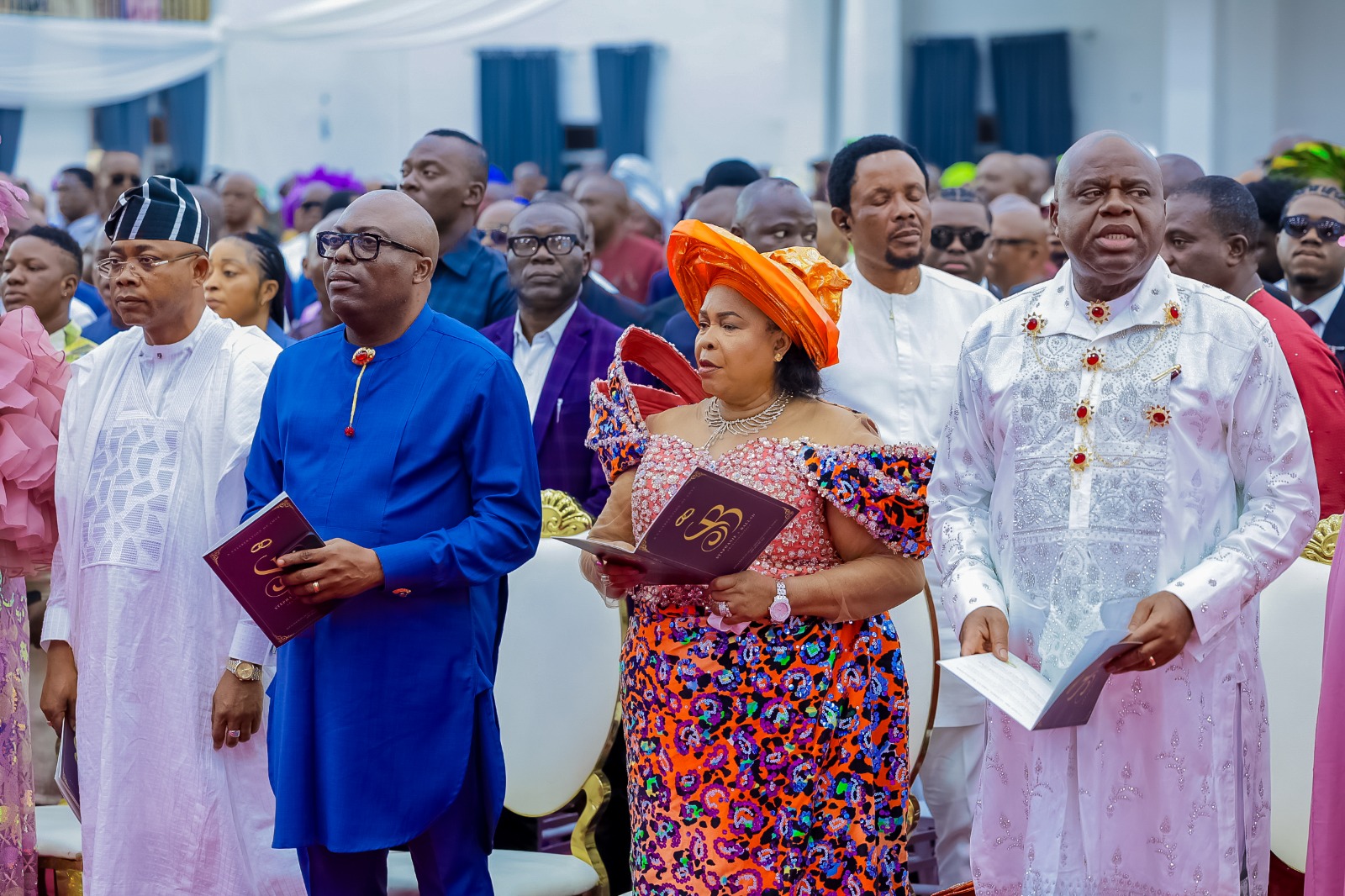
Rivers State, Sir Siminalayi Fubara, has assured members of the National Youth Service Corps (NYSC) of his administration’s commitment to supporting and strengthening the scheme in the State.
Fubara gave the assurance last Friday at the NYSC permanent orientation camp, Nonwa-Gbam, Tai Local Government Area in the State, during the swearing-in ceremony of 2026 Batch B Stream II orientation course.
Represented by the Permanent Secretary, Cabinet Bureau, Office of the Secretary to the State Government, Dr. Promise Oguzie, the governor said the State Government would remain intentional in providing the necessary support to improve the NYSC scheme and enhance the experiences of corps members deployed to the state.
He charged the corps members to be role models and quality nation-builders in their service to the good people of Rivers State in particular, and Nigeria at large.
“I charge you to be exemplary, dedicated and committed in all you do. Take full advantage of all the camp programmes and activities to enrich yourselves”, he said.
In his welcome address, the State Coordinator of NYSC in Rivers State, Mr. Moses Oleghe, urged corps members to see their deployment to Rivers State as a “veritable opportunity to make meaningful contribution to the growth of the State in particular and Nigeria at large.”
He further charged them to serve with all sense of “integrity, discipline, and the fear of God, especially when they will be engaged as INEC ad-hoc staff that will conduct the 2027 general elections.”
A total of 3,584 corps members composed of 1,421 males and 2,163 females were sworn in by the Chief Judge of Rivers State, who was represented by Justice Godspower Aguma.

Governor of Rivers State, Sir Siminalayi Fubara, says Nigeria needs God-fearing leaders for the nation to move in the right direction and make meaningful progress.
The Governor stated this yesterday when he received in audience, the World President of the Seventh Day Adventist Church, Pastor Erton Kohler; his wife, Andriene Marques Kohler; daughter Mariana Marques Kohler and a retinue of ministers of the church at Government House, Port Harcourt.
Fubara who hailed the Seventh Day Adventist Church for its contributions to education and the grooming of future leaders in Nigeria, expressed delight that the Church had over the years, been investing in education at various levels and currently runs two universities in the country.
He commended the church for not only using its institutions to spread the gospel of Christianity but to groom future leaders for the country.
According to him, religion should not be just about defending one’s faith, but also making meaningful impact on the lives of the people.
He said that by floating these educational institutions, the church has demonstrated capacity to support Nigeria in the task of producing not only educated people but a breed of God-fearing leaders.
“Our country is where it is today because we lack the fear of God. If you have the fear of God, there should be a limit to what you can do because you understand the supremacy of God. But when God is not in your equation, you’ll go beyond the line and that is what has brought us to where we are today.
“So, I feel very happy that you are contributing to the development of our future leaders in this country. We need the right people being in the right place; prepared properly with good minds; that is what we need, not just in Nigeria but round the whole world.,” he said.
Governor Fubara further observed that the absence of God-fearing people in high places to take the right decisions that could impact positively on the society, has also given rise to other problems such as social inequality, poverty, corruption and criminality. According to him, Nigeria needs a system where the average parent could afford quality education for their children and a guarantee that upon graduation, the average child will have the capacity to compete favourably with anybody, anywhere in the world.
“If we have a situation where the little money that you’re being paid as wage can also afford you quality healthcare and after working at least for 15-20 years, you have a roof over your head, tell me why you should be involved in any kind of crime? At that point, you’ll feel secured and this attitude of insecurity about the future that leads to all the social vices we have today won’t be there,” he said.
Governor Fubara expressed appreciation to the delegation for the visit and for their prayers for Rivers State, assuring them of his continued support for their programmes in the state.
Leader of the delegation and World President of the Seventh Day Adventist Church, Pastor Erton Kohler said he was in Nigeria for a special conference of the church during which thousands of the church’s ministers will be undergoing an empowerment programme to further equip them for the task of herding their flocks and serving the society.
He expressed gratitude to the Governor for the warm reception accorded his entourage, saying the memory of the visit will linger in his mind for a lifetime.
Kohler disclosed that the Church has over twenty -four million (24,000,000) members and more than 182,000 places of worship, spread across 212 countries of the world.

The Rivers State House of Assembly has approved the 2026–2028 Medium Term Expenditure Framework (MTEF) submitted by Governor Siminalayi Fubara.
This reaffirms the lawmakers’ commitment to enacting laws and taking legislative actions geared towards the overall development of the State.
The Assembly gave the approval during its Second Legislative Sitting of the Fourth Session held last Friday.
Speaking on the MTEF document during plenary, the House Speaker, Rt. Hon. Martin Amaewhule, noted that by the provision of Section 10(1)(b) of the Rivers State Fiscal Responsibility Law No. 8 of 2010, the MTEF ought to have been laid before the House in September 2025.
Amaewhule explained that traditionally, the document is expected to be presented four months before the commencement of the next financial year and immediately after the expiration of every three-year fiscal cycle.
He, however, stated that in the interest of the State and its people, the House considered it necessary to deliberate on the document, describing it as a precursor to the 2026 Budget Estimates.
The Speaker expressed concern that the year had already progressed significantly before the presentation of the framework.
During deliberations on the document, members examined the assumptions and projections contained in the MTEF and observed that strict adherence to the outlined fiscal parameters would ultimately serve the interest of Rivers people.
The lawmakers maintained that effective implementation of the framework would promote prudent financial management and enhance developmental planning across the State.
Following the debate and positive consideration by members, the Speaker put the question to the House and members voted overwhelmingly in support of the approval of the MTEF.
Meanwhile, during the same sitting last Friday, the House also received a petition from the Chairman of Obio/Akpor Local Government Council, Dr. Gift Worlu.
The petition was presented by the member representing Obio/Akpor Constituency II, Hon. Emilia Amadi.
According to the petition, concerns were raised over an imminent security breach, threats to lives, destruction of property and alleged forceful takeover of property by some lawless persons within parts of the Local Government Area.
Presenting the petition before the House, Hon. Amadi appealed to the lawmakers to revisit the matter and take necessary steps aimed at safeguarding lives and property in the affected communities.
The House is expected to further deliberate on the petition and consider measures to address the concerns raised in order to sustain peace and security in the area.
King Onunwor
-

 News1 day ago
RSG Targets Nine Million Residents in Mosquito Net Distribution Campaign
-

 Oil & Energy1 day ago
Aiyedatiwa Signs New Electricity Bill
-

 Maritime1 day ago
Marine Minister Commends President Tinubu On NPERA Bill Assent
-

 Oil & Energy1 day ago
NLNG Commissions Research And Innovation Centre In RSU
-

 News1 day ago
KenPoly Holds Eight Convocations, August 29
-

 News1 day ago
RMAFC Completes Revenue Sharing Review, Proposes New Pay
-

 News1 day ago
RSG Begins Another Phase of Projects Commissioning Today
-

 Maritime1 day ago
NAGAFF Petitions IGP Over Alleged Maritime Police Harassment