
Nation
Experts Seek Collaboration With Academics, Security Professionals

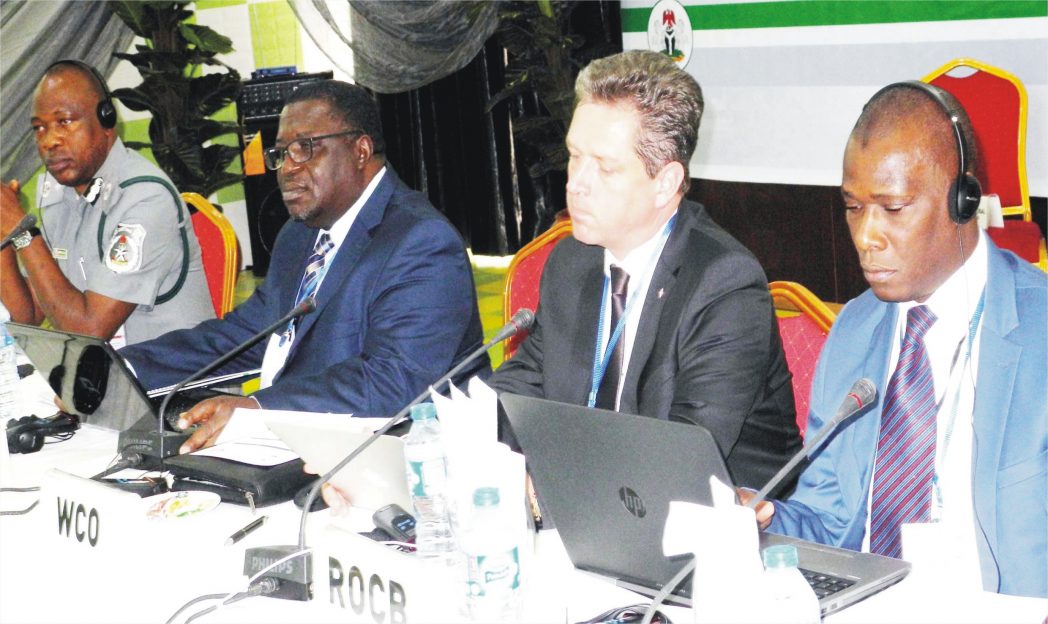
The Institute of Security, Nigeria, has urged the academic community and security professionals to work together to re-examine and re-evaluate the threats and vulnerabilities facing the nation’s security architecture.
The President of the institute, Prof. Oluwatoyin Ogundipe, gave the advice at the 15th International Security conference 2023, on Saturday in Lagos.
The theme of this year’s conference is: National Security Environment and Challenges; Enhancing Security Services for Sustainable Development.
According to him, such collaboration will also go a long way in examining threats to the environment and consequently determine the level of challenges and solutions.
He said that the security practitioners provide security and protection services with the aid of God-given expertise and skills which remain the major tools.
Ogundipe said the theme of the conference was well suited and timely, and to him personally, intriguing.
“We appreciate the complement of some of the best security experts and professionals this country ever produced; well cultured, with excellent character.
“It is worrisome though that we still face security challenges as professionals, where a few among us have by their misconduct brought distain and disrespect to the profession”, he said.
Ogundipe, the immediate past vice chancellor of the University of Lagos, noted that such development had remained a grave concern to the security professionals and the nation at large.
According to him, it is proper to hold the view that those instances of professional misconduct does not represent all the security professionals and experts in the nation.
“We must teach the next generation to act professionally and play a central role in setting the parameters for them that will have the formidable task of safeguarding and securing the nation in the new and challenging context in which we now live.
“There is no other profession that is uniquely positioned to provide internal and territorial security, protection and defence, other than security professionals.
“Every negative ethical behaviour needs to be condemned. The instances of alleged corrupt practices and professional misconducts constitute a minute fraction of members of the security profession”, he said.
The former VC urged Nigerians to repose confidence in security professionals, while they hold them to account and report cases of misconduct.
According to him, the country is on the verge of conducting another general election, hence it is the responsibility of the security professionals to guarantee the security of lives and properties in the country.
Ogundipe further said that there was the need for citizens to also do all that was legitimate within their abilities and be motivated by the desire to find solutions to the many security challenges facing the country.
“All hands must be on deck and all arms of government have to do all that is possible to contribute ideas and actions that will birth the solutions needed to secure lives and properties of Nigerians as envisaged in section 14 (2)(b) of the 1999 constitution.
“It states that ‘the security and welfare of the people shall be the primary welfare of government’.
“I, therefore, believe that the professional actions will fully resolve this complex national security issues and frizzle all forms of corruption facing our country”, Ogundipe stated.
In his welcome address, Mr Adebayo Akinade, Deputy President of the institute, noted that the conference represented a milestone in the effort to create awareness among members of the general public and the law enforcement agencies.
According to him, one of the objectives of the institute is to promote and develop security science, technology and practice in all its ramifications.
He said it also conducts research, collects and disseminates information on security subjects among others.
The Deputy President said there was the need to search for the remote and immediate causes of security challenges, security architecture and other breakdown in the social fabrics of the society.
“There is the need to reflect on the policies which can be put in place to correct these anomalies and restore the lost order in our communities and societies.
“It is only when this order is restored that progress can be made to improve the decayed social standard and in the security trends in the nation.
“The papers to be discussed in the conference today will highlight some of these problems with the possibility of finding solutions to them.
“As we move into the 21st century, let us together find the blueprint of improving the security environment to ensure security, stability, unity, progress, peace and order in our society”, Akinade said.
In his remark, Chairman of the occasion, Prince Olu Bajowa, said the country’s nascent democratic experiment was still occuring with tremendous challenges.
According to him, the country can not remain impervious to the overriding task of democratic consolidation, which must be anchored on the rule and supremacy of the law.
“We have obligation to the nation to mentor the younger members of the security profession. The duty is deliberate and sincere mentorship, which is the only way the ideal security practitioners will progressively place the next generation in the right track.
“We also owe ourselves the duty to preserve the security space for the next generation of security professionals and for these reasons, we must shun all forms of unprofessional and unethical practices that may cast the security professionals in bad light and undermine our place in the society,” he said.
The Tide’s source reports that the high point of the event was the award of distinguished fellowship to eight persons, while 26 professionals were awarded professional fellowship.




The Hydrocarbon Pollution Remediation Project (HYPREP) has commemorated the 15th anniversary of the release of the United Nations Environment Programme (UNEP) Environmental Assessment Report on Ogoniland, reaffirming its commitment to restoring the environment and improving the livelihoods of affected communities.
In a statement signed by the Project Coordinator, Prof Nenibarini Zabbey, to commemorate the anniversary, HYPREP described the anniversary as a significant milestone in Nigeria’s environmental restoration efforts, noting that the project has made remarkable progress in implementing the recommendations of the landmark UNEP report released on August 4, 2011.
The UNEP report had revealed extensive oil pollution across Ogoniland, severe environmental degradation, and serious public health risks resulting from decades of petroleum operations. It also recommended an initial $1 billion fund to commence the cleanup of the affected communities.
According to HYPREP, the Federal Government formally launched the Ogoni clean-up in 2016, while the Project Coordination Office was established in 2017 to drive the implementation of UNEP’s recommendations.
Zabbey said the current administration has continued to prioritise the project under the Renewed Hope Agenda.
Providing an update on the cleanup, the Project Coordinator disclosed that 30 of the 65 contaminated sites identified by UNEP have been fully remediated, while work is ongoing at several medium- and high-risk locations. It also stated that more than 1.5 million mangrove seedlings have been planted as part of what it described as the world’s largest restoration of oil-degraded mangroves, with over 1,000 hectares of shoreline already rehabilitated.
Zabbey further revealed that 49 Ogoni communities have been connected to potable water schemes through multiple water projects and booster stations aimed at providing safe drinking water across the region.
In the health sector, he said the 100-bed Ogoni Specialist Hospital in Kpite and the 43-bed Cottage Hospital in Buan are nearing completion, adding that several existing health facilities have been upgraded with modern medical equipment, while five ambulances have been donated to improve emergency healthcare services. The Project Coordinator also disclosed that a three-year human health biomonitoring study is being conducted in collaboration with the World Health Organization’s International Agency for Research on Cancer (IARC).
On economic empowerment, Zabbey stated that the Project has created more than 8,000 direct jobs and trained thousands of Ogoni youths and women in various vocational and technical skills, including software development, cybersecurity, aviation, commercial diving, seafaring, mechatronics, and creative arts. The project also reported awarding scholarships to more than 1,000 students, providing grants to small businesses, and supporting persons living with special needs through skills acquisition programmes.
The statement further highlighted ongoing legacy projects, including the Ogoni Power Project and the Centre of Excellence for Environmental Restoration, which it said is about 96 per cent complete. HYPREP also welcomed the recent designation of the Ogoni Wetland as a Ramsar Site of International Importance and pledged to continue promoting biodiversity conservation and sustainable management of the ecosystem.
Marking the anniversary, Zabbey said the progress achieved over the past 15 years demonstrates the collective commitment of government, development partners, stakeholders, and local communities to restoring Ogoniland. He called for renewed collaboration to sustain the cleanup effort, promote environmental sustainability, and support the long-term development of the region. 3
-

 News2 days ago
RSG Targets Nine Million Residents in Mosquito Net Distribution Campaign
-

 Oil & Energy2 days ago
Aiyedatiwa Signs New Electricity Bill
-

 Maritime2 days ago
Marine Minister Commends President Tinubu On NPERA Bill Assent
-

 Oil & Energy2 days ago
NLNG Commissions Research And Innovation Centre In RSU
-

 News2 days ago
KenPoly Holds Eight Convocations, August 29
-

 News2 days ago
RSG Begins Another Phase of Projects Commissioning Today
-

 News2 days ago
RMAFC Completes Revenue Sharing Review, Proposes New Pay
-

 Maritime2 days ago
NAGAFF Petitions IGP Over Alleged Maritime Police Harassment