
Nation
Nigeria Must Not Fail With 2023 Elections, UN Warns … As NBA Apologises For Abdicating Role

As Nigerians count down to the presidential polls, which will hold in the next 25 days, the Deputy Secretary-General of the United Nations (UN) and Chair of the UN Sustainable Group, Ms Amina J. Mohammed, has warned that Nigeria cannot afford to fail with the 2023 general elections.
She also urged the Nigerian Bar Association (NBA) to ensure success of the polls.
Mohammed stated this on Monday in her keynote address delivered at the State of the Nation Dialogue on Security, Economy and Administration of Justice, organised by NBA in Abuja.
He urged the association to come up with how to effectively manage conflicts that may arise from the conduct of the elections.
The UN Deputy Secretary-General said: “As Africa’s leading economy, with the biggest ports and security anchor for our neighbouring countries, Nigeria cannot simply afford to fail. UN will support any process that will lead to credible, all-inclusive, free and fair general elections. UN is committed to accompanying Nigeria on this journey.
“And NBA has a huge role to play to advance the country’s aspiration towards 2023 general elections.”
She said the UN has observed fake news, religious and ethnic hate speeches trailing the ongoing campaigns.
Speaking to the audience via a live broadcast, Mohammed applauded the Independent National Electoral Commission (INEC) for achieving great strides in increasing the credibility and transparency of the electoral process.
the number of women in government.”
NBA President, Yakubu Maikyau (SAN), in his speech, apologised to Nigerians for what he described as the failure of lawyers to live up to their responsibilities of offering guidance for the country’s advancement.
Maikyau said most of the challenges facing Nigerians were as a result of the neglect of lawyers to provide direction and leadership to the people.
“I dare say, with utmost respect, that to a large extent, our experience today as a country is a direct result of the legal profession’s abdication of the duty to provide direction and leadership to the people. I must, therefore, as one who is privileged to lead the Bar at this time, apologise to Nigerians for the abdication of our role.
“Today, as members of the Bar, we are reputed more for how much fees we charge our clients as opposed to the discharge of our primary call to offer guidance and/or offer ourselves for the advancement of the cause of our country. This apology is necessary because, no other group of professionals is called to this privileged position as the lawyers,” he said.
As the watchdog of the people, he added that NBA members must, through their independence and total commitment to social justice, provide necessary support to sustain independent and fearless judiciary, the last hope of man for law and order, peace and progress.
Members of a panel of discussion moderated by Eugenia Abu on the ‘State of Human and State Security in Nigeria: Is there a way out?’ lamented the security challenges in the country, even as they held that the security of life and property is the responsibility of government.
A former Inspector General of Police and Chairman of the Police Service Commission (PSC), Dr. Solomon Arase, a member of the panel, in his comment, called for increase in the numerical strength of security agents, adding that when there is consequence for crime, there will be deterrent.
Present at the NBA dialogue were presidential candidates of Action Alliance (AA), Maj. Al-Mustapha Hamza (rtd); Sani Yabaji Yusuf of Action Democratic Party (ADP); Prof. Peter Umeadi of All Progressives Grand Alliance (APGA); Omoyele Sowore of African Action Congress (AAC); Prince Adewole Adebayo of Social Democratic Party (SDP); Dumebi Kachikwu of African Democratic Congress (ADC) and Nwanyanwu Daniel Daberechukwu of Zenith Labour Party (ZLP).



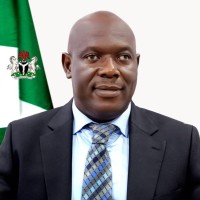
The Hydrocarbon Pollution Remediation Project (HYPREP) has commemorated the 15th anniversary of the release of the United Nations Environment Programme (UNEP) Environmental Assessment Report on Ogoniland, reaffirming its commitment to restoring the environment and improving the livelihoods of affected communities.
In a statement signed by the Project Coordinator, Prof Nenibarini Zabbey, to commemorate the anniversary, HYPREP described the anniversary as a significant milestone in Nigeria’s environmental restoration efforts, noting that the project has made remarkable progress in implementing the recommendations of the landmark UNEP report released on August 4, 2011.
The UNEP report had revealed extensive oil pollution across Ogoniland, severe environmental degradation, and serious public health risks resulting from decades of petroleum operations. It also recommended an initial $1 billion fund to commence the cleanup of the affected communities.
According to HYPREP, the Federal Government formally launched the Ogoni clean-up in 2016, while the Project Coordination Office was established in 2017 to drive the implementation of UNEP’s recommendations.
Zabbey said the current administration has continued to prioritise the project under the Renewed Hope Agenda.
Providing an update on the cleanup, the Project Coordinator disclosed that 30 of the 65 contaminated sites identified by UNEP have been fully remediated, while work is ongoing at several medium- and high-risk locations. It also stated that more than 1.5 million mangrove seedlings have been planted as part of what it described as the world’s largest restoration of oil-degraded mangroves, with over 1,000 hectares of shoreline already rehabilitated.
Zabbey further revealed that 49 Ogoni communities have been connected to potable water schemes through multiple water projects and booster stations aimed at providing safe drinking water across the region.
In the health sector, he said the 100-bed Ogoni Specialist Hospital in Kpite and the 43-bed Cottage Hospital in Buan are nearing completion, adding that several existing health facilities have been upgraded with modern medical equipment, while five ambulances have been donated to improve emergency healthcare services. The Project Coordinator also disclosed that a three-year human health biomonitoring study is being conducted in collaboration with the World Health Organization’s International Agency for Research on Cancer (IARC).
On economic empowerment, Zabbey stated that the Project has created more than 8,000 direct jobs and trained thousands of Ogoni youths and women in various vocational and technical skills, including software development, cybersecurity, aviation, commercial diving, seafaring, mechatronics, and creative arts. The project also reported awarding scholarships to more than 1,000 students, providing grants to small businesses, and supporting persons living with special needs through skills acquisition programmes.
The statement further highlighted ongoing legacy projects, including the Ogoni Power Project and the Centre of Excellence for Environmental Restoration, which it said is about 96 per cent complete. HYPREP also welcomed the recent designation of the Ogoni Wetland as a Ramsar Site of International Importance and pledged to continue promoting biodiversity conservation and sustainable management of the ecosystem.
Marking the anniversary, Zabbey said the progress achieved over the past 15 years demonstrates the collective commitment of government, development partners, stakeholders, and local communities to restoring Ogoniland. He called for renewed collaboration to sustain the cleanup effort, promote environmental sustainability, and support the long-term development of the region. 3
-

 News2 days ago
RSG Targets Nine Million Residents in Mosquito Net Distribution Campaign
-

 Oil & Energy2 days ago
Aiyedatiwa Signs New Electricity Bill
-

 Maritime2 days ago
Marine Minister Commends President Tinubu On NPERA Bill Assent
-

 Oil & Energy2 days ago
NLNG Commissions Research And Innovation Centre In RSU
-

 News2 days ago
KenPoly Holds Eight Convocations, August 29
-

 News2 days ago
RSG Begins Another Phase of Projects Commissioning Today
-

 News2 days ago
RMAFC Completes Revenue Sharing Review, Proposes New Pay
-

 Maritime2 days ago
NAGAFF Petitions IGP Over Alleged Maritime Police Harassment