
Education
‘Poor Leadership Responsible For Nigeria’s Under-Development’

Nigerians have been told that it is impossible to develope under the conditions of poor quality leadership as well as living over the years with misconceptions of what constitutes development of a nation.
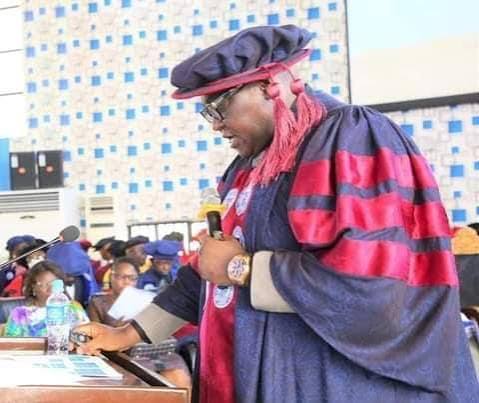
Speaking during the 41st Inaugural Lecture of Ignatius Ajuru University of Education, Port Harcourt, last Thursday, the Inaugural Guest Lecturer, a Professor of Development and Economics, Prof. Good Wilson, while delivering his lecture titled: ‘Nigeria’s Quest For Development: A Journey Without A Roadmap, at the university, maintained that Nigeria instead of progressing alongside countries like Malaysia and Singapore was retrogressing.
Wilson attributed retrogression and underdevelopment of Nigeria to corrupt leadership that has bedeviled the country few years back, noting that this is the reason why the country is where it is today.
He stressed that if Nigerians don’t take a drastic action by choosing quality leaders, who meant well for the economic development and well being of the people, the country and her people will continue to remain poor, underdeveloped and impoverished.
He expressed dissatisfaction towards the conditions affecting the growth and development of Nigeria, adding that to confront the condition that perpetrates hardship and sufferings in Nigeria squarely, requires stronger self determination, the will power and sacrifices by all well meaning individuals to change all the bad leaders and enemies of Nigeria comes the 2023 General Elections.
He added that this was possible if all can muster courage, determination strong will and desire for positive change given the present circumstances that is confronting the country.
He opined that choosing quality leader, will encourage the emergence of a developmental state as well as applying the virtues of a road map that can help to achieve development and improve the living condition of her people.
Prof. Wilson stated further that if asked what he sees about Nigeria attainment of development and improvement in the life of the people years to come, he will say all he sees is a herculean task.
He defined development as the achievement of yearly increases in both the total and per Capita output of goods and services, noting that a country is said to be developing if the country is able to achieve on sustained basis, an annual increase in it’s gross national product (GNP) at a rate of between 5 to 7 percent.
He added that another economic indicator of development that featured prominently in the past was a rising level of industrialization, noting that if the share of industrial output in the total domestic output was rising as well then there was hope development.
Wilson stressed that in a normal setting where things are working development is seen as an economic phenomenon in which the increase in the overall and per-capita GNP would bring about more jobs for the people and a wilder distribution of the economic and social benefits of growth.
“It was believed that growth would lead to improvement in the living conditions of the people which is what development is all about. It was this kind of thinking that informed the United Nations’ declaration of the period 1960-1970 as it’s ‘First Development Decade’, in which it stipulated and advised that all less-developed countries should strive to grow at an annual rate of 5 per cent during the period”, Prof Wilson added. Added.
He emphasised that a Road map is important to every development without which one cannot move to anywhere, saying that: “Development and road map changes can only be sustained on a basis and thus attain development.
“Looking at the various development levels in Nigeria attainment of Development and attendant improvement in the living condition of the people is a herculean task.
“We can achieve development by choosing quality leaders, encouraging the emergence of a development state as well as applying the virtues of a road map”, he added.
The Professor, who is also the Dean, Post Graduate School in the university, cited that Singapore and Malaysia started together with Nigeria, but regretted that today, these two countries have taken over Nigeria, pointing out that Nigeria lacks direction and good leaders, hence the reason why the country is still underdeveloped.
“In Singapore and Malaysia there has been consistency in their political calendar in which their governments were concerned and involved in the growth and development of their countries, but in our own case we are still borrowing, which is not a good practice for a developing country, like ours.
On his part, the Vice Chancellor, Prof. Okechuku Onuchuku said:, “Just as we have rightly heard from the inaugural lecturer, the only way towards development is choosing a good leader and that will only be possible if we vote wisely in the upcoming 2023 General elections”.
Onuchuku commended the guest Lecturer for the lecture put up as well as his efforts in X-raying Nigeria and the quest for development, adding that one basic solution is that Nigeria should adopt the paradigm of developmental states, where the states will lead the quest for development in the country.
The Vice Chancellor frown at the state of development in Nigeria, attributing it to corruption, which Nigeria leaders now called borrowing, remarking that basically corruption has shifted from oil to borrowing as seen ordinarily that there is nothing wrong with borrowing.
“Originally the essence why someone borrowed is as a result of lack of needed finance to needed to do something significant, but today people and leaders of this country, Nigeria have turned borrowing to stealing and mortgaged the future of Nigerians which will take the country so many years to develop.
“When we borrowed we put the money in our individual pockets instead of using it to address the general issue plaguing the country and it’s people, so it’s high time for our people to open their eyes next year as they choose their leaders during the 2023 General Elections that would ensure the economic of the country grows as well as the welfare of it’s citizens”, Prof. Onuchuku added.
By: Susan Serekara-Nwikhana & Adline Humhrey



-

 News2 days ago
RSG Targets Nine Million Residents in Mosquito Net Distribution Campaign
-

 Oil & Energy2 days ago
Aiyedatiwa Signs New Electricity Bill
-

 Oil & Energy2 days ago
NLNG Commissions Research And Innovation Centre In RSU
-

 Maritime2 days ago
Marine Minister Commends President Tinubu On NPERA Bill Assent
-

 News2 days ago
KenPoly Holds Eight Convocations, August 29
-

 News2 days ago
RSG Begins Another Phase of Projects Commissioning Today
-

 News2 days ago
RMAFC Completes Revenue Sharing Review, Proposes New Pay
-

 Maritime2 days ago
NAGAFF Petitions IGP Over Alleged Maritime Police Harassment