
Politics
Role Of The Media In The Conduct Of Peaceful Elections

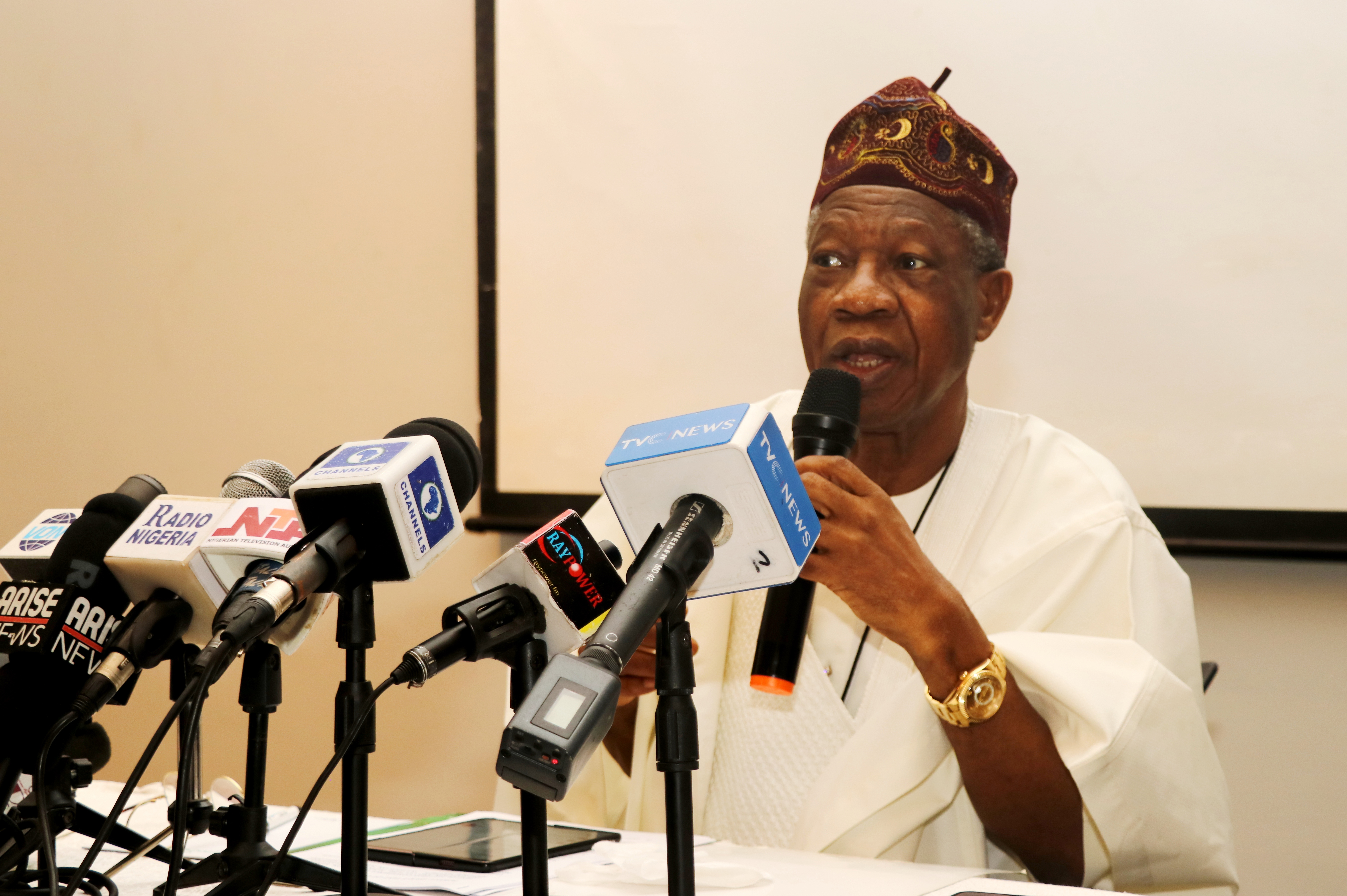
This topic is very important at this time, given the fact that election periods in Nigeria are normally considered by politicians as do or die affairs. It is therefore auspicious for us as Media Professionals to brainstorm ahead of the election year so as to prepare ourselves very well for the onerous task ahead.
The 2023 Nigerian elections will be held, in large part, on 25 February and 11 March 2023. The President and Vice President will be elected on 25 February, with incumbent President Muhammadu Buhari ineligible to run, being term-limited, but his party has thrown up its Candidates for the various positions at stake. Similarly,there will also be elections on the same day for the Senate and the House of Representatives. On 11 March, twenty-eight gubernatorial elections will be held alongside elections to state houses of assembly in all the 36 States of the Federation.
Peace Journalism/Conflict Sensitive and Election Reporting
In whatever we do as Journalists,it is very necessary to take the issue of peace as a cardinal point and take into consideration the need to be careful so that areas that are already fragile do not explode or implode.
Peace is a basic requirement in a democracy. No democracy can flourish in the absence of peace. While, we concede that it is inevitable to eliminate crises and conflicts from our society, however it is important if deliberate efforts are made toward conflict resolution and peace building.
How then can journalists use the power of the mass media to resolve rather than inflame conflicts? How can we as responsible citizens and media professionals help in ensuring a smooth and peaceful democratic transition? Is it possible to use the media pro-actively to help the complex process of conflict management and transformation to peaceful co-existence?
Most importantly,while examining the ethical issues involved in reporting elections and conflicts, how can we play any constructive role in conflict and Post Conflict Scenarios?
As Journalists, we are expected to develop a thorough understanding of the elections and the electoral process, an understanding of conflicts and convey these to citizens in a way that reflect the truth in all their complexities.The proper foundation established by Journalists will provide citizens with the opportunities they require to make informed judgments about issues involved and perhaps help the government in taking meaningful decisions.
Media professionals should brace up for the challenges ahead, especially since they are expected to participate in the process of social reconstruction and democratisation by providing a positive and participatory forum for the exchange of ideas, democracy and nation building and while discharging their duties Journalists should never attempt to deviate from the ethics of the profession because it will not auger well for the nation. Since the role of the media in Nigeria’s emerging democracy is central, media professionals must maintain the highest possible standards in their practice.
The role of the media in peace promotion or conflict escalation has been heightened by a number of factors which include ownership and funding, editorial policy and the regulatory agencies, therefore it is proper to suggest peace journalism as an instrument in promoting peace and reducing dysfunctional conflict to the barest minimum.
The media have a vital role to play in nation building, by being active partners in the implementation of the development processes. They are veritable instruments and are therefore central to any input-output functions of any political system. However, there may be constraints of the media in this regard which among others include lack of conducive working environment, mass poverty, poor remuneration and lack of adequate training.
It should be noted that the emergence of our country as a democracy in 1999 was a product of collective efforts of Nigerians as represented by the mass media and civil society. Despite its challenges, democracy has provided Nigerians with space to freely discuss their affairs. Every single day of democratic governance in Nigeria helps to further deepen democratic values in the country. Our role as journalists is to facilitate easy access to information that will enhance participation in governance and ultimately enable citizens make informed choices during elections.
We are conscious of our professional responsibility to gather, collate, process and disseminate news. Through this role, we act as gate keepers who determine which news material to disseminate especially against the background of the myriads of available news material.
Using the means of new technology to reach a mass audience, the journalist influences opinions, builds perceptions and mediates among contending social and political forces. We act as mirror for the society to view itself while also influencing social realities.
Clearly, while we have contributed to the process of democratic sustainability in Nigeria in the past 23 years or thereabout, we are also interested in its future. Therefore the 2023/general election is important to all journalists especially because it will further stabilise our democracy and strengthen the democratic culture in Nigerian.
The NUJ is committed to improving the ethical standard of news reportage during elections. We are keen in ensuring that Nigerian Journalists undertake their professional duties within the ambit of the Electoral Law and other regulations. Professionally, we desire to improve the news judgment of the journalist as it affects elections and elections related issues.
Media Professionals should be actively involved in the Pre-voting stage during which electoral frameworks may be developed or refined and boundaries may be defined to ascertain voter eligibility. During this phase, voter and civic education, Voter registration, party nominations, and electoral campaigns also take place.
The process of voting where citizens come to cast their votes is also very important for the media to be active participants. In addition to the casting of votes, this phase also includes vote counting and the verification of results. It is therefore another critical stage where the attention of Journalists is very key. It is the responsibility of Journalists to provide the necessary information whethr the electoral system is fair and equitable, without ethnic- or regionally-based discrimination.
The media must always beam their searchlight on the Election management body- INEC to ensure that it is impartial and competent, that it embraces transparency and inclusivity in its composition and mandate in order to discharge its duties effectively.
The role of Journalists in the proper functioning of a democracy cannot be ignored. Their “watchdog” role should center on unfettered scrutiny and discussion of the successes and failures of politicians , governments, and the electoral management body. Journalists should inform the public of how effectively they have performed and help to hold them to account.
Other roles of media professionals should include educating voters on how to exercise their democratic rights by reporting on election campaigns through providing equal platforms for the political parties and candidates to communicate their messages to the electorate.
Similarly, they should provide a platform for the public to communicate their concerns, opinions, and needs, to the parties/candidates, to the EMB( INEC) the government, and to other voters, and to interact on these issues.
Another important responsibility is bringing the parties and candidates to debate with each other. This is a veritable means through which voters can have ideas on where to cast their votes.
It is the duty of Journalists to report election results as released or provided by INEC, and monitoring the entire process of vote counting. They should scrutinise the electoral process itself, including electoral management, in order to evaluate the fairness of the process, its efficiency, and its probity.Journalists must provide information that, as far as possible, avoids inflammatory language, thus helping to prevent election-related violence.
Social Media, Fake News and Hate Speech.
Journalists must avoid hate journalism, and fake news as these evils can destroy a society.
The advent of multi-media technology has changed the pattern and flow of communication, globally and since journalism is in the business and practice of Communication, it has also been impacted upon tremendously.
Social media platforms have thrown up challenges and opportunities for the practice of journalism which many journalists and their media organisations have not embraced.
Social media is both a threat and yet affords opportunities for journalism and businesses especially in Nigeria. It is a healthy trend but there is need for change in roles between traditional media and social media.Journalists need to avail themselves of the opportunities being provided by the Social Media Platforms to provide credible information and reduce the prevalence of hate speech and fake news. This will assist immeasurably in dousing tension in the polity.
Finally
The media plays a major role in keeping the citizenry abreast of current events and raising awareness of various issues in any society. It also has an extremely significant impact on the public’s views and way of thinking. The media is the primary means through which public opinion is shaped and at times manipulated. If this is the media’s role then in normal course of events, it becomes even more vital in exceptional periods, one of which is electoral junctures, when the media becomes a primary player. Elections constitute a basic challenge to the media, putting its impartiality and objectivity to the test. The task of the media, especially national media outlets, is not and should not be to function as a mouthpiece for any government body or particular candidate. Its basic role is to enlighten and educate the public and act as a neutral, objective platform for the free debate of all points of view. (“Media and Parliamentary Elections in Egypt: Evaluation of Media Performance in the Parliamentary Elections” Human Rights Movement Issues 26, (Cairo, Egypt: Cairo Institute for Human Rights Studies, 2011): 27)
Conclusion
Journalists in Nigeria should work towards the advancement of the right of freedom of expression, access to information, freedom of the press, media independence, conflict transformation and peace building. These are prerequisites for open governance and development, which ultimately serve the public interest.
In order to properly advance public interests, earn public trust and be watchdogs of the society, the pursuit of truth and public good must be the cornerstone of journalism practice in Nigeria. This makes it obligatory for every journalist to maximally comply with ethical principles and professional standards. It also makes it obligatory for every journalist to be entitled to decent wages, protection from attacks or hazards and conducive working environment.
It is our hope that participants will avail themselves of this training opportunity to ensure that a level playing field is provided for all political actors and ensure that peoples’ votes will count through a highly professional management of news by journalists who are equipped with international best practices. This is the only way we as professionals can advance the course of peace and ensure a credible and peaceful transition.
Being the text of a keynote address delivered by the President of the Nigeria Union Journalists (NUJ), Chris Isiguzo, at a Training on Election and Conflict Sensitive Reporting for Journalists in the South-South organized by the Center Democracy and Development (CDD) and the Independent National Electoral Commission (INEC), held in Port Harcourt, this week.
By: Chris Isiguzo
Isiguzo is the President of Nigeria Union of Journalists (NUJ).



The Independent National Electoral Commission (INEC) has extended the deadline for political parties to submit the list of candidates for the 2027 governorship and state Houses of Assembly elections from Saturday, August 8, to Tuesday, August 11, 2026.
The commission announced the extension in a statement issued on Saturday and signed by the National Commissioner and Chairman of its Information and Voter Education Committee, Mohammed Haruna.
According to INEC, the decision followed appeals by political parties for additional time to complete the submission process through the dedicated online portal.
“The submission window, which according to the revised Timetable and Schedule of Activities for the General Election was originally scheduled to close on Saturday, 8th August, 2026, has been extended to Tuesday, 11th August, 2026,” the commission said.
In a a related development, INEC announced the suspension of PVC collection in Osun State ahead of the August 15 governorship election.
The commission said voters who applied for replacement of lost, damaged or defaced Permanent Voter Cards would have until midnight on Sunday, August 9, to print downloadable copies of their cards.
The electoral body explained that the deadline was necessary to enable it compile data on downloaded PVCs and produce final statistics on the total number of cards collected ahead of the election.
INEC said PVC collection in Osun commenced at the Registration Area level from July 22 to 28, 2026, but was extended to July 31 following complaints about large crowds and difficulties experienced by voters at collection centres.
The exercise subsequently moved to the local government level and ran from August 1 to 7.
The commission also disclosed that replacement downloadable PVCs had been made available to voters in Odo-Otin and Ife Central Local Government Areas following the theft of cards during attacks on the two collection centres.
It stressed that the stolen cards could not be used to vote.
INEC reassured Osun residents of its preparedness for the August 15 governorship election.
“The commission reiterates that the stolen cards cannot be used to vote.
“INEC reassures the people of Osun State of its readiness to conduct a free, fair, credible and inclusive governorship election on 15th August, 2026,” the statement said.
The commission said the deadline, initially set for Saturday, 8 August, has been extended to Tuesday, 11 August 2026, following appeals from political parties for more time.
INEC also announced that the window for voters who applied to replace lost, damaged or defaced PVCs to download their replacement cards will close at midnight on Sunday, 9 August.
The move is to enable the commission compile final PVC collection figures ahead of the 15 August Osun governorship election.
INEC said replacement downloadable PVCs have also been provided to affected voters in Odo-Otin and Ife Central Local Government Areas after hoodlums carted away cards from two collection centres, stressing that the stolen cards cannot be used to vote.
The commission reaffirmed its readiness to conduct a free, fair, credible and inclusive election in Osun State.
Gov. Kefas made the remarks over the weekend at the Federal Medical Centre (FMC), Jalingo, during the flag-off of the second phase of the Renewed Hope Medical Outreach in Taraba State, organised as part of activities marking Prof. Yilwatda’s 58th birthday.
The governor commended Prof. Yilwatda for choosing to mark his birthday by providing medical care to people in need.
“What Professor Nentawe did is a powerful demonstration of what leadership should be,” Gov. Kefas said.
He assured that his administration would continue to support initiatives that complement government efforts to improve healthcare delivery and the wellbeing of residents.
Speaking at the event, Prof. Yilwatda called on Nigerian leaders to embrace the culture of giving and use their positions to touch the lives of the less privileged.
He said his decision to celebrate his 58th birthday in Taraba State was deliberate and informed by the needs of underserved communities, particularly people who face difficulties accessing healthcare because of distance and financial constraints.
According to him, the intervention followed a needs assessment and was extended across the three senatorial districts of the state.
He said the exercise commenced on August 3 at Takum General Hospital and covered the Federal University Teaching Hospital, Wukari; First Referral Hospital, Sunkani, Ardo-Kola Local Government Area; General Hospital, Bali; General Hospital, Gembu; and FMC Jalingo.
Prof. Yilwatda said the intervention provided medical services to thousands of beneficiaries, including people who required surgical procedures.
He said sustainable national development could only be achieved when strong institutions placed Nigerians at the centre of development.
“Leadership is about service,” he said, urging political and public leaders to make giving back to society an important part of their responsibilities.
He reaffirmed his commitment to serving Nigeria and its people, saying his personal vision was to make every day of his life useful to humanity.
“Every day that I live, the vision is: let it be useful to humanity,” he said.
The Taraba State Commissioner for Health, Dr. Bordiya Buma, commended the initiative, saying it was consistent with the Renewed Hope agenda and efforts to strengthen healthcare delivery in the state.
Dr Buma said the second phase followed the successful completion of the first phase, which was conducted simultaneously in six local government areas, with two LGAs selected from each of the three senatorial districts.
According to him, more than 10,000 patients were attended to during the first phase, including people with medical and surgical conditions.
He disclosed that 327 general surgeries, 71 eye surgeries and 575 dental procedures were carried out during the exercise.
The commissioner expressed appreciation to President Bola Tinubu for the Renewed Hope Medical Outreach and thanked Prof. Yilwatda for supporting the initiative and choosing Taraba State as a beneficiary.
The Minister of Health and Social Welfare, Prof. Muhammad Ali Pate, also commended Prof. Yilwatda for choosing Taraba State to mark his 58th birthday through a medical outreach.
Prof. Pate said making healthcare the centrepiece of the birthday celebration was significant because health affects everyone.
-

 News4 days ago
RSG Targets Nine Million Residents in Mosquito Net Distribution Campaign
-

 Oil & Energy4 days ago
Aiyedatiwa Signs New Electricity Bill
-

 Oil & Energy4 days ago
NLNG Commissions Research And Innovation Centre In RSU
-

 Maritime4 days ago
Marine Minister Commends President Tinubu On NPERA Bill Assent
-

 News4 days ago
KenPoly Holds Eight Convocations, August 29
-

 News4 days ago
RSG Begins Another Phase of Projects Commissioning Today
-

 News4 days ago
RMAFC Completes Revenue Sharing Review, Proposes New Pay
-

 Maritime4 days ago
NAGAFF Petitions IGP Over Alleged Maritime Police Harassment