
Women
Key To Combating Breast Cancer


For prominent Nigerians and celebrities in the country, cancer is no longer an ailment to only imagine. It is one that is currently ravaging their ranks and reducing their numbers.Such was the case of two notable women. One 48-year-old Roseline Ogbemudia, wife of the eldest son of Dr Samuel Ogbemudia, former Governor of Edo State, and the other victim, a popular socialite and sister of former Governor Ayo Fayose of Ekiti State, Evangelist Bimpe Oluwayose-Sorinolu. Roseline and Bimpe both battled breast cancer till death. While the former died in a hospital in India, the latter, died in a London hospital.
From first discovering a tiny growth on the left or right breast to eventually having the entire section removed through a painful and expensive surgery, life has not been the same for breast cancer survivors. Some of them eventually live from hand to mouth after losing their main source of income and other material assets in the course of battling with their situation. Regrettably, some have had their entire physiognomy changed, virtually looking like the shadow of themselves and in most cases, the wounds far from healing.. A victim once painfully said, “I wish the day I felt that tiny growth on my breast which I thought was mere fat cyst never came. If I had known that it was a cancerous lump growing in my breast, I would have paid more attention. Maybe that would have made the difference,”
From the experiences of many women under the breast cancer scourge, the world has refused to renege on its effort at getting the populace more aware of the enigma and how to combat it. In a couple of days from now, the Gregorian calender would turn its back on October, the 10th month of the year. But even though it be gone, the month ‘October’, has so much to be remembered of. For women across the globe the awareness created about ‘breast cancer’, cannot be forgotten in a hurry. For once, the phobia they have had over the years of the monster called breast cancer, as a death sentence is doused down. Now it is crystal clear that breast cancer though a traumatic health challenge, is curable.
In pursuance of this cause, Nigeria Association of Women Journalists (NAWOJ), Rivers State, appealed to government at all levels, politicians and philanthropists to provide free Chemotherapy Centres in the State. The association made the appeal during the Breast Cancer Awareness campaign organised in partnership with Engraced Life Foundation in Port Harcourt.
In a statement by the Chairperson, Mrs Susan Serekara-Nwikhana and Secretary, Dr Ngozi Anosike, the body demanded that cancer treatments be made free so that everyone suffering from it can have access to free test and treatment, pointing out that such gesture will go a long way in reducing preventable deaths caused by cancer.
Maintaining that early detection saves lives, NAWOJ enumerated the importance of self breast examination so as to be able to detect lumps in the breast that might likely cause cancer and advised women to see their doctors once a lump is detected on any part of the breast.
The association observed with dismay that most of the women screened for free during the breast cancer awareness campaign in the State are suffering from breast cancer, but lack access to treatment due to poverty.
It expressed belief that establishment of free chemotherapy and cancer treatment centres in different locations in the state would reduce to the barest minimum the death of women who suffer from the deadly disease. The association, in collaboration with Engraced Life Foundation, embarked on some form of community outreach to some communities within the state. Women in the visited communities had their vital signs examined, and blood sugar tested..Thousands of women were screened for free, given medications especially for the minor diagnosis while serious cases were referred to concologists for further investigations and possible treatments.
Breast cancer, a disease that is characterised by the abnormal growth of cells in the breast (CDC, 2020). is the most common malignant disorder affecting women and the leading cause of death among them (Bray et al., 2004). The most common sign of breast cancer is a lump or thickening in the breast – but there are other symptoms too.They include:Change in size or feel of the breast, Changes in the skin of the breast, such as dimpling or redness.Fluid leaking from the nipple, outside of pregnancy or breast feeding. Change in position of the nipple.These symptoms can be caused by other conditions any way.
Breast cancer is characterised by cells lining the duct turning into cancerous cells but not spreading into nearby breast tissue through the walls of the duct. Ts is an early stage of breast cancer, most women having it can be cured.. Invasive Breast Cancer spread into surrounding breast. Most breast cancers fall into this category but the two most common types are invasive ductal carcinoma, which begins in the cells lining the milk duct, and invasive lobular carcinoma, which begins in the lobules of the breast.Triple-negative breast cancer is a type of cancer where the cancer cells do not have estrogen or progesterone receptors and also makes little of the HER2 protein. It grows and spreads faster than other forms of invasive breast cancer and accounts for about 10-15 per cent of all breast cancers.
The fourth is . Inflammatory Breast Cancer (IBC) – IBC occurs as a result of cancer cells blocking the lymph vessels in the skin and therefore making the breast look inflamed. It is a rare form of breast cancer and accounts for only about 1-5% of all breast cancers. Paget disease of the Breast is a type of cancer that affects the nipples and areola of the breast. It is a rare form of breast cancer and usually only affects one breast. The majority of cases are found along with ductal carcinoma in situ or invasive ductal carcinoma. Angiosarcoma of the Breast. This rare type of breast cancer begins in the cells lining blood and lymph vessels. It is said to often be the result of complications of previous breast radiation treatment and tends to grow and spread rapidly.
Phyllodes Tumor. This is a tumor that develops in the connective tissue of the breast. It is a rare form of breast cancer and mostly occurs in women in their 40s. Most phyllodes tumors are benign but 25 per cent are malignant.
In the case of Nigerian women, breast cancer tends to be diagnosed at an advanced stage and the chances of survival are low (Adebamowo & Adekunle, 1999, Ihekwaba, 1992). Women in the country are also more frequently diagnosed with triple-negative breast cancer than women of European ancestry (Huo et al., 2009), with cases occurring at a much younger age (Adesunkanmi et al., 2006). As a result of the late presentation of the disease, the only options available are expensive treatment procedures, which may be unaffordable for the average Nigerian woman.
Though there is a high incidence of breast cancer in Nigeria, studies have shown that the majority of Nigerian women, both in rural and urban areas possess little or no knowledge about risk factors and symptoms of the disease (Motilewa et al., 2015, Olayide et al., 2017). In cases where women are aware of these, there is hesitation in seeking healthcare which results in untimely death. Religious, economic and socio-cultural factors have been shown to play a part in women’s attitude towards the disease (George et al., 2019, Pruitt et al., 2014). There is also a lack of knowledge on breast self-examinations (BSE) and who should conduct them, especially in rural areas (Nwaneri et al., 2016, Oladimeji et al., 2015).
Late Mrs Beatrice Mensah Osae, the beloved mother of AhmazingGrace Baaba Danso, was diagnosed in 2011 when she discovered a tumor in her left breast which grew bigger to the point it became inoperable. It burst and became an open sore on her chest and ate away at her breast even claiming her nipple. She had three chemo treatments which weakened her greatly till she switched to homeopathic treatment. This helped her regain her strength a bit but ultimately she succumbed to the disease and passed in September 2016. .
With the high incidence and mortality rate associated with breast cancer in low and middle income countries like Nigeria, there is a need for efforts to be made to create more awareness about the disease, especially among uneducated women and proper structures for early detection. With proper education of women in both rural and urban areas and affordable screening programmes developed, the chances of survival can be increased. Policies on the breast cancer detection and care also need to be developed and disseminated to aid healthcare workers make informed decisions.
Above all, early diagnosis which has been proven to improve survival chances, should be encouraged especially through the use of the media to spread the message of breast cancer, its signs and symptoms, causes as well as management procedures.
By: Sylvia ThankGod-Amadi



The world of women has actually been more complicated than simple . How else can one explain , a gender globally adjudged as ‘talk -machines’ , talkatives and more and still the one seen or said to be subjected or coerced to silence at the face of issues negatively affecting them . Sexual molestation , domestic violence in my mind .
In recent days, whispers from behind closed doors have grown into a roar that demands the attention of every woman—notz just within the historic walls of Daura , but across the entire nation. What is unfolding in what is now widely known as the ” Emirate Scandal” is more than a passing social media sensation; it is a stark, sobering reminder of how easily women’s boundaries, trust, and dignity can be compromised—and how swiftly society moves to silence them especially when power and prestige are involved.
Big controversy erupted after a foreign Polish tourist, Mirka Cze, went public with a video recorded on smart glasses during a visit made two weeks ago to the palace of the 95-year-old Emir of Daura, Alhaji Faruk Umar Faruk, in Katsina State . According to her account, after touring several Nigerian cities safely for 30 days, she visited the palace where the monarch allegedly held her hand, hugged her, kissed her cheeks, and grabbed her breasts without her consent—despite her repeated protests of “no, no, no, Emir, you cannot be touching….” In her social media posts she explained that she shared the footage after leaving the country not for clout, but for awareness and accountability, noting that many Nigerian women likely endure similar unwanted advances from powerful men without having the courage or platform to either voice it out or complain .
Almost as soon as the story broke, a troubling counter-wave swept across the social media. It was expected that the alleged immodest act of the elderly Monarch be condemned by online commentators but Instead many commentators—alongside statements from palace defenders—began pressuring the tourist to pull down the video. Their primary argument? Protecting the reputation of the royal father, his family, and a centuries-old traditional institution. Some social media users accused her of disrespecting Northern traditions, demanded that the Federal Government compel Meta to delete the footage and deport her, and even resorted to mass-reporting her Instagram post until the platform’s automated system temporarily took it down.
Just as human rights groups like Amnesty International and several prominent voices have called for an independent investigation, and the Daura Emirate Council has claimed the footage was manipulated while calling for an apology, the intense backlash against the accuser soeak volumes and exposes the more a deeply entrenched culture where the voice of a woman has a set boundary.
Time and again, when a woman speaks out against an influential figure, the burden of “protecting family honor” and “preserving institutional dignity” is placed squarely on her shoulders—as if silence is the price women must pay to keep reputations intact.
Let us be clear: being a woman of virtue and respect does not mean accepting violation or staying quiet to save someone else’s face. Tradition and authority should never be weaponized to strip women of their bodily autonomy and dignity or turn them into game objects meant to boost the ego and entitlement of the opposite sex.
When a society rushes to bury allegations under the carpet to shield prominent names while shaming or threatening the woman who spoke up, we must pause and ask—who is truly protecting whom?
Women , wake up! Who reaps from this silence being enforced. Whose ego is being massaged here. Many more women loose their confidence and sulk behind closed doors as the society mutes them .
To every young woman and mother reading this, the lesson from Daura is unambiguous: ; be vigilant, or risk being toyed with.
Keep your boundaries over titles. Prestige, age, royal or social status do not grant anyone the right to disregard your consent or personal space.
Reject the pressure of silence. Never let guilt-tripping about “family reputation” or “cultural respect” bully you into covering up inappropriate behavior.
Stand with women who speak up. When women join the chorus of those demanding that victims stay quiet, abusers and enablers win. Solidarity and accountability are our strongest defenses.
Even as it sounds absurd that a monarch at the said age can engage in such a mesmerizing act , that is of course an alarm for women to always be on guard .
Scandals will come and go, and viral clips may be reported and removed. What must remain is a collective awakening among women. Know your worth, guard your dignity fiercely, and never allow anyone’s reputation to matter more than your right to safety and respect.
Nneka Amaechi-Nnadi
Eye Glasses and sunshades have evolved far beyond their original purpose of vision correction and UV protection; in women’s fashion, they act as one of the most transformative accessories a woman can wear.
Because they sit right at the center of the face—the focal point of human interaction—they immediately dictate the tone, structure, and attitude of an entire outfit. Here is a breakdown of their major effects on women’s fashion:
Instant Outfit Elevation (“The Effortless Polish”)
Completing a Look: A pair of well-chosen designer sunglasses can make a simple white t-shirt, jeans, and sneakers look intentional, chic, and “off-duty model” ready.
Even if an outfit is modest or casual, structured frames with subtle metallic hardware (gold, silver, or tortoiseshell) inject an immediate sense of sophistication and wealth. The sunglasses add luxury to your dressing without overdressing:
Facial Framing & Feature Enhancement
Eyewear acts like architectural contouring for the face:
It has a lifting effect Upswept styles like cat-eye or butterfly frames visually lift the cheekbones and outer corners of the eyes, creating a youthful, sculpted appearance. Eyeglasses have a way of balancing proportions: Angular, square, or geometric frames add definition to softer, rounder faces, while round or oval frames soften strong jawlines and sharp cheekbones.
It can highlight Makeup & Brows. Clear or wire-rimmed optical glasses draw attention to eye makeup and groomed eyebrows, whereas dark, oversized shades allow a woman to look put-together even on makeup-free days.
Projecting Persona, Mood & Attitude
Few accessories communicate personality faster than eyewear: It adds ‘Mystery & Glamour’ to a woman’s fashion tone. Dark, oversized lenses evoke classic Hollywood allure and create an air of privacy and poise.
Precisely Eyeglasses assert Intellect and Authority. Structured optical frames (such as bold black acetate or sleek gold wire rims) project confidence, professionalism, and sharp intelligence—often worn intentionally even with non-prescription lenses (“fashion frames”) in corporate or creative spaces.
Some spell Playfulness and Avant-Garde. Edge Tinted lenses (amber, rose, blue), geometric shapes, or chunky colorful frames signal trend-awareness, creativity, and bold self-expression.
Versatility across Cultural and Modern Styling
Eye wears bridge Traditional and Contemporary Wear in modern fashion, especially across Nigeria and West Africa. Statement sunshades are frequently paired with traditional attire like ankara, aso-ebi, lace, or flowing boubous. A sleek pair of gold-rimmed or cat-eye shades modernizes heritage outfits and adds high-fashion flair at outdoor celebrations (owambe), brunches, and travel.
Seasonal Occasion Adaptability. Light weight rimless shades suit sunny daytime events and resort wear, while sleek dark frames effortlessly weave into street style and formal daytime gatherings.
Practical Confidence:
This piece of fashion becomes a meeting point between ‘Protection and Poise’ Beyond aesthetics, shielding the eyes from harsh sunlight, glare, and dust, Sunglasses prevent squinting (which helps protect the delicate skin around the eyes) and allows women to move comfortably and confidently outdoors.
Next time you adorn your eyes with your favourite eyeglasses or sunshades, don’t forget, it’s not just a piece of fashion item or another shield to your eyes but one part of your dressing that makes a statement.
Nneka Amaechi-Nnadi
As Nigeria’s political arena thickens ahead of the January / February 2027 elections , the women folk stand on their resolve to remain a force to reckon with .
Not just in mobilisation as before but right there on the ballot papers . Rivers women this time , more than ever are determined to shake the space .
Through the creeks of Opobo, the bustling markets of Mile One in Port Harcourt, and the political wards stretching from Ogoni to Ahoada, Rivers women sought flags for political posts across the parties.
The story is that for the forthcoming January and February 2027 general elections, the women are undeniable the engine room of political mobilisation across the Treasure Base of the Nation.
Filling every campaign arena coordinating ward-to-ward voter drives, and sustaining the grassroots coalitions that determine who occupies Government House and the legislative chambers but their numerical strength still couldn’t translate to equivalent number of tickets granted them .The Final list of the Independent National Electoral Commission (INEC) unveiled , a familiar paradox. While women constitute the backbone of Rivers State’s electorate and party structures, their names on the actual ballot paper remain hard-won exceptions rather than the rule.
Against the backdrop of complex political realignments—most notably the reconciliatory Rainbow Coalition uniting allies of Governor Siminalayi Fubara and Federal Capital Territory Minister Nyesom Wike behind President Bola Tinubu’s re-election bid, a select group of determined women has stepped forward to claim space on the 2027 ballots.
In the female squad; the faces defining women’s quest for power in Rivers State in 2027 parades a lone female governorship contender challenging 18 men to seasoned labour leaders, lawyers, and grassroots strategists vying for legislative seats, The lone woman in the Brick House Race, to succeed Governor Siminalayi Fubarra among 19 governorship hopefuls, is West Ivy standard-bearer of the African Action Congress (AAC).
At 47, West Ivy is no stranger to the rough-and-tumble of Rivers politics. A lawyer holding multiple academic and legal credentials (including an LL.B, BL, and LL.M), she previously ran as the AAC’s deputy governorship candidate during the 2023 general elections.
West Ivy has anchored her 2027 campaign on ideological consistency and independence from political godfathers.
“I did not switch parties or sides. I kept faith with you, and I am back to lead,” she declared on the campaign trail, framing her candidacy around peace, job creation, and human dignity. Crucially, she has placed gender inclusion at the heart of her governance blueprint, pledging to reserve at least 35 percent of executive cabinet positions for women alongside signing a 13-point Citizens’ Charter. Running alongside her as deputy is Eletuo Ezekiel Ijendu, At the Deputy Governorship corridor, six women appear on the ballot as deputy governorship candidates across diverse party platforms:
Davies Joy Jebba Ikubogh ; and Running mate to Chibuzor Israel Rain on the Accord (A) ticket.
John-Woke Geraldine ; Running mate to Idoniboye-Obu Omangima of the All Progressives Grand Alliance (APGA).
Badom Zaavalo ; Running mate to Whyte Churchill Dagogo of the Allied Peoples Movement (APM).
Jumbo Jessica Robert ; Running mate to Labour Party (LP) candidate Boms Chima Ernest.
Ehuwa Pirinye Kabaka an accountant paired with Peoples Democratic Party (PDP) flag bearer Samuel Soni Ejekwu.
Membere Ibigbeye Deborah ; Running mate to Peoples Redemption Party (PRP) candidate Kieghe Nature Dumale.
The presence of women on the deputy tickets of legacy parties like the PDP and major opposition platforms like the Labour Party reflects an enduring tradition in Rivers politics following in the footsteps of amiable Dr. Ipalibo Harry Banigo, who broke the glass ceiling in 2015 as the state’s first female deputy governor.
Then the Law makers Zone ; battles for the Red Chamber: Women in the Senate Races: . In Rivers State, seven women are contesting across the three senatorial districts, bringing varied backgrounds in labour activism, law, business, and community organising to the January 16 National Assembly polls: Rivers East Senatorial District:Two women are vying to represent the state’s most populous senatorial zone. Leading the charge is Beatrice Itubo. of the Labour Party (LP). A veteran trade unionist and former chairperson of the Rivers State chapter of the Nigeria Labour Congress (NLC), Itubo was the Labour Party’s governorship candidate in 2023.
She is joined on the Rivers East ballot by Wokekoro Beauty Dike Chinonso of the Action Peoples Party (APP).
Rivers South-East Senatorial District: Lessi Naasi Susan flies the flag for the Social Democratic Party (SDP), carrying the banner for female representation in the Ogoni and Opobo/Nkoro axis.
Rivers West Senatorial District This riverine and upland district features the highest concentration of female senatorial contenders in the state, with four women on the ballot: *Ololube Charity Chizhim of the Action Alliance (AA), Abusi Tammy C. of the Action Democratic Party (ADP), Opoli Aneni Inyamoyio* of the Democratic Leadership Alliance (DLA), and *Sokari George Georgina* of the New Nigeria Peoples Party (NNPP).
Yet, the Rivers West race is also defined by the loud absence of Incumbent Senator *Distinguished Senator Ipalibo Harry Banigo, the former deputy governor who won the seat in 2023, and currently Chairs the Health Committee of the Senate . She couldn’t scale through at the primaries of the All Progressives Congress (APC) .
Her exit from the major-party ticket speaks loud of the vulnerablity of even high-ranking, experienced female politicians even with their huge grassroots popularity.
The House of Representatives and State Assembly Contests
In the lower chamber of the National Assembly and the Rivers State House of Assembly INEC’s final list( for the House of Representatives,) has women such as *Victor Igeh Happiness* (contesting the Abua-Odual/Ahoada East Federal Constituency on the Action Alliance platform), alongside candidates under the ADC, NDC, SDP, ZLP, and APM banners, are pushing to break male dominance in federal constituencies.
At the state legislative level —scheduled for February 6, 2027—women across local government areas from Tai to Abua/Odual women had many battles and are still battling internal party intrigues and post-primary litigation. It’s common seeing some female aspirants who clinched party tickets loose their victories immediately in court contests with male contenders Behind the faces on the Ballot are Mobilisers shaping the outcome. Let’s talk about them !
In Rivers State, electoral outcomes are frequently decided by powerful women-led mobilisation networks operating inside the major coalitions.
As the Rivers Rainbow Coalition bridging the political structures of Governor Fubara and Minister Wike under the APC and PDP umbrellas— women leaders have been central to translating high-level political truces into ward-level votes:
Hon. Tonye Briggs-Oniyide, a former two-term Commissioner for Culture and Tourism and Rivers State Coordinator of the Renewed Hope Initiative, has played a pivotal role in linking federal women-empowerment interventions with grassroots political mobilisation.
Barr. Onyii Ile; State Coordinator of the Simplified Grassroots Ladies (SGL), commands one of the most visible female political networks in the state, rallying women across the 23 local government areas behind Governor Fubara’s political alignments.
Prof. Adaeze Chidinma Oreh former Commissioner for Health, continues to bridge public health advocacy and community engagement, resonating strongly with female voters and professional networks.
Amb. Dr. Ruth Davies Ibiamu; Chairperson of the Rivers State chapter of the Nigeria League of Women Voters (NILOWV), leads non-partisan civic education, pushing for peaceful polls and encouraging women to vote beyond material inducements.
Rivers Women in Politics still have lots of hurdles to pull off.
Rivers state with all her dynamic, politically astute women still see men occupy over 90 percent of the top slots on the 2027 ballot.
Women folk; Rivers Women there’s every need to discuss the following barriers : The Patronage and Godfather System,, Prohibitive Campaign High Costs ,Political Volatility and Intimidation: Looking Ahead to January and February 2027 ballots our Women flag bearers have a dual burden. They are competing to win seats in a fiercely contested political environment, while simultaneously keeping the door open for the next generation of female leaders.
I believe through West Ivy’s bold solo run for Government House, Beatrice Itubo’s labour-backed push for the Senate, and the six women standing a heartbeat away from the governorship as running mates, Rivers women are fast going beyond mobilisation figures, aso – ebi wearers or mere spectators in Politics .True democratic representation in Rivers State will remain incomplete until the women who deliver the votes are equally entrusted with the power to govern.
Nneka Amaechi-Nnadi
-

 Maritime5 days ago
Nigeria, Russia Customs Sign MOU To Trade Facilitations
-
 Sports5 days ago
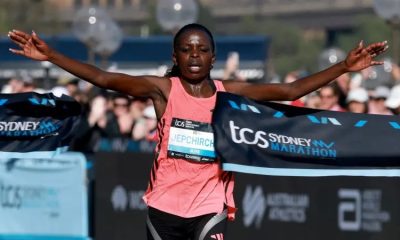
World marathon champion gets three-year doping ban
-
 Maritime5 days ago
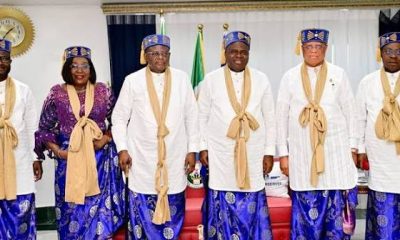
South-South Governors Urges To Shake Off Collective Lethargic To Embrace Blue Economy
-
 Maritime5 days ago
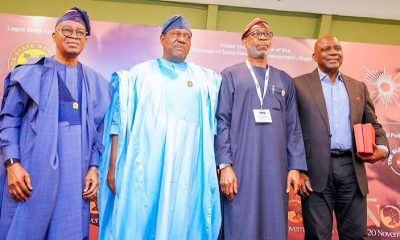
Oyetola Woos Investors With Nigeria’s Seabed Resources, Marine Biotechnology
-

 Business5 days ago
Moniepoint MfB transaction volume hits 1trn daily — CEO
-

 Sports5 days ago
RSG PLEDGES TO PARTNER SWAN FOR SPORTS PROMOTION, DEVELOPMENT
-
Sports5 days ago
Safety Babes, Rima Strikers Crowned Ardova Handball Champions
-

 Oil & Energy5 days ago
Global Oil Market May Witness Supply Surplus Before The End Of 2026 …… Report