
Nation
2023: NSCIA, CAN Sign Pact Against Religious Tension

The Nigeria Supreme Council for Islamic Affairs (NSCIA) and Christian Association of Nigeria (CAN) have signed a pact to de-escalate religious tension in the country ahead of the 2023 general elections.
The accord was signed during the International Religious Freedom Summit organised by the Global Peace Foundation and 70 international human rights and religious freedom groups in Washington D.C.
This is contained in a statement signed by the immediate past President of CAN, Rev. Samson Ayokunle, issued on Wednesday in Abuja.
According to him, the Sultan of Sokoto, Dr Saad Abubakar, who doubles as the President-General of NSCIA, was represented by Prof. Yusuf Usman, former Executive Secretary, National Health Insurance Scheme.
The apex Christian body was represented by Ayokunle.
Ayokunle said the two organisations agreed to encourage Muslims and Christians in the country to shun violence, embrace dialogue and remain committed to building resilient communities that are free from fear.
He added that the two religious bodies also promised to embrace a vision of common humanity and speak publicly on hope for Nigeria’s peaceful and bright future.
Ayokunle said that the pact was part of the determination of religious leaders to work together and lead Nigerians out of all current crises in the country.
According to him, much of the crisis in Nigeria have religious context, as such it is important to mobilise Muslims and Christians to ensure peaceful coexistence.
He commended the Sultan for his consistent advocacy for peaceful coexistence in the country.
According to him, the pact will help to build a stronger Nigeria that is able to tackle its challenges, including lack of security, accountability and corruption.
“The Declaration we signed lays out a number of principles that we believe all Nigerians can readily affirm.”It states that all people are endowed by the Creator with inherent value and fundamental rights.
“Regardless of nationality, ethnicity, culture, region or the many other differences that often divide us, and that the essential freedom and dignity of every person must be respected and protected.
“The Declaration also calls for collaboration amongst the various traditions and faith communities in Nigeria, in order to advance the wellbeing of all and resolve conflicts peacefully.”
He said that both NSCIA and CAN vocally rejected and condemned the use of violence and coercion to spread political or religious views and identities or demean ethnic, regional, or tribal affiliation.
Ayokunle added that the pact demanded for peaceful, free and fair elections in 2023.
He added that both religious bodies agreed to push for more judicial integrity and fairness and engage leaders to tackle insecurity, reprisal attacks, kidnapping, sexual violence and organised crime.
Other areas of concern, according to him, include food security, education, sustainable livestock production, hostile business environment and unemployment.
“Certainly, individuals will have different opinions as to the causes of and solutions to all of these problems.
“But far more importantly, we must share a fundamental commitment to the unity of Nigeria and to work collaboratively toward solutions through peaceful and respectful means,” he added.
Ayokunle said that religious leaders have a duty to shepherd their communities in a way that promotes peace.
“We call upon all religious and political leaders and all people of faith to develop and promote solutions that are grounded in the shared values of our common humanity,” he added.



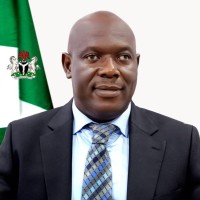
The Hydrocarbon Pollution Remediation Project (HYPREP) has commemorated the 15th anniversary of the release of the United Nations Environment Programme (UNEP) Environmental Assessment Report on Ogoniland, reaffirming its commitment to restoring the environment and improving the livelihoods of affected communities.
In a statement signed by the Project Coordinator, Prof Nenibarini Zabbey, to commemorate the anniversary, HYPREP described the anniversary as a significant milestone in Nigeria’s environmental restoration efforts, noting that the project has made remarkable progress in implementing the recommendations of the landmark UNEP report released on August 4, 2011.
The UNEP report had revealed extensive oil pollution across Ogoniland, severe environmental degradation, and serious public health risks resulting from decades of petroleum operations. It also recommended an initial $1 billion fund to commence the cleanup of the affected communities.
According to HYPREP, the Federal Government formally launched the Ogoni clean-up in 2016, while the Project Coordination Office was established in 2017 to drive the implementation of UNEP’s recommendations.
Zabbey said the current administration has continued to prioritise the project under the Renewed Hope Agenda.
Providing an update on the cleanup, the Project Coordinator disclosed that 30 of the 65 contaminated sites identified by UNEP have been fully remediated, while work is ongoing at several medium- and high-risk locations. It also stated that more than 1.5 million mangrove seedlings have been planted as part of what it described as the world’s largest restoration of oil-degraded mangroves, with over 1,000 hectares of shoreline already rehabilitated.
Zabbey further revealed that 49 Ogoni communities have been connected to potable water schemes through multiple water projects and booster stations aimed at providing safe drinking water across the region.
In the health sector, he said the 100-bed Ogoni Specialist Hospital in Kpite and the 43-bed Cottage Hospital in Buan are nearing completion, adding that several existing health facilities have been upgraded with modern medical equipment, while five ambulances have been donated to improve emergency healthcare services. The Project Coordinator also disclosed that a three-year human health biomonitoring study is being conducted in collaboration with the World Health Organization’s International Agency for Research on Cancer (IARC).
On economic empowerment, Zabbey stated that the Project has created more than 8,000 direct jobs and trained thousands of Ogoni youths and women in various vocational and technical skills, including software development, cybersecurity, aviation, commercial diving, seafaring, mechatronics, and creative arts. The project also reported awarding scholarships to more than 1,000 students, providing grants to small businesses, and supporting persons living with special needs through skills acquisition programmes.
The statement further highlighted ongoing legacy projects, including the Ogoni Power Project and the Centre of Excellence for Environmental Restoration, which it said is about 96 per cent complete. HYPREP also welcomed the recent designation of the Ogoni Wetland as a Ramsar Site of International Importance and pledged to continue promoting biodiversity conservation and sustainable management of the ecosystem.
Marking the anniversary, Zabbey said the progress achieved over the past 15 years demonstrates the collective commitment of government, development partners, stakeholders, and local communities to restoring Ogoniland. He called for renewed collaboration to sustain the cleanup effort, promote environmental sustainability, and support the long-term development of the region. 3
-

 News2 days ago
RSG Targets Nine Million Residents in Mosquito Net Distribution Campaign
-

 Oil & Energy2 days ago
Aiyedatiwa Signs New Electricity Bill
-

 Maritime2 days ago
Marine Minister Commends President Tinubu On NPERA Bill Assent
-

 Oil & Energy2 days ago
NLNG Commissions Research And Innovation Centre In RSU
-

 News2 days ago
KenPoly Holds Eight Convocations, August 29
-

 News2 days ago
RSG Begins Another Phase of Projects Commissioning Today
-

 News2 days ago
RMAFC Completes Revenue Sharing Review, Proposes New Pay
-

 Maritime2 days ago
NAGAFF Petitions IGP Over Alleged Maritime Police Harassment