Connect with us

Oil & Energy

Fuel Queues May Persist Until We Fully Deregulate – Minister

Published

on

The Federal Government
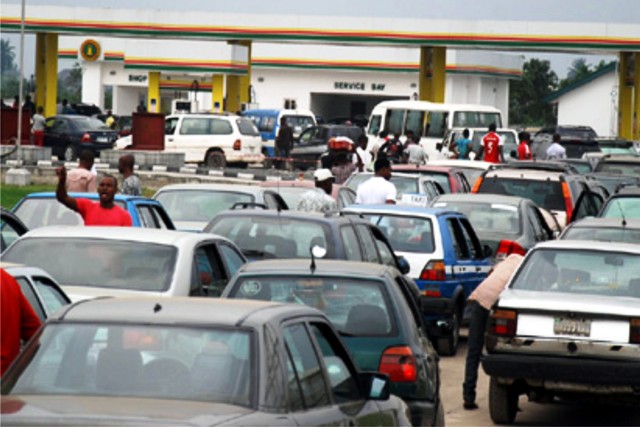
has said Nigerians, especially residents of the Federal Capital Territory (FCT) and some other cities, may continue to witness fuel queues until there was complete deregulation of petrol.
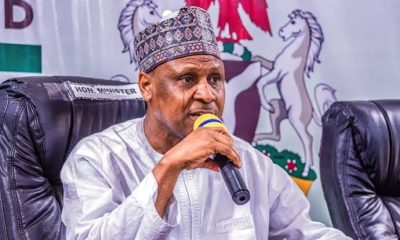
Minister of State for Petroleum Resources, Timipre Sylva, stated this while briefing State House correspondents at the end of the weekly Federal Executive Council, FEC, meeting, weekend, presided over by President Muhammadu Buhari at the Council Chamber, Presidential Villa, Abuja.
The Minister also said the council approved the award and procurement for provision of a conference hostel facility in Yenagoa, adjacent to the Nigerian Content Towers at N22 billion to Megastar Technical Construction Company, with completion period of 24 months.
Responding to questions on the persistent fuel queues in Abuja and some other parts of the country, the Minister said the situation, particularly in the FCT, would persist for a while until fuel was finally deregulated.
He explained that the fuel queues were not caused by shortages in supply of fuel but for the reluctance of petroleum marketers to sell at the recommended retail price.
According to him, there are queues in Abuja because selling at the recommended N165/litre of fuel is unprofitable to marketers, who resolved to take advantage by diverting products from the city centre to where they could sell above the recommended retail price.
“If you look at it, there are no queues when you leave Abuja. In most places, it is only in Abuja metropolis you continue to have these queues. So, it is as though there is less supply to Abuja than to the rest of the country.
“It is not so. It is because if you go out of Abuja, they can afford to probably sell at higher prices. And I’m sure a lot of you must be buying at higher prices”, the Minister said.
Giving updates on the rehabilitation of the nation’s refineries, Sylva said the Port-Harcourt refinery would soon become operational, adding that the Dangote Refinery would commence operation by January next year.
“So, these issues will gradually be resolved and we will get to the point where Nigeria will be fully supplied from in-country refined products,” he assured.

On why Kaduna and Warri Refineries’ workers were still drawing salaries, even when they were not producing anything, the Minister explained that most of the workers had been redeployed, with a few others doing skeletal services to prevent pilfering at the facilities.

Commenting on the high cost of gas (diesel), the Minister said it was so because the product had been deregulated.

“But, of course, you know the geopolitical tensions in Ukraine and Russia is still on and it’s really affecting the global prices of this commodity.

‘’So, it is not really something from Nigeria. It is something that is affecting the global community; everywhere in the world is having the same problem.

“If you go to the UK, they are still talking about inflation; if you go to America, they’re talking about inflation, because there are issues and it’s all coming from the geopolitical tensions in Ukraine and Russia”, he said.

On his part, Minister of Environment, Muhammed Abdullahi, said Council awarded the contract for consultancy services and design of centre of excellence for environmental restoration with an Integrated Contaminated Soil Management Centre at the sum of N449,250,040.50 (VAT inclusive).

He explained that the centre was in fulfillment of the President’s promise to Ogoni people and was meant to impact on them in terms of employment generation and laboratory tests for land remediation efforts on the site contaminated, so it could be made easily cultivatable by the people for their fisheries, farming activities and access to water.


Continue Reading

Oil & Energy

‘Revamping Moribund Refineries ‘ll Address Rising Cost Of Petroleum Products’

Published

on

An Energy Expert, Dr Joseph Obele, has called on the Federal Government and the management of the Nigerian National Petroleum Company Limited (NNPCL) to urgently restart the government – owned refineries insisting that it would help in curbing the rising cost of petroleum products.
He insisted that bringing back the moribund public refineries would further serve as a direct response to the plight of Nigerians as far as petroleum products is concerned.
Obele, who is also the Public Relations Officer (PRO) of the Petroleum Products Retail Outlets owners Association of Nigeria (PETROAN) and Lecturer at the Ignatius Ajuru University of Education, Port Harcourt, while reacting to the cost of petrol said the immediate and practical approach to addressing the current increase in petroleum prices is to restore production at the government-owned refineries and maximise every available refining capacity in the country.
“The immediate approach to the recent rise in petroleum prices is to restart the government-owned refineries”, he said.
Obele insisted that restoring functional government-owned refining capacity would increase domestic supply, reduce dependence on imported refined petroleum products and contribute to greater stability in the downstream petroleum market.
He urged the federal government to maximise all available refining capacity while continuing to encourage responsible private-sector Investment and healthy competition within the downstream petroleum industry.
Obele expressed concern over the continued rise in crude oil prices amid the ongoing tensions involving the United States and Iran and concerns around the Strait of Hormuz, warning that sustained supply risks could continue to put pressure on global petroleum prices.
He noted that Brent crude closed at about $105.83 per barrel on 16 September 2026, while WTI closed at about $102.43 per barrel.
The impact, the expert said, is already being felt in the Nigerian downstream market, with Premium Motor Spirit (PMS) reportedly selling in the range of ?1,400–?1,500 per litre in some locations, while Automotive Gas Oil (AGO) is selling above ?2,000 per litre.
“The immediate approach to the recent rise in petroleum prices is to restart the government-owned refineries”, Obele said.
According to him, restoring functional government-owned refining capacity will increase domestic supply, reduce dependence on imported refined petroleum products and contribute to greater stability in the downstream petroleum market..
He warned that a prolonged increase in petroleum prices would have a wider economic impact, particularly on transportation, food, medical services and other essential commodities.
“The continuous increase in the cost of petroleum products will invariably affect the prices of virtually all commodities and services. It will create additional inflationary pressure and deepen the financial hardship being experienced by Nigerians”, he stated.
Obele noted that the prolonged dormancy of government-owned refineries has had serious economic and employment implications across the petroleum value chain, affecting workers, contractors, marketers, transporters, businesses and other dependants of the sector.
According to him, a functional Port Harcourt and Warri Refinery would stimulate activities across the petroleum value chain, support employment and restore confidence among industry stakeholders.
In his words, ‘the Port Harcourt Refinery should become a measurable demonstration of government’s commitment to the welfare of Nigerians”
He further noted that the Port Harcourt Refinery had previously recorded production activities arguing that the focus should now be on resolving operational challenges and returning the facility to sustainable production.
“The time to restart the Port Harcourt Refinery is now. Nigerians cannot continue to bear the unbearable cost of petroleum products when domestic refining capacity is available. Every viable refinery should be optimally utilised in the national interest”
Obele emphasised that the objective should not be to undermine private-sector refineries but to ensure that all viable refining assets—government and private—contribute to national energy security, adequate supply and a competitive downstream petroleum market.
Lady Godknows Ogbulu


Continue Reading

Oil & Energy

The Race To Cut Methane Emissions Is Exposing A Global Divide

Published

on

Several countries worldwide have been working to reduce methane leaks, with some states making significantly more progress than others. The establishment of the Global Methane Pledge in 2021 at the COP26 climate summit has helped accelerate cleanup efforts; however, many countries are still falling behind on their methane-cutting pledges. Now, one of the world’s biggest methane polluters – Turkmenistan – is aiming to plug its mega leaks, which would help reduce global methane emissions and could encourage other countries to do the same.
The United States and the European Union led the Global Methane Pledge, which has since been signed by 159 countries that together contribute around 45 per cent of global human-caused methane emissions. The pledge aims to reduce methane emissions by at least 30 per cent below 2020 levels by 2030.
Many governments had already made ambitious pledges to reduce carbon emissions, but some had not previously sought to cut methane emissions, which heat the planet up to 80 times more than carbon dioxide over two decades. Methane has contributed around 30 per cent of the increase in global temperatures since the Industrial Revolution, and fossil fuels contribute around one-third of the methane emissions from human activity. Record production of oil, gas, and coal, combined with limited mitigation efforts, has kept emissions above 120 million tonnes (Mt) annually, according to the International Energy Agency (IEA).
The IEA’s annual Global Methane Tracker shows how much methane is emitted each year and tracks progress and failures. In 2024, abandoned wells and mines accounted for roughly 8 Mt of methane emissions, demonstrating the severity of leaving them unplugged. It is extremely hard to track methane emissions as they are widely underreported. Some parts of the world have little or no measurement-based data on methane emissions.
Therefore, the IEA has to rely on data from scientific studies, measurement campaigns, and large emissions events detected by satellites to estimate emissions each year. Some regions of the world, such as Europe, report their methane emissions far more accurately than other parts. The IEA estimated that global energy-related methane emissions are about 80 per cent higher than those reported by countries to the UN Framework Convention on Climate Change.
Some countries contribute heavily to the world’s methane emissions, particularly oil-rich countries that have not effectively decommissioned fossil fuel operations for decades, including Turkmenistan, the United States, Russia, Iran, and Venezuela. A 2023 Guardian assessment revealed that Turkmenistan was the worst country for methane mega-leaks. Some of Turkmenistan’s “super-emitters” leaked tonnes of methane every hour, from a single valve or pipeline, which is more than the emissions from an entire coal-fired power station. The assessment showed that the methane emissions alone from Turkmenistan’s two main fossil fuel fields contributed more to global heating in 2022 than the United Kingdom’s entire carbon emissions. The findings have led to significant public backlash and put pressure on the government to address the problem.
This year, Turkmenistan approved a massive clean-up project, as the country started plugging its mega-leaks. Turkmenistan has halted eight leaks by repairing corroded pipes, faulty wells, and failing flares, according to data from the United Nations. However, significant work is needed to reduce the country’s methane emissions. The UN Methane Alert and Response System (MARS) has delivered 192 alerts of methane plumes to Turkmenistan over the last year. According to the system, Turkmenistan had nine of the world’s top 50 worst methane leaks of the last six months.
Turkmenistan has improved its reporting systems in recent years and responded to around 20 per cent of the alerts with on-the-ground information about the leaks and potential plans to fix them. By comparison, the United States was sent 138 alerts and did not respond to any. The worst detected methane leak came from Mexico’s offshore oil and gas operations and measured a huge 37 tonnes per hour, equivalent to the emissions of over 7 million SUVs. Although Mexico responded to all 23 MARS alerts, it has yet to fix the leak.
Meghan Demeter, the programme manager of MARS, stated, “These mitigation cases are a proof point of what can be done with satellite data, especially in situations like Turkmenistan, where there are a lot of detections… This is a breakthrough in terms of having real documented mitigation action. But it is not yet a breakthrough in the overall magnitude of emissions. Eight cases is an incredible first step, but there are also a lot more sources in Turkmenistan that need to be addressed. We are in pretty constant communication, and the response rate is growing month by month. We’re seeing steady progress.”
UN tracking has also encouraged other countries in the region to plug leaks, with Kazakhstan, another former Soviet republic with ageing oil and gas infrastructure, stopping eight leaks following alerts. To date, Mexico, Brazil, and Argentina have 100 per cent response rates to MARS alerts, while Libya and Azerbaijan have high response rates. Meanwhile, the United States, Iran, Russia, and China failed to respond to any alerts.

By Felicity Bradstock for Oilprice.com 16

Continue Reading

Oil & Energy

Delta Targets 120MW Power Boost, Moves To Cut Reliance On National Grid

Published

on

The Delta State Government has intensified efforts to boost  electricity generation and supply in the state with plans to add 120 megawatts (MW) to the national grid through a partnership with Supply Power.

The State Commissioner for Works (Rural Roads) and Public Information,  Charles Aniagwu, disclosed this at a press conference in Asaba, weekend, noting that the initiative was part of wider reforms aimed at opening up the power sector to private investors.

Aniagwu, who was accompanied by the Executive Assistant to the Governor on New Media, Felix Ofou, said the state was exploring alternative sources of electricity to support businesses, households and communities while reducing pressure on the national grid.

He said the government was particularly interested in exploiting Delta’s abundant natural gas resources for power generation, pointing to the Kwale Free Trade Zone, which is part of the state’s special economic zone, as a major opportunity for investors.

According to him, prospective investors were taken to the zone during the state’s recent economic summit to enable them to assess the availability of gas as a key raw material for electricity generation. ComparePower Rates

The commissioner explained that generating more electricity locally would not only increase supply in Delta but also free up power on the national grid for use by other consumers.

Aniagwu cited the 8.5MW Independent Power Plant located behind the state secretariat in Asaba as an example of what could be achieved through alternative power sources.

He said the facility had enabled the secretariat complex to operate independently of the national grid, thereby making the electricity that would otherwise have been consumed there available to other users.

He added that the planned 120MW partnership with Supply Power would further strengthen the state’s electricity supply capacity and provide a more reliable power base for small and medium-sized enterprises.

Aniagwu said the state government was also intervening in areas traditionally regarded as the responsibility of electricity distribution companies because inadequate power supply could no longer be allowed to constrain economic development. LearnQuantum Physics

He identified the extension of the electricity grid from Abraka towards the Ndokwa axis as one of the interventions being undertaken to connect more communities to electricity.

The commissioner, however, raised concerns over the burden placed on communities that are often required to provide transformers and other electricity infrastructure, only for distribution companies to take over the facilities and subsequently collect electricity bills without adequately accounting for the investments made by the communities.

He said the state would continue to support efforts aimed at energising communities, noting that improved electricity supply would stimulate businesses, create jobs and help tackle social problems associated with unemployment and idleness.

On regulation, Aniagwu said the government was working with the Ministry of Energy and a committee set up to develop an appropriate regulatory framework for the state’s emerging power sector. SwitchEnergy Plans

He said the proposed energy commission would be responsible for regulating new electricity producers, determining appropriate tariffs and overseeing distribution networks.

The commissioner stressed that liberalising the sector required effective regulation to protect consumers and investors, adding that decisions on power distribution infrastructure, including the use of overhead or underground lines, must take into account the peculiarities and safety requirements of each location.

He warned that power expansion without adequate regulation could expose residents to electrocution and other hazards, stressing the need to protect electricity infrastructure while ensuring consumers were not subjected to unfair pricing.

Aniagwu said the state government’s broader objective was to build an efficient and sustainable electricity market driven by private investment and capable of powering businesses, households and communities across Delta State.


Continue Reading

Trending