
Sports
Ex-Adamawa Queens Boss Laments Dwindling Of Women Football Dev

A top sports stakeholder and former Chairman of Adamawa Queens, Mr. Emmanuel Zira, has said that women football development in Nigeria has drastically dwindled in the past few years.
Mr. Zira who spoke in an interview from his base in Yola, Adamawa state capital said lack of professional approach, transparency and poor attitude by the league administrators have under-developed Nigeria Women Football League (NWFL) in particular and other aspects of the game.
Recently, NWFL chairperson and a board member of the Nigeria Football Federation (NFF) Aisha Falode had claimed that women football has witnessed developmental changes.
But Zira while assessing the state of Nigeria women football in recent years said both its league and other areas have lost value and that those administering it have chosen to engage in “unnecessary media razzmatazz, without any substance on ground.”
“Without any form of sentiment, women football in Nigeria has dwindled so much. I don’t really know why the administrators are just engaging in media hype which does no one any good.
“The entire stakeholders are watching and they know what is happening. Forget the media and publicity stunts here and there. Anyone can print banners, flyers and even stickers to say whatever he or she likes, but the reality is that the gains made in the administration of women football in the past has been destroyed.
“In anywhere in the World, football development thrives on accountability and openness. For instance, you can’t be running a league and not disclose your earnings or support in form of sponsorship or otherwise and you expect to grow and have integrity.
“Previously, the women league had financial and other records of its activities which the board renders at the end of every season, I still have copies, but such don’t happen again. Match officials’ indemnities are not paid by league administrators. As a league, everything you do must be subjected to congress scrutiny and decision. Nigeria is the only place especially in the past five years where the leagues are ran without financial statement. Even at the town union meetings, there’s financial statement… When you talk, they say you are against them, how?
“They announced sponsors and the details of the sponsorship are shrouded in secrecy. They only promised participating clubs during the just concluded Super six tournament which is part of the entire league process that they will get paltry amount, after forcing them to wear specific branded jerseys, where is that done, It’s wrong. Why sign a contract without disclosure,” he queried.
On grassroots development and current formation of senior women national team, Zira, who is a former chairman of Adamawa United and has been involved steadily in women football affairs lamented the continuous re-circling of aged-players.
“The leagues are not growing, that is why we can’t tap into numerous budding talents, if not that the right things were done, where would we have gotten Oshoala, Onome, Ordega and others that are aging now,” he said.



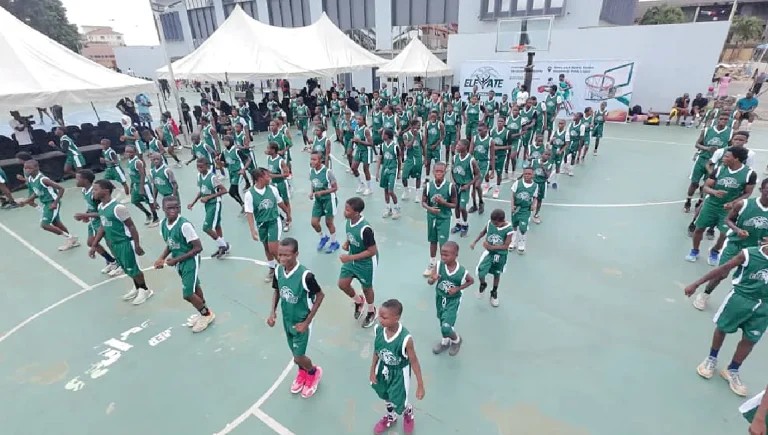
Young basketball players have been urged not to sacrifice their education for sporting ambitions, as stakeholders at the third Elevate Basketball Clinic stressed the need for young athletes to develop both on and off the court.
The call was the thematic preoccupation of the clinic held on Saturday at the Rowe Park Sports Centre, Yaba, Lagos, where hundreds of participants were taken through basic basketball skills and drills.
The third edition of the clinic, organised by Elevate Basketball Academy in partnership with the Lagos State Basketball Association, brought together hundreds of youngsters, mostly under the age of 16.
Founder and sponsor of the clinic, Akinwande Oshodi, said the initiative was designed to use basketball as a vehicle for youth empowerment while helping participants understand the values required to succeed in life.
“The end game is to elevate basketball and it’s about empowering the youth through basketball. It’s not just about the game, it’s about life, helping the students to understand what it takes to be successful,” Oshodi said.
Oshodi, who is Lagos-born but based in the United States, also disclosed plans to establish a foundation focused on basketball and athletics while creating opportunities for educational enrichment.
“This year, we are planning on tracking statistics so we can share with our sponsors what we have been doing over the last three years,” he added.
Oshodi’s mother, Bosede Ode, a sports nurse who worked with the Lagos State Government at Rowe Park, also stressed the importance of combining sporting development with academic pursuits.
“I’m very encouraged that more girls are in sports than what it used to be. I just want to encourage them to focus on not just sports but their education as well,” Ode said.
Ode said her son’s experience had reinforced the importance of education, recalling that an injury prevented him from pursuing basketball professionally but that his education had helped him build a life beyond the sport.
“I always tell my son about the importance of education, he had an injury which prevented him from playing professionally, but with education, that is helping him through life and giving back to the society. When he was small, he played basketball through school and I’ve always encouraged him,” she added.
The message was also reflected in the experience of one of the participants, Abdulkareem Abdulraheem, who attended the clinic for the second consecutive year.
Abdulraheem said the progress he observed among participants compared to last year had motivated him to keep improving, adding that he also makes time for his academics despite training regularly.
“The motivation is high. Last year I saw some people that were learning how to bounce the ball. This year, I’m seeing people play more and that is motivating me to never give up,” he said.
“For me, I train like three times a week and I make enough time for my academics as well, and that is one of the teachings of this clinic.”
Coordinator Gbade Olatona said the initiative was also aimed at using basketball to nurture discipline, leadership and responsible citizenship among young people.
Since its launch in 2024, the initiative has sought to position basketball as more than a competitive sport, using the game as a platform for mentorship, character development and creating opportunities for young people.
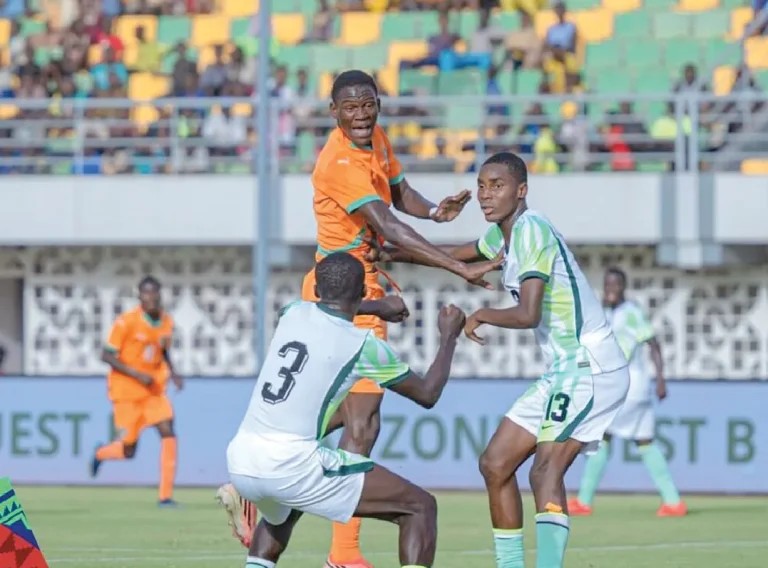
Nigeria’s Golden Eaglets will miss both the 2027 U-17 Africa Cup of Nations and the 2027 FIFA U-17 World Cup after they were eliminated from the 2026 WAFU-B U-17 Championship following a 1-1 draw with Ivory Coast in Ouagadougou on Saturday.
The result in their second Group B match at the Stade du 4 Août left the five-time world champions bottom of the table with a solitary point from two games, ending their hopes of qualification.
The Golden Eaglets needed a victory after losing 2-1 to Niger Republic in their opening match last Wednesday, but they could not find the result required to stay alive in the competition.
Nigeria fell behind in the 16th minute when Alex Fousseni scored for Ivory Coast, leaving head coach Eboboritse Uwejamomere’s side with an uphill task.
The young Nigerians continued to push for an equaliser and were rewarded in the 84th minute, when Abiodun John levelled the scores to set up a tense finish. Despite their late efforts, they could not find a winner.
Niger Republic finished top of Group B with four points, while Ivory Coast took second place with two points.
The failure to progress means Nigeria will miss the U-17 AFCON for the third consecutive edition, having also failed to qualify for the 2025 and 2026 tournaments, both hosted by Morocco. The North African country will also host the 2027 edition.
The disappointment extends to the global stage, as the team will miss the FIFA U-17 World Cup for the fourth consecutive edition. The Golden Eaglets last took part in the tournament in 2019.

Former Ajax defender Frank de Boer has urged supporters to be patient with Super Eagles striker Tolu Arokodare, saying the forward should simply be allowed to play.
De Boer was speaking about the early excitement around the Nigerian at Ajax. He did not compare Arokodare to Marco van Basten or Patrick Kluivert. He used the two former Ajax strikers as an example of how Dutch fans tend to judge every new forward.
“We are used to comparing a striker to Van Basten and Kluivert, but I have also seen a few times that he is technically gifted and that you can make very good use of him. I have seen some great things. So just let him play,” De Boer told Tidesports source, via Ajax Showtime.
Arokodare joined Ajax from Wolverhampton Wanderers in the summer on a season-long loan with an option to buy, after a difficult spell in the Premier League.
He has scored seven goals and provided two assists in 11 appearances across all competitions, despite starting only six of those games.
The 25-year-old played the full 90 minutes of Ajax’s UEFA Conference League game away to Hajduk Split on Thursday but did not score.
De Boer, who played for Ajax and the Netherlands, also said the club could get more from Arokodare by delivering crosses from the flanks, which would suit his game in the penalty area.