
Editorial
23 Years After: Democracy At Crossroads

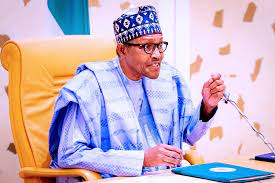
It was exactly 29 years yesterday when a most memorable presidential election was held and its result was criminally nullified by a ravenous cabal. The desire of the Ibrahim Babangida and Sani Abacha regimes to invalidate the election also had a particularly sinister dehumanising and macabre political logic, in addition to its endemic barbaric proportion. But, the emerging nationwide battle for emancipation gave an incredibly defective Constitution, which returned the country to civil rule on May 29, 1999, and returned the military to the barracks.
The persistent clamour and devotion of Nigerians to the principles of June 12 climaxed in the recognition of the day as the annual Democracy Day by President Muhammadu Buhari. It is also to observe that remarkable polling day in 1993 when Nigerians, across ethnic, religious and demographic fault lines, endowed their hopes in freedom in Chief Moshood Kashimawo Olawale Abiola, the presumed winner of the election, and the supreme sacrifice he paid in his quest to redeem his mandate.
Unfortunately, nearly 30 years after, rather than sweeping revelries, pessimism still pervades throughout the country as Nigerians encounter the painful truth that the democratic vow of freedom and the pursuit of contentment have been envenomed terribly by purblind leadership, a debased Constitution and an obsequious citizenry. Instead of the inauguration of democracy, the people paid dearly for the baneful mix that has simply conveyed a civil rule with all its concomitant drawbacks.
Thus, the citizens are learning the hard way that deepening democracy and its tremendous ability to emit the imaginative and creative powers of the people goes beyond outward showing of intermittent elections, presence of legislature and other chaotic emblems of government. Democracy has become a mere covering for a few to hijack power and public treasury when these isomorphic institutions fail to achieve the real democratic objectives of personal, political and economic liberty and the pursuit of the greatest good for the most significant number.
More than 20 years of civil rule, it is sad that most Nigerians are not in any way better. Corruption still characterises governance, intensifying poverty and inequality, economic loss and inefficiency, public and private sector dysfunction, failures in infrastructure, rigged economic and political systems, impunity and injustice, organised crime, terrorism and diminished state capacity.
As corruption, in particular, state capture becomes the new normal, public disgruntlement and misanthropy permeate the land. The essential components of democracy — rule of law, social justice, citizens’ participation, responsible political parties, active free press, independent parliament and judiciary — in scanty existence are likewise under ferocious assault.
Significant progress can be assessed by an examination of how far the country has gone in accomplishing these key facets of democracy. For the past 29 years, it has been hard to exacerbate these fundamental values because the executive arm is viciously irresponsible, the legislature pathetically vulnerable, and the judiciary precariously negotiated. The three, of course, share a common DNA — corruption. Dictators or at best deprecating despots have been romping themselves as democrats with their common enemy being freedom of speech.
Democracy faces obsolescence when the citizens are laid-back and freedom is menaced when the media is muffled. Perceiving something that the government claims is satisfactory and pointing out why it is atrocious is a major idiosyncrasy of democracy and a constitutive function of the press. Indeed, it is one of democracy’s most imperative safeguards. The undiscerning Buhari’s regime has been trying to browbeat the media into tractability. The administration plans to criminalise “hate speech,” under a law that may necessitate mass scrutiny and proximate tracking of social media.
Yet, it is generally acknowledged in free societies that what counts as odious is subjective, so “hate speech” laws can be malleable tools for criminalising dissension. Notwithstanding the country’s dynamic press, it ranked an impoverished 115 out of 180 countries on the World Press Freedom Index 2020, where Ghana was 30th, South Africa 31st and Burkina Faso 38th. In defiance of the Constitution and court judgements, the government illegally detains people. Recent cases in Kaduna, Katsina, Cross River and Akwa Ibom States for the non-existent offence of “insulting the President” or a state governor illustrate the people’s gloom.
The constitutionally overly planned separation of powers among the executive, the legislature, and the judiciary that are recognised as a major pillar of representative rule is unstable. At the National Assembly, it has been a contour of legislators permanently seeking group and personal ennoblement; many governors have reduced State Assembly to contemptible subordination, thereby making short attrition of the fragile system of checks and balances. The dysfunction is made complete by the debilitating of the judiciary through corruption and coercion by insubordination to court orders.
Getting elections right and having people of candour to seek public office are necessary precedence for good governance. The differentiating factor of a democracy are the legislators, who are the concierge of the people’s yearnings and authority. But far from being champions of the people’s privileges and advocates of the safety and welfare of the citizens, the federal and state lawmakers are seen as pathetically selfish persons who are mainly involved with accumulating wealth. The captious task of making good laws, exercising oversight over the executive and keeping an eagle eye on public funds have gravely convulsed.
Nigerians must maintain democratic values through active participation. They have been missing in action, largely leaving the space for politicians to define, direct and corner the extras of civil rule. Inclusion and liberty are never achieved on a platter; they could be a long-drawn affair. The people need to constantly wield pressure to secure the ideals. French democracy has its catchwords of “liberty, equality and fraternity,” but citizens reserve their right to pour into the streets to affirm their discretion, irrespective of representative state institutions. Nigerians too need to recoup their vigour and passion in holding public officers accountable.
To halt the trend, civil society groups should re-strategise and re-energise. Labour and student unions need to chuck their unhealthy snug with the corrupt political class and rediscover their activist and progressive tradition. Professionals and academics should re-acquire the spirit of national service and work for the uplifting of the country. Common people as well should shake off complacency and rise above arm-twisting.
The time to act is now. This dismal circumstances demand determined pressure by the people to possess democracy and become masters of their destiny. Nigerians must make democracy work for them, or remain eternally miserable and disheartened. Political restructuring and electoral reforms are imperative. The first will allow for robust federalism while the other will ensure that elections reverberate the free expression of the will of the people.
It is left for the youths to uphold and crystallize what has been accomplished and heighten the democratic culture, values and good governance, without which democracy loses its lifeblood. The media should remain steadfast in its role as a defence against dictatorship and a watchdog to conserve public interest. But, perpetually, the June 12 resolve remains a dominant denotation of national democratic aspirations and a mobilisation point for real assimilation.



There are moments in the life of a legislature when plain speaking becomes a public service. Senator Adams Oshiomhole provided such a moment on the floor of the Senate when he accused the Minister of Works, Senator David Umahi, of manifestly neglecting critical federal arteries in Edo and Delta States, and implored his colleagues to prevail on the Minister to adopt a more equitable and genuinely national approach to road infrastructure delivery. It was blunt, it was uncomfortable, and it was necessary.
The specifics of his complaint deserve restating. Drawing attention to the recent approval of some 20 new road projects despite the parlous state of existing ones, the former Edo State governor lamented that Nigerians cannot travel from Benin to Warri, Benin to Asaba, Benin to Auchi, or Auchi to Okene without encountering severe distress. He alleged a deliberate omission of these corridors from the national budget in the last three years, save for palliative interventions directed by President Bola Tinubu through tax credit arrangements. His question — “What have we done wrong?” — resonates far beyond the chambers of the National Assembly.
We lend our full and unequivocal support to that call. The Auchi-Benin Road, for instance, has been in a deplorable and near-impassable condition for several years, turning what should be a two-hour journey into an all-day ordeal of broken axles, extortionate fares, and despondent commuters. The media have, on multiple occasions, chronicled the suffering of motorists, traders, and students who ply that route. To describe it as a federal road today is to stretch the meaning of the term beyond recognition.
This pattern of sidelining is not confined to Edo or Delta. Even here in Rivers State, the disposition of the Federal Ministry of Works has left much to be desired, particularly along the Eleme axis of the East-West Road. That road, which ought to be a flagship of federal presence in the Niger Delta, has remained in a wretched state for long. Those who use it daily — workers at the Eleme Petrochemical Complex, the two refineries, Onne Port, and the countless ancillary industries — can attest to its deterioration. Work has proceeded in fits and starts without the sustained urgency such a strategic road demands.
The Eleme stretch is not a mere intra-state byway. It is the gateway to the nation’s economic jugular. According to the Federal Ministry of Works and Housing’s 2023 Highway Condition Survey, only about 35 per cent of the country’s 36,000 kilometres of federal roads are rated as being in good or fair condition, with the remainder classified as poor or very poor. The East-West Road, conceived in the 1970s to bind the entire Niger Delta, remains unfinished in critical sections more than four decades after. If it had been treated as a priority, the perennial gridlock, carnage, and economic loss on the Eleme-Refinery junction would have long been consigned to history.
The irony is as painful as it is glaring. The Niger Delta remains the goose that lays the golden eggs. Data from the Nigeria Extractive Industries Transparency Initiative [NEITI 2023 Oil and Gas Audit] show that the region still accounts for over 78 per cent of Nigeria’s federally collected export earnings and about 65 per cent of total government revenue. The National Bureau of Statistics [NBS Foreign Trade Report Q4 2024] similarly confirms that crude oil continues to dominate export receipts. By every metric of equity and economic logic, a region that sustains the national purse deserves first-rate consideration in the allocation of infrastructure, not afterthoughts and tokenism.
Road infrastructure is not largesse to be dispensed by favour; it is the skeleton upon which commerce, cohesion, and citizenship hang. When contracts are concentrated in one geopolitical zone while other zones are left to contend with craters, it erodes trust in the federation itself. The World Bank’s Nigeria Development Update [June 2023] estimated that poor transport connectivity inflates the cost of moving goods by up to 40 per cent and costs the Nigerian economy an estimated $1.5 billion annually in lost man-hours and vehicle maintenance. If we profess to be one country, then equity must be the compass that guides key institutions before any project is executed. Development must spread round, not pool in one place as though other regions do not matter.
There is also a grave security dimension that can no longer be ignored. The deplorable condition of federal roads has become a veritable enabler of criminality. The NBS Crime Experience and Security Perception Survey reported over 2.5 million incidents of kidnapping-related occurrences nationally, with transport workers identifying bad road spots as prime ambush points. When vehicles are forced to crawl at 10 kilometres per hour through failed sections at Auchi, Sapele Road, or Eleme, they become sitting ducks for armed gangs. Fixing bad roads, therefore, is not merely about convenience; it is about safeguarding lives.
By his intervention, Senator Oshiomhole has hit the nail on the head and reminded Minister Umahi of a fundamental constitutional truth: public office is held in trust. The Ministry of Works is not a personal estate where contracts are awarded according to whim or political convenience. It is a national institution funded by the collective resources of Nigerians, including the oil and gas rents from the very communities whose roads are now neglected. The Minister must demonstrate balance, transparency, and a pan-Nigerian outlook in the distribution of projects that impact the daily existence of citizens. Selective neglect breeds suspicion, and suspicion is corrosive at a time when the nation is preaching unity, oneness, equity, and justice.
Consequently, the National Assembly must go beyond rhetoric and assert its oversight powers with vigour. Sections 88 and 89 of the 1999 Constitution [as amended] empower the legislature to investigate and expose any maladministration in the execution of federal projects. If an office holder is not acting rightly, it is the duty of the Senate and the House of Representatives to call him to order. Oversight must not be reduced to budget approval ceremonies; it must translate to field verification, public hearings, and insistence that the Federal Character principle, as enshrined in Section 14(3) of the Constitution, reflects in road awards.
Let the Auchi-Okene, Benin-Warri, Benin-Asaba, and Eleme East-West gangways be restored to motorable dignity. Let priority be given to completing existing, economically vital roads before embarking on new ones. If those who, through their resources, sustain the federation are sidelined in the distribution of tangible dividends, it tells poorly of our nationhood. Bad roads must be fixed, and they must be fixed now, with fairness as the guiding standard.
-

 News3 days ago
RSG Targets Nine Million Residents in Mosquito Net Distribution Campaign
-

 Oil & Energy3 days ago
Aiyedatiwa Signs New Electricity Bill
-

 Oil & Energy3 days ago
NLNG Commissions Research And Innovation Centre In RSU
-

 Maritime3 days ago
Marine Minister Commends President Tinubu On NPERA Bill Assent
-

 News3 days ago
KenPoly Holds Eight Convocations, August 29
-

 News3 days ago
RMAFC Completes Revenue Sharing Review, Proposes New Pay
-

 News3 days ago
RSG Begins Another Phase of Projects Commissioning Today
-

 Maritime3 days ago
NAGAFF Petitions IGP Over Alleged Maritime Police Harassment