
Features
2023 Poll: Strengthening Capacity For Sustainable, Inclusive Tax Administration

As the nation prepares for 2023 general elections, this year, 2022, has been awash with an array of political activities fraught with permutations and scheming by political gladiators and party faithful with attendant regional, religious, ethnic and financial manipulations and interests. The party primaries have come and gone not without expected intrigues, acceptable and non-acceptable outcomes.
In the past, party primaries were always greeted with internal conflicts among party faithful and stakeholders, which when not properly handled, had led to rancour, defections and formation of new parties through alliances. This more often than not have heated up the polity not neglecting the underlining threats of terrorism, banditry, kidnapping among others that so far have threatened the unity of the nation.
However, as diverse interests and permutations of who and who should or not govern the country are on top gear, there exist some pre-political arrangements and prerequisites/criteria expected of those who have indicated interest in the governorship of the country at various positions. Some of these criteria include age, academic qualifications, and party membership aside other qualifications. In addition to the above, one pertinent question that has provoked interest and occupied the minds of political analysts is the issue of tax compliance as a prerequisite for clearing aspirants seeking political or elective positions.
This, therefore, was the thrust of the meeting held on May 24, this year in Abuja between the Federal Inland Revenue Service (FIRS), the Independent National Electoral Commission (INEC), Code of Conduct Bureau and the Independent Corrupt Practices and Other Related Offences Commission (ICPC).The goal of the meeting, initiated by the Joint Tax Board, was to forge ways in which the aforementioned agencies can collaborate towards ensuring tax compliance among candidates in the upcoming elections.
Based on this, the Federal Inland Revenue Service (FIRS) is advocating that tax compliance should be a prerequisite for clearing political aspirants, arguing that those who evade tax should not been trusted with public money. According to the Executive Chairman of FIRS, Muhammad Nami, there was need to promote measures aimed at strengthening the capacity for a sustainable and inclusive tax administration in the country. “Whoever does not pay tax should not be given tax payers money to superintend. Anyone whose tax status was not in harmony with their declared records should not be entrusted with public office. “It is important that political office holders pay their right taxes to enable the tax agencies channel the funds for national development. Tax payment has become a secondary matter because some of us are benefiting from social amenities achieved from money from oil,’’ he said.
Nami stressed that tax revenue is the most effective and sustainable way for generating funds required to drive the social economy, calling for a reorientation that would make every income earner pay tax. “The challenge we face as a nation is that the Gross Domestic Product (GDP) based on tax in Nigeria is about the lowest in the whole world. We must get our tax right. We must have a reorientation or reconstruction of our tax code. Tax compliance is a constitutional obligation and it is our duty to ensure that every eligible citizen pays his or her tax promptly and accurately.
“The 2023 election presents an opportunity for us to ensure the effective compliance of every political actor to showcase his tax agenda as part of prerequisite for 2023 elections,” Nami said.
Meanwhile, the INEC Chairman, Prof. Mahmood Yakubu, wished there was a law that would make evidence of tax payment a prerequisite for clearance to contest. ”Sadly, no specific law makes it mandatory for candidates for election to present evidence of payment of tax before they could contest election,” Yakubu said.
He, however, pledged INEC’s commitment to relevant agencies to ensure that public office holders complied with Nigeria’s constitution and relevant laws, including payment of tax. “All candidates for elective offices are required to complete the INEC nomination forms and to swear to an affidavit that they have fully and faithfully provided the requisite information to the commission.
“We will collaborate with sister agencies to provide whatever information you require to facilitate your constitutional roles. Leadership comes with enormous responsibilities at both the executive and legislative levels, and persons entrusted with that responsibility must respect the constitution and laws of this country.” And that is why agencies responsible for ensuring compliance with the constitution and laws of this government, just like INEC, have fully given their support,” Yakubu said.
On his own side, the Chairman of ICPC, Bolaji Owasanoye, said that false records presented by some public office holders reflected the kind of governance in some places. He said that ensuring tax compliance was important in ensuring that the right people emerged within the governance space in Nigeria.“It is also an opportunity for us to be able to profile those who are able to afford the very huge costs of competing for political space to ensure that they are not using that opportunity for illicit financial flows.
“From the point of view of ICPC, it is also a great opportunity for us to work with INEC to check what people file out there as records and to verify because we have increasing cases of people who provide false credentials and certification. “And of course, the direct effect of that is the governance of the country – people who never had degrees are already taking decisions over the rest of us who struggled to go to school. We need to begin to check to make it clear that we will not take anything for granted and you can see this in the quality of governance that emanates from persons, because they will also find positions for which they are not qualified.
“We have some cases at the moment where we are prosecuting people in office and they try to use their position to muscle out a certificate to justify that position,’’ Owasanoye said. While saying that ICPC has an existing collaboration with FIRS to widen the tax base, Owasanoye identified tax as the only source of revenue guaranteed for planning. “So, for some years now, we have been collaborating with FIRS to make sure that anybody who becomes our customer, without prejudice to why you came to us, we will check your tax compliance. If you are not tax compliant, we will redirect you to FIRS to first make peace with FIRS, without prejudice to why you became our customer.
“This collaboration with regard to political aspirants is also an extension of that existing relationship and so we hope to focus on this issue. We will send a very strong signal that we will no longer take these things for granted that people are what they say they are not,’’ the ICPC boss said. It should also be a food for thought and concern of every Nigerian to argue whether tax payment and clearance by politicians should be a prerequisite for contesting political positions in Nigeria.
It is worthy of note that as political factors shape the year’s activities, the electorate remains the most viable tool for manipulation by some political actors to pursue self-centred motives. At this stage in Nigeria’s democracy, analysts believe that citizens must adopt and demonstrate an awakened attitude, recognising the fact that sustainable growth and development of Nigeria lie in electing credible leaders.
Unfortunately, it has become a season of money rain for delegates as flag bearers emerge from different political parties, while empty promises subsist. “That makes it very easy to establish a nexus between the huge amount paid to party delegates and why those occupying public offices embezzle funds,’’ political scientist, Nobert Ukasoanya, said. Some of the aspirants, especially the presidential hopeful, crisscrossed the country and sold their plans to the delegates. In other developed climes, when a candidate is going around wooing delegates, he tells them about his plans to improve the situation in the country, but in Nigeria, those things seem not to matter.
Sadly, moneybags have hijacked our electoral process. While the politicians buy their way through, the issues of telling the delegates their plans do not surface. Moreso, whether these aspirants pay their taxes or not, has become secondary. This, in the opinion of an economist, Mrs. Katty Onwe, must change if Nigeria must have people of high moral standing and integrity as her leaders. She however, noted that if the taxes are not put into proper use that will benefit the generality of the citizens, compelling the politicians and other citizens to pay tax will be unjustified.
By: Calista Ezeaku




It has been 25 years of impactful development of the Niger Delta region, facilitated by theNiger Delta Development Commission. NDDC. Without doubt, it has been a remarkable journey, marked by significant milestones and daunting challenges.
For the past week, the NDDC has been celebrating its achievements, beginning with a thanksgiving service in Akure, Ondo State, on July 6, drawing stakeholders and Niger Deltans to express gratitude to God for the Commission’s journey so far.
Taking off on the wings of the Oil Minerals Development Commission, OMPADEC, in 2000, the NDDC has grown into a symbol of federal presence in the oil-rich Niger Delta region.
The celebration moved from spiritual reflection and thanksgiving to strategic communication, with a World Press Conference held in Asaba, Delta State, on Monday, the 7th of July. There, members of the Fourth Estate across all media gathered in what was perhaps the most extensive media engagement of its kind. The NDDC Managing Director and Chief Executive Officer, Dr. Samuel Ogbuku, reaffirmed the Commission’s commitment to its motto of “making a difference.”
Dr. Ogbuku stated, “The President gave us a matching order during our inauguration to positively turn things around in the Niger Delta region.” That presidential directive, he noted, continues to guide the Board and Management as they pursue legacy projects across the region.
From electricity restoration in Ondo to road linkages in Bayelsa and Akwa Ibom, the NDDC’s impact was showcased in clear, tangible terms. “We commissioned the 45-km double-circuit 33KV feeder line from Omotosho Power Station to Okitipupa in Ondo State,” Dr. Ogbuku recalled, “bringing electricity back to 25 local governments after 15 years in darkness.” This was just one of several landmark interventions highlighted during the press briefing, underscoring the Commission’s renewed vigour under the current leadership.
The Managing Director spoke candidly about the setbacks caused by years of instability in leadership. “Frequent changes in management and boards have slowed our progress,” he admitted. “But today, we are targeting legacy projects. Our mandate is to complete those critical projects.” He emphasised that the Commission had transitioned from a transactional mindset to one of transformation, including the digitisation of procurement processes to ensure transparency and accountability.
Other top executives echoed similar sentiments. The Chairman of the Governing Board, Mr. Chiedu Ebie, stressed the importance of collaboration, particularly with the media, whom he described as “critical stakeholders” in advancing development. Alabo Boma Iyaye, the Executive Director of Finance and Administration, noted that the celebrations would run until Saturday, July 12, culminating in a gala night and plenary session in Port Harcourt.
Perhaps, the most significant message from the silver jubilee celebration is the renewed hope that the Niger Delta can finally experience holistic and sustainable development.
According to Ogbuku, “Through the initiative of the Board and Management, we have restructured the administrative architecture of the Commission to its 13 statutory Directorates, introduced robust Corporate Governance protocols… This formalised a value- driven institutional culture anchored on ethics and performance.”
As the weeklong celebrations continue across different states in the region, the NDDC appears determined not just to celebrate its past but to chart a bold course for the future.
The people of the Niger Delta are watching, hopeful that the next 25 years will be defined not by promises, but by lasting progress that transforms lives and communities, truly making a difference.
The celebration also featured a movie premiere titled “Making a Difference”, which traced the Commission’s journey and told stories of transformation in communities once plagued by underdevelopment. For many observers, the film served as both an emotional tribute and a powerful reminder of the NDDC’s role in shaping the destiny of the region.
The Governing Board and management of the NDDC have again proven to Nigerians, particularly the people of the oil-bearing Niger Delta region, that history does matter. They have also shown clearly that extraordinary personalities can upturn calculations and permutations. The above assertion was evidenced by the torrents of praises, accolades, and commendations poured on the Commission and its management and board by critical stakeholders during its week-long 25th anniversary celebration.
Beginning with Ondo State, one of the NDDC mandate states, Ondo Governor, Lucky Aiyedatiwa, hailed the management of the NDDC for the peace and development currently prevailing in the Niger Delta region. He said the Commission, under the current management and board, has succeeded in bridging developmental gaps in the region, noting that NDDC’s emphasis on partnerships and collaboration aimed at driving sustainable development across the Niger Delta has ushered in unprecedented progress.
Aiyedatiwa, who spoke at the Thanksgiving Service of the NDDC held at St Thomas’s Anglican Church, Akure, the Ondo State capital, stressed that the commission has undoubtedly lived up to its established mandate, commending the Board and Management for their exemplary leadership and commitment.
The Governor hailed the commission’s commitment and dedication to project conception, implementation, and completion, noting that the NDDC has established a culture of delivery and the region would no longer witness abandonment of projects as was the case in the past.
He said, “As we celebrate the Silver Jubilee of the NDDC, we must acknowledge the progress we have made and also recognise that there is still much work to be done as the Niger Delta region continues to face significant development challenges and we must work together to address these issues. “I urge the NDDC to continue to improve on its activities, ensuring that projects are tailored to the needs of the communities we serve. Let us work together to unlock the potential of our region, promote economic growth and enhance the lives of our people. We are partners in progress, unity and development.”
From Ondo State to Asaba, the Delta State capital, it was the same rain of praises. The Asaba monarch, the Asagba of Asaba, Obi Epiphany Azinge, on his part, was full of praises for the NDDC for its achievements in the past 25 years.
Obi Azinge spoke when Ebie led a delegation of the Commission’s Board and Management to pay a courtesy visit to him in his palace in Asaba, the Delta State capital. The Royal Father commended the NDDC for its intervention in several sectors across the Niger Delta region.
He expressed delight with the foreign postgraduate scholarship programme, which had helped many youths from the Niger Delta upgrade their knowledge.
He also acknowledged the contributions of the NDDC Chairman, whom he said had served the Delta State Government in different capacities. He noted that Ebie served meritoriously as Delta State Commissioner for Basic and Secondary Education and later, Secretary to the State Government. The monarch thanked the NDDC for selecting Asaba as the venue for some of the activities marking its 25th anniversary, such as a press conference and the movie premiere.
Earlier, the NDDC Board Chairman congratulated Asagba on his ascension to the throne of his forefathers, saying he was eminently qualified for the position. Ebie expressed optimism that the Asagba’s reign would bring good tidings to Asaba, which serves as both a Kingdom and the capital of Delta State.
He stated that the NDDC had come of age and was now a big brother to the new development agencies in Nigeria’s geo-political zones. Ebie disclosed that as part of the silver jubilee celebration, the Commission was going around the nine States of the Niger Delta.
The NDDC Chief Executive Officer pledged that the NDDC’s commitment to adhering strictly to the President’s directive to the Commission to complete all ongoing projects in the region, including roads, bridges, schools, and healthcare facilities. He disclosed that the Commission was engaging all stakeholders to ensure harmony and cooperation in the task of developing the hitherto neglected Niger Delta region.
He noted that, ”It is not only by our efforts; it is the collaborative efforts from all the stakeholders who believe the time has come when there should be stability in the NDDC and that stability is a challenge to us to ensure that we deliver development to the people of the Niger Delta region.”
Ifeatu Agbu
Agbu wrote in from Port Harcourt.
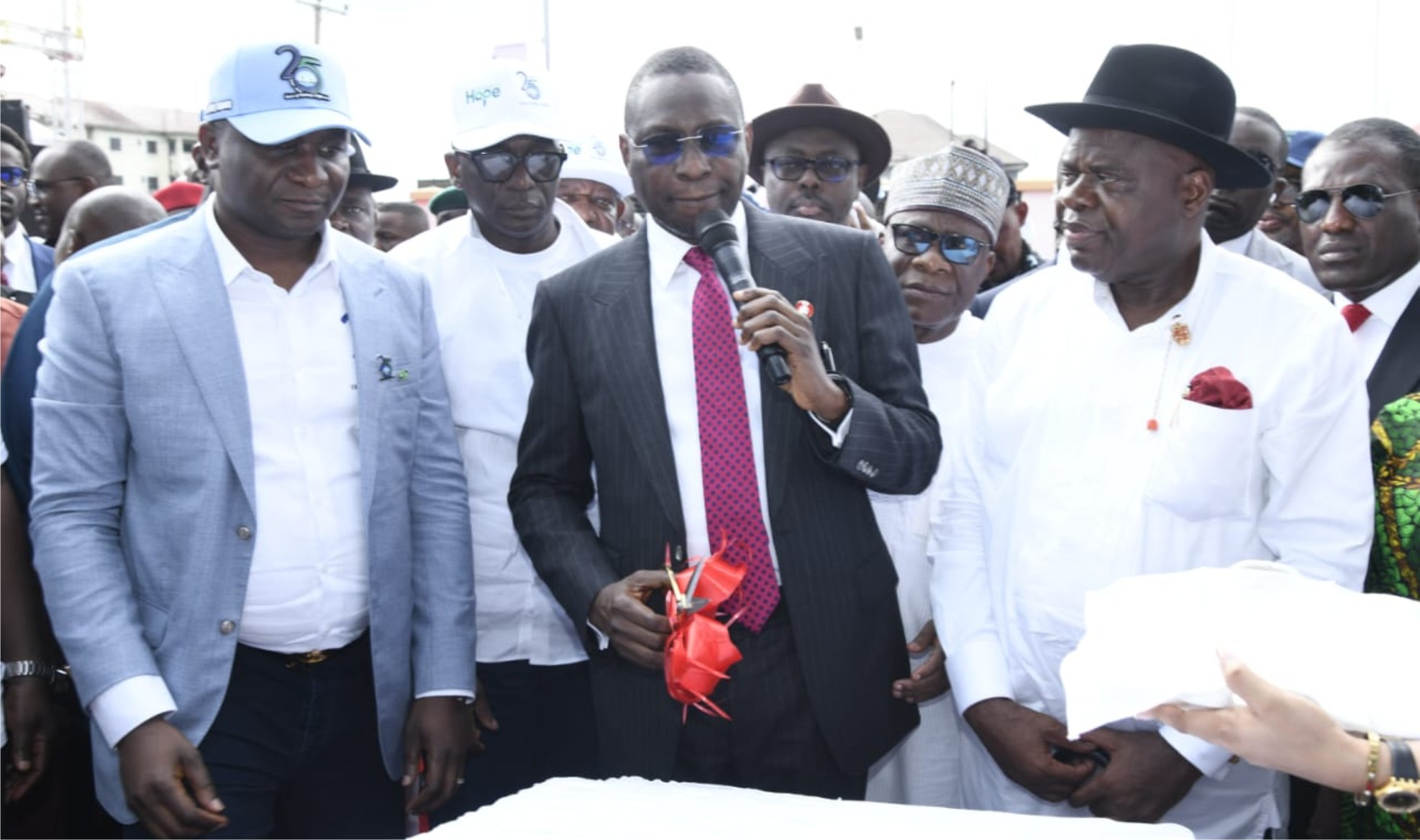
The mandate of the Niger Delta Development Commission, NDDC, is to facilitate the rapid and sustainable development of the Niger Delta region, while that of the Economic and Financial Crimes Commission, EFCC, is to investigates financial crimes and put corrupt practices in check.
Given their different roles, the idea of an alliance between the two organisations may seem far-fetched. However, with the NDDC Managing Director, Dr Samuel Ogbuku, and the EFCC Executive Chairman, Mr. Olanikpekun Olukoyede, it is not just an idea; it is a reality.
The unique collaboration between the NDDC and the EFCC has given rise to the Renewed Hope Multi-Purpose Training Centre, unveiled on Tuesday at Otuokpoti Community in Ogbia Local Government Area, Bayelsa State.
According to the NDDC Managing Director, the vast training complex was executed with funds recovered on behalf of the Commission by the EFCC.
Ogbuku explained that the Bayelsa training centre was funded through the money recovered by the EFCC and executed under a signed performance bond, ensuring transparency and impact. He noted that the facility represented one of several such centres being constructed in Delta and Rivers States. He said: “We have similar facilities currently under construction in Odi, Bayelsa State, while the ones in Delta State are being built in Patani and Ozorro and another two in Rivers State.”
He observed that the Multi-Purpose Training Centre, which was completed in record time, was a partnership between the EFCC and the NDDC, as the anti-crime agency had recovered the funds that facilitated the project’s execution.
Ogbuku observed that the facility, which could accommodate 1,000 persons, represented a significant step toward empowering local communities through skills development and inclusive growth.
The training centre’s components, which include a school, hospital, cafeteria, police post, and recreational centre, are all designed to support training, healthcare, and emergency accommodation within a single integrated complex.
Speaking at the inauguration ceremony, the EFCC Chairman assured the NDDC of the release of more recovered funds in the coming weeks.
Olukoyede described the NDDC as a “renewed and transformed government agency.” He assured that the EFCC would do everything to recover all outstanding statutory contributions due to the NDDC from oil companies.
He noted: “We have made several recoveries on behalf of the NDDC, and we will not relent in this direction. We are encouraged by the fact that the NDDC is making the Renewed Hope Agenda of the Federal Government a reality in the Niger Delta region.”
Olukoyede commended the NDDC for its institutional and policy reforms, declaring that the people of the Niger Delta will have every reason to celebrate the current leadership of the Commission. He described the NDDC as a beacon of good governance under President Bola Ahmed Tinubu.
He noted: “The Niger Delta is the goose that lays the golden egg and should not be denied the benefits of that golden egg. On our part at the EFCC, we must do everything within our power to ensure that the three per cent statutory contribution due to the NDDC is recovered and handed over to the Commission. We are going to continue supporting you.”
He said further: “Under this President, NDDC is working; good governance is being delivered. It is my delight to be part of this transformational agenda. The Renewed Hope Agenda is no longer a slogan—it is a reality. For the first time, people are identifying with what NDDC is doing.”
Olukoyede commended the NDDC, saying the Commission has refined its processes to uphold the principles of probity. This aligns with the agency’s head’s emphasis on upholding transparency and accountability in the country’s affairs.
The Chairman of the anti-crime agency confessed that his perspective on the NDDC was turned around in 2024, when the NDDC management, led by Ogbuku, paid him a courtesy visit at the EFCC’s headquarters in Abuja.
Olukoyede stated that he was impressed by the Commission’s “Rewind to Rebirth” initiative.
He declared: “The five minutes of interaction with the MD left me with a different perception of NDDC. Maybe, we will begin to see an NDDC that is a symbol of pride, accountability, transparency and able to deliver on its mandate.
“From his presentation, you can see that he is ready to bring a change, and that is the exact thing that we stand for in EFCC.”
Assuring that the EFCC would continue to assist the NDDC to achieve its mandate, he said: “We have been working with you to make recoveries; we will continue to do more.
“The collaboration is something we need to take to the next level, and with what you have put on the table I think we are ready to work with you to strengthen your systems and processes and to take the NDDC to the next level.”
In his remarks, the Minister of Niger Delta Development, Engr. Abubakar Momoh, praised the NDDC Board and Management for their unity of purpose and commitment to service delivery, stating that the level of harmony and stability within the Commission is unprecedented.
He declared: “What we are witnessing here today has never happened in the history of the NDDC. Since I assumed office as Minister, I have not been called upon to settle any crisis within the Commission. This is a testament to the teamwork between the Board and Management.”
Also speaking, the Chairman of the NDDC Governing Board, Mr. Chiedu Ebie, emphasised the human capital development focus of the two projects commissioned, noting that reforming the NDDC is an ongoing but rewarding process.
He stated: “We are moving from transaction to transformation. We are doing our best to improve not just the reputation of the NDDC, but everything that concerns the Commission. Today is about promoting and celebrating human capacity.”
Without a doubt, the Niger Delta region is confronted with ecological and environmental challenges that should, perforce, attract significant funds from the Federal Government and the oil companies operating in the region.
Sadly, this has not been so, thus limiting the capacity of the NDDC to fulfill its mandate of driving the development process and transforming the Niger Delta region into one that is “economically prosperous, socially stable, ecologically regenerative and politically peaceful.”
It is rather unfortunate that, despite the spirited efforts by successive boards and managements of the NDDC to meet the expectations of the people, their efforts have not been matched with commensurate funding.
The issue of inadequate funding is resurfacing again. Indeed, it is an inconvenient truth that will remain on the front burner until it is fully addressed.
That explains why the NDDC Managing Director highlighted the issue during interactive sessions that the Commission’s Board and Management held with the relevant Committees of the National Assembly in Abuja last year.
Ogbuku told the House of Representatives Committee on NDDC, chaired by Hon. Ibori-Suenu Erhiatake, that the Commission is owed over N2 trillion, arising from withheld funds and underpayments by both the government and the oil companies. He blamed this on non-compliance with the Act establishing the Commission.
Given the enormous impact of their activities on the environment, the oil companies are expected to be at the forefront in the critical task of urgently developing the oil basin that has suffered so much neglect in the past. It is, in fact, in their interest to develop the communities where they operate to guarantee peace, which is very necessary for them to continue with their work.
Thankfully, both the Senate and the House of Representatives promised to assist the NDDC in recovering its outstanding funds. In their various interactions with the NDDC leadership, the lawmakers expressed concern about the disregard for existing laws governing the Commission’s funding.
The Chairman of the Senate Committee on NDDC, Senator Asuquo Ekpenyong, expressed displeasure over the disregard for the law by the International Oil Companies (IOCs) and promised to call them to order.
The Senate Committee Chairman stated that proper funding would help NDDC to adequately address the sustainable development of the Niger Delta region, noting that the challenge of developing the region was enormous and that all relevant contributors to the NDDC must play their roles diligently.
Senator Ekpenyong said that in discharging its oversight functions, his committee will ensure that every contributor to NDDC pays what they owe the Commission, “because we cannot afford to toy with the development of that very important region. We owe it to the country to make sure that we improve the living conditions of the people of the region.”
It is reassuring to note that both chambers of the National Assembly are concerned about the pressing funding challenges facing the NDDC and are taking steps to address the situation.
The lawmakers understand that we have a responsibility to adequately fuel the vehicle chosen to drive the development process in the Niger Delta region.
In 2023, the House of Representatives unveiled plans to investigate the activities of International Oil Companies (IOCs) operating in the Niger Delta region, as well as the recovery of over $4 billion allegedly owed to the NDDC.
The resolution was passed sequel to the adoption of a motion sponsored by Hon. Donald Kimikanboh Ojogo, who frowned at the flagrant breach of the NDDC Act, 2000, which was established in response to heightened agitations and violent yearnings for special intervention in the oil-producing states.
He said: “The House is aware that the indebtedness of the IOCs to the NDDC had culminated in the drive by the Economic and Financial Crimes Commission (EFCC) to commence the debt recovery process.
By Ifeatu Agbu
-

 News2 days ago
RSG Targets Nine Million Residents in Mosquito Net Distribution Campaign
-

 Oil & Energy2 days ago
Aiyedatiwa Signs New Electricity Bill
-

 Oil & Energy2 days ago
NLNG Commissions Research And Innovation Centre In RSU
-

 Maritime2 days ago
Marine Minister Commends President Tinubu On NPERA Bill Assent
-

 News2 days ago
KenPoly Holds Eight Convocations, August 29
-

 News2 days ago
RSG Begins Another Phase of Projects Commissioning Today
-

 News2 days ago
RMAFC Completes Revenue Sharing Review, Proposes New Pay
-

 Maritime2 days ago
NAGAFF Petitions IGP Over Alleged Maritime Police Harassment