
Politics
Shekarau, Kwankwaso Team Up Against Ganduje In Kano

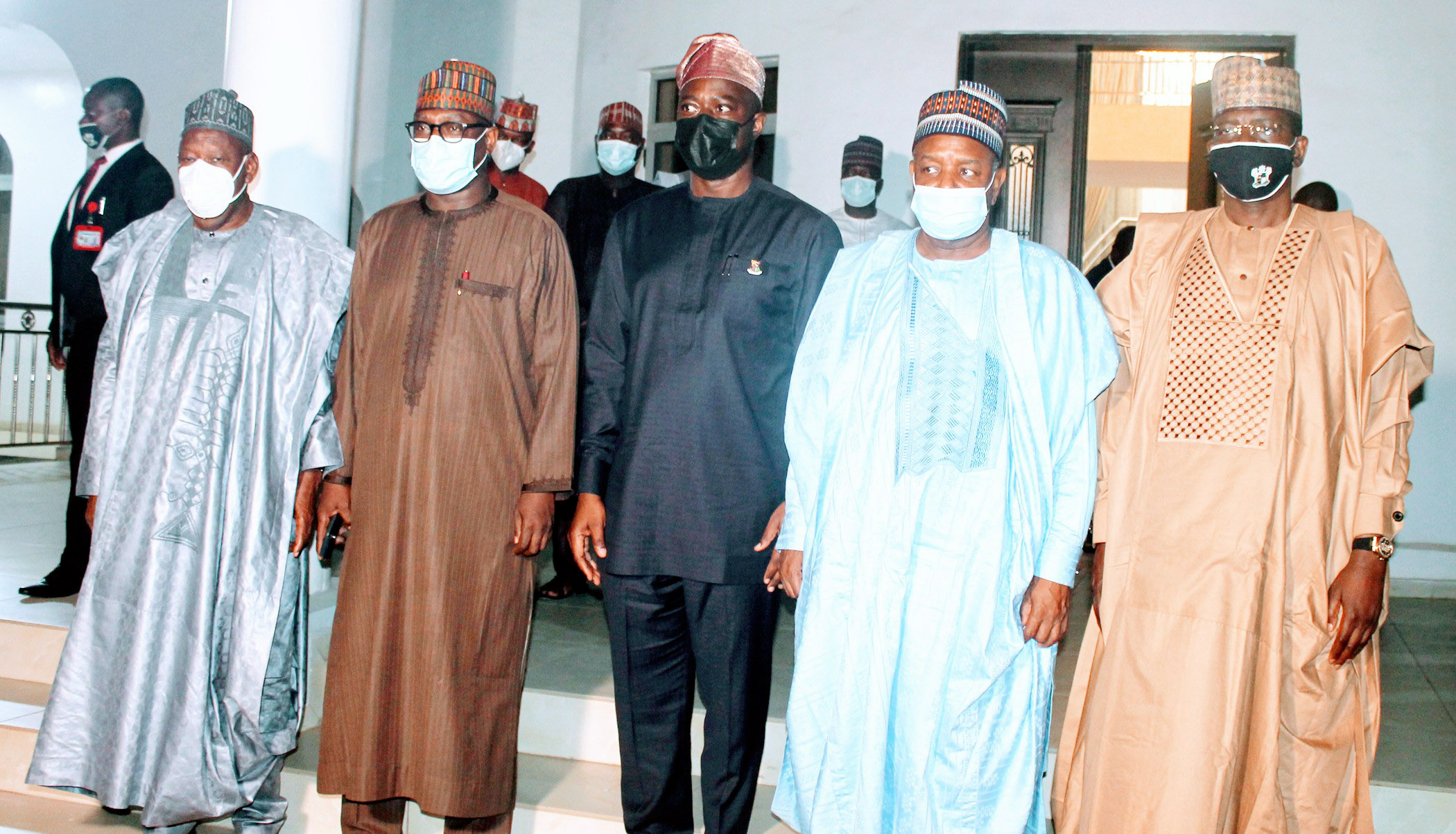
Following the formal defection of former Kano State Governor, Malam Ibrahim Shekarau, from the ruling All Progressives Congress (APC) to the New Nigeria Peoples Party (NNPP), the political alignment in the state has taken a different shape, TheTide source reports.
Shekarau, the Senator representing Kano Central, picked up his NNPP membership card at his Giginyu Ward on Wednesday after several days of back and forth on the defection.
The National Leader of NNPP and its presidential aspirant, Rabiu Musa Kwankwaso, also a former Governor of Kano State, was among the bigwigs of Kano politics that were at the event to receive Shekarau into NNPP; a union some political analysts described as a marriage of convenience.
Our source further reports that Kwankwaso personally handed over Shekarau’s membership card, with the Shura Council, Shekarau’s political structure’s highest decision-making body, also in attendance.
This is the first time that Shekarau and Kwankwaso will go into general elections as members of the same party, and with both of them considered as two of three strongest politicians in the state, their alignment is being seen as a game changer.
Since the crisis within Kano APC led to the emergence of the G-7 faction led by Shekarau in late 2021, observers had forecast that as long as the crisis is left to be resolved via the court system where only one winner would emerge, it would be impossible to have Shekarau and the current Governor, Abdullahi Umar Ganduje in the same party come 2023.
This forecast became evident days before the Supreme Court decided the matter in favour of Governor Ganduje as Shekarau was reported to have said that if the apex court’s decision did not favour them (G-7), they will stop over at the famous Yan Lemo fruits’ market at the entrance of Kano. The insignia of the new but fast growing NNPP is a variety of fruits.
After the apex court’s judgment, a lot of politicking took place, most of them in the dead of the night, to broker peace between Ganduje and Shekarau and convince the latter to rescind his decision to leave the APC, but all were to no avail as both sides could not come to agreement on demands made from each other.
But before Shekarau’s formal defection, some other members of G-7 had all defected to the NNPP and were seen at the forefront of convincing Shekarau to also join them in the new party.
Before this chain of defection, at least 17 members of Kano State House of Assembly had defected from both the Peoples Democratic Party (PDP) and the APC to the NNPP.
All these defections, which culminated with Shekarau’s move on Wednesday, has now changed the permutations and political alignment in Kano State ahead of the 2023 general elections.
Political analysts observed that before the emergence and sudden growth of the NNPP, PDP was hitherto considered as the main opposition in Kano and was expected to provide a formidable competition to the APC in 2023 as it did in 2019.
But with the party (PDP) engrossed with its own leadership problem between the camps of its chairman, Shehu Sagagi (a loyalist of Kwankwasiyya Movement) and that of a former Minister of Foreign Affairs, Aminu Wali, the party has continued to struggle to put its house in order.
In 2019, when the opposition (PDP) was coasting to victory before the election was declared inconclusive, the party had its major strength from Kwankwaso and his Kwankwasiyya Movement, which marshalled supports and votes for its then candidate, Abba Yusuf (popularly known as Abba Gida-Gida) against Ganduje.
Unlike in 2019 when Governor Ganduje had the support of Shekarau to defeat his major challenger, Yusuf, the governor’s candidate in 2023 will not only not be able to call on Shekarau’s support but will now have to contend against the joint force of the NNPP, filled majorly by politicians that felt slighted by him (Ganduje) and APC.
Recall that Ganduje-led APC stakeholders had endorsed the current deputy governor, Nasir Yusuf Gawuna and former Commissioner for Local Government and Chieftaincy Affairs, Murtala Sule-Garo to clinch the joint governorship and deputy governorship ticket of the party.
This decision was one of the developments that led to the mass exodus of APC bigwigs, especially from Kano South to the NNPP.
Kano South is believed to be central to the permutations of all the parties in Kano, and the battle is expected to come from that axis, especially with the latest alignment.
Alhassan Rurum, who is currently a House of Representatives member for Rano/Kibiya/Bunkure, was among those hoping to clinch the governorship ticket of APC before it was handed over to Gawuna, and he was hinging his ambition on the fact that his zone (Kano South) has not produced a governor or deputy since 1992.
Abdulrahman Kawu Sumaila, a former legislative aide to President Muhammadu Buhari, is also targeting the Kano South senatorial ticket, currently held by Senator Kabiru Gaya. This is even as the immediate past Commissioner for Budget and Planning, Nura Dankadai, is planning to unseat the House Leader, Alhassan Doguwa, as representative of Doguwa/Tudunwada at the green chamber.
The ambition of Dankadai, who is believed to be a major local mobiliser in Kano South, may also change permutations at the federal level for APC as the Doguwa is believed to be prepping up to become the Speaker of the House of Representatives in 2023.
Elsewhere, in Kano North, the recent peace parley between Ganduje and Senator Barau Jibrin, another leader of the G-7, seems to have doused the tension in the axis, especially as it was reported that the governor has agreed to step down his senatorial ambition for Barau’s return to the red chamber. Barau was a front runner for the governorship seat until the endorsement of Gawuna. He thereafter abandoned his gubernatorial ambition.
But there are still fears within the APC that unless the party is able to resolve the animosity between Barau and Sule-Garo (the anointed deputy governorship aspirant), the party may still implode, especially with talks of dissatisfaction in the camp of Sule-Garo over the peace parley between Ganduje and Barau.
In Kano Central, Senator Bashir Lado, Abdulkarim A. Zaura and Barrister Ismaeel Ahmed, all in the camp of the governor, are expected to test their popularity at the party’s primaries to know who will contest against Shekarau of the NNPP for the senate seat.
The Kano central has always been seen as a stronghold of Kwankwasiyya while Kano north and south belong to governor Ganduje and APC as evidenced during the 2019 elections. However, many observers see the Kwankwaso/Shekarau merger and the recent high-profile defection to NNPP from Kano south as a serious threat that could lead to the defeat of the ruling APC.
But some APC insiders believe that Ganduje’s reconciliation with Senator Barau of Kano north and the fact that Gawuna hails from Kano central as well as the incumbency factor will help them retain Nigeria’s most populous state.
Commenting, Dr Aminu Hayatu, a political analyst and lecturer at the Department of Political Science, Bayero University, Kano, (BUK), is of the opinion that as much as Kwankwaso and Shekarau’s union has changed the political alignment and permutations in Kano, the real challenge will come after the party’s primaries or shortly after the party retains power.
He said, “His NNPP is no doubt an alternative force that has the promise of neutralising the arrogance of the ruling party, basically in Kano, and the incompetence of the PDP as a supposed opposition.
“But Kwankwaso’s major dilemma is that, most of those defecting to the NNPP are just after what they can personally gain from the party’s elective positions and appointments.”
Hayatu, therefore, believes that while NNPP has the potential to “capture power at least in Kano and some few Northern states maybe, but it may, if care is not taken, run into post-victory crises arising from different kinds of grievances.”



The Independent National Electoral Commission (INEC) has extended the deadline for political parties to submit the list of candidates for the 2027 governorship and state Houses of Assembly elections from Saturday, August 8, to Tuesday, August 11, 2026.
The commission announced the extension in a statement issued on Saturday and signed by the National Commissioner and Chairman of its Information and Voter Education Committee, Mohammed Haruna.
According to INEC, the decision followed appeals by political parties for additional time to complete the submission process through the dedicated online portal.
“The submission window, which according to the revised Timetable and Schedule of Activities for the General Election was originally scheduled to close on Saturday, 8th August, 2026, has been extended to Tuesday, 11th August, 2026,” the commission said.
In a a related development, INEC announced the suspension of PVC collection in Osun State ahead of the August 15 governorship election.
The commission said voters who applied for replacement of lost, damaged or defaced Permanent Voter Cards would have until midnight on Sunday, August 9, to print downloadable copies of their cards.
The electoral body explained that the deadline was necessary to enable it compile data on downloaded PVCs and produce final statistics on the total number of cards collected ahead of the election.
INEC said PVC collection in Osun commenced at the Registration Area level from July 22 to 28, 2026, but was extended to July 31 following complaints about large crowds and difficulties experienced by voters at collection centres.
The exercise subsequently moved to the local government level and ran from August 1 to 7.
The commission also disclosed that replacement downloadable PVCs had been made available to voters in Odo-Otin and Ife Central Local Government Areas following the theft of cards during attacks on the two collection centres.
It stressed that the stolen cards could not be used to vote.
INEC reassured Osun residents of its preparedness for the August 15 governorship election.
“The commission reiterates that the stolen cards cannot be used to vote.
“INEC reassures the people of Osun State of its readiness to conduct a free, fair, credible and inclusive governorship election on 15th August, 2026,” the statement said.
The commission said the deadline, initially set for Saturday, 8 August, has been extended to Tuesday, 11 August 2026, following appeals from political parties for more time.
INEC also announced that the window for voters who applied to replace lost, damaged or defaced PVCs to download their replacement cards will close at midnight on Sunday, 9 August.
The move is to enable the commission compile final PVC collection figures ahead of the 15 August Osun governorship election.
INEC said replacement downloadable PVCs have also been provided to affected voters in Odo-Otin and Ife Central Local Government Areas after hoodlums carted away cards from two collection centres, stressing that the stolen cards cannot be used to vote.
The commission reaffirmed its readiness to conduct a free, fair, credible and inclusive election in Osun State.
Gov. Kefas made the remarks over the weekend at the Federal Medical Centre (FMC), Jalingo, during the flag-off of the second phase of the Renewed Hope Medical Outreach in Taraba State, organised as part of activities marking Prof. Yilwatda’s 58th birthday.
The governor commended Prof. Yilwatda for choosing to mark his birthday by providing medical care to people in need.
“What Professor Nentawe did is a powerful demonstration of what leadership should be,” Gov. Kefas said.
He assured that his administration would continue to support initiatives that complement government efforts to improve healthcare delivery and the wellbeing of residents.
Speaking at the event, Prof. Yilwatda called on Nigerian leaders to embrace the culture of giving and use their positions to touch the lives of the less privileged.
He said his decision to celebrate his 58th birthday in Taraba State was deliberate and informed by the needs of underserved communities, particularly people who face difficulties accessing healthcare because of distance and financial constraints.
According to him, the intervention followed a needs assessment and was extended across the three senatorial districts of the state.
He said the exercise commenced on August 3 at Takum General Hospital and covered the Federal University Teaching Hospital, Wukari; First Referral Hospital, Sunkani, Ardo-Kola Local Government Area; General Hospital, Bali; General Hospital, Gembu; and FMC Jalingo.
Prof. Yilwatda said the intervention provided medical services to thousands of beneficiaries, including people who required surgical procedures.
He said sustainable national development could only be achieved when strong institutions placed Nigerians at the centre of development.
“Leadership is about service,” he said, urging political and public leaders to make giving back to society an important part of their responsibilities.
He reaffirmed his commitment to serving Nigeria and its people, saying his personal vision was to make every day of his life useful to humanity.
“Every day that I live, the vision is: let it be useful to humanity,” he said.
The Taraba State Commissioner for Health, Dr. Bordiya Buma, commended the initiative, saying it was consistent with the Renewed Hope agenda and efforts to strengthen healthcare delivery in the state.
Dr Buma said the second phase followed the successful completion of the first phase, which was conducted simultaneously in six local government areas, with two LGAs selected from each of the three senatorial districts.
According to him, more than 10,000 patients were attended to during the first phase, including people with medical and surgical conditions.
He disclosed that 327 general surgeries, 71 eye surgeries and 575 dental procedures were carried out during the exercise.
The commissioner expressed appreciation to President Bola Tinubu for the Renewed Hope Medical Outreach and thanked Prof. Yilwatda for supporting the initiative and choosing Taraba State as a beneficiary.
The Minister of Health and Social Welfare, Prof. Muhammad Ali Pate, also commended Prof. Yilwatda for choosing Taraba State to mark his 58th birthday through a medical outreach.
Prof. Pate said making healthcare the centrepiece of the birthday celebration was significant because health affects everyone.
-

 News3 days ago
RSG Targets Nine Million Residents in Mosquito Net Distribution Campaign
-

 Oil & Energy3 days ago
Aiyedatiwa Signs New Electricity Bill
-

 Maritime3 days ago
Marine Minister Commends President Tinubu On NPERA Bill Assent
-

 Oil & Energy3 days ago
NLNG Commissions Research And Innovation Centre In RSU
-

 News3 days ago
KenPoly Holds Eight Convocations, August 29
-

 News3 days ago
RSG Begins Another Phase of Projects Commissioning Today
-

 News3 days ago
RMAFC Completes Revenue Sharing Review, Proposes New Pay
-

 Maritime3 days ago
NAGAFF Petitions IGP Over Alleged Maritime Police Harassment