Connect with us

Maritime

ILO Adopts New Minimum Wage For Seafarers

Published

on

In a bid to motivate seafarers globally and improve on their productivities, a subcommittiee of the International Labour Organisation (ILO) has agreed to raise the minimum wage for seafarers to up to $673 per month
The new wage was agreed following the conclusion of negotiations between shipowners and seafarers’ unions.
Under the resolution agreed by a subcommittee of the ILO’s Joint Maritime Commission (JMC), the minimum basic wage for able seafarers will increase each year for three years starting in January 2023 until the next meeting of the JMC in 2025.
Under the agreement, the minimum wage will be raised to $658 starting January 1, 2023, $666 in 2024, and $673 in 2025 respectively.
During the previous round of negotiations last September, shipowners and seafarer unions set the minimum wage at $648 per month beginning 1 July 2022.
During those negotiations, the International Transport Workers’ Federation (ITF), representing the seafarers, originally asked to increase the minimum wage to $683 per month, up 6.5% or a $1.40 per day from the $641 monthly minimum wage that had been in place since 2018.
But shipowners unions, represented by the International Chamber of Shipping, rejected the offer and put forward a plan to increase wages by just 3% over three years, maxing out at $660 per month in 2024.
“The global seafarer workforce is central to the safe and efficient flow of world trade, and they are among the unsung heroes of the pandemic”, spokesman for Swiss Shipowners Association, Charles Darr, said.
A group  member in the negotiations said the new deal is a win-win for both shipowners and seafarers.
“It strikes a balance between rewarding seafarers for their incredible contributions to the global economy, and ensures, at the same time, that shipping companies are able to remain sustainable and commercially viable in the light of the many challenges we are currently facing and those that lie ahead”, the member said.
Speaking shortly after the agreement, Spokesman for Seafarers group, Mark Dickinson, of Nautilus International, said:
“Today’s agreement recognises the huge sacrifices and professionalism of the men and women working at sea and is a testament to the collective milestones the social partnership between seafarers and shipowners have historically achieved, especially over the past few years.
“We look forward to continuing to work together alongside our social partners to safeguard financial stability for the world’s seafarers,” he said.
ILO insisted that minimum wage is low by most standards in the developed world, and that it is widely recognised by the global shipping industry as being a positive contribution to decent work and employment for the world’s seafarers.
The minimum basic wage standard falls under the ILO’s Maritime Labour Convention, 2006 (MLC 2006), known as the “Seafarers’ Bill of Rights, MLC 2006) which ame into force on 20th August 2013, and has been ratified by 101 ILO member States, representing approximately 96% of global shipping tonnage.
The Joint Maritime Commission (JMC) is a bipartite ILO body comprising employers’ representatives co-ordinated by the International Chamber of Shipping (ICS) and seafarers’ union representatives coordinated by the International Transport Worker’s’ Federation.


Continue Reading

Maritime

NAGAFF Petitions IGP Over Alleged  Maritime Police Harassment

Published

on

The 100% Compliance Team of the National Association of Government Approved Freight Forwarders (NAGAFF) has petitioned the Inspector-General of Police (IGP) Tunji Disu over alleged unlawful conduct, extortion, intimidation, harassment and obstruction of trade by officers of the Maritime Police Command operating around Nigerian seaports.
The petition, dated August 14, 2026 and addressed to the Inspector-General of Police at Force Headquarters, Abuja, specifically identified the Lagos Port Complex, Apapa; Tincan Island Port; and other designated port locations, including bonded terminals, as areas where the alleged misconduct is taking place.
The petition was signed by Alhaji Ibrahim Tanko, National Coordinator, 100% Compliance Team, NAGAFF.
NAGAFF described the situation as a growing impediment to trade facilitation and a factor contributing to the rising cost of doing business in Nigeria.
According to the association, freight forwarding practitioners have, over a sustained period, reported and independently observed what it described as a pattern of misconduct involving Maritime Police personnel around the nation’s seaports.
The petition alleged that officers issue container blockage letters to shipping lines and terminals through the Nigeria Shippers’ Council, allegedly demanding payments before release orders are subsequently issued.
It further listed alleged practices including extortion, described as demanding and receiving money or other documents from freight forwarders, drivers and agents as a condition for the release or unhindered passage of cargo.
The association also alleged intimidation and harassment, including verbal abuse, threats, unlawful arrest and detention, seizure of documents and, in some instances, physical assault.
NAGAFF said such activities could obstruct trade facilitation by causing avoidable delays, port congestion and disruption of supply chains, contrary to the Federal Government’s Ease of Doing Business reforms.
It also argued that the alleged unofficial payments and additional charges ultimately increase the cost of doing business, with the burden transferred to importers, exporters and consumers.
In its petition, NAGAFF cited several laws and regulatory instruments which it said underscore the need for clearly defined roles and lawful conduct within the port environment.
The association referenced Sections 4 and 5 of the Nigeria Police Act 2020, the Corrupt Practices and Other Related Offences Act 2000, the Nigerian Ports Authority Act and the Customs Service Act 2023.
It also cited the Federal Government’s Ease of Doing Business Executive Orders and National Action Plan on Business Environment Reforms, as well as constitutional provisions relating to dignity, personal liberty and freedom from discrimination and unlawful obstruction in the conduct of lawful business.
NAGAFF warned that the alleged activities could undermine Nigeria’s trade competitiveness, discourage investment in the maritime and logistics sectors and weaken public confidence in law enforcement institutions.
The association further argued that the alleged conduct was inconsistent with Nigeria’s commitments under the World Trade Organization (WTO) Trade Facilitation Agreement.
The freight forwarders’ body requested the Inspector-General of Police to order an immediate investigation into the allegations and direct the cessation of what it described as unlawful container blockage, extortion, intimidation and harassment by Maritime Police officers at the affected ports.
It also called for the constitution of a joint task force comprising the Nigeria Police Force, Nigerian Ports Authority (NPA), Nigeria Customs Service (NCS) and NAGAFF to monitor and enforce compliance with lawful conduct at the ports.
The association further requested that any officers found culpable after investigation be subjected to appropriate disciplinary action and, where warranted, criminal proceedings in accordance with applicable Police Force regulations and the laws of the Federation.
NAGAFF also asked the police authorities to issue clear guidelines on the lawful scope of Maritime Police engagement at seaports and grant the petitioners an opportunity to be heard with further evidence in support of the petition.
Additionally, it called for a clear distinction between the functions and jurisdictional boundaries of the Maritime Police and the Commissioner of Police, Ports.
The association stressed that it was not opposed to legitimate police operations at the nation’s ports, but insisted that such operations must remain within the law and should not turn legitimate cargo clearance processes into avenues for unlawful financial gains.
“We are not opposed to legitimate police operations at the ports. We only demand that such operations be conducted strictly within the purview of our extant laws, without turning legitimate cargo clearance into an avenue for unlawful financial gains,” the association stated in the petition.
NAGAFF said it remained willing to provide further particulars, documentary evidence and witness accounts to assist any investigation arising from the petition.
Continue Reading

Maritime

Marine Minister Commends President Tinubu On NPERA Bill Assent

Published

on

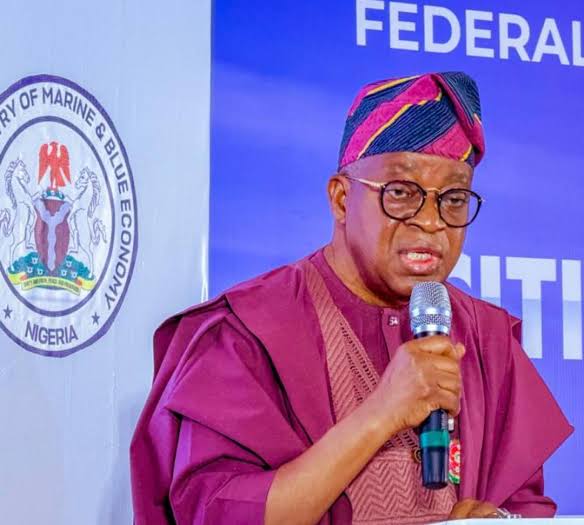
The Minister of Marine and Blue Economy Adegboyega Oyetola, has commended President Bola Ahmed Tinubu for assenting to the Nigerian Ports Economic Regulatory Agency (NPERA) Bill, 2026, describing the development as a major milestone in the ongoing reform of Nigeria’s maritime sector.
Oyetola said the presidential assent to the legislation would pave the way for the establishment of a dedicated, robust and independent economic regulator for the nation’s ports, capable of promoting transparency, efficiency and competitiveness.
 In a statement posted on his official X account, the Minister expressed appreciation to President Tinubu for what he described as visionary leadership and unwavering commitment to transforming the maritime industry and unlocking the immense potential of the Blue Economy.
 According to Oyetola, the presidential assent is a significant step towards building a globally competitive maritime economy and unlocking the full potential of Nigeria’s Blue Economy.
 “I thank His Excellency, President Bola Ahmed Tinubu, GCFR, for assenting to the Nigerian Ports Economic Regulatory Agency (NPERA) Bill, 2026, paving the way for a dedicated, robust and independent economic regulator for our ports,” Oyetola stated.
He explained that the legislation would provide a stronger legal basis for the regulation of tariffs, charges, competition, licensing and the resolution of commercial disputes within the port industry.
 The Minister noted that the establishment of an independent economic regulator would bring greater certainty, transparency and efficiency to port operations, thereby enhancing investor confidence and improving the ease of doing business in Nigeria’s maritime sector.
 “This landmark legislation will strengthen the regulation of tariffs, charges, competition, licensing and commercial disputes, bringing greater certainty, transparency and efficiency to Nigeria’s port sector,” he said.
 Industry stakeholders have long advocated for an independent port economic regulator to address concerns over arbitrary charges, promote fair competition among operators and ensure a more transparent and predictable business environment.
Continue Reading

Maritime

Apapa Ports Manager Advocates Woman Involvement In MWP Bootcamp

Published

on

The Nigerian Ports Authority (NPA), Lagos Ports Complex Manager, Mr. Debo Lawal, has urged participants at the 6th annual Maritime Writes Project (MWP) Creative Writing Bootcamp to use their voices to promote Nigeria’s maritime and port sector as an industry that embraces inclusion.
Lawal, who was Special Guest of Honour at the Opening of the 2026 bootcamp at the Multi-Purpose Hall, Apapa Port, Lagos, encouraged participants to maximise the opportunity to highlight the growing participation of women in traditionally male-dominated maritime roles.
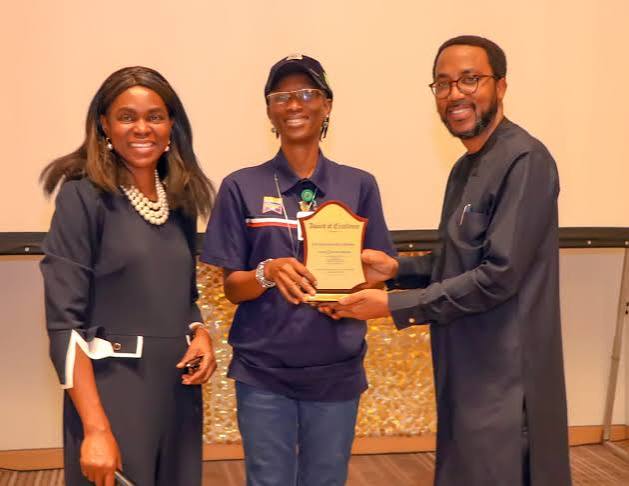
He noted that there are more than 10 female crane operators in Lagos port, alongside female tugboat pilots and numerous other women working across in the port.
According to him, the growing presence of women in operational and technical positions demonstrates that the maritime sector offers opportunities for women and should be portrayed as an inclusive industry.
Lawal formally opened the bootcamp, which brings together young writers, maritime stakeholders, academics and mentors under the theme, “Voyages Through Chokepoints: Power, Passage and Life at Sea.”
The Head of Faculty for the 2026 edition and Dean, Faculty of Arts, Adeleke University, Prof. Adegbite Tobalase, urged participants to use the bootcamp to develop their individual voices and understand the discipline required to produce original works.
“We welcome you not merely to a training programme, but to a mission: to grow literary talent through maritime storytelling, and to deepen Nigeria’s maritime consciousness through the power of the written word,” he said.
In his goodwill message, the Director, International Ocean Institute-Nigeria Centre (IOI-Nigeria), Mr. Akanbi Williams, commended MWP for combining creative writing with practical exposure to the maritime sector.
The Institute, which has partnered with MWP for five years, urged participants to “observe, listen, question, learn and write,” stressing the importance of looking beyond ships, ports and waterways to the people, communities and livelihoods connected to the maritime environment.
It said storytelling could help communicate maritime knowledge to wider audiences, particularly young Nigerians, while encouraging greater understanding of the sector and the blue economy.
Earlier, the Project Coordinator, Maritime Writes Project, Ezinne Azunna, said the initiative was designed to bridge creative writing and maritime awareness by exposing young writers to the realities of the sector.
She said participants would engage with maritime professionals, facilities and communities, enabling them to develop stories grounded in authentic industry experiences.
The 2026 theme draws attention to the significance of maritime chokepoints to global trade, diplomacy, economics and human activities. Mentorship sessions and facility tours are designed to help participants develop stories based on real maritime experiences.
For returning participants, the impact of MWP extends beyond creative writing.
One of the project’s alumni, Uche Ohiaeri, who returned for the 2026 edition, said her participation in the programme in 2022 transformed her confidence and broadened her interests from creative writing to environmental conservation and community development.
Ohiaeri recalled that she initially joined because she simply enjoyed writing, but the experience challenged her to ask deeper questions about the ocean, the environment and communities connected to them.
She subsequently became involved in conservation activities at her school, where she taught younger students, and eventually wrote her first book.
According to her, the programme gave her the confidence to explore opportunities she had not previously considered and showed her that creative writing could serve as an entry point into wider environmental and civic engagement.
The Maritime Writes Project has previously held sessions in Lagos, Osun an
d Rivers states and has produced three published anthologies featuring 17 stories by past participants.
The organisers noted that African writers remain significantly under-represented in maritime fiction and that MWP is encouraging a new generation of Nigerian writers to explore stories around the ocean, shipping, coastal communities and the blue economy.
 by Nkpemenyie Mcdominic, Lagos
Continue Reading

Trending