
Editorial
Emefiele, Resign Now

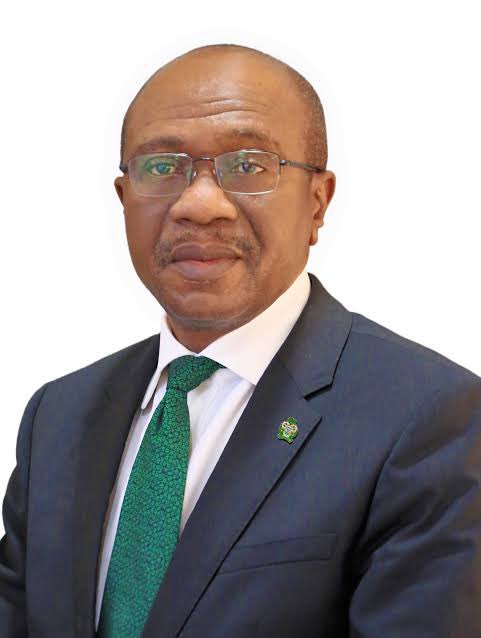
The ambition of the Central Bank of Nigeria’s (CBN) Governor, Godwin Emefiele, to participate in the
party primary towards the presidential election in 2023 has been eliciting mixed reactions from both politicians and industry watchers, as concerns mount over possible conflict of interest on his regulatory and supervisory role on Nigerian banks.
In his suit confirming his political ambition, Emefiele sued the Independent National Electoral Commission (INEC) and the Attorney General of the Federation (AGF) asking the court to restrain them from compelling him to resign as the CBN governor to run for office in 2023. His lawyer, Mike Ozekhome, expressed fears that the INEC and the AGF were making “frantic efforts to disqualify” Emefiele “from participating in the presidential primaries scheduled for June 3, 2022, for not resigning from his office before the parties’ primaries.”
Emefiele was reported to have joined the list of presidential aspirants who had picked the expression of interest form of the ruling party, the All Progressives Congress (APC). Although the form was said to have been picked on his behalf by a group, the apex bank governor had gone to the Federal High Court in Abuja seeking to retain his office as the Central Bank governor while pursuing his interest in the presidential race.
Emefiele, through his counsel, Ozekhome, is seeking the court’s interpretation as to whether by the provisions of Section 84 (3) of the Electoral Act, 2022, a political party can by its constitution impose any nomination qualification criteria or measures on aspirants or candidates, including him who is in centrally the constitutional provision.
He is also seeking the court to clarify whether he can be compelled to resign his position as Governor of the CBN earlier than 30 days before the political party primary, in line with the provision of Section 84 (3) of the Electoral Act, which is against Section 137 (1) of the Constitution of Nigeria as amended, which requires a public officer to resign, withdraw, retire at least 30 days from the date of the presidential election.
However, the Federal High Court refused to shield Emiefele from being disqualified to contest for the presidential ticket of any political party ahead of the 2023 general elections. Ruling on the ex parte application, the judge, Ahmed Mohammed, ruled that he would rather order INEC and the AGF to appear to state their side of the case instead of granting the CBN governor’s request.
The Federal Government had last Wednesday through the Office of the Secretary to the Government of the Federation (SGF), Boss Mustapha, issued a circular directing serving Ministers in the cabinet, heads of government agencies, ambassadors and other political appointees of the administration, coveting political ambitions in 2023 to resign from the government. Soon after the directive, the CBN boss reportedly met with the President.
In our opinion, Emefiele’s action, if unchecked timeously, portends great danger to the fragile economy of the country. There is everything morally and legally wrong with his ambition to become Nigeria’s President while still occupying his current position. Looking at the handwriting on the wall, it is clear that the CBN governor has been a partisan politician to the disadvantage of the country.
Section 6 of the CBN Act says that the Governor of the Central Bank should not pursue any interest that would make him conflict with his official duties. The Act further states that the office should be autonomous and independent. Emefiele must understand that he is the number one banker in the country and chairman of the Bankers’ Committee as well as head of the financial regulations in Nigeria that determine exchange and inflation rates.
The CBN governor must realise that it is improper for him to declare a partisan interest with the sensitive position he occupies. The apex bank is like INEC which should not be under the control of any political influence or party. Indeed, sensitive security documents for the conduct of eletions are deposited in the Central Bank by INEC before any elections. Nigerians must know that Emefiele has the powers to remove the managing directors of banks and can use his position to punish or witch-hunt any bank. Why would a man who keeps in custody the nation’s foreign exchange submit himself to partisan politics?
The apex bank boss demonstrated his partisan posture during the #ENDSARS protest. Recall that Emefiele asked the leaders of the group to shelve their protest, which they refused to comply with. They then had their accounts blocked by the CBN, having gone to court to secure an ex- parte order to do that. This is because they refused to yield to his demand to halt the protest.
Already, and rather unsurprisingly, local and international media have picked up the news of Emiefele’s reported interests and his unwise responses to his linkage to partisan politics. It is needless to say that his alleged aspiration while holding office as governor of the apex bank is a very weighty turn of events. It can potentially erode the confidence in the Nigerian monetary system, which is expected to be administered by non-partisan experts with the CBN governor as the dominant head of the team.
When the CBN Governor assumed office in 2014, he set a target to achieve single-digit inflation and maintain a stable Naira. But the national currency is trading at N590 per dollar on the unofficial market and N415 at the official window. There are also profound implications for the confidence of investors, both foreign and local. Moreover, the Central Bank is an institution that needs to earn the trust of all stakeholders in the economy, irrespective of their political affiliation, creed, gender, religion, ethnicity or vocation.
The economy is yet to recover from the shocks of the COVID-19 pandemic. The disparity in rates has created a paradise for forex brokers and currency speculators. The business of forex roundtripping is also flourishing. There is a liquidity crisis in the forex market on a scale never witnessed before. We cannot afford to worsen the current economic situation with a Central Bank that is entangled in the controversy of political partisanship. In the circumstances, the most respectable course of action for the CBN governor is to resign to preserve the integrity, credibility, independence, neutrality and professionalism of the bank.



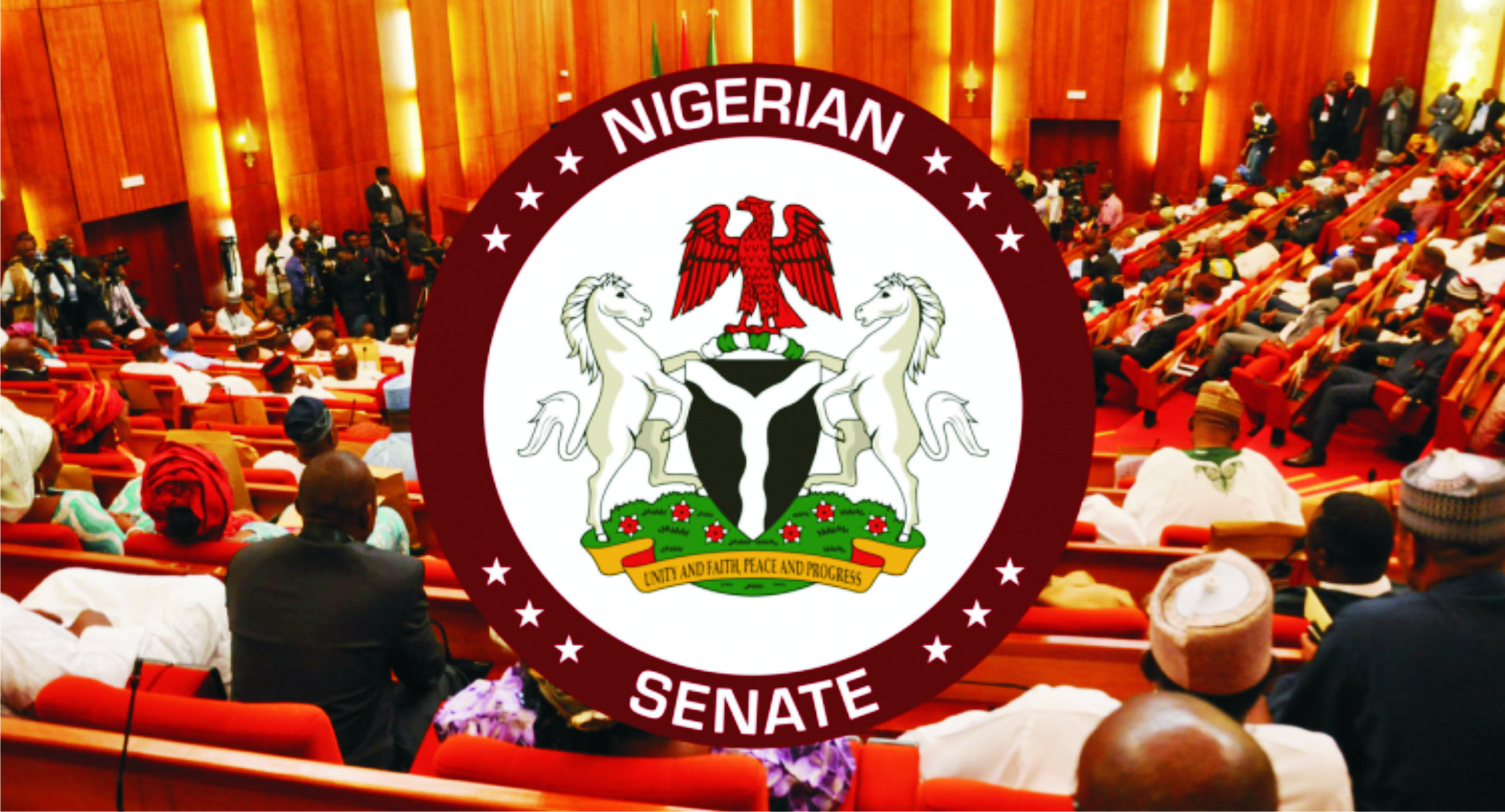
There are moments in the life of a legislature when plain speaking becomes a public service. Senator Adams Oshiomhole provided such a moment on the floor of the Senate when he accused the Minister of Works, Senator David Umahi, of manifestly neglecting critical federal arteries in Edo and Delta States, and implored his colleagues to prevail on the Minister to adopt a more equitable and genuinely national approach to road infrastructure delivery. It was blunt, it was uncomfortable, and it was necessary.
The specifics of his complaint deserve restating. Drawing attention to the recent approval of some 20 new road projects despite the parlous state of existing ones, the former Edo State governor lamented that Nigerians cannot travel from Benin to Warri, Benin to Asaba, Benin to Auchi, or Auchi to Okene without encountering severe distress. He alleged a deliberate omission of these corridors from the national budget in the last three years, save for palliative interventions directed by President Bola Tinubu through tax credit arrangements. His question — “What have we done wrong?” — resonates far beyond the chambers of the National Assembly.
We lend our full and unequivocal support to that call. The Auchi-Benin Road, for instance, has been in a deplorable and near-impassable condition for several years, turning what should be a two-hour journey into an all-day ordeal of broken axles, extortionate fares, and despondent commuters. The media have, on multiple occasions, chronicled the suffering of motorists, traders, and students who ply that route. To describe it as a federal road today is to stretch the meaning of the term beyond recognition.
This pattern of sidelining is not confined to Edo or Delta. Even here in Rivers State, the disposition of the Federal Ministry of Works has left much to be desired, particularly along the Eleme axis of the East-West Road. That road, which ought to be a flagship of federal presence in the Niger Delta, has remained in a wretched state for long. Those who use it daily — workers at the Eleme Petrochemical Complex, the two refineries, Onne Port, and the countless ancillary industries — can attest to its deterioration. Work has proceeded in fits and starts without the sustained urgency such a strategic road demands.
The Eleme stretch is not a mere intra-state byway. It is the gateway to the nation’s economic jugular. According to the Federal Ministry of Works and Housing’s 2023 Highway Condition Survey, only about 35 per cent of the country’s 36,000 kilometres of federal roads are rated as being in good or fair condition, with the remainder classified as poor or very poor. The East-West Road, conceived in the 1970s to bind the entire Niger Delta, remains unfinished in critical sections more than four decades after. If it had been treated as a priority, the perennial gridlock, carnage, and economic loss on the Eleme-Refinery junction would have long been consigned to history.
The irony is as painful as it is glaring. The Niger Delta remains the goose that lays the golden eggs. Data from the Nigeria Extractive Industries Transparency Initiative [NEITI 2023 Oil and Gas Audit] show that the region still accounts for over 78 per cent of Nigeria’s federally collected export earnings and about 65 per cent of total government revenue. The National Bureau of Statistics [NBS Foreign Trade Report Q4 2024] similarly confirms that crude oil continues to dominate export receipts. By every metric of equity and economic logic, a region that sustains the national purse deserves first-rate consideration in the allocation of infrastructure, not afterthoughts and tokenism.
Road infrastructure is not largesse to be dispensed by favour; it is the skeleton upon which commerce, cohesion, and citizenship hang. When contracts are concentrated in one geopolitical zone while other zones are left to contend with craters, it erodes trust in the federation itself. The World Bank’s Nigeria Development Update [June 2023] estimated that poor transport connectivity inflates the cost of moving goods by up to 40 per cent and costs the Nigerian economy an estimated $1.5 billion annually in lost man-hours and vehicle maintenance. If we profess to be one country, then equity must be the compass that guides key institutions before any project is executed. Development must spread round, not pool in one place as though other regions do not matter.
There is also a grave security dimension that can no longer be ignored. The deplorable condition of federal roads has become a veritable enabler of criminality. The NBS Crime Experience and Security Perception Survey reported over 2.5 million incidents of kidnapping-related occurrences nationally, with transport workers identifying bad road spots as prime ambush points. When vehicles are forced to crawl at 10 kilometres per hour through failed sections at Auchi, Sapele Road, or Eleme, they become sitting ducks for armed gangs. Fixing bad roads, therefore, is not merely about convenience; it is about safeguarding lives.
By his intervention, Senator Oshiomhole has hit the nail on the head and reminded Minister Umahi of a fundamental constitutional truth: public office is held in trust. The Ministry of Works is not a personal estate where contracts are awarded according to whim or political convenience. It is a national institution funded by the collective resources of Nigerians, including the oil and gas rents from the very communities whose roads are now neglected. The Minister must demonstrate balance, transparency, and a pan-Nigerian outlook in the distribution of projects that impact the daily existence of citizens. Selective neglect breeds suspicion, and suspicion is corrosive at a time when the nation is preaching unity, oneness, equity, and justice.
Consequently, the National Assembly must go beyond rhetoric and assert its oversight powers with vigour. Sections 88 and 89 of the 1999 Constitution [as amended] empower the legislature to investigate and expose any maladministration in the execution of federal projects. If an office holder is not acting rightly, it is the duty of the Senate and the House of Representatives to call him to order. Oversight must not be reduced to budget approval ceremonies; it must translate to field verification, public hearings, and insistence that the Federal Character principle, as enshrined in Section 14(3) of the Constitution, reflects in road awards.
Let the Auchi-Okene, Benin-Warri, Benin-Asaba, and Eleme East-West gangways be restored to motorable dignity. Let priority be given to completing existing, economically vital roads before embarking on new ones. If those who, through their resources, sustain the federation are sidelined in the distribution of tangible dividends, it tells poorly of our nationhood. Bad roads must be fixed, and they must be fixed now, with fairness as the guiding standard.
-

 News2 days ago
RSG Targets Nine Million Residents in Mosquito Net Distribution Campaign
-

 Oil & Energy2 days ago
Aiyedatiwa Signs New Electricity Bill
-

 Maritime2 days ago
Marine Minister Commends President Tinubu On NPERA Bill Assent
-

 Oil & Energy2 days ago
NLNG Commissions Research And Innovation Centre In RSU
-

 News2 days ago
KenPoly Holds Eight Convocations, August 29
-

 News2 days ago
RSG Begins Another Phase of Projects Commissioning Today
-

 News2 days ago
RMAFC Completes Revenue Sharing Review, Proposes New Pay
-

 Maritime2 days ago
NAGAFF Petitions IGP Over Alleged Maritime Police Harassment