
Featured
We’ve Given Priority To All Arms Of Govt, Sectors In Rivers -Wike …Fayemi Flags Off Magistrates Court Complex In PH

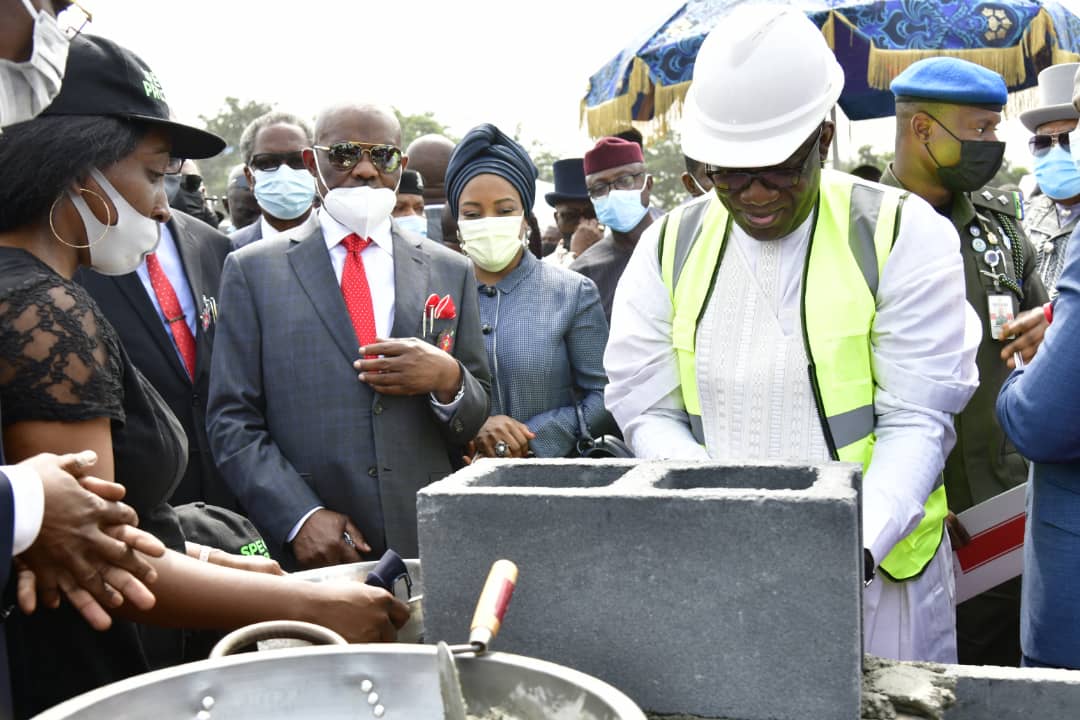
Rivers State Governor, Chief Nyesom Wike has explained that no arm of government and sector in the state has been treated poorly in terms of allocation of funds and distribution of infrastructure.
The governor made the explanation at the flag-off of construction work on the Magistrates Court Complex that was performed by the Chairman, Nigeria Governors’ Forum and Governor of Ekiti State, Dr Kayode Fayemi, yesterday, in Port Harcourt.
Responding to an allusion made by one of the speakers at the event who cited a question that a friend asked him about so much attention paid to the Judiciary, Wike said, that such person must be a mischief maker.
Wike said so much money has been spent in the health sector, which cannot be compared to what has been spent in the Judiciary.
He said this is the last project his administration would be executing for the Judiciary before his tenure ends, and assured that it would be completed within the next eight months.
Other projects that are already ongoing, he said, include the state Judicial Institute, the Federal Judicial Service Commission for the South-South, allocated to Rivers State.
The governor, however, took a swipe at the state Judiciary about the lack of space and courtrooms in the High Court premises that make magistrates and judges share courtrooms.
Wike queried what they have been doing with their capital budget released to them in the last six and half years.
According to him, they cannot receive such money and still wait for the Executive to provide offices for them, effect repairs on existing offices, and also make the air conditional in the courtrooms functional.
“Let me say something I find very disturbing because it is self-indictment. You said that people sit in the morning; people sit in the afternoon because of no space.
“The question now becomes what has the Judiciary been doing with their capital budget? Because I’m surprised, all these (projects) that are being done are done by the Executive. We release your capital budget as at when due.
“Again, why do you recommend for the appointment of new magistrates when you know there is no court for them. Why? As I speak today, we are not owing the Judiciary any dime.”
Wike stated that when the new magistrate court complex would be completed, it would be fitted with all modern facilities and would help decongest the State High Court.
Performing the flag-off, Governor Kayode Fayemi commended Wike for the transformational work, not just in the Judiciary alone, but in every sector in the state.
Fayemi observed that what was happening to the magistracy in Rivers State and the on-going construction of campus of Nigerian Law School in Port Harcourt were also worthy of commendation.
According to him, even if he was not a lawyer, he was educated enough to know the importance of this arm of government, and particularly the importance of the magistracy to the administration of justice in the country, adding that what Wike has done was going to make a fundamental difference.
“From the statistics I’ve seen, 70percent of matters relating to criminal justice administration are handled at the magistracy. And that contributes immensely to addressing our long-standing problem of awaiting trial detainees in our prisons.
“So, if we provide a conducive environment for our magistrates to function, it goes without saying that they would deliver their responsibilities a lot more swiftly, and also cover a lot more grounds in order to address that challenge.”
Fayemi said issues raised about the Judiciary by Wike were serious, and said it was the aspiration of the federating states in the country to have a truly independent Judiciary.
“What we look forward to as states, is that time that we would also have state courts that are not just autonomous but that are wholly driven from the state, not ones driven from the National Judicial Council (NJC), that is the vision of state and that is what we look forward to.”
On his part, the Chief Judge of Rivers State, Justice Simeon Amadi said the construction of the magistrate courts complex has come at an auspicious time most desired.
According to him, it would decongest the State High Court Complex where Magistrate Court was currently being housed.
In his address, the Rivers State Commissioner for Justice and Attorney General, Prof. Zacchaeus Adangor said the stability, peace and order of any society depends largely on the administration of justice.
The magistrates courts, he noted, were the component of the court system that discharges crucial responsibility in upholding the sanctity of the law, particularly the criminal law and the magistrate courts handles over 70percent of criminal cases which make the project also important.
Speaking for the Senior Advocate of Nigeria, Okey Wali, SAN, stated that Wike has the hindsight of understanding the peculiar problems of the Judiciary, and was deliberately addressing them in order to also strengthen democracy.
Special Adviser to the Governor on Special Projects, George Kelly-Dax Alabo explained that the complex sits on a 10.150 squares metres of land and contain 24 courts in two-storey of four buildings that would have six courts each.






The Rivers State Government says it has commenced the necessary processes for implementing the new wage structure for members of the Academic Staff Union of Polytechnics (ASUP), urging the union to suspend its ongoing industrial action and return to the classrooms.
The government gave the assurance during a meeting with the leadership of ASUP in Rivers State, led by the Secretary to the State Government (SSG), Dr Dagogo Wokoma, alongside the Commissioner for Education, Dr Peter Nwagor, and the Permanent Secretary of the Ministry of Education, Dr Mina Ikuru.
The meeting focused on issues surrounding the ongoing strike and the implementation of the new wage structure for academic staff in the state’s polytechnics.
At the meeting, the government reaffirmed its commitment to addressing the concerns raised by the union, disclosing that the necessary administrative and financial processes for implementing the new wage structure were already underway.
While acknowledging the grievances of the union, the government appealed to its leadership to reconsider its position and call off the strike in the interest of students, parents and the overall development of the state’s education sector.
It stressed that sustained engagement and constructive dialogue remained the most effective means of resolving outstanding issues, assuring ASUP that the government was committed to fulfilling its obligations and maintaining a harmonious working relationship with academic staff.
The SSG urged members of the union to resume academic activities while discussions and implementation processes continued to prevent further disruption to the academic calendar.
“The Rivers State Government urges ASUP members to return to the classrooms while discussions and necessary implementation processes continue, to prevent further disruption to the academic calendar,” Wokoma said.
He reaffirmed Governor Siminalayi Fubara’s commitment to workers’ welfare and the provision of a conducive environment for quality education across the state.
“Governor Siminalayi Fubara remains committed to the welfare of workers and the provision of a conducive environment for quality education across the state,” he added.
The ASUP delegation included Bariakwaadro Bere, Chairman of ASUP, Kenule Beeson Saro-Wiwa Polytechnic Bori Chapter; Destiny Obinna, Chairman of ASUP, Rivers State College of Health Science and Management; and Ezekiel Tamu-nodiepriye, Chairman of ASUP, Captain Elechi Amadi Polytechnic, Port Harcourt.
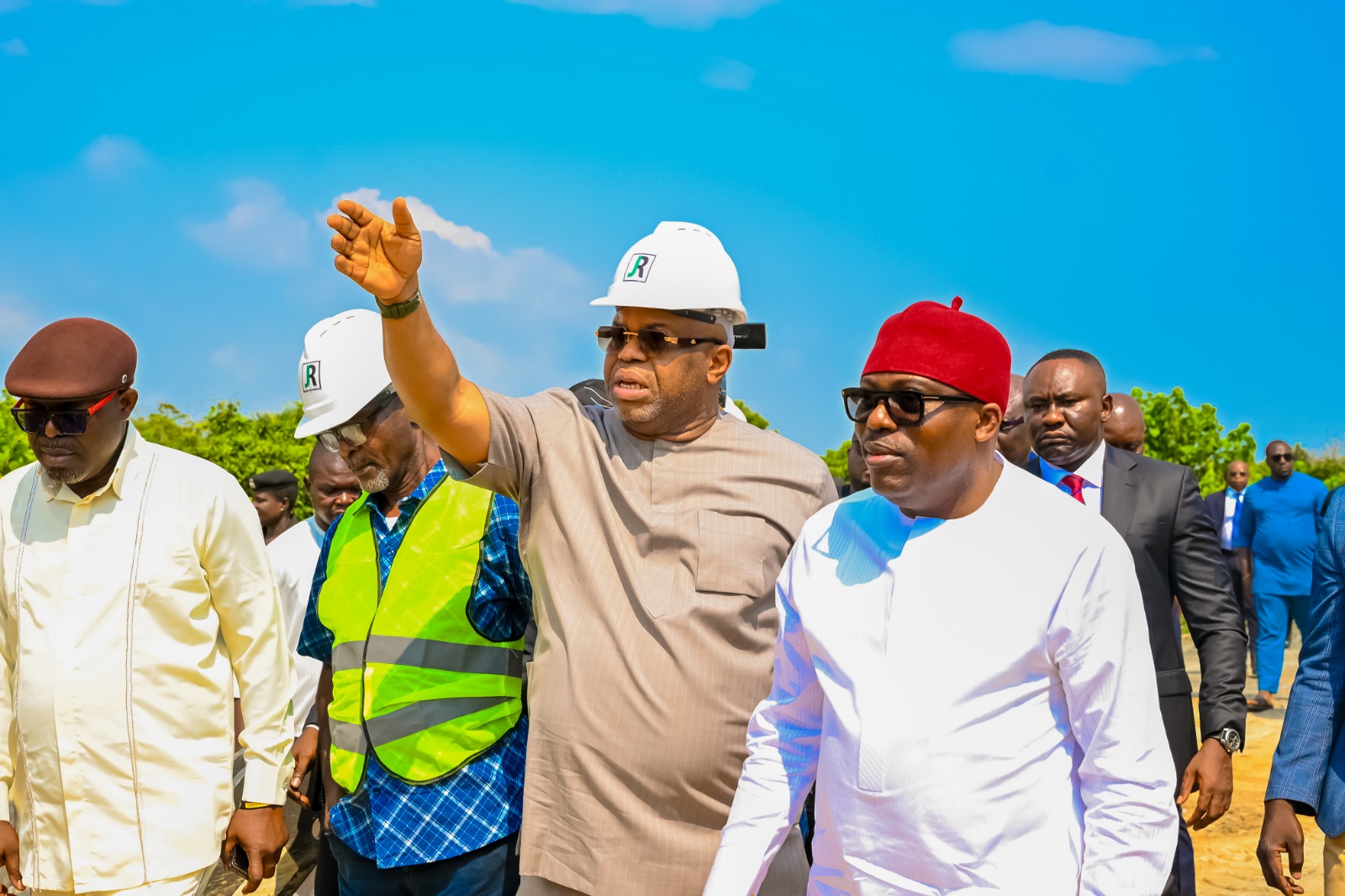
Governor of Rivers State, Sir Siminalayi Fubara, has expressed satisfaction with the level of work ongoing at the Ngo-Atlantic Oyorokoto Beach Road, beckoning on prospective investors to take advantage of the tourism potential in the project, located in Andoni Local Government Area of the state.
Governor Fubara, who inspected the project yesterday, assured that the access road to the beach will be asphalted before December and ahead of the next Tourists Beach Party.
Addressing journalists at the end of the inspection, Governor Fubara said he was on ground to see for himself the extent of work done, recalling that his administration had created the official road to the beach before the State of Emergency, after which the project witnessed some delays.
He said that since the end of the emergency rule the State Government has been meeting its own obligations to the contractors to ensure it fulfilled its promise to the people to transform the area into a tourist centre.
“We’ve been following up and meeting our own side of the obligation to ensure that one of the promises that we made to our people that day — that we want to make this place a tourist centre — comes to reality. And that is one of the main reasons we came here to see what is happening and the extent of the job that has been done,” he said.
According to Governor Fubara, the inspection tour was an opportunity to assess first-hand the progress made so far on the project.
On the beach side, the Governor said the work done was largely satisfactory, with only the asphalting of the road remaining. He gave assurance that it would be completed before December or before the next Tourists Beach Party.
He also disclosed that the other side of the road leading to the fishing ports had been inspected, with only a little culvert of about a hundred metres to the fishing centre left to be completed.
Governor Fubara said his assessment showed that the extent of work done was far better than what was previously on ground, urging investors to have no fear investing in Rivers State.
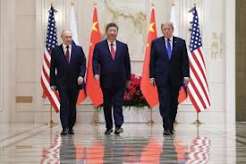
Chinese President, Xi Jinping, U.S. President, Donald Trump, and Russian President, Vladimir Putin, have made a historic commitment to strengthen global peace, reduce nuclear risks and promote strategic stability.
The world leaders made the commitment following their first-ever trilateral summit held in Shenzhen, China, yesterday.
The landmark meeting culminated in the adoption of a joint declaration, signalling renewed diplomatic engagement among three major global powers and permanent members of the United Nations Security Council.
The declaration outlined commitments to international security, United Nations reform, energy stability and dialogue on nuclear risk reduction.
Addressing the summit, Xi described the gathering as a groundbreaking diplomatic development, stressing that positive interaction among major powers was indispensable to international peace.
He recalled ?????????the historical cooperation among China, Russia and the United States during World War II, when they fought together against fascism.
“More than 80 years ago, China, Russia and the United States, the key anti-fascist forces in the world, fought shoulder to shoulder and achieved great victories, winning peace and tranquility for the world.
“History is the best textbook; we must remember history, and learn from it to shape the future,” the Chinese President said.
Xi warned that major-power rivalry could destabilise the international system, arguing that cooperation, rather than confrontation, was essential to humanity’s shared future.
He proposed four principles for managing relations among major powers: mutual respect, peaceful coexistence, win-win cooperation, and dialogue and consultation.
On mutual respect, Xi urged the three countries to respect sovereignty, territorial integrity, political systems, development choices and legitimate national interests.
He also called for greater sensitivity over contentious issues, warning against interference in domestic affairs and actions that challenge other countries’ red lines.
On peaceful coexistence, Xi maintained that the so-called Thucydides Trap was not inevitable, urging the three powers to reject confrontation and preserve international stability.
He particularly emphasised nuclear disarmament, declaring that nuclear war could never be won and must never be fought.
The joint declaration subsequently reaffirmed this principle, committing the three countries to dialogue on reducing nuclear risks and preventing nuclear proliferation.
The leaders also agreed to pursue reforms of the United Nations to strengthen its capacity to respond effectively to global challenges and advance international peace and security.
On economic cooperation, Xi advocated abandoning Cold War thinking, strengthening trade and combining the three countries’ respective advantages in resources, manufacturing and consumption.
He identified energy security as another important area for cooperation, proposing stronger coordination to maintain stable energy supplies and uninterrupted global industrial and supply chains.
The joint declaration reflected this priority, with the three countries planning to increase refined petroleum production and supply while reaffirming the importance of stable energy flows.
Another significant outcome was their common position on the authority and jurisdiction of international institutions, particularly the International Criminal Court.
The declaration stressed state consent and immunity for government officials, cautioning that the ICC and similar institutions must not abuse their jurisdiction.
On dialogue, Xi urged regular high-level engagements, open communication channels and crisis-prevention mechanisms to minimise misunderstandings and prevent disagreements from escalating.
He also called on the three countries to encourage parties involved in international conflicts to pursue negotiations and resolve disputes through political and diplomatic channels.
However, the declaration did not announce a specific agreement on ending the Russia-Ukraine war or the Iran conflict, despite their prominence in international security discussions.
Putin described the trilateral format as useful and substantive, while Xi characterised the discussions as positive, constructive and fruitful.
Trump also welcomed the opportunity, expressing optimism that cooperation among the three powers could help reduce nuclear weapons and prevent their use.
Although the summit produced no sweeping breakthrough on outstanding geopolitical disputes, its significance lies in establishing an unprecedented platform for direct engagement among three influential powers.
For the international community, the challenge now is translating the Shenzhen commitments into sustained diplomatic cooperation, practical nuclear-risk reduction and tangible progress towards global peace.
That although the historic summit offers an important diplomatic opening, its ultimate legacy will depend on Washington, Moscow and Beijing’s willingness to turn their declarations into action.
-
Business5 days ago
BSG Partiner American Coy To Invest $100m In Gas Processing
-

 Oil & Energy5 days ago
FG To Double Oil, Gas Reserves, Moves To Intensified fresh Exploration
-
Business5 days ago
Seme Customs Intercepts Live Pacific Ridley Sea Turtle
-
News15 hours ago
Parents Protest Scholarship Scheme Suspension At PAMO Varsity
-
 News13 hours ago
US Hails Nigerian Military For Rescuing 125 Kidnap Victims
-
Sports4 days ago
Fernandes Turns Down Man Utd Offer
-
Business5 days ago
159m small businesses registered on database in three years – SMEDAN boss
-
Sports4 days ago
Rivers To Host National Table Tennis Championship