
Oil & Energy
Nigeria Doubles Down On Oil After Years Of Trouble

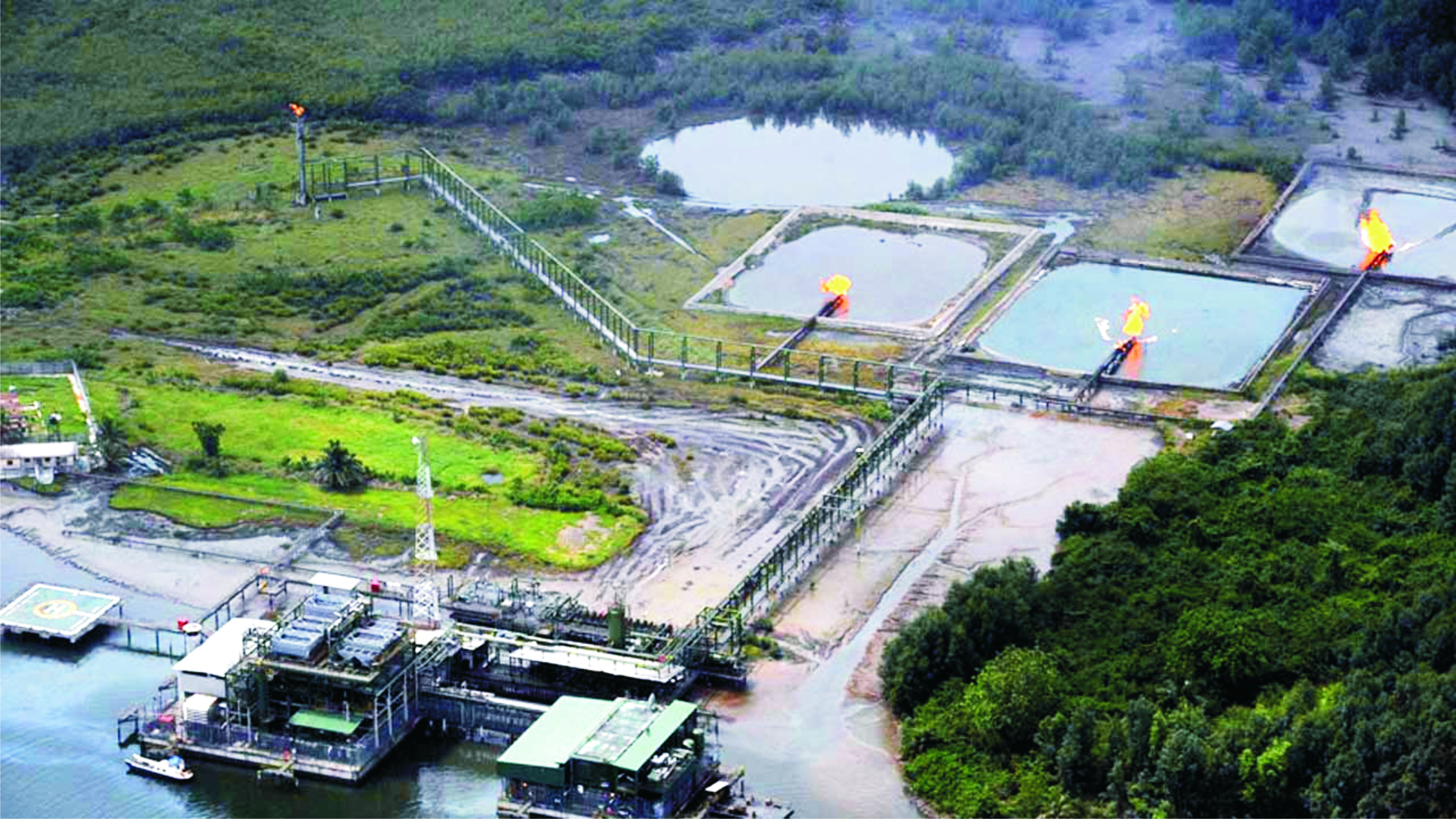
After months of stalling because of Covid restrictions and OPEC cuts, as well as significant international criticism over misplaced funds, Nigeria appears to be optimistic about the future of its faltering oil industry in a time when few others are.
The Nigerian government announced this week that it expects the country to produce 1.88 million barrels per day of crude oil in 2022, assuming a benchmark price of $57 per barrel. In the 2022-2024 Medium-Term Expenditure Framework (MTEF), just approved by the senate, the government also predicted GDP growth of 4.2 percent and inflation of 13 percent in 2022. Inflation in Nigeria decreased to 17.01 percent in August, in a country that has continued to struggle with a double-digit inflation rate since 2016.
This is a highly optimistic plan seeing as Nigeria, Africa’s largest economy, was hit particularly hard by the Covid-19 pandemic, from which it is still recovering. The Nigerian economy contracted 1.92 percent in 2020, after a growth of 2.92 percent in 2019. However, the contraction was lower than the World bank estimate of a 4 percent contraction or the IMF estimate of 3.2 percent.
The hopeful budget approval follows President Muhammadu Buhari’s signing of the Petroleum Industry Bill into law in August. This comes after two long decades of delays in approving the PIB, at a time when much of the rest of the world is moving away from fossil fuel strategies towards green policies with a focus on renewable energy. Plans to stop the sale of diesel and petroleum vehicles as well as targets for net zero-carbon emissions by 2050, across Europe and North America, make the new Petroleum Industry Act (PIA) appear somewhat outdated.
However, advocates for the Bill believe that the African continent will continue to rely on oil production for fuel well into the next decade. Related: U.S. Oil Rig CThe President stated in August at the inauguration of the Steering Committee and PIA Implementation Group that Nigeria may have lost as much as $50 billion worth of investment because of years of delays in enacting the PIA, as investors were uncertain of Nigeria’s oil and gas outlook.
There has been significant criticism over Nigeria’s failure to establish a better regulatory environment for its oil and gas industry until now, which would have increased investor interest in the region. This is particularly pertinent at a time when other African states are beginning to develop their oil industries, and further competition comes from new emerging markets such as Guyana and Suriname.
Critics also point towards the $14 billion in funds provided to develop the Niger Delta region, the heart of the Nigerian oil industry, that was ill spent between 2001 and 2019. The funds were expected to support projects to “offer a lasting solution to the socio-economic difficulties of the Niger Delta Region and to facilitate the rapid and sustainable development of the Niger Delta into a region that is economically prosperous, socially stable, ecologically regenerative and politically peaceful.”
The inability to establish an adequate regulatory environment for foreign oil and gas investors for so long, as well as government’s failure to use funds to develop its oil-rich Delta Niger region, have put the country at the bottom of the list for many investors now attracted to up-and-coming oil regions without such a difficult past in the sector.
Not to forget, Nigeria is not out of the woods, still battling with reduced OPEC+ oil quotas and the lack of investment that came alongside them. Angola, Nigeria, and Kazakhstan have failed to increase their oil production in line with the OPEC+ easing of cuts this August, primarily due to years of underinvestment in the oil-rich nations’ energy industries.
In addition, concerns around Covid-19 restrictions continue to plague Nigeria’s oil industry, as the Delta region faces yet another lockdown if cases continue to rise. The challenges of 2020 could be seen all over again should Rivers State go into lockdown, with oil firms facing difficulties in transporting personnel to and from oil fields, as well as restrictions affecting pipeline and facilities maintenance, as was the case last year.
But the Nigerian government and those left in Nigeria’s oil industry are hopeful that ongoing demand from the African continent and increasing demand from Asia for oil and gas could help boost the country’s appeal following the enactment of the PIA. With 37 billion barrels of proven oil reserves, ranking 10th in the world, Nigeria has always had significant potential to become oil superstar but has until now lacked the regulatory framework to make this dream a reality until now.
So, the question is whether the “landmark” PIA will really be as ground-breaking for Nigeria’s oil industry as once hoped. The Nigerian government holds out hope for the new Act attracting greater foreign investment in the oil-rich nation, but time is yet to tell whether oil majors are willing to take a gamble on the African state so late in the game.
Other companies that look to capitalize on higher on prices this year:
Transocean (NYSE:RIG) After having missed on earnings for a number of quarters in a row, this offshore rig giant is seeing opportunities left and right as oil majors are once again betting big on offshore oil & gas production. The increasing market for offshore operations couldn’t come at a better time for Transocean, which remains one of the more speculative plays in its sector.
At the moment, the company is looking to expand its footprint in the Gulf of Mexico. Earlier this month, it landed a $252 million firm contract for its new, ultra-deepwater drillship, the Deepwater Atlas. Transocean’s client, BOE Exploration & Production LLC looks to commence operations at the Shenandoah project in the 3rd quarter of 2022.
Suncor Energy (NYSE:SU; TSE:SU): Suncor has been in the news this week as it decided to shut down some of its oil sands production due to a mechanical disruption. Syncrude, majority owned by Suncor, produces some 275,000 bpd of crude oil from bitumen at its upgrader in Alberta, according to the latest data, which was for January to May. Despite the disruption, Suncor remains one of the most attractive oil plays in Canada, which some see as the best contrarian oil bets out there.
Suncor’s relatively low extraction costs per barrel, coupled with strict ESG standards and long lasting reserves make the company interesting for long-term oil investors.
And Suncor isn’t just focusing on its flagship Syncrude project. Two weeks ago, the company announced the plan to extend the life of the Terra Nova FPSO. Together with Murphy Oil and Cenovus, and with support from the local government, Suncor looks to extend the production life of the Terra Nova FPSO by around 10 years.
Royal Dutch Shell (NYSE:RDS.A) Shell has been the target of activist investors and environmentalists alike in 2021, and the Dutch court decision that forces Shell to reduce carbon intensity has accelerated the company’s plans to decarbonize.
This week, Royal Dutch Shell announced that it would sell off its Permian operations to ConocoPhillips for a total sum of $9.5 billion. Instead of reinvesting the entire sum in new energy projects, Shell decided to distribute $7 billion to shareholders. The Anglo-Dutch company is ramping up renewable investments around the planet in a bid to become carbon neutral by 2050. Shell’s latest investments. Its most recent bets on renewables include solar PV installations in Brazil and a major biofuel refinery in Rotterdam, the Netherlands.
By: Felicity Bradstock
Bradstock writes from Oilprice.com



By Felicity Bradstock for Oilprice.com 16
The State Commissioner for Works (Rural Roads) and Public Information, Charles Aniagwu, disclosed this at a press conference in Asaba, weekend, noting that the initiative was part of wider reforms aimed at opening up the power sector to private investors.
Aniagwu, who was accompanied by the Executive Assistant to the Governor on New Media, Felix Ofou, said the state was exploring alternative sources of electricity to support businesses, households and communities while reducing pressure on the national grid.
He said the government was particularly interested in exploiting Delta’s abundant natural gas resources for power generation, pointing to the Kwale Free Trade Zone, which is part of the state’s special economic zone, as a major opportunity for investors.
According to him, prospective investors were taken to the zone during the state’s recent economic summit to enable them to assess the availability of gas as a key raw material for electricity generation. ComparePower Rates
The commissioner explained that generating more electricity locally would not only increase supply in Delta but also free up power on the national grid for use by other consumers.
Aniagwu cited the 8.5MW Independent Power Plant located behind the state secretariat in Asaba as an example of what could be achieved through alternative power sources.
He said the facility had enabled the secretariat complex to operate independently of the national grid, thereby making the electricity that would otherwise have been consumed there available to other users.
He added that the planned 120MW partnership with Supply Power would further strengthen the state’s electricity supply capacity and provide a more reliable power base for small and medium-sized enterprises.
Aniagwu said the state government was also intervening in areas traditionally regarded as the responsibility of electricity distribution companies because inadequate power supply could no longer be allowed to constrain economic development. LearnQuantum Physics
He identified the extension of the electricity grid from Abraka towards the Ndokwa axis as one of the interventions being undertaken to connect more communities to electricity.
The commissioner, however, raised concerns over the burden placed on communities that are often required to provide transformers and other electricity infrastructure, only for distribution companies to take over the facilities and subsequently collect electricity bills without adequately accounting for the investments made by the communities.
He said the state would continue to support efforts aimed at energising communities, noting that improved electricity supply would stimulate businesses, create jobs and help tackle social problems associated with unemployment and idleness.
On regulation, Aniagwu said the government was working with the Ministry of Energy and a committee set up to develop an appropriate regulatory framework for the state’s emerging power sector. SwitchEnergy Plans
He said the proposed energy commission would be responsible for regulating new electricity producers, determining appropriate tariffs and overseeing distribution networks.
The commissioner stressed that liberalising the sector required effective regulation to protect consumers and investors, adding that decisions on power distribution infrastructure, including the use of overhead or underground lines, must take into account the peculiarities and safety requirements of each location.
He warned that power expansion without adequate regulation could expose residents to electrocution and other hazards, stressing the need to protect electricity infrastructure while ensuring consumers were not subjected to unfair pricing.
Aniagwu said the state government’s broader objective was to build an efficient and sustainable electricity market driven by private investment and capable of powering businesses, households and communities across Delta State.
-
Opinion3 days ago
Ancestorial Worship: My Take (1)
-

 News3 days ago
FG Must Address Nigerians’ Concerns On Reforms -Shettima …Warns Against Misuse of AI, Social Media
-

 Featured3 days ago
Tinubu Jets To S’Arabia For Lesser Hajj …Unveils Free Healthcare For Pensioners
-
Niger Delta3 days ago
Police Rescue Woman, 24, From Online Dating Kidnappers … Arrest Five Suspects
-
News3 days ago
FG Approves King Amachree Airport In Rivers, Sets Conditions For Construction
-

 Featured3 days ago
2027: Be Politically Neutral, Fubara Tasks Traditional Rulers
-
News3 days ago
Lawmaker Sets Sights On Assembly Return …As Mammoth Crowd Grace Flag Handover Rally
-
News3 days ago
RSG, Peter Odili Cardiovascular Hospital Move To Promote Early Breast Cancer Detection