
Politics
‘NASS, Other Parliaments Most Misunderstood Govt Organ’

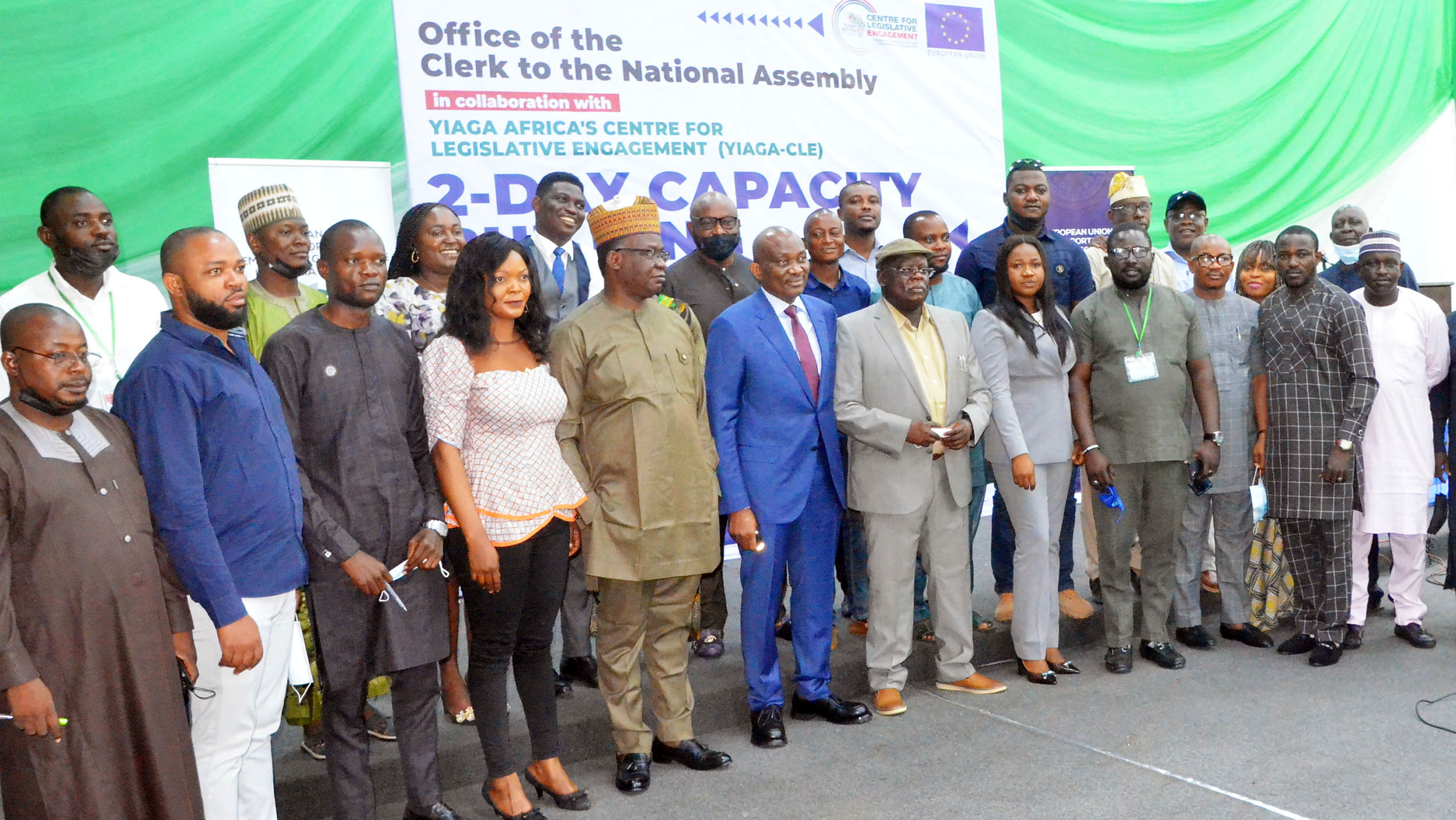
The Speaker of the House of Representatives, Femi Gbajabiamila, has said the national assembly and legislatures in other parts of the world are the most misunderstood organ of government.
Gbajabiamila made this known in Abuja on Monday at the opening of a two-day capacity-building workshop for the media committee.
He noted that the committee plays a major role in the activities of the house as it is the intermediary between the lawmakers and the public.
He added that that committee’s work goes a long way in shaping the perception that the public has of the House and correcting any misinformation that is in the public sphere.
The speaker said, “I took time out to actually look at the dictionary definition of media. If you look at that definition you will understand the importance and critical roles the house of representatives has to play in defining or reframing the narrative of the house of representatives, in giving direction to the legislature, in propelling policies of government and indeed, that is why many of you who practise in this field of endeavour, the institution is referred to as a 4th Estate of the Realm.
“The house of representatives or the national assembly in general, like every legislature in the world, is perhaps the most misunderstood institution in the world. Some of that misunderstanding is unintentional, based simply on lack of knowledge; some of that misunderstanding is intentional and sometimes it is political.
“Some of that misunderstanding, unfortunately, is pure ignorance and lack of interest in finding out the truth.
“It, therefore, falls on the media committee to begin to educate the public and change the much-needed narrative because we are not aware of the unforeseen consequences of what will happen when a small committee or an institution such as the national assembly is misunderstood or misjudged. It has the possibility of snowballing into a larger and more dangerous effect on our democracy.”
The speaker, therefore, said the committee should not be looked at from a narrow prism but as a committee “that is so strategic to the survival of our democracy; not the survival of the national assembly but the survival of democracy.”
Gbajabiamila also said, “Before I continue with my speech; it has been mentioned already but it is worth mentioning again; I want to note that the Vanguard Newspaper reporter in the House of Representatives, Tordue Salem, who has been missing for some weeks now, is yet to be found.
“I and indeed the house have been in contact with the leadership of the press corps since the matter came to light. I want to encourage the security agencies not to relent in their efforts to locate Tordue and bring him back to his family. Anything that forces one, torches on all of us.”
Chairman of the Committee, Benjamin Kalu, in his address, noted that the 21st Century media environment is dynamic and continues to develop in novel, sometimes in unanticipated ways that have serious consequences for democratic governance.
Kalu added that the new media has radically altered the way that government institutions operate, and the way that political leaders communicate and engage citizens.
He said, “The media today disseminates a tremendous amount of political content, most of which are trivial, unreliable and polarising. The media’s watchdog role, hitherto performed by trained journalists and gatekeepers such as established mass media institutions, has evolved in the face of technological innovation.
“Today, every actor with a smartphone is able to disseminate information and frame political issues in their various spheres of influence. The press has been decentralised, with oftentimes destructive outcomes. But such is the price that we must pay for the beauty that is democracy and the exchange that we must uphold for freedom of speech- the inalienable right of every Nigerian.”
However, Kalu said, “The 9th House of Representatives continues to stand for freedom of speech, recognise the value of the fourth estate of the realm to our democracy, especially in times like this, and remains committed to protecting free speech and independence of the media and its journalists.”



The commission announced the extension in a statement issued on Saturday and signed by the National Commissioner and Chairman of its Information and Voter Education Committee, Mohammed Haruna.
According to INEC, the decision followed appeals by political parties for additional time to complete the submission process through the dedicated online portal.
“The submission window, which according to the revised Timetable and Schedule of Activities for the General Election was originally scheduled to close on Saturday, 8th August, 2026, has been extended to Tuesday, 11th August, 2026,” the commission said.
In a a related development, INEC announced the suspension of PVC collection in Osun State ahead of the August 15 governorship election.
The commission said voters who applied for replacement of lost, damaged or defaced Permanent Voter Cards would have until midnight on Sunday, August 9, to print downloadable copies of their cards.
The electoral body explained that the deadline was necessary to enable it compile data on downloaded PVCs and produce final statistics on the total number of cards collected ahead of the election.
INEC said PVC collection in Osun commenced at the Registration Area level from July 22 to 28, 2026, but was extended to July 31 following complaints about large crowds and difficulties experienced by voters at collection centres.
The exercise subsequently moved to the local government level and ran from August 1 to 7.
The commission also disclosed that replacement downloadable PVCs had been made available to voters in Odo-Otin and Ife Central Local Government Areas following the theft of cards during attacks on the two collection centres.
It stressed that the stolen cards could not be used to vote.
INEC reassured Osun residents of its preparedness for the August 15 governorship election.
“The commission reiterates that the stolen cards cannot be used to vote.
“INEC reassures the people of Osun State of its readiness to conduct a free, fair, credible and inclusive governorship election on 15th August, 2026,” the statement said.
The commission said the deadline, initially set for Saturday, 8 August, has been extended to Tuesday, 11 August 2026, following appeals from political parties for more time.
INEC also announced that the window for voters who applied to replace lost, damaged or defaced PVCs to download their replacement cards will close at midnight on Sunday, 9 August.
The move is to enable the commission compile final PVC collection figures ahead of the 15 August Osun governorship election.
INEC said replacement downloadable PVCs have also been provided to affected voters in Odo-Otin and Ife Central Local Government Areas after hoodlums carted away cards from two collection centres, stressing that the stolen cards cannot be used to vote.
The commission reaffirmed its readiness to conduct a free, fair, credible and inclusive election in Osun State.
Gov. Kefas made the remarks over the weekend at the Federal Medical Centre (FMC), Jalingo, during the flag-off of the second phase of the Renewed Hope Medical Outreach in Taraba State, organised as part of activities marking Prof. Yilwatda’s 58th birthday.
The governor commended Prof. Yilwatda for choosing to mark his birthday by providing medical care to people in need.
“What Professor Nentawe did is a powerful demonstration of what leadership should be,” Gov. Kefas said.
He assured that his administration would continue to support initiatives that complement government efforts to improve healthcare delivery and the wellbeing of residents.
Speaking at the event, Prof. Yilwatda called on Nigerian leaders to embrace the culture of giving and use their positions to touch the lives of the less privileged.
He said his decision to celebrate his 58th birthday in Taraba State was deliberate and informed by the needs of underserved communities, particularly people who face difficulties accessing healthcare because of distance and financial constraints.
According to him, the intervention followed a needs assessment and was extended across the three senatorial districts of the state.
He said the exercise commenced on August 3 at Takum General Hospital and covered the Federal University Teaching Hospital, Wukari; First Referral Hospital, Sunkani, Ardo-Kola Local Government Area; General Hospital, Bali; General Hospital, Gembu; and FMC Jalingo.
Prof. Yilwatda said the intervention provided medical services to thousands of beneficiaries, including people who required surgical procedures.
He said sustainable national development could only be achieved when strong institutions placed Nigerians at the centre of development.
“Leadership is about service,” he said, urging political and public leaders to make giving back to society an important part of their responsibilities.
He reaffirmed his commitment to serving Nigeria and its people, saying his personal vision was to make every day of his life useful to humanity.
“Every day that I live, the vision is: let it be useful to humanity,” he said.
The Taraba State Commissioner for Health, Dr. Bordiya Buma, commended the initiative, saying it was consistent with the Renewed Hope agenda and efforts to strengthen healthcare delivery in the state.
Dr Buma said the second phase followed the successful completion of the first phase, which was conducted simultaneously in six local government areas, with two LGAs selected from each of the three senatorial districts.
According to him, more than 10,000 patients were attended to during the first phase, including people with medical and surgical conditions.
He disclosed that 327 general surgeries, 71 eye surgeries and 575 dental procedures were carried out during the exercise.
The commissioner expressed appreciation to President Bola Tinubu for the Renewed Hope Medical Outreach and thanked Prof. Yilwatda for supporting the initiative and choosing Taraba State as a beneficiary.
The Minister of Health and Social Welfare, Prof. Muhammad Ali Pate, also commended Prof. Yilwatda for choosing Taraba State to mark his 58th birthday through a medical outreach.
Prof. Pate said making healthcare the centrepiece of the birthday celebration was significant because health affects everyone.
-

 News4 days ago
RSG Targets Nine Million Residents in Mosquito Net Distribution Campaign
-

 Oil & Energy4 days ago
Aiyedatiwa Signs New Electricity Bill
-

 Oil & Energy4 days ago
NLNG Commissions Research And Innovation Centre In RSU
-

 Maritime4 days ago
Marine Minister Commends President Tinubu On NPERA Bill Assent
-

 News4 days ago
KenPoly Holds Eight Convocations, August 29
-

 News4 days ago
RSG Begins Another Phase of Projects Commissioning Today
-

 News4 days ago
RMAFC Completes Revenue Sharing Review, Proposes New Pay
-

 Maritime4 days ago
NAGAFF Petitions IGP Over Alleged Maritime Police Harassment