Business
SEC Frowns At Resurgence Of Ponzi Schemes

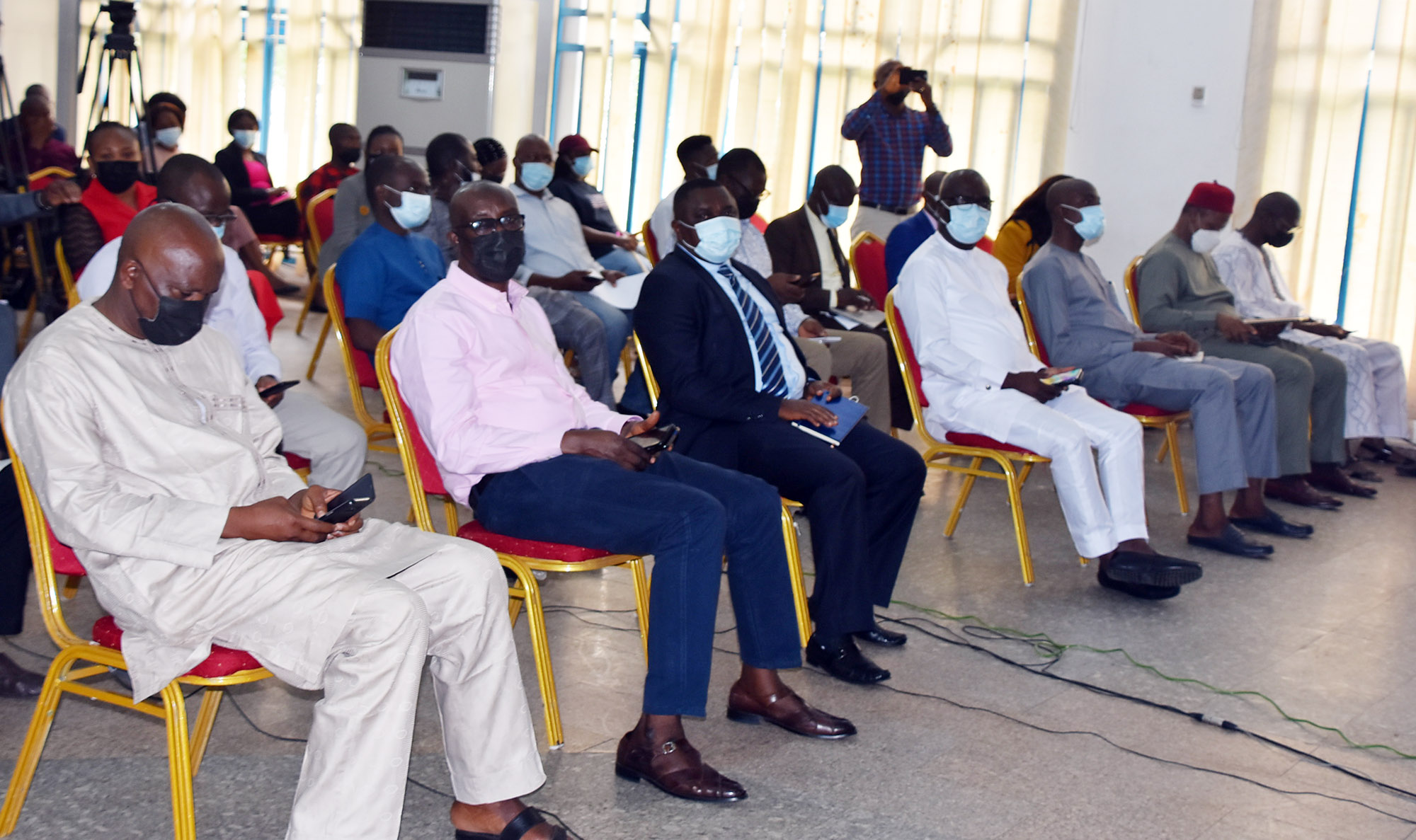
The Securities and Exchange Commission has frowned upon the resurgence of Ponzi schemes and illegal fund managers in the country’s financial sector.
The Director-General of SEC, Mr Lamido Yuguda, made the observation of the development at an enlightenment workshop with the staff of the Federal Ministry of Finance, Budget and National Planning on in Abuja over the week.
Yuguda said that the unlawful schemes had continued to enjoy massive patronage of the populace and remained a source of concern for regulators in the financial sector.
According to him, the commission was poised to continue to apply measures and seek the cooperation of relevant stakeholders toward combating the activities of these Ponzi schemes.
He expressed regrets that the upsurge of the schemes had undermined the reputation of the financial markets and dampened investors’ confidence, among other things.
“SEC firmly believes that the country’s capital market can attain its potential if market operators and participants contribute their respective quotas to the growth”, he said.
He also explained that SEC was committed to always ensure and maintain an environment that was enabled by the appropriate regulatory framework, timely and affordable access to market.
“The commission is also committed to zero tolerance for infractions, heightened investor confidence and awareness, innovative product development and good governance practice”, he said
“There is the need to restore investor confidence and improve the participation of retail investors in the market.
He further pointed out that the demography of investors in the country’s capital market showed that the young population do not participate in the capital market, and only a few Nigerians invested in the capital market.
The situation, he said, created a huge challenge to the market growth and the commission and added that it was striving to change the narratives by instilling a fair, transparent and orderly market.
The Minister of Finance, Budget and National Planning, Zainab Ahmed, represented by Mr Stephen Okon, Director Home Finance, urged investors to take advantage of the various initiatives in the market.



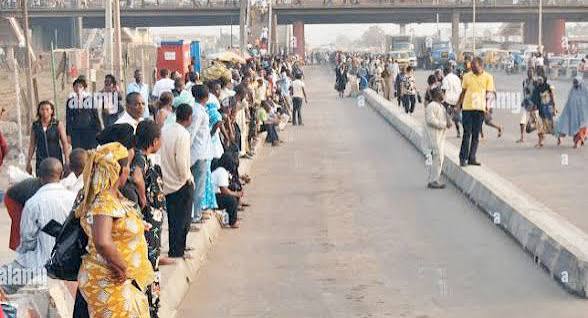
Some Commercial drivers in Port Harcourt have said that the Federal Government’s N1,350 fuel discount is yet to reduce their daily operating cost.
A cross session of commercial drivers who spoke to The Tide correspondents in Port Harcourt said they are yet to feel the impact of the government discount, adding that most filling stations in the city are even selling above the pump price
A driver Jude Ogbo who operates the mile 1 Rumuokoro axis of Port Harcourt said plies the discount has not reflected in his daily fuel expenses.
“Since the discount was announced, many filling stations still sell at the old price. When you go there, you discover they sell you two litres at the price of one. For now, we have not seen any reduction,”_ he said.
Another commercial driver, Comrade Ishmael Uzeho who operates within the Port Harcourt metropolis, said the discount is not being implemented across the country.
“How has the discount affected us? I will say it has not. Many stations are not working. Only NNPC is working and that is just one person in the whole country. If government really wants to help, let the fuel price go down properly,”_ he said.
Uzeho added that if the price of fuel goes down, transport fares will also go down. He noted that his route fare has remained at N500.
On his part, Mr. Moses Dapa, Supervisor at Sam Jaja Foundation Transport Company, said the company has not increased its fares despite the high cost of fuel.
“We are still running normal price. We charge N2,000 and N5,000 depending on the destination. We will not increase our price. I don’t know about other parks, but for Sam Jaja, we are maintaining normal price,”_ Dapa said.
He appealed to passengers to understand that drivers are not using high fuel price as an excuse to charge excessive fares.
Other drivers who spoke said the federal government should monitor the NNPCL retail stations to ensure that the directive is implemented.
Recalled that The Federal Government in abid to reduce transportation cost in the country had announced a 30-day margin discount at NNPC Retail stations across the country from October 1 to 31,
However investigation revealed that the policy is yet to affect transportation cost in the country.
By; Stephens Sopakriba and Saint Davies
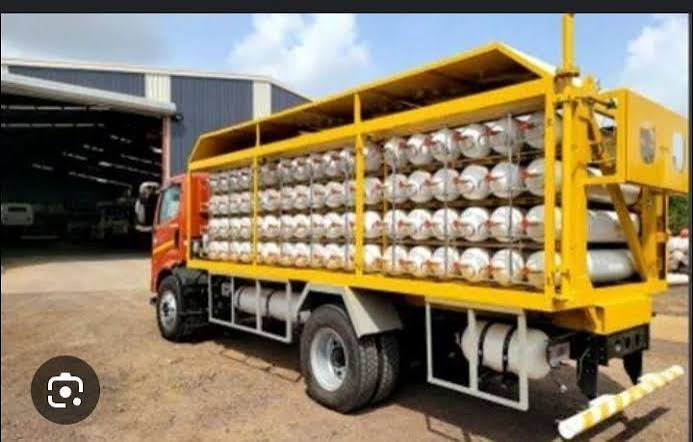
In a press statement released to The Tide’s source on Friday in Abuja, the group said Nigeria had a significant resource advantage due to its vast natural gas reserves.
“At a time when global energy markets face unprecedented volatility and rising operational costs, Nigeria stands on a massive resource advantage with its vast natural gas reserves,” the group said.
Highlighting this potential, Alfa Designs urged the nation to move past complaints over energy costs and aggressively embrace Compressed Natural Gas (CNG) as a sustainable engine for economic growth.
While federal policy adjustments have sought to cushion the impact of global energy shocks, industry experts emphasised that long-term relief hinges on a rapid, nationwide transition to gas.
“Transitioning away from expensive traditional petroleum products promises to ease the financial burden on ordinary citizens.
“It will also reposition Nigeria as an attractive industrial hub capable of drawing foreign direct investment and driving job creation,” it said.
To demonstrate the practical feasibility of this transition, the group said it recently partnered with a global Original Equipment Manufacturer (OEM) to lower the entry barriers for commercial drivers.
“By negotiating directly with the manufacturer, we reduced the total cost of acquiring and installing a CNG conversion kit for commercial tricycles (commonly known as Keke NAPEP) from up to N700,000 down to under N450,000.”
The group said this shift offers dramatic immediate financial benefits for local operators, with petrol currently selling at roughly N1,390 per liter.
It said that, in comparison, at a CNG equivalent price of about N98 per liter, a daily commercial driver using 10 liters of fuel reduces its daily energy expenditure from N13,900 to N3,980.
“This represents a daily net savings of N9,920, or more than 71 per cent.
“Over a standard 26-day working month, drivers save over N257,000, allowing them to fully recover the cost of the CNG conversion in less than 46 operational days.”
The company further stated that when scaled nationally, the economic implications are monumental.
“Nigeria consumes approximately 50 million liters of gasoline daily, costing roughly N69.5 billion per day.
“A nationwide 71 per cent reduction in fuel expenditure would generate daily national energy savings of N49.6 billion.
“On an annualised basis, this shift equates to approximately N18.1 trillion, or $13.5 billion, kept within the domestic economy.”
The group added that those recurring national savings would offer a vital mechanism to help address Nigeria’s estimated $2.3 trillion infrastructure deficit.
It said reinvesting those funds into the economy helps eliminate the 30 to 40 per cent operational overhead currently consumed by imported fossil fuels.
“The resulting boost to corporate margins expands the national tax base, generates reliable user-fee revenues to make major transit projects bankable, and creates a self-sustaining financial cycle,” it said.