Connect with us

Oil & Energy

New Electricity Line To Connect Nigeria, Three Others  – FG

Published

on

The Federal Government has announced that the transmission line being constructed under the West Africa Power Pool North Core Project would connect Nigeria to the Republics of Niger, Burkina Faso and Benin.
It announced this last Friday through the Transmission Company of Nigeria (TCN), whose acting Managing Director, Sule Abdulaziz, doubles as chairman of the Executive Board of WAPP.
Abdulaziz said the pool was committed towards completing the project, as the transmission line would link Nigeria to the three countries.
He spoke at the 52nd WAPP Executive Board Meeting taking place as part of the 16th Session of the WAPP General Assembly in Ouagadougou, Burkina Faso.
He said, “The WAPP North Core Project that seeks to interconnect Nigeria, Niger, Burkina Faso and Benin is in the implementation phase with the procurement process underway.
“The project is expected to be completed by 2023 and is part of efforts of the WAPP to integrate the power systems of West African countries by delivering priority projects, which would ensure that all 14 countries in the mainland of ECOWAS are eventually interconnected”.
According to Abdulaziz, other projects undertaken within the West African subregion include the construction of the 330kV Volta (Ghana)-Lome ‘C’ (Togo)-Sakété (Benin) interconnection line that has been completed and will soon be energised. 
He said the WAPP Cote d’Ivoire–Sierra Leone–Guinea project would also be inaugurated soon.
The TCN boss said the WAPP had continued to make efforts towards the effective operationalisation of the ECOWAS regional electricity by harmonising the market rules and agreement of participants on regulatory issues.
This, he said, would ensure flexibility in the power system and increase trading opportunities for market participants, among others.


Continue Reading

Oil & Energy

Nigeria Lost 3.3m Barrels To Oil Thieves In 2025 –Report

Published

on

Nigeria is said to lost 3.33 million barrels of crude oil to theft in 2025, with nearly two-thirds of the reported losses occurring in the final three months, as the Nigerian Upstream Petroleum Regulatory Commission’s revenue collection declined by N2.14tn, The PUNCH reports.
The commission’s 2025 annual report, released last Thursday, showed that crude oil and gas revenue collections fell from N12.56tn in 2024 to N10.42tn in 2025, representing a 17.03 per cent decline, despite increases in receipts from gas flare penalties, signature bonuses and concession rentals.
Data from the commission’s 2025 report showed that crude theft rose sharply in the fourth quarter, when 2.19 million barrels were recorded. This represented 65.8 per cent of the total volume reported for the year and was almost five times the 440,434 barrels recorded in the third quarter.
The commission recorded 896,471 barrels of crude theft in the first quarter, while its second-quarter report showed a negative figure of 200,400 barrels, which it attributed to excess volumes identified during reconciliation.
The combined quarterly figures brought reported losses for the year to approximately 3.33 million barrels.
The report read, “Nigeria recorded 896,471 barrels of crude oil theft in the first quarter.
The second quarter recorded a negative 200,400 barrels, which the commission described as an excess volume in its reconciliation. Reported theft stood at 440,434 barrels in the third quarter. The fourth quarter recorded 2.19 million barrels, the highest quarterly volume of the year.”
The losses came despite the huge financial burden of securing the country’s petroleum assets even as the Nigerian National Petroleum Company Limited reported energy security costs of N8.67tn in 2025, compared with about N3.1tn in 2024.
The expenditure reflects the cost of interventions to protect oil and gas infrastructure and support national energy security, although the entire amount cannot be attributed solely to combating crude theft.
The persistence of theft alongside the rising security costs raises questions about the effectiveness of measures to protect production facilities and crude evacuation infrastructure.
The losses also represent crude that could otherwise have contributed to government revenue, export earnings and the supply of feedstock to domestic refineries.
Despite the reported theft, Nigeria produced 541.08 million barrels of crude oil and blended condensate in 2025. Quarterly production stood at 132.70 million barrels in the first quarter, 137.69 million in the second, 137.45 million in the third and 133.23 million in the fourth quarter. The country also produced 48.52 million barrels of unblended condensate during the year.
On revenue, the report said oil and gas royalties, including Project Gazelle and NNPC receivables, remained the largest contributor, generating N8.97tn in 2025, compared with N11.08tn in 2024. The decline of N2.11tn represented a 19.03 per cent reduction.
 “The total approved budget for 2025 was N645,462,335,500.80, with total income of N342,814,462,174.97 and total expenditure was N304,533,385,103. Total revenue generated was N10,424,478,448,682.40, which is 63 per cent of projected revenue of N16,538,206,608,738.00.
“357 oil spill incidents were reported. 49.5 per cent of the spills were a result of sabotage. There was an increase of 64.74 per cent in revenue in 2024 over 2023 and a decrease of 20.53 per cent in 2025 over 2024 revenues,” the report added.
However, receipts from gas flare penalties increased from N391.26bn to N611.42bn, representing a 56.27 per cent rise.
Signature bonuses also increased by 44.2 per cent, from N369.58bn in 2024 to N532.94bn in 2025, while concession rentals rose by 61.1 per cent, from N23.71bn to N38.19bn.
Miscellaneous revenue increased from N35.20bn to N46.44bn. Conversely, royalty by price declined from N313.72bn to N213.41bn, while lease renewal receipts fell sharply from N230.73bn to N8.23bn.
The commission’s total income from cost of revenue collection and internally generated revenue, however, increased by 21.85 per cent to N342.81bn in 2025, compared with N281.34bn in 2024.
The report showed that cost of revenue collection contributed N335.45bn, while internally generated revenue accounted for N7.36bn.
The commission generated N10.42tn against a projected revenue target of N16.54tn, representing 63 per cent performance.
Beyond crude theft, the report documented 357 oil spill incidents during the year, with sabotage accounting for 49.5 per cent of the reported cases.
Continue Reading

Oil & Energy

Navy Uncovers 117,000 Litres of Stolen Crude Oil In Rivers 

Published

on

The Nigerian Navy Forward Operating Base (FOB) Bonny, has deactivated three illegal refining sites in Owokiri Community, Ogu-Bolo Local Government Area of Rivers State, uncovering approximately 117,000 litres of stolen crude oil.
The Director, Naval Information, Captain Abiodun Folorunsho, disclosed this in a statement, at the weekend.
Folorunsho said the operation was conducted following credible intelligence indicating the activation of new illegal refining sites in the area.
The statement said “During the operation, the naval team discovered 16 dugout pits, nine of which contained approximately 115,000 litres of suspected stolen crude oil.
“An additional storage tank contained about 2,000 litres, bringing the total volume to approximately 117,000 litres. Four other pits contained water, while three were freshly excavated. The identified sites, pits and products were handled in accordance with extant regulations.”
The naval spokesperson said the operation underscored the Nigerian Navy’s sustained commitment to combating crude oil theft and illegal bunkering through intelligence-driven operations.
He added that by dismantling illegal refining infrastructure and disrupting criminal networks, the Service continued to protect critical oil and gas assets and safeguard the nation’s economic interests.
Continue Reading

Oil & Energy

FG Targets 2,000 New CNG Stations, Revives Abandoned State House Facility

Published

on

The Federal Government has unveiled plans to establish 2,000 additional Compressed Natural Gas (CNG) refuelling stations nationwide, as part of intensified efforts to reduce transportation costs and accelerate Nigeria’s transition to cheaper, cleaner energy.
The government also disclosed that over 30,000 vehicle conversion kits would arrive in the country this week to boost the conversion of petrol-powered vehicles to CNG ahead of the Christmas travel season.
Chairman of the Presidential Initiative on Compressed Natural Gas and Electric Vehicles (Pi-CNG & EV), Barrister Ismael Ahmed, disclosed this at the inauguration of a newly rehabilitated CNG refuelling facility in Karu, Abuja, formerly an abandoned petrol station belonging to the State House.
Ahmed said the expansion programme followed President Bola Ahmed Tinubu’s directive for the establishment of 1,500 additional CNG stations in February and another 500 in August, with the facilities expected to become operational between this year and early 2027.
According to him, Nigeria currently has 106 operational CNG stations, while another 170 are under development or awaiting regulatory approvals.
He explained that the initiative had progressed beyond its experimental phase, with the government now concentrating on expanding infrastructure sufficiently to serve the country’s estimated 220 million population and 12 million vehicles.
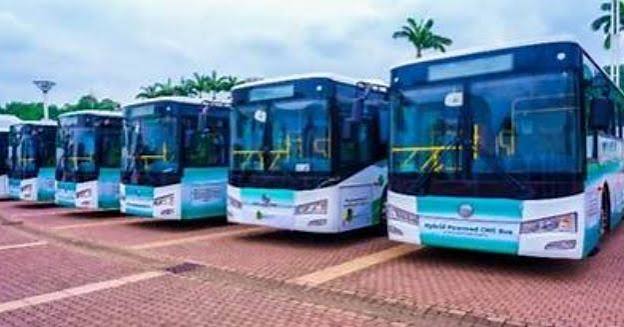
Ahmed said the introduction of CNG-powered buses had already reduced transportation fares by between 30 and 40 per cent on some routes in Abuja, Lagos and the Kano-Katsina corridor.
He cited the Kano-Katsina route, where passengers who previously paid between N3,000 and N4,000 now pay approximately N1,500 on CNG-powered buses.
Also speaking, the Permanent Secretary, State House, Temitope Fashedemi, said the conversion of the abandoned petrol station into a functional CNG facility demonstrated the Tinubu administration’s commitment to promoting affordable energy while stimulating private investment in gas infrastructure.
Fashedemi explained that the facility was rehabilitated through a partnership involving the State House, Pi-CNG & EV and Rollin Energy Limited, without any financial expenditure by the State House.
He said the government deliberately released the abandoned facility for conversion to demonstrate the commercial viability of CNG investments and address the shortage of refuelling infrastructure, which had remained a major obstacle to wider adoption.
According to him, the government’s role is to provide an enabling environment for private businesses rather than directly undertake the establishment and management of commercial refuelling stations.
“All the filling stations you see around, are they owned by government? No. They are owned by people and business operators. The earlier existing and prospective business people recognise this as an opportunity and partner with Pi-CNG to establish these facilities, the better,” he said.
Fashedemi disclosed that the State House had already begun incorporating CNG technology into its fleet, with about 10 recently acquired JAC vehicles equipped with hybrid systems, alongside some shuttle buses operating within the Presidential Villa.
He further stated that arrangements were underway to extend the conversion programme to interested State House personnel whose private vehicles meet the necessary technical requirements.
“We are demonstrating that we are walking the talk of Mr President. In the next few weeks, a number of our staff will be bringing their vehicles here for conversion, subject to the eligibility of the vehicles”, he said.
The Permanent Secretary stressed that vehicles would undergo technical assessments before conversion to ensure compliance with safety and operational specifications.
He described Nigeria’s abundant natural gas reserves as a strategic economic advantage that should be harnessed to provide motorists and transport operators with cheaper alternatives to petrol and diesel.
Fashedemi noted that the removal of petrol subsidy by President Tinubu, despite the initial economic difficulties it generated, had also created an opportunity to accelerate the country’s transition to alternative energy sources.
He disclosed that the newly inaugurated facility had undergone more than a week of trial operations, during which motorists in the surrounding communities received CNG free of charge before the commencement of commercial services.
Chief Executive Officer of Rollin Energy Limited, Mubarak Umar Danbatta, said the station had the capacity to refuel approximately 150 vehicles daily, including motorcycles, depending on cylinder sizes and operating pressure.
Danbatta explained that the facility featured an integrated system incorporating compressors, dispensers and other essential equipment, with double-nozzle dispensers allowing vehicles to refuel from both sides.
Describing the project as the company’s second collaboration with Pi-CNG, following an earlier facility inaugurated on May 29, 2024, Danbatta said the company was targeting nearly 15 operational CNG refuelling facilities nationwide before the end of 2026.
Continue Reading

Trending