Connect with us

Maritime

Arbitration Panel Orders INTELS To Pay 624 Sacked Workers

Published

on

President General of Maritime Workers Union of Nigeria (MWUN), Comrade Adewale Adeyanju, says the Industrial Arbitration Panel (IAP) has ordered the Integrated Logistics Services Limited (INTELS) and Associated Maritime Services (AMS) to pay the full entitlements including gratuities and terminal benefits of the 624 sacked members of the union.
The workers were sacked by INTELS and its subsidiary, AMS between late 2020 and early 2021.
Comrade Adeyanju disclosed this in a statement made available to The Tide in Lagos, recently. 
He said the ruling of the arbitration panel was communicated to the union through a letter dated September 13, 2021, by Mrs. O. U Akpan, Director, Trade Union Services and Industrial Relations, on behalf of the Minister of Labour, Dr. Chris Ngige.
According to the statement, the IAP, constituted by the Minister of Labour, after its findings, ruled that the sum of N300,000 be used as a mode of calculation of extra gratuity to be paid for each completed year of service to redundant workers who have completed five years of service and above.
The panel also ruled that, “All the contract staff/ employees seconded by the 3rd party to the 2nd party under their labour management contract namely; 599 contract staff affected by redundancy exercise conducted on November 30th, 2020, 8 contract staff affected by redundancy exercise conducted on 2nd February 2021, and 17 contract staff affected by the redundancy exercise conducted on June 15, 2021, are employees of the 2nd party, Intels Nig. Ltd.
“All the contract staff employees seconded by the 3rd party under their labour management contract namely; 599 contract staff affected by the redundancy exercise conducted on November 30th, 2020, 8 contract staff affected by redundancy exercise conducted on 2nd, April 2021 and 17 contract staff affected by redundancy exercise conducted on June 15, 2021, by 2nd and 3rd parties, are each entitled to be paid extra gratuity in addition to their terminal benefits by the 2nd party through the 3rd party, forthwith.
“The mode of calculation of extra gratuity to be paid by the 2nd party through the third party shall be: N300,000 for each completed year of service to redundant workers who have completed five (5) years of service and above, forthwith”.
The statement further said that the panel ruled that the lump sum of N1.5 million be paid to redundant staff/workers who have completed 1-4 years of service, forthwith.
“Redundant workers with less than one year but have spent a minimum of six months in service shall be paid on a prorated basis, forthwith.
“The contractual relationship between the 2nd and 3rd parties still subsist in all matters relating to and concerning this Award in the proceedings”, the statement added.

By: Nkpemenyie Mcdominic, Lagos

Continue Reading

Maritime

NCS Holds Free Medical Outreach For 2,000 Daura Residents 

Published

on

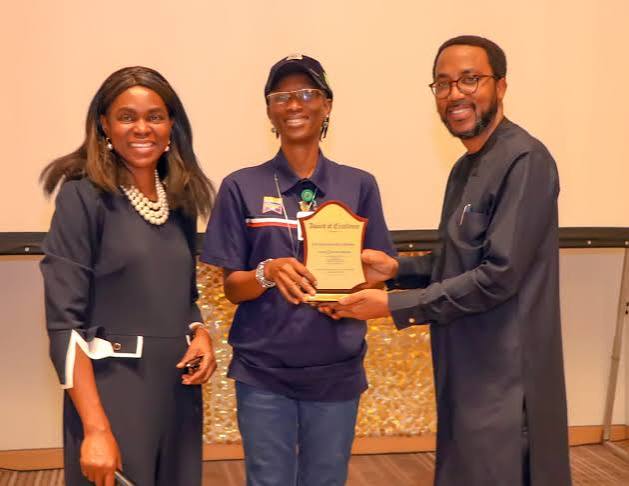
The Nigeria Customs Service (NCS) has held its 7th Retreat Medical Outreach in Daura, Katsina State,
Customs said the Free medical outreach is aimed at providing free healthcare services to residents of the area.
Speaking during the event, Deputy Comptroller-General of Customs, Ahmad Tijjani-Abe, said the programme would provide general medical consultations, dental care, eye and ear care, as well as minor surgical operations for beneficiaries.
Tijjani-Abe said medical teams deployed for the exercise would also provide free medications to patients attending the outreach.
He added that the service would visit schools within the area to deworm students and distribute health kits and mosquito nets to help prevent malaria among children.
Also Speaking, Dr Ethelbert Ikechukwu, Medical Team Leader of the outreach said the exercise was part of the initiative of the Comptroller-General of Customs, which had been carried out in different parts of the country over the years.
According to him, the programme is designed to support communities where customs personnel operate by offering free medical consultations and medications to residents.
Ikechukwu further explained that patients whose conditions could not be fully managed at the outreach centre would be referred to appropriate medical facilities for further treatment.
Ikechukwu urged members of the public to take advantage of the exercise, noting that the medical teams comprised highly qualified healthcare professionals.
The outreach targets about 2,000 patients across various areas of medical care.
Continue Reading

Maritime

Lagos Records Major Gains In Road, Rail, Water Transport —Osiyemi

Published

on

The Lagos State Commissioner for Transportation, Mr Oluwaseun Osiyemi, says the Babajide Sanwo-Olu led administration has made significant progress in developing road, rail and water transportation infrastructure across the state.
Osiyemi made this known during the 2026 Ministerial Press Briefing in Lagos to commemorate the third year of Gov. Babajide Sanwo-Olu’s second term in office.
He said the government remained committed to providing residents with an integrated multimodal transportation system that is seamless, safe, affordable, sustainable and inclusive.
According to him, the administration will continue to engage residents and invest in transport infrastructure to enhance mobility and support socio-economic development.
“Our promise to Lagos residents is to continue to provide and plan the best transportation system for all, in a manner that will boost the socio-economic development of the people and the state,” he said.
Osiyemi said the state was upgrading public transport infrastructure, including Bus Rapid Transit corridors and terminals, Quality Bus Corridors, rail projects and waterways facilities.
He said the Bus Rapid Transit BRT infrastructure from Doyin-Orile to Mile 2 along the Lagos-Badagry Expressway was 84 per cent completed, while the Iyana Ipaja Bus Terminal had reached 28 per cent completion.
According to him, the projects will improve mobility, reduce traffic congestion, enhance affordability and safety, and stimulate economic development.
Osiyemi said the Lagos Metropolitan Area Transport Authority was implementing several Quality Bus Corridor projects to improve mass transit efficiency and reduce travel time.
He listed the ongoing corridors as Mile 2, Alapere-Ketu, Ojuelegba, Cele and Abule Egba.
He said the projects feature dedicated and regulated bus lanes, modern shelters and terminals, improved pedestrian walkways and crossings, as well as traffic signal and junction improvements.
On rail transportation, the Commissioner said Phase II of the Lagos Rail Mass Transit Blue Line would extend the corridor from Mile 2 to Okokomaiko, with track construction, station development and power installation ongoing.
He said the 37-kilometre Red Line rail project from Marina through Oyingbo to Agbado was being strengthened with the procurement of 24 new coaches arranged in three sets of eight-coach trains.
According to him, each train set will carry more than 500 passengers.
He added that a feasibility study was ongoing for Phase II of the Red Line from Oyingbo to National Theatre to connect with the Blue Line.
Osiyemi said the 68-kilometre Green Line rail project would connect Marina to the Lekki Free Trade Zone through Victoria Island, Lekki, Ajah and Sangotedo, with about 17 stations.
He said the state had signed a Memorandum of Understanding MOU with China Harbour Engineering Company for the project.
According to him, the Green Line is designed to transport 35,000 passengers per hour, while the Federal Executive Council has approved funding for Phase I.
On water transportation, Osiyemi said the Lagos Ferry Services was nearing completion of a boat maintenance and dry dock facility at the Mile 2 Ferry Terminal.
He said boat trailers were also being constructed to facilitate dry-docking and repairs.
The commissioner added that solar-powered portable office cabins were being installed at Ijede, Ebute-Ero and Liverpool jetties to improve working conditions for staff.
He said the CMS Pontoon Jetty had also been upgraded to enhance passenger boarding and disembarkation.
By: CHINEDU WOSU
Continue Reading

Maritime

Customs Harps On Human-led AI Governance –As Customs Digital Reforms Generate N230Bn

Published

on

The Comptroller-General of the Nigeria Customs Service, Adewale Adeniyi, has called for a human-centred approach to digital transformation, warning that the success of artificial intelligence and emerging technologies will ultimately depend on ethics, leadership, and institutional accountability.
Adeniyi made the remarks while delivering the keynote address at the 4th Biennial International Conference organised by the Faculty of Communication and Information Sciences of University of Ilorin in collaboration with the Faculty of Philology, RUDN University.
The conference, themed “Disruptive Technology: Human and Artificial Intelligence in the Digital Economy,” brought together communication scholars, technology experts, researchers, policymakers, and heads of government agencies to examine the growing influence of artificial intelligence, digital innovation, and emerging technologies on governance, trade, education, and economic development.
Addressing participants at the University of Ilorin Main Auditorium last week , meAdeniyi argued that while artificial intelligence is reshaping institutions and economies globally, technology must remain accountable to society and aligned with public interest objectives.
“The digital age is, in the end, a human story, and the real test of our generation is not how powerful our machines become, but how wisely our societies choose to use them,” he said.
He noted that the world had already moved beyond the stage of anticipating disruption, stressing that digital payments, e-commerce platforms, artificial intelligence systems, and smart technologies had fundamentally altered global economic and governance structures.
According to him, the responsibility of public institutions is not merely to adopt new technologies, but to ensure that innovation strengthens transparency, efficiency, and public trust rather than weakening accountability mechanisms.
Drawing from the ongoing modernisation reforms within the Nigeria Customs Service, Adeniyi highlighted the deployment of the B’Odogwu Unified Customs Management System as a major milestone in the Service’s digital transformation agenda.
He disclosed that the platform generated more than ?230 billion at the PTML Command within its first eight months of deployment, while significantly improving cargo processing timelines and inter-agency coordination.
According to the Customs boss, compliant traders now complete cargo clearance procedures in less than eight hours under the digital platform, representing a major improvement in trade facilitation efficiency.
“The partnership, not the rivalry, between human and artificial intelligence is where the real value lies,” Adeniyi stated.
He maintained that while artificial intelligence can enhance operational efficiency, risk management, and data-driven decision-making, human expertise and institutional leadership remain indispensable in governance and enforcement operations.
“Technology changes processes; leadership and expertise still deliver the results,” he added.
The CGC further advocated deeper collaboration between universities, research institutions, and government agencies to develop practical, locally relevant solutions to emerging governance and digital economy challenges.
He urged academic institutions to move beyond theoretical scholarship and become active contributors to innovation, policy development, and institutional reform.
Adeniyi identified several areas where academia could support Customs modernisation efforts, including artificial intelligence-driven risk targeting systems, digital compliance mechanisms, governance of cross-border data flows, and public trust communication strategies.
He also challenged African governments to develop indigenous digital governance frameworks that reflect the continent’s legal systems, economic realities, and development priorities rather than relying solely on imported regulatory models.
The conference also provided a platform for high-level engagements between the Customs leadership, scholars, traditional rulers, communication professionals, and heads of government agencies on opportunities for collaboration in digital research, innovation, community development and capacity.
By: Nkpemenyie Mcdominic, Lagos
Continue Reading

Trending