
Featured
Wike’s Key Signature Projects Have Changed Rivers’ Landscape – Nsirim

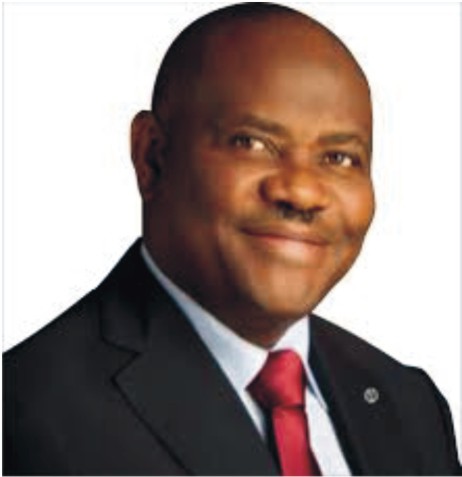
Being Text of a Speech on “Developing Media Infrastructures for Good Governance, the Example of Rivers State Government” by The Honourable Commissioner of Information and Communications, Rivers State, Pastor Paulinus Nsirim, As Special Guest of Honour/Keynote Speaker at The Rotary Club of Port Harcourt 2020-2021 Media Day on Monday April 19, 2021 at the Rotary Centre, off Trans-Amadi Industrial Way, Port Harcourt.
Excerpts.
One thing that is not in
doubt in today’s world, especially in the corporate world, is that good public relations image remains essential to achieving great results. Indeed, the fact that a public relations committee had been at the epicenter of the management of not just the activities but also image of Rotary, tells a great deal of story why publicity matters so much to the world’s longest and oldest organized social and humanitarian club.
Rotary and Rotarians may not record much success in their endeavours without publicity. It is to that extent that Rotary and the media must establish and sustain a symbiotic relationship in order to further the goals of Rotary, and most importantly, make a difference in the lives of millions of those who need help, support and assistance to keep alive hope of a better life.
It is for this reason that I wish to commend Rotary club for dedicating the month of April in their International Calendar as Magazine/Media Month. I believe it is a month for the celebration of the media for its role in bringing to the fore the good qualities of Rotary club and its activities in order to inspire the world for better living. Rotary believes that the synergy with the media has been and will continue to be of profound importance to its activities. Let me also commend the media whose advocacy and information management roles have been critical to the achievement of the core goals of Rotary in the society.
Since February 23, 1905 when Rotary was formed and its first meeting of like minds in Chicago, Ilinois in the United States of America, “the characteristics of Rotary Club and those who populate it have remained the same everywhere; the features of service, internationality, fellowship, classification of each vocation, development of goodwill and world understanding, the emphasis of high ethical standards, concern for other people, and many more descriptive qualities, which show care and compassion, respect for others, honesty and integrity, as well as patriotism, industry and hard work”.
The 4-way Test Philosophy of Rotary Club, which in 1943 was translated to the acceptance that whatever Rotarians think, say and do they must be guided by the TRUTH at all times, and must be FAIR, and naturally
seen to be so by others. Rotarians must ensure that they, whatever they think, say, or do, help in building GOODWILL and BETTER FRIENDSHIPS across the community, and by extension, the world and that their results are BENEFICIAL to all concerned.
This 4-way Test Philosophy and the roles the media play in upholding a just society, by holding leaders and government accountable at all times, clearly makes it impossible for either the media or Rotary to divorce each other, since both work for the good of the society.
Having said these, let me return to the issue of today.
Media refers to the channels of communication which are utilized for the purposes of dissemination of news, music, movies, education, promotional messages and other data. It includes physical and online
newspapers and magazines, television, radio, billboards, telephone, the internet and fax, that provide news and information to the public.
One thing that is legendary and long-standing is the power of the media in shaping society, setting agenda for public discourse and moulding public opinion. Perhaps, that explains why Thomas Jefferson (1743-1826), the third president of the United States of America and principal author of its declaration of Independence once said, that if he had to choose between “a government without newspaper or newspapers without a government, I should not hesitate a moment to prefer the later”.
According to Jefferson, “the press is the best instrument for enlightening the mind of man, and improving him as rational, moral and social being.” Jefferson’s successor, James Madison (1751-1836) corroborated this view when he said; “to the press alone, chequered as it is with abuses, the world is indebted for all the triumphs which have been gained by reason and humanity over error and oppression”.
Truly, the above statements underscore the importance of the media as it carries out its multifaceted roles of providing information education, and entertaining. Also the media acts as a public forum for the discussion of important issues. While the media also plays the role of entertainment, it acts as a watchdog for government, business and other institutions, mirroring society as it were.
Chapter 2, Section 22 of the 1999 Nigerian Constitution states clearly the role of the
media in governance. It says, “the press, radio, television and other agencies of the mass media shall at all times be free to uphold the fundamental objectives contained in this chapter and uphold the responsibility and accountability of the government to the people”.This clearly links the media to good governance.
Thus, as required by the constitution, the media which is the watch dog of society should hold public office holders accountable to the people who elected them by monitoring governance closely. Clearly, in the issues of promoting good governance, rule of law, ensuring probity and accountability, wiping out illiteracy and eradicating poverty, the media are the key factors in that strategic link.
The media provides a platform for discussion of all the checks and assessments of the activities of government by bringing public concerns and voices into the open. The media articulates citizens voices and preferences for government to use in policy formulation. They hold government accountable and provide information for the people. Thus, the media are a critical link in the accountability chain between the government and the governed.
With the existence of an unfettered and Independent press, and the spread of modern information and communication technologies, “the media are essential for democratization and guaranteeing good governance through freedom of expression, transparency, accountability, rule of law and providing a pluralist platform for political expression about controversial issues”.
Without good governance, it is difficult to attain nor guarantee social, economic and political progress, because the bedrock or pillar of any modern democracy is good governance.
However, to achieve the humongous roles of the media, there are means through which they can reach the public. This is termed media infrastructure. According to Lisa Parks, a Professor of Comparative Media Studies and Science, Technology and Society at the Massachusetts Institute of Technology, whose research focuses on satellite technologies and global Media, critical studies of media infrastructure, among others, “the word “infrastructure” surfaced in the early twentieth country “as collective term for the surbordinate parts of an undertaking: substructure, foundation,” and first became associated with permanent military installations. Since then, the terms meanings have expanded to encompass power grids and telecommunication networks, subways and freeways, sewer systems and oil pipeline.
While Critical media studies
scholars have investigated “networks” for decades, they have only recently begun to think of “infrastructures” as part of their research field.
“Work on media infrastructure has explored the material conditions in which broadcast, cable, satellite, internet and mobile telephony systems are arranged to distribute audiovisual content to sites around the world. While such systems have historically been referred to as “Telecommunication networks, “the reconceptualization of them as “media infrastructures”, signals a shift toward exploring issues of scale, difference, unevenness, rationality, labour, maintenance and repair, literacy etc.”
According to the World Bank, “Media Infrastructure can be a vital and necessary step in the media development process. “A functioning media
infrastructure is the underpinning for the rest of the media sector.
Media Infrastructure are defined as the “foundational technologies, services, facilities and outlets that are critical to the communication of information, opinion and expression.
Media Infrastructure can be classified under Networks, which includes data and communication networks such as internet or 5G mobile networks. Other aspects of media infrastructure include “Last mile”, which is the infrastructure required to deliver media to the consumers door, such as an internet connection, newspaper delivery or cable TV services.
They also include information, communication and Technology (ICT) platforms, facilities such as data centre, broadcasting centre, newsroom or modern printing press. Others are broadcast media-media that flows from a simple source to a large audience such as television networks, newspapers and radio statement. Social media and streaming media applications are part of the media infrastructure.
All aspects of media infrastructure available in the state are put to use by the Rivers State Government to promote good governance. Media infrastructure available through the Ministry of Information and Communications and its parastatals (the Rivers State Newspaper Corporation, publishers of The Tide Newspapers; Rivers State Broadcasting Corporation, Operators of Radio Rivers, Rivers State Television (RSTV), Garden City Radio and the Government Printing Press, provide channels of communication for the government to communicate to the people of the state.
Over the years, the Rivers State Government have made huge investments in these MDA’s to underscore the importance attached to them in ensuring good governance, especially in the areas of rule of law, transparency, accountability, effectiveness, consensus Oriented, equity and inclusiveness and responsiveness.
The procurement of a state-of-the art printing machine for The Tide Newspaper, outside Broadcast Van for the Garden City Radio and Radio Rivers, Placement of Rivers State Television on Satellite platforms to enhance global reach, are all aimed at reaching out to the people about government activities and also get the peoples reactions and suggestions. That is not all. Plans have reached advanced stages to completely revamp the Rivers State Newspaper Corporation, publishers of The Tide Newspaper to give the medium a competitive edge in the industry. New computer-to-plate machine, delivery vans, communication equipment and other media infrastructure to enhance its mandate will soon be delivered by the Rivers State Government. In the same vein, the Rivers State Government has set in motion plans for a hitch-free Digital Switch over in the state on July 8, 2021. What that implies is that Rivers State Television would no longer require a transmitter to broadcast to the world. It would translate to an increase in the capacity of the station by improving spectrum efficiency and providing better signal quality.
What this implies in terms of benefit to the government are enormous. Jobs will be created by manufacturers, Surface Mount Technology will be created and chipset industry would be set up, making Nigeria the only of such in West Africa, Central Africa and creating a hub. It would also create local plastics industry jobs that are needed for the gift packs for the Set Top Boxes (STBs), creation of other value added jobs and small businesses.
For the industry, this switch-over would mean massive technology transfer in terms of SMT, chipset design, PCB implementations and opening up ancillary manufacturing opportunities for other electronic devices and equipment.
The Rivers State Government would also benefit immensely from the Digital switch-over as it provides opportunity for enhanced revenue generation. The local government councils can use the STBs to collect TV and radio license fees. It also creates new ways to provide education delivered to the homes through TV and improves social interaction and creativity as communities start to develop applications for the new digital TV platform.
Aside these, the Rivers State Government under the visionary leadership of His Excellency, Nyesom Ezenwo Wike has been open to the infrastructure of the independent media in the state to ensure good governance. The Governor believes strongly that good governance can be facilitated by a strong and independent media scape.
For Governor Nyesom Wike, there is nothing to hide, but much to improve. Journalists are free to monitor, investigate and criticize the administration and he is always ready and handy to let the public through the media see and dissect his administration activities.
Rivers State Government allows the media to contribute to the participation process by the citizenry through assent or dissent or exploring aspects of issues not considered through official channels and in arenas where face-to-face participation is impossible.
As you are aware, the Rivers State Government under the pragmatic and visionary leadership of Governor Nyesom Wike has embarked on rapid infrastructure development that has changed the landscape of the state through the execution of key signature projects particularly in the area of road infrastructure, to accelerate robust economic activities within the urban centres and their environs.



Fubara gave the assurance last Friday at the NYSC permanent orientation camp, Nonwa-Gbam, Tai Local Government Area in the State, during the swearing-in ceremony of 2026 Batch B Stream II orientation course.
Represented by the Permanent Secretary, Cabinet Bureau, Office of the Secretary to the State Government, Dr. Promise Oguzie, the governor said the State Government would remain intentional in providing the necessary support to improve the NYSC scheme and enhance the experiences of corps members deployed to the state.
He charged the corps members to be role models and quality nation-builders in their service to the good people of Rivers State in particular, and Nigeria at large.
“I charge you to be exemplary, dedicated and committed in all you do. Take full advantage of all the camp programmes and activities to enrich yourselves”, he said.
In his welcome address, the State Coordinator of NYSC in Rivers State, Mr. Moses Oleghe, urged corps members to see their deployment to Rivers State as a “veritable opportunity to make meaningful contribution to the growth of the State in particular and Nigeria at large.”
He further charged them to serve with all sense of “integrity, discipline, and the fear of God, especially when they will be engaged as INEC ad-hoc staff that will conduct the 2027 general elections.”
A total of 3,584 corps members composed of 1,421 males and 2,163 females were sworn in by the Chief Judge of Rivers State, who was represented by Justice Godspower Aguma.

The Governor stated this yesterday when he received in audience, the World President of the Seventh Day Adventist Church, Pastor Erton Kohler; his wife, Andriene Marques Kohler; daughter Mariana Marques Kohler and a retinue of ministers of the church at Government House, Port Harcourt.
Fubara who hailed the Seventh Day Adventist Church for its contributions to education and the grooming of future leaders in Nigeria, expressed delight that the Church had over the years, been investing in education at various levels and currently runs two universities in the country.
He commended the church for not only using its institutions to spread the gospel of Christianity but to groom future leaders for the country.
According to him, religion should not be just about defending one’s faith, but also making meaningful impact on the lives of the people.
He said that by floating these educational institutions, the church has demonstrated capacity to support Nigeria in the task of producing not only educated people but a breed of God-fearing leaders.
“Our country is where it is today because we lack the fear of God. If you have the fear of God, there should be a limit to what you can do because you understand the supremacy of God. But when God is not in your equation, you’ll go beyond the line and that is what has brought us to where we are today.
“So, I feel very happy that you are contributing to the development of our future leaders in this country. We need the right people being in the right place; prepared properly with good minds; that is what we need, not just in Nigeria but round the whole world.,” he said.
Governor Fubara further observed that the absence of God-fearing people in high places to take the right decisions that could impact positively on the society, has also given rise to other problems such as social inequality, poverty, corruption and criminality. According to him, Nigeria needs a system where the average parent could afford quality education for their children and a guarantee that upon graduation, the average child will have the capacity to compete favourably with anybody, anywhere in the world.
“If we have a situation where the little money that you’re being paid as wage can also afford you quality healthcare and after working at least for 15-20 years, you have a roof over your head, tell me why you should be involved in any kind of crime? At that point, you’ll feel secured and this attitude of insecurity about the future that leads to all the social vices we have today won’t be there,” he said.
Governor Fubara expressed appreciation to the delegation for the visit and for their prayers for Rivers State, assuring them of his continued support for their programmes in the state.
Leader of the delegation and World President of the Seventh Day Adventist Church, Pastor Erton Kohler said he was in Nigeria for a special conference of the church during which thousands of the church’s ministers will be undergoing an empowerment programme to further equip them for the task of herding their flocks and serving the society.
He expressed gratitude to the Governor for the warm reception accorded his entourage, saying the memory of the visit will linger in his mind for a lifetime.
Kohler disclosed that the Church has over twenty -four million (24,000,000) members and more than 182,000 places of worship, spread across 212 countries of the world.

This reaffirms the lawmakers’ commitment to enacting laws and taking legislative actions geared towards the overall development of the State.
The Assembly gave the approval during its Second Legislative Sitting of the Fourth Session held last Friday.
Speaking on the MTEF document during plenary, the House Speaker, Rt. Hon. Martin Amaewhule, noted that by the provision of Section 10(1)(b) of the Rivers State Fiscal Responsibility Law No. 8 of 2010, the MTEF ought to have been laid before the House in September 2025.
Amaewhule explained that traditionally, the document is expected to be presented four months before the commencement of the next financial year and immediately after the expiration of every three-year fiscal cycle.
He, however, stated that in the interest of the State and its people, the House considered it necessary to deliberate on the document, describing it as a precursor to the 2026 Budget Estimates.
The Speaker expressed concern that the year had already progressed significantly before the presentation of the framework.
During deliberations on the document, members examined the assumptions and projections contained in the MTEF and observed that strict adherence to the outlined fiscal parameters would ultimately serve the interest of Rivers people.
The lawmakers maintained that effective implementation of the framework would promote prudent financial management and enhance developmental planning across the State.
Following the debate and positive consideration by members, the Speaker put the question to the House and members voted overwhelmingly in support of the approval of the MTEF.
Meanwhile, during the same sitting last Friday, the House also received a petition from the Chairman of Obio/Akpor Local Government Council, Dr. Gift Worlu.
The petition was presented by the member representing Obio/Akpor Constituency II, Hon. Emilia Amadi.
According to the petition, concerns were raised over an imminent security breach, threats to lives, destruction of property and alleged forceful takeover of property by some lawless persons within parts of the Local Government Area.
Presenting the petition before the House, Hon. Amadi appealed to the lawmakers to revisit the matter and take necessary steps aimed at safeguarding lives and property in the affected communities.
The House is expected to further deliberate on the petition and consider measures to address the concerns raised in order to sustain peace and security in the area.
King Onunwor
-

 News1 day ago
RSG Targets Nine Million Residents in Mosquito Net Distribution Campaign
-

 Oil & Energy1 day ago
Aiyedatiwa Signs New Electricity Bill
-

 Maritime1 day ago
Marine Minister Commends President Tinubu On NPERA Bill Assent
-

 Oil & Energy1 day ago
NLNG Commissions Research And Innovation Centre In RSU
-

 News1 day ago
KenPoly Holds Eight Convocations, August 29
-

 News1 day ago
RSG Begins Another Phase of Projects Commissioning Today
-

 News1 day ago
RMAFC Completes Revenue Sharing Review, Proposes New Pay
-

 Maritime1 day ago
NAGAFF Petitions IGP Over Alleged Maritime Police Harassment