
Nation
Jubilation As Ashafa Hands Over FESTAC Mechanic Village To Artisans

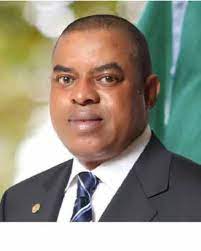
Senator Gbenga Ashafa, Managing Director, Federal Housing Authority (FHA), yesterday handed over the site of the six acres Mechanic Village/Market in FESTAC Town to the artisans.
Speaking during the handing-over ceremony at the new site on 6th Avenue, FESTAC town, Ashafa said that the event was in line with his promise to restore the lost glory of FESTAC town.
The Tide source reports that Ashafa was represented by Mr Akintola Olagbemiro, FHA South-West Zonal Manager, at the handing over the site to the Nigerian Automobile Technician Association (NATA).
He expressed joy at the achievement of FHA’s age -long plan to resettle the mechanics in a comfortable permanent site.
“Let me quickly add that the place of mechanics, technicians, and artisans can never be underestimated in any society. Their overall importance in any economy is not of low profile because of the essential nature of their trade.
“The value chain they add to the economy is quite enormous, owing to the many jobs and employment they create through service deliveries.
“We in FHA will do all we can within our reach to make you comfortable, relevant and organised,” he said.
He urged the leadership of NATA, FESTAC branch, to ensure orderly business premises and collaboration with all tiers of government and other stakeholders for peaceful coexistence.
“With the success of today, it has been officially declared illegal for any auto mechanic to operate in any other part of FESTAC Town.
“We also implore the auto mechanic/technician leadership to help relevant authorities concerned with the security and sanitation of FESTAC Town, by compelling all your members to avail themselves of this facility,” he said.
Ashafa pledged continuous collaboration of FHA with the artisans and other stakeholders and thanked the FESTAC Town Residents Association, security agencies and other stakeholders for their patience.
He said that the FHA would liaise with the Amuwo Odofin Local Government and other stakeholders towards Right of Way (RoW) recovery.
Ashafa added that FHA surveyors had taken the measurements of the site for laying of the beacons on the new site.
The Chairman, Amuwo Odofin Local Government (AOLG), Mr Valentine Buraimoh, said the move would bring added development, not only to FESTAC Town, but to the entire community.
Buraimoh, however, noted that there was need to hold a stakeholders meeting to determine how the space allocated could be maximised.
“We need to get ideas and suggestions on how best we can use the space given to us,” he said.
NATA members, led by the immediate past chairman of the Amuwo Odofin Local Government (AOLG) Area, Mr Ayodele Adewale, marched in joy to the venue to take possession of the facility.
Adewale told journalists that he was overwhelmed with joy that efforts of his tenure to ensure that the artisans and traders take possession of the site allocated to them in the original Master plan of FESTAC Town, had become a reality.
The Chairman of NATA, Mr Yunusa Elekolomo said: “I am happy that finally this site that rightly belongs to us is being given to us today.
“Since the 70s, we have suffered a lot of encroachment on this land, we have suffered too much, I will say that today that we are taking possession is my happiest day,” he said.
Earlier, President, FESTAC Town Residents Association (FTRA), Mr Shola Fakorede, said that enough sensitisation and awareness campaign was carried out for residents and artisans to embrace the project which had become a reality.




In a statement signed by the Project Coordinator, Prof Nenibarini Zabbey, to commemorate the anniversary, HYPREP described the anniversary as a significant milestone in Nigeria’s environmental restoration efforts, noting that the project has made remarkable progress in implementing the recommendations of the landmark UNEP report released on August 4, 2011.
The UNEP report had revealed extensive oil pollution across Ogoniland, severe environmental degradation, and serious public health risks resulting from decades of petroleum operations. It also recommended an initial $1 billion fund to commence the cleanup of the affected communities.
According to HYPREP, the Federal Government formally launched the Ogoni clean-up in 2016, while the Project Coordination Office was established in 2017 to drive the implementation of UNEP’s recommendations.
Zabbey said the current administration has continued to prioritise the project under the Renewed Hope Agenda.
Providing an update on the cleanup, the Project Coordinator disclosed that 30 of the 65 contaminated sites identified by UNEP have been fully remediated, while work is ongoing at several medium- and high-risk locations. It also stated that more than 1.5 million mangrove seedlings have been planted as part of what it described as the world’s largest restoration of oil-degraded mangroves, with over 1,000 hectares of shoreline already rehabilitated.
Zabbey further revealed that 49 Ogoni communities have been connected to potable water schemes through multiple water projects and booster stations aimed at providing safe drinking water across the region.
In the health sector, he said the 100-bed Ogoni Specialist Hospital in Kpite and the 43-bed Cottage Hospital in Buan are nearing completion, adding that several existing health facilities have been upgraded with modern medical equipment, while five ambulances have been donated to improve emergency healthcare services. The Project Coordinator also disclosed that a three-year human health biomonitoring study is being conducted in collaboration with the World Health Organization’s International Agency for Research on Cancer (IARC).
On economic empowerment, Zabbey stated that the Project has created more than 8,000 direct jobs and trained thousands of Ogoni youths and women in various vocational and technical skills, including software development, cybersecurity, aviation, commercial diving, seafaring, mechatronics, and creative arts. The project also reported awarding scholarships to more than 1,000 students, providing grants to small businesses, and supporting persons living with special needs through skills acquisition programmes.
The statement further highlighted ongoing legacy projects, including the Ogoni Power Project and the Centre of Excellence for Environmental Restoration, which it said is about 96 per cent complete. HYPREP also welcomed the recent designation of the Ogoni Wetland as a Ramsar Site of International Importance and pledged to continue promoting biodiversity conservation and sustainable management of the ecosystem.
Marking the anniversary, Zabbey said the progress achieved over the past 15 years demonstrates the collective commitment of government, development partners, stakeholders, and local communities to restoring Ogoniland. He called for renewed collaboration to sustain the cleanup effort, promote environmental sustainability, and support the long-term development of the region. 3
-

 News2 days ago
RSG Targets Nine Million Residents in Mosquito Net Distribution Campaign
-

 Oil & Energy2 days ago
Aiyedatiwa Signs New Electricity Bill
-

 Maritime2 days ago
Marine Minister Commends President Tinubu On NPERA Bill Assent
-

 Oil & Energy2 days ago
NLNG Commissions Research And Innovation Centre In RSU
-

 News2 days ago
KenPoly Holds Eight Convocations, August 29
-

 News2 days ago
RSG Begins Another Phase of Projects Commissioning Today
-

 News2 days ago
RMAFC Completes Revenue Sharing Review, Proposes New Pay
-

 Maritime2 days ago
NAGAFF Petitions IGP Over Alleged Maritime Police Harassment