Connect with us

Environment

Don Traces Environmental Challenges To Poverty, Ignorance

Published

on

Dean Faculty of Environmental Sciences, University of Calabar, Prof. Imo Ekpoh on Wednesday disclosed that Nigeria cannot solve its environmental challenges without solving the challenges of poverty and ignorance.
Ekpoh said this in an interview with The Tide source in Calabar.
The Prof. of climatology noted that as a nation we needed to carryout measures that would ensure that rural dwellers lived sustainably with the forests and not destroy them.
“Telling people who have been logging or burning bushes as a profession they learnt from their fathers to stop logging and burning bushes at the beginning of the farming season because you want to check greenhouse gases emission won’t work.
“This is because they will not understand, unless they are educated and given an alternative means of livelihood.
“Today, many of our rural communities take bush burning as a way of life and when village A, B, and C continue to burn  the forests, it becomes a major challenge contributing to global warming, he maintained.
Ekpoh stated that the major factor that was enhancing global warming was the amount of greenhouse gases such as carbon-(iv)-oxide, methane, nitrous-oxide and chlorofluorocarbons released daily into the atmosphere.
He said that preindustrial level of atmospheric carbon-(iv)-oxide  was in the region of 280 parts per million but at present, it was over 400 parts per million.
He added that if not for the efforts of some communities like Cross River in planting trees, it would have risen to 500 parts per million.
“Planting of trees is important because it helps in the absorption of carbon-(iv)oxide which escapes into the atmosphere from different sources and enhancing global warming.
“Global warming brings with it surprises because earth’s atmosphere becomes unstable, making it difficult for scientists to predict.
“This is why you see massive flooding in China, storms in America and bush fires at the same time, some other countries are witnessing draught and even Nigeria is not left out with the effects of desert encroachment and other disasters.
“As a nation we need to start enforcing the use of catalytic converters in our vehicles and factories and also provide an alternative and safe means of survival for our people, if we must save our environment,” he asserted.


Continue Reading

Environment

LWC, Julius Berger seek stronger coordination on Lagos infrastructure

Published

on

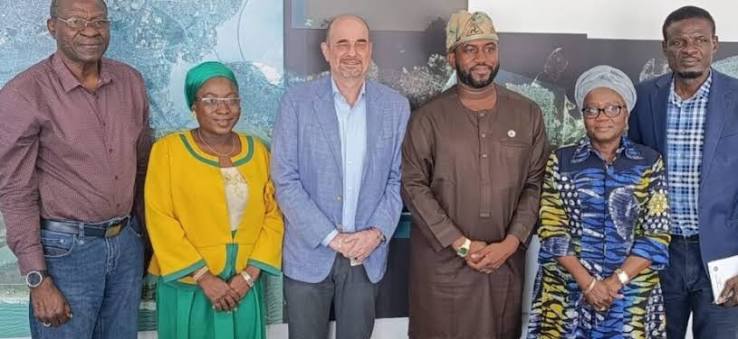
The Lagos Water Corporation (LWC) has commenced discussions with Julius Berger Nigeria Plc to strengthen coordination between water and road infrastructure projects.
This is contained in a statement issued by the corporation.
The corporation said the engagement followed a courtesy and familiarisation visit led by its Managing Director, Mr Mukhtaar Tijani, to Julius Berger’s Ijora office.
It said the visit was aimed at strengthening institutional relations and creating opportunities for deeper collaboration between both organisations.
The corporation stressed the importance of cordial relationships with neighbouring organisations and strategic stakeholders to promote future collaboration.
The meeting focused on road construction, water pipeline protection, water infrastructure development and sustainable water supply across Lagos Island and its environs.
Both organisations highlighted the need for early communication and technical coordination to prevent conflicts between road projects and existing water infrastructure.
Julius Berger Regional Commercial Manager, Region West, Mr Alexander Bauer, reaffirmed the company’s commitment to sustainable engineering solutions rather than short-term fixes.
Bauer stressed the importance of early stakeholder engagement and proper coordination before construction activities begin.
The meeting also examined access to project drawings and technical information required to improve coordination between water and road infrastructure projects.
Julius Berger explained that releasing detailed project drawings remained subject to approval from the appropriate client.
Both organisations therefore agreed on the need to engage the Lagos State Government to secure necessary approvals and strengthen technical collaboration.
The discussions also focused on accurate pipeline information and its importance in planning future water infrastructure and urban development projects.
The LWC delegation raised concerns about uncoordinated borehole drilling and its potential effects on groundwater resources and the ecosystem.
Participants noted that stronger public water supply systems could reduce dependence on individual boreholes and help protect underground water resources.
Construction & Maintenance
They also agreed on the importance of sharing information on construction activities, road conditions, project schedules and potential disruptions.
Security and community considerations were also discussed, with Julius Berger highlighting its engagement with relevant authorities on security infrastructure within the area.
The meeting ended with a shared commitment to open communication, stronger technical coordination and exploring further opportunities for collaboration.
The engagement is expected to strengthen synergies between water and road infrastructure planning and support resilient and sustainable infrastructure development across Lagos.
Continue Reading

Environment

IYD: Climate experts advocate investment in African youth

Published

on

Some Climate Experts across Africa have called for investment in African youth to enhance future security.
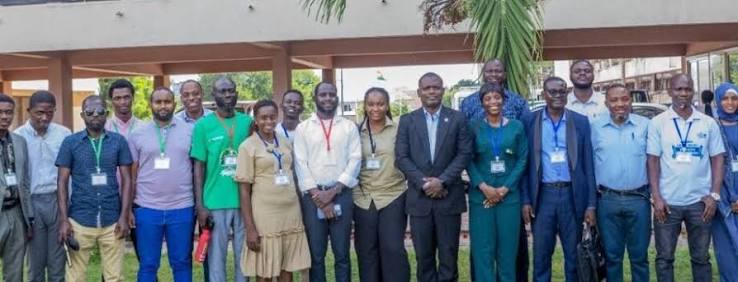
They made the call on Wednesday during a webinar organised by Planet, People and Peace Foundation (PPPF), a non-governmental organisation, to observe 2026 International Youth Day (IYD).
According to them, there is a need to invest, listen and create opportunities for young African people.
The Tide source reports that the 2026 theme of the IYD is “Different Contexts, Common Aspirations’’.
Miss Bisi Kumuyi, the Secretary, Climate Beyond Border Caravan (CBBC), Nigeria, who canvassed for investment in youth, said the future of Africa would be determined by the opportunities the continent created for its young people today.
The CBBC, an initiative of PPPF, is a pan-African, youth-led campaign promoting climate action, cross-border cooperation and green economic transformation across the continent.
‘‘As Africa joins the rest of the world to commemorate International Youth Day on Aug. 12, 2026, we celebrate the energy, creativity, resilience and determination of young Africans who continue to shape the continent’s present and future.
‘‘This year’s theme reminds us that young people across Africa live in different social, economic and cultural circumstances.
‘‘They share common aspirations: access to quality education, decent employment, innovation, peace, inclusion, environmental sustainability and opportunities to fulfil their potential,’’ she said.
Also speaking, Mrs Nouran Farouk, an Egyptian Climate Activist, called for urgent investment in Africa’s youth.
According to her, Africa is the world’s youngest continent, and its youthful population represented one of its greatest assets.
Continue Reading

Environment

PWDs: CCD Unveils Report On Climate Change Impacts, Urges Implementation

Published

on

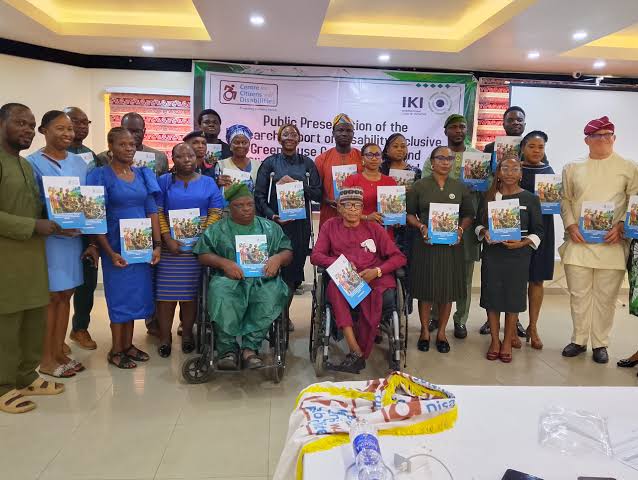
The Centre for Citizens with Disabilities (CCD) has unveiled a research report on impacts of climate change on Persons With Disabilities (PWDs), calling for its implementation in the country.
The Acting Director CCD, Mr Godwin Unumeri, made the call  at the public presentation of the report titled: “Disability-Inclusive Greenhouse Gas Emission and Climate Change Adaptation and Mitigation in Nigeria” on Wednesday in Lagos.
The event brought together government institutions, development partners, civil society organisations, persons with disabilities and other key stakeholder to foster dialogue, collaboration and stronger commitment to disability-inclusive climate change adaptation and mitigation in Nigeria.
Unumeri urged stakeholders to strengthen collaboration and policy commitment toward building climate resilience and ensuring the inclusion of persons with disabilities in Nigeria’s climate response.
He noted that valuable insights and recommendations from stakeholders at a validation workshop in February had been incorporated into the report.
According to him, effective implementation of the recommendations requires sustained collaboration, strong policy commitment, adequate resource mobilisation and coordinated action across sectors.
“By working together, we can translate these findings into practical interventions that strengthen climate resilience and ensure the full inclusion of persons with disabilities in Nigeria’s climate response,” he said.
In her remarks, the General Manager, Lagos State Office for Disability Affairs (LASODA), Adenike Oyetunde-Lawal, urged the stakeholders to ensure that the report would be translated into practical interventions to enhance full inclusion of PWDs particularly in climate change policies.
Continue Reading

Trending