
Politics
Enugu Assembly Passes Anti-Open Grazing Bill


Enugu State House of Assembly has passed the anti-open grazing bill brought before it.
The bill which is for a law to prohibit open grazing, regulate cattle ranching and for connected purposes was passed during the Assembly plenary in Enugu, yesterday.
The leader of the Assembly, Mr Ikechukwu Ezeugwu, said the passage followed the consideration of the report of the public hearing, presented by the chairman of its joint committee, Mrs Amaka Ugwueze.
The Joint Committee is on Agriculture and Natural Resources, Judiciary, Public Petitions, Ethics and Privileges, Youth, Sports and Security Matters.
Ezeugwu said that the bill would be cited as Enugu State Prohibition of Open Grazing, Regulate Cattle Ranching and other Connected Purposes (HB.7) 2021.
The lawmaker explained that the bill would ensure security and peace in the state.
The joint committee had on Tuesday held a public hearing on the bill.
It was where residents represented by the traditional rulers, town union leaders, leaders of various groups and institutions gave the Assembly the support to go ahead with passage of the bill.
The House had alaso received and accepted the report from the member representing Isi-Uzo constituency Mrs Amaka Ugwueze wthat all the oral and written submissions received by the committee were in support of immediate passage of the bill.
The bill is a 16-page document with 36 sections.
Speaking after the passage, the Speaker of the Assembly, Chief Edward Ubosi, emphasised that the bill was not targeted at anybody or group but for the good people of the state and others that live in it.
Ubosi thanked the sponsors, noting that the people of the state had been clamouring for the law for a long time.
He also expressed optimism that Gov. Ifeanyi Ugwuanyi would not waste time in accenting to it.



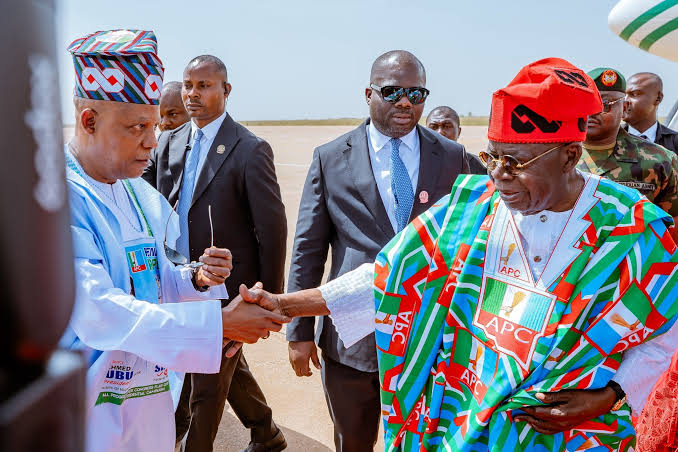
The campaign rally, held at the Kaduna Township Stadium, attracted Vice-President Kashim Shettima, APC governors, party leaders, federal and state lawmakers, political stakeholders and supporters from across the country.
The flag-off marks the beginning of the APC’s drive to secure a second presidential term for President Tinubu, with the party expected to promote its achievements, defend its economic reforms and outline its policy priorities under the proposed Renewed Hope 2.0 agenda.
Kaduna’s selection for the campaign launch underscores the strategic importance of the North-West, a region with a substantial voting population and considerable influence on presidential election outcomes.
The APC faces a significant challenge in Kaduna, where the Peoples Democratic Party’s presidential candidate, Alhaji Atiku Abubakar, defeated President Tinubu in the 2023 election. The rally therefore provides the ruling party an opportunity to strengthen its grassroots structures and regain electoral support in the state.
Addressing supporters, Vice-President Shettima appealed to Northern voters, highlighting President Tinubu’s political relationships with prominent Northern leaders, including Alhaji Abubakar, Mallam Nuhu Ribadu and the late President Muhammadu Buhari.
The Vice-President’s appeal reflects the APC’s determination to consolidate its support in the North as the party intensifies preparations for the presidential contest.
The Renewed Hope 2.0 agenda is expected to feature prominently in the campaign, providing a platform for President Tinubu to explain his administration’s economic policies and outline plans for another term.
However, the President’s record on economic reforms, rising living costs, petrol prices, employment, infrastructure and insecurity is expected to attract considerable scrutiny during the electioneering period.

-

 Education1 day ago
FCE Yola Graduates 3,555 Teachers , Seeks Upgrade to University
-

 Sports1 day ago
Nigerian Trio Target Titles At PFL Africa Finals
-

 Niger Delta1 day ago
Diri Restates Stance On Lagos-Calabar Coastal Highway
-

 Niger Delta1 day ago
C’River, NUJ Pay Tribute To Late Guardian Editor
-

 News1 day ago
NDLEA Recovers Tons Of Illicit Drug Consignments In Nine States
-

 Opinion1 day ago
Checking Voter Apathy In Nigeria’s Electoral Process
-

 Politics1 day ago
2027: DICKSON’S EX-ALLY VOWS TO WORK AGAINST NDC INTEREST IN BAYELSA
-

 Politics1 day ago
2027: GROUP PLEDGES 40,000 SUPPORTERS FOR COALITION CANDIDATES IN RIVERS