
Business
SON Procures Warehouse For Goods’ Testing

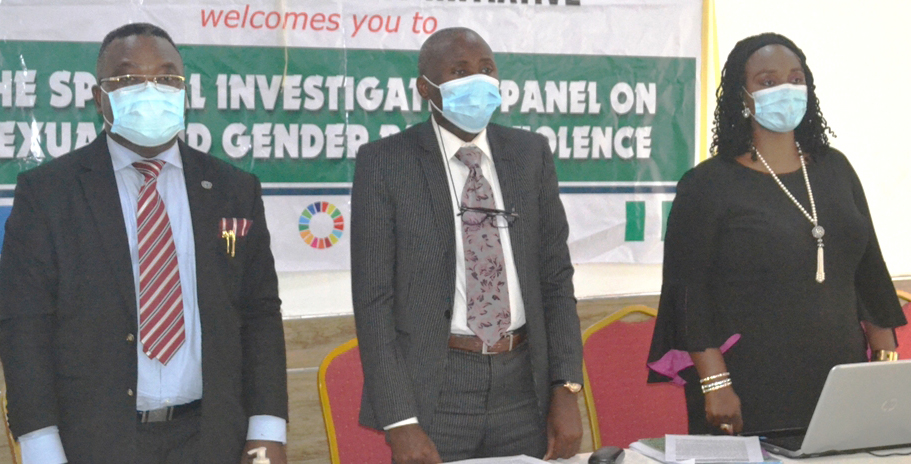
In a bid to stop the practice of arresting containers released at the seaports on the highways by its officials, the Standards Organisation of Nigeria (SON) has procured a warehouse around the port where suspicious goods will be taken to for testing.
The Director General, SON, Mallam Farouk Salim who disclosed this at a one day capacity building workshop for journalists organized by SON in Lagos, recently, said that rather than blocking suspicious goods at the port and delay other legitimate businesses coming through, they would just take those containers to their warehouse and conduct their test.
Salim explained that after testing, if the goods were found to be okay, they would release them but if the goods were found not to be okay, they (SON officials) would show those individuals how to fix the products if the products were fixable, adding that where they were not fixable; the SON would destroy them in line with their mandate.
Salim explained that the idea was to encourage ease of doing business at the seaport, saying the organisation does not want bottlenecks and bureaucracy that would stop people from achieving their legitimate goals.
He assured that the SON management would continue to rejig the system to make it more efficient.
According to him: “We have done so many changes over the years. For example, we have our own warehouse right by the port where goods that are suspicious, instead of blocking them in the port and delay other legitimate businesses coming through, we just take those containers to our warehouse which are nearby and because we have a very high professional and efficient lab in this country, we do our test, if the goods are okay, we release them. If the goods are not okay, we show those individuals how to fix those products if they are fixable, if they are not fixable; we destroy them which is our legitimate mandate by the government and by the National Assembly”.
He emphasised that it was the SON’s responsibility to make sure that every goods that enter the country are up to standard.
He said: “We make sure there are consequences to any product and that any person producing substandard products will have to pay one way or the other. We will have to make sure that there are consequences for individuals buying fake products and injuring our people. We are to make sure manufacturers of goods; building materials are up to standards because collapsing buildings are not discriminatory.
“We, as an organisation, are committed to improving our responsibility. If we expect standards from people, we have to three times inspect how we handle ourselves. So, over the years, we have collaborated with market associations, we have collaborated with importers’ associations even though our responsibility is primarily to help our local producers but Nigeria has importers and they are legitimate businessmen and they are importing things that are needed in Nigeria. So, our responsibility is to make sure that whatever comes to this country is standard, is good, is not going to harm our people and our local industry”.
By: Nkpemenyie Mcdominic, Lagos



Business
Jonathan, Diri, Others Laud Firm’s Milestone in Bayelsa …Says Project Will Drive Industrialisation, Create Jobs



-

 News4 days ago
RSG Targets Nine Million Residents in Mosquito Net Distribution Campaign
-

 Oil & Energy4 days ago
Aiyedatiwa Signs New Electricity Bill
-

 Maritime4 days ago
Marine Minister Commends President Tinubu On NPERA Bill Assent
-

 Oil & Energy4 days ago
NLNG Commissions Research And Innovation Centre In RSU
-

 News4 days ago
KenPoly Holds Eight Convocations, August 29
-

 News4 days ago
RSG Begins Another Phase of Projects Commissioning Today
-

 News4 days ago
RMAFC Completes Revenue Sharing Review, Proposes New Pay
-

 Maritime4 days ago
NAGAFF Petitions IGP Over Alleged Maritime Police Harassment